Races
Logroño Marathon 2025: route, times, and prices
The Rioja race combines three distances, starting at the Espolón, and a very complete organization for runners.

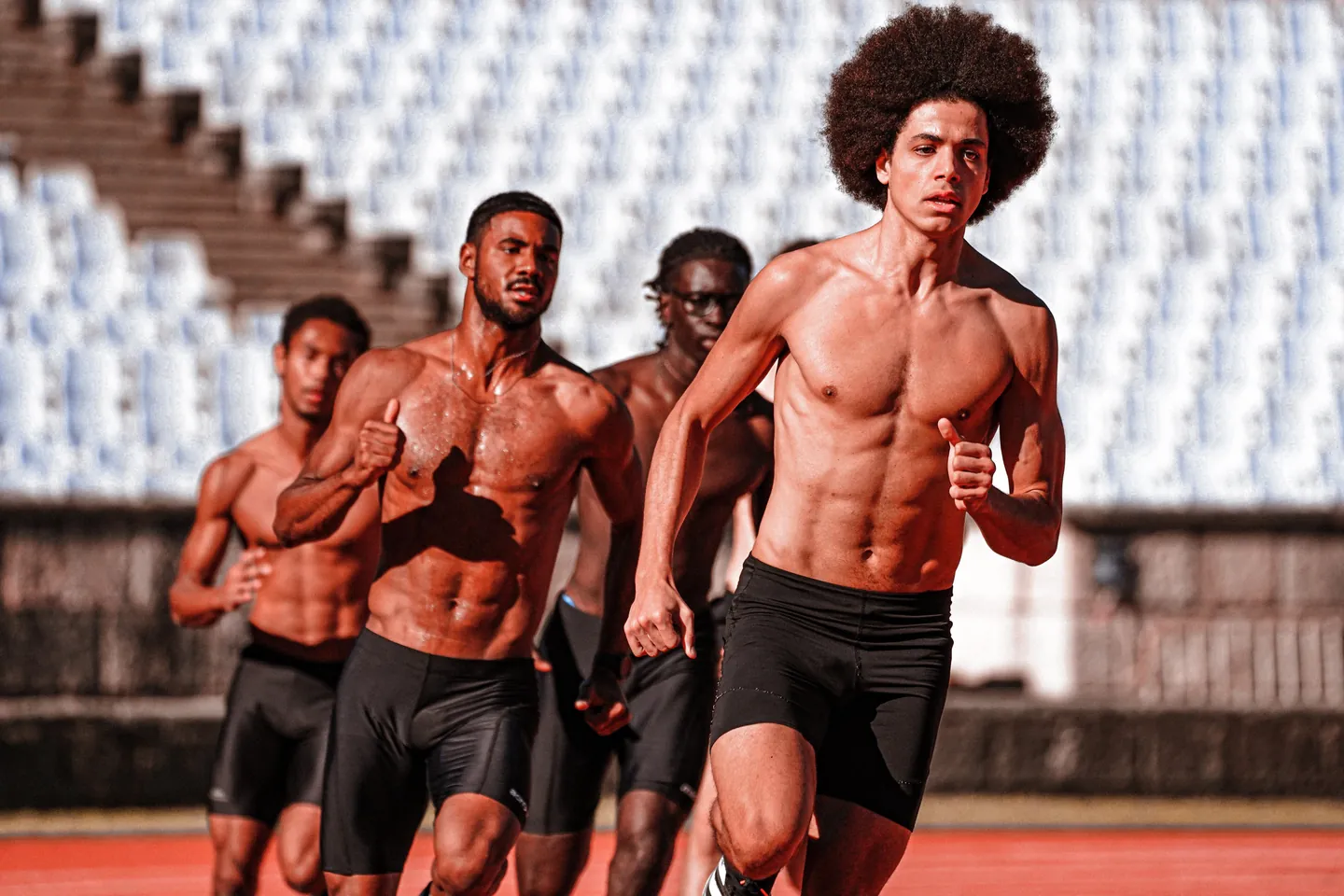
Imagen: RUN 4 FFWPU / Pexels
Logroño is back on the national running map with an urban race that brings together a marathon, half marathon and 10K on the same Sunday, all on a certified course and with the start in the city center. The XII Ciudad de Logroño International Marathon is scheduled for October 4, 2026, while the reference edition analyzed by the organization took place on October 5, 2025, with a very similar setup in terms of schedules, services and route.
The race takes place in the heart of La Rioja and uses Paseo del Espolón as the setting for the longer distances, with a specific start for the 10K in the roundabout area between Avenida de Lobete and Obispo Fidel García. That combination of city center, clear logistics and distances for different runner profiles explains why the event has become one of the most recognizable autumn races on the Spanish calendar.
An urban race with a Rioja seal
The Ciudad de Logroño International Marathon is not just a 42.195-kilometer race. It works as a small festival of popular running in which marathon runners, half-marathon specialists and those looking for a fast 10K in a compact, runner-friendly city all come together. The setting helps: Logroño offers wide streets, a profile that is usually favorable and a finish that returns to the same starting point, making the experience easier for both participants and companions.
The added value is not only in the distance. It also lies in the way the organization has built the event: runner guide, route map, results, photos, videos, volunteers and live tracking are all part of a structure designed to give the feel of a big race without losing its close atmosphere. In the Spanish running ecosystem, that mix of order and atmosphere matters as much as the stopwatch.
The available documentation also points to a race with a strong local identity. References to sponsors, media partner, official drink and specific spaces such as the marathon area or the mini-marathon suggest an event that goes beyond the bib number. It is a city day, with public presence, services and a narrative built around each participant’s effort.
Distances, time limits and start
The sports program includes a marathon, half marathon and 10K. The official distances are 42,195 meters, 21,097 meters and 10 kilometers, respectively. The marathon and half marathon start is set for 09:00 from Paseo del Espolón in Logroño, with the finish at the same point. The 10K also starts at 09:00, but from a different location to make event operations easier.
The 10K starts from the roundabout located between Avenida de Lobete and Obispo Fidel García. This is not a minor detail: in urban races with multiple distances, separating the short start from the longer events reduces crossings, improves flow and allows each group to race with fewer interruptions. That small logistical architecture is what prevents friction at the most delicate moment of any mass event: the first kilometers.
The time limits also define the character of the race. The marathon has a maximum of 5 and a half hours, the half marathon 2 and a half hours and the 10K 1 and a half hours. These are reasonable marks for a popular race, but they require careful pace management. In the marathon, in addition, the organization sets checkpoint controls and warns that those who do not meet the minimum times may be withdrawn for road safety and regulatory compliance.
Certified and very urban course
The course is certified by the RFEA, a detail that for many runners is worth more than it seems. Certification guarantees official measurements and gives confidence to those seeking a serious time, whether in the marathon, half marathon or 10K. In practice, that makes the race a very attractive option for first-timers who want to finish feeling good and for veterans chasing a measurable, comparable result.
The information released by the organization describes a route marked every kilometer and a course that returns to Paseo del Espolón. That repetition of center and finish helps build the race: the crowd usually gathers where the city beats strongest, and that makes the final stretch gain in visual and sound stimulus. Running through a lively city is not the same as running through an empty avenue; the body notices it and so does the mind.
Logroño also has a profile that lends itself to steady paces. In the race narrative it appears as a comfortable urban race, with the appeal of passing through emblematic spots in the capital of La Rioja. This type of course favors both those chasing a personal best and those who want to enjoy the route without the demands of a mountainous or technical course. In a marathon like this, consistency matters more than epic heroics.
Another relevant element is the presence of green areas and stretches near the Ebro River, which several editorial profiles place as part of the course’s charm. That combination of city, river and open spaces reduces the feeling of enclosure that sometimes occurs in races fully closed in by blocks of buildings. For the runner, the scenery changes like a soundtrack alternating between urban rhythm and more open breathing.
Registration, quotas and prices
Registration opened with a total limit of 2,000 bibs, a figure that sets the size of the event and that the organization can close earlier if places are filled or for operational reasons. In the information reviewed, the registration period ran from December 18, 2023 to October 1, 2025, or sooner if entries sold out. In practice, this means the race operates with a controlled field, closer to a well-organized big popular race than to mass overcrowding.
Prices were split into tiers and by distance, creating a clear time-based incentive. For the initial period, until August 4, 2025 or the first 500 entries, the 10K cost 16 euros, the half marathon 22 euros and the marathon 22 euros. Between August 5 and September 15, 2025, or from bib 501 to 1,500, the fees rose to 18 euros, 25 euros and 34 euros. In the final stretch, from September 16 to October 21, 2025 or from bib 1,501 to 2,000, the 10K went up to 20 euros, the half marathon to 28 euros and the marathon to 38 euros.
The marathon also had a special price of 22 euros for the first 500 bibs, with a full refund if the terms of the promotion were met. This kind of commercial strategy usually speeds up the decision to register and, at the same time, rewards early commitment. For runners, the lesson is simple: in races with limited capacity, waiting usually does not help your wallet or availability.
Bibs, chip timing and runner services
Bib collection was organized in several time slots to spread attendance and avoid queues. On Friday, October 3, 2025, it could be done from 10:00 to 14:00 and from 16:00 to 21:00 at Ferrer Sport Center, on Calle Siete Infantes de Lara, 19. On Saturday, October 4, the runner expo was open from 10:00 to 21:00 at the same venue. On Sunday, October 5, for those who had not collected it earlier, there was a slot from 7:00 to 8:00 in the corresponding start area.
The organization required presentation of the ID card to collect the bib and reminded runners that it had to be visible on the front of the torso throughout the race. In the marathon, in addition, two bibs were issued: one with a chip for the front and another for the back. This dual identification is not arbitrary; it makes control easier and reinforces the traceability of the race on a certified course.
The timing system was based on an mandatory chip and checkpoint controls placed at several kilometers. The organization detailed references at the start, at 5, 11, 15, 21, 26, 36, 37 and 42 kilometers, although the sequence appeared in the documentation with some repetition in numbering. For the runner, the underlying message is clear: this is not an improvised race, but an event with regulated control and technical tracking.
The baggage drop was also clearly defined. For 42K and 21K it was located in the start and finish area, at the Espolón shell. For the 10K there were two options: a mobile baggage drop at the short-distance start or direct drop-off at the finish. That kind of solution saves trips and reduces pre-race stress, especially on a race morning when every minute feels shorter than usual.
Refreshments, medical support and safety
The marathon had 17 aid stations along the route and a large recovery area at the finish. From kilometer 5 onward, the organization provided supplies every 2.5 kilometers, a useful rhythm for sustaining effort over a long and demanding distance. In practice, that consistency helps the runner avoid turning hydration into an improvised act and instead makes it part of the race plan.
The aid stations were served in an individualized format: liquids were handed out in small bottles and solids in bags prepared for each athlete. That decision responds to hygiene and organizational criteria, but it also changes race dynamics. The runner does not stop to look, just takes and goes. In a marathon, that economy of movement is worth gold when the muscles start negotiating with fatigue.
The race had a Red Cross setup at the start and finish, as well as staff distributed along the course. Visible medical support in popular races is not decoration; it is part of the basic safety structure. In an event with hundreds or thousands of participants, health monitoring and rapid response capability are just as important as the start arch or the results list.
The kilometer marking and checkpoint controls complete that safety design. If a runner falls behind the minimum schedule, the organization may withdraw them for their protection and for compliance with the rules. It is the less pleasant side of the race, but also the most responsible one. Well-organized marathons do not just celebrate effort; they also frame it.
Prizes, trophies and race finish
The prize structure is designed to recognize both the overall standings and local talent. In the marathon, the top three men and top three women in the overall classification were awarded, as well as the first male runner from La Rioja and the first female runner from La Rioja. In the half marathon and 10K, trophies were reserved for the top three men and top three women in each distance. It is a classic scheme, but an effective one, because it combines the elite of each race with a territorial layer that gives the event identity.
The trophy ceremony was scheduled for Paseo del Espolón at 13:30, unless unforeseen force majeure occurred. That return to the same start and finish setting gives continuity to the story of the day. The runner arrives, recovers, looks around and understands that for a few hours the city has been an open track for shared effort.
In addition to the trophies, the runner’s bag included a T-shirt, refreshments and sponsor products. Marathon finishers were given a commemorative medal, while those who completed any of the three distances received a commemorative wristband. These are material details, yes, but also a way of fixing memory. Many races are forgotten the next day; a medal or wristband reappears years later in a drawer and reactivates the exact memory of the finish line.
Volunteers, live tracking and the life around the race
The race gives a visible place to volunteers, an unglamorous yet essential piece. Without volunteers, the flow of runners, water distribution, finish-line guidance or control of sensitive areas would become much more complicated. The presence of this call in the official communication shows how much the race is understood as a collective construction, not just a sports service.
There was also the option to follow the race live and check results and photos. In today’s running ecosystem, the experience does not end at the finish line. People share times, look for images, compare splits and turn the race into a story that continues for hours. The organization knows this and therefore feeds that second digital life of the event.
The reference to mini-marathon, the La maratón space and informational materials suggests a race with a citywide vocation. It is not limited to gathering bib numbers; it tries to build local sports culture. In an overcrowded calendar of events, that kind of proposal has more staying power than simply repeating a distance. Loyalty comes from treatment, order and the feeling that everything fits together.
What makes this event attractive for the popular runner
The Logroño Marathon combines three highly sought-after elements for the popular runner: a certified course, an urban format and distance options for different levels. That trio explains much of its appeal. Those who want a marathon get a measurable and reasonably fast event; those who prefer a half marathon access a race with a big atmosphere and similar logistics; those choosing the 10K enter an event with the same setting, but a much shorter demand.
The city also adds value. Logroño is not experienced as an anonymous metropolis, but as a manageable capital, with a recognizable center and a gastronomic and street identity that complements the sports experience. That context matters. In autumn races, runners are not only looking for a result or a finish; they also want the trip to make sense and for race morning to leave a clear, almost photographic image.
That is why the race has grown in reputation. The combination of clear schedules, abundant refreshments, reliable timing and an urban course designed for running creates a solid sports product. There is no need to exaggerate or sell heroics. It is enough to look at what it offers: a city marathon with order, rhythm and enough personality to stand out on the Spanish calendar.
The imprint of a marathon told in kilometers and in city life
Well-built races leave a double imprint: one on the legs and another on the runner’s emotional map. Logroño works precisely at that intersection. The Espolón as start and finish, the city as stage and the organization as framework shape an event that does not depend only on distance, but on how it is lived within it. In the end, that is the difference between just another race and one that is remembered.
The urban marathon has something of both a clock and a landscape. It marks time precisely, but also lets the city seep into the effort. In Logroño, that mix is well balanced: a certified course, start plazas, defined schedules, closed quotas and logistics that support the experience. That is where its real value lies, beyond the marathon label or the bib number.
When the runner crosses the finish line and Paseo del Espolón becomes just another street again, what remains is the feeling of having taken part in a complete, orderly day with its own identity. That is no small thing. In a calendar full of options, that kind of certainty remains one of the great attractions of races that last.



How to prevent thigh chafing: causes and real solutions

Women’s running windbreakers: seven jackets and how to choose

Do more workouts get rid of soreness? A guide for runners

Jaén Half Marathon 2026: Record 3,800 Runners Registered

Men’s short running tights: how to choose the right pair

World Triathlon confirms data breach involving medical data

Izan Edo targets podium at Miyazaki World Cup

María Pérez ranks ninth in World Athletics’ 2026 top ten

Dos Santos, Duplantis and Sawe: World Athlete of the Year finalists

San Silvestre Vallecana 2026: 42,000 places, prices and start times

 Races3 months ago
Valencia Half Marathon 2027: date and registration

 Races3 months ago
Valencia Marathon 2026: entry, ballot and course

 Reviews and Comparisons4 months ago
Asics Gel-Roadmiles 3 for men: review and current price

 Reviews and Comparisons4 months ago
Asics Gel Sonoma 8 Gore-Tex: complete analysis for trail and rain

 Sneakers3 months ago
Saucony Endorphin Pro 4: full review and verdict

 News5 months ago
Strava API 2026: what changes for clubs, challenges and runner apps?

 Reviews and Comparisons5 months ago
Nike Alphafly 3: opinions, sensations, and real key points

 Reviews and Comparisons4 months ago
Under Armour running shoes review 2025-2026: models and key features

 Sports Equipment4 months ago
Shoe sizes in cm: a clear guide to getting the right fit for your footwear

 Sneakers3 months ago
Skechers GO RUN Consistent 2.0 analysis: comfort and limits

 News5 months ago
Valencia Marathon 2026 route: key tips to train and run better

 Sneakers4 months ago
Adidas Adizero Boston 13 for men: review and verdict