Races
Madrid Grand Triathlon 2026: dates and distances
Casa de Campo once again brings together several distances, relay, school, and a great day of popular triathlon.

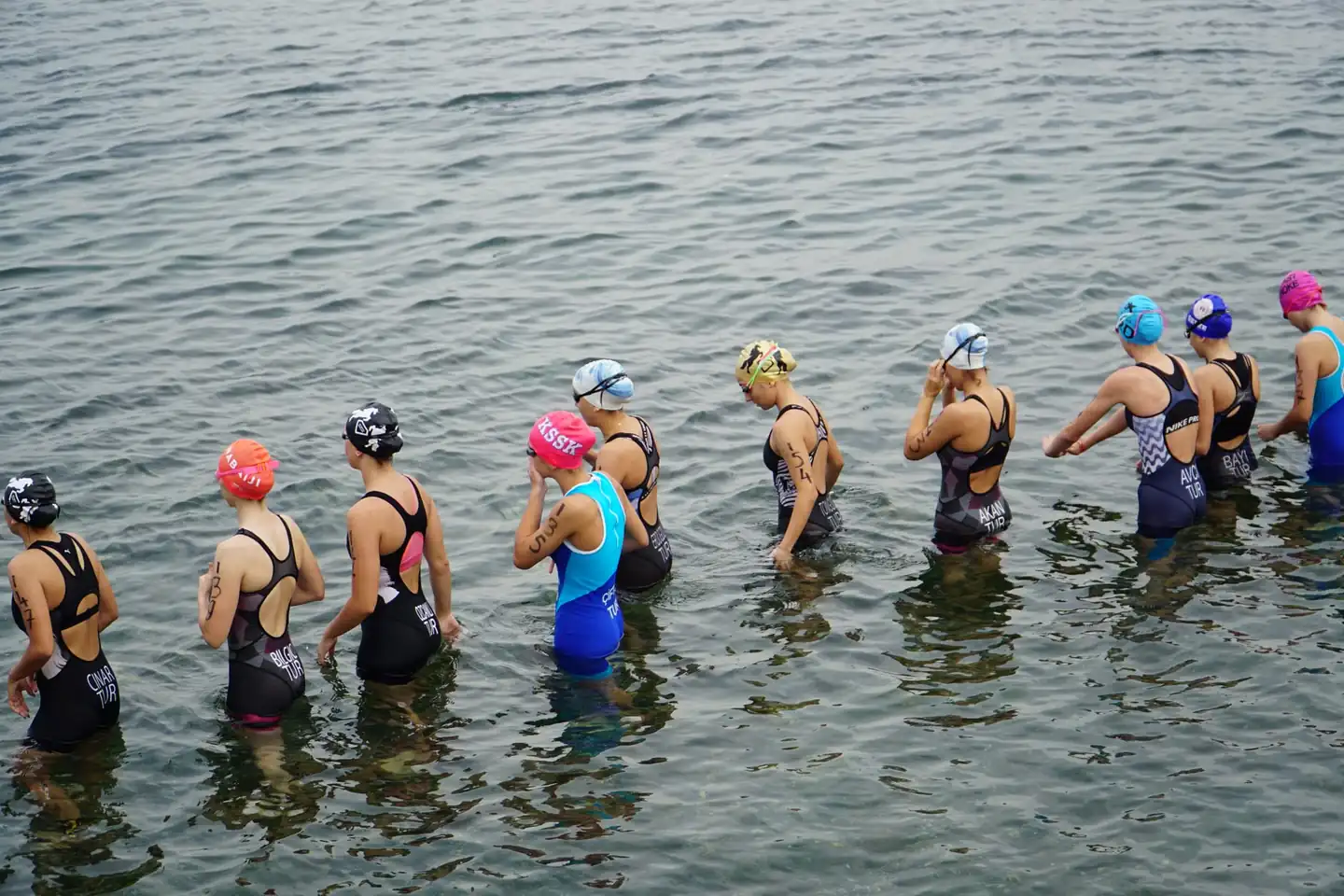
Casa de Campo once again becomes, for another year, the great stage of Madrid’s triathlon. The 2026 Gran Triatlón Madrid takes place on 20 and 21 June and brings together, in a single weekend, events for different levels, from supersprint to standard distance, as well as school and team time trial formats. The event has established itself as one of the most crowded on the national calendar thanks to its mix of popular atmosphere, variety of formats and a course that combines water, asphalt and green areas right in the heart of the capital.
The event is not limited to a single race or a single participant profile. Its value lies in that breadth: federated and non-federated athletes, first-timers and experienced triathletes, adults and youth all share the same organisational setup. In 2026, the event once again moves very high participation figures, with more than 2,000 triathletes in the edition held, a benchmark that helps explain the real weight of this event within Spanish popular triathlon.
An event that turns Casa de Campo into a living track
Casa de Campo offers something few urban settings can match: space, relatively orderly circulation for the running of several starts, and a sense of open competition, without the boxed-in feeling of other more rigid venues. The Madrid park also provides a familiar setting for spectators and runners alike, with the lake area as the nerve centre for starts, transitions and bib collection. That environment makes triathlon read almost like a choreography: swim, bike, run and start again, while the urban backdrop fades among trees and open spaces.
In the official 2026 programme, there are clearly defined time slots for bib collection, transition opening and the various starts on Saturday and Sunday. Friday 19 June is reserved for bib collection between 17:00 and 20:00 in the secretariat tent, next to the Casa de Campo football field. Saturday 20 begins at 07:00 with more bib collection and opening of the transition area; from there, the starts for standard, sprint, Women’s Triathlon, supersprint and school events follow one after another. Sunday 21 is set aside for the Madrid team time trial championship, with starts from 08:00 onwards.
That split across days is no minor detail: it helps organise the experience and also gives context to the type of event. Saturday concentrates the individual and popular dimension, while Sunday shifts the tone toward coordinated effort, team strategy and a more tactical reading of cycling. For the spectator, the difference is noticeable in the atmosphere; for the participant, in the tension of the start, the logistics and the pace of the day.
Formats for every profile, from debut to standard distance
The Gran Triatlón Madrid stands out because it does not force everyone down the same path. In 2026 it offers three main individual levels. The super sprint format and the Women’s Triathlon feature 350 metres of swimming, 7.4 kilometres of cycling and 1.8 kilometres of running. It is a short, intense and accessible formula, designed for those who are just starting out or for those looking for a quick, almost explosive day, without an excessive mileage load.
The sprint distance raises the bar with 750 metres of swimming, 22.2 kilometres of cycling and 5 kilometres of running. It is still a reasonable entry point for many runners coming from running or cycling, but it already demands sharper transitions and a clearer management of effort. In practice, the sprint usually offers the most recognisable image of urban triathlon: fast pace, spectators close by and room to decide positions in the final metres.
The standard or Olympic distance comes in at 1,500 metres of swimming, 37 kilometres of cycling and 10 kilometres of running. It is the most demanding version of the individual programme and the one that, by volume and profile, usually separates more clearly those who arrive with a solid base in the three disciplines. Here triathlon leaves less room for improvisation: every transition matters, the exit from the water weighs heavily, the cycling segment makes the differences and the final 10K usually reveals who has managed energy best.
The school triathlon completes the picture with a different logic. Distances are adapted to age categories and aim to bring young athletes into competition in a safe, supported and progressive environment. In 2026, the planned starts are divided between youth, cadet, infant, alevín, benjamín and pre-benjamín, a sequence that confirms that this event is no longer just a date for adults, but also a showcase for Madrid’s grassroots triathlon.
No cut-off times and an organisation very close to the participant
One of the most striking features of the event is the absence of cut-off times. That decision completely changes how many entrants read the race. Instead of setting a barrier that leaves out those who are a little tighter on time, the organisation prioritises participation and enjoyment of the course. It does not mean the effort disappears, far from it, but it does make the experience less exclusive and more open to different profiles.
The logistics are also designed to reduce friction. The organisation recommends collecting the bib at least one hour before the start and showing up in front of the bike 15 minutes before for the call room. In an event with a large number of participants, that practical discipline avoids queues, rushing and oversights, three common enemies of any triathlon with several start windows. Casa de Campo, in that sense, works like a small temporary sports city, with its own pulse and its own timetable.
The usual services reinforce that operational approach: chip timing, cloakroom, parking, changing rooms and toilets, as well as a commemorative keepsake for participants. These are elements that do not change the sporting essence, but they do make the competition day easier to read. In mass events, service quality shows up in seemingly minor details: a well-marked transition, a bib handed out on time, a reasonably orderly support area.
What changes between Saturday and Sunday
Saturday allows drafting in the cycling segment. That means triathletes can ride in a group and take advantage of the slipstream, a rule that completely changes the tactics on the bike. On this day, the organisation limits the permitted equipment: time trial bikes and aerobars are not allowed, and in the standard format only road and gravel bikes are accepted. In sprint and super sprint, mountain bikes are also allowed. The rule is not arbitrary; it aims to standardise the race and avoid disproportionate technical advantages.
Sunday is raced without drafting in the team time trial. That format changes the architecture of the race, because the group has to sustain a shared effort without taking advantage of the slipstream in the usual way. Equipment selection is stricter: road and time trial bikes are allowed, but mountain bikes and gravel bikes are not accepted. The result is a more technical day, where coordination and steady pacing matter as much as raw power.
That contrast between days gives the Gran Triatlón Madrid an unusual personality. It is not a single event with one set of rules, but a block of competitions that coexist and complement each other. For the spectator it is interesting because it offers several readings of the same sport; for the participant, because it forces them to fine-tune preparation and, above all, to understand which format best suits their level and available equipment.
An event that also measures the pulse of popular triathlon
Participation figures help explain its pull. The 2026 edition brought together more than 2,000 triathletes in Casa de Campo and confirmed a very broad distribution of profiles. The standard distance had 518 individual entrants, the sprint was the most numerous format with 811 participants and the super sprint brought together 166 athletes in individual format. The school day, meanwhile, brought the competition closer to around 500 young athletes.
Beyond the winners, the relevant point is another one: the event manages to combine competition, learning and access without breaking its continuity. That balance is difficult, because in the same weekend there are runners chasing a podium, first-timers who just want to finish with good feelings and families accompanying young athletes in their first competitive steps. Popular triathlon finds there a reliable health barometer.
The 2026 edition also left its own sporting names. In the standard distance, Carlos Arrazola took the men’s victory in 1:58:54 and Carla Larrabeiti won the women’s category in 2:13:44. In the sprint, Lucas Zazo and Lucía de la Puerta were the winners, while in the super sprint the victories went to Marcos Gómez and Nadia Gil. These are results that add competitive shine, but they also reflect the depth of the field and the variety of levels that come together at the event.
The weight of school triathlon and Madrid’s youth talent
The school day deserves its own reading because it does not act as a mere add-on. In large-format events, youth talent often gets pushed into the background, but here the youth and development block occupies a clear place in the calendar and in the narrative of the competition. The staggered starts by age organise the rollout and allow each category to have its moment, without interfering too much with the other events of the day.
That prominence has a broader consequence: the event serves as a showcase for grassroots Madrid triathlon. Clubs, schools and families gather around the same event and turn Casa de Campo into a kind of annual meeting point. In a sport where continuity matters as much as the immediate result, that training layer adds context and meaning to the event.
The school winners of 2026, spread across infant, alevín, cadet and youth categories, confirm that the category structure works and that there is a pipeline. In journalistic terms, that is one of the most valuable features of the Gran Triatlón Madrid: it not only produces a great participation picture, but also a structure that connects adult competition with the development of those coming up behind.
What an event like this leaves on the national calendar
The Gran Triatlón Madrid does not live in isolation within the calendar. It has become a reference point in the central region and one of the events that best sums up accessible, urban and mass-participation triathlon. Its ability to attract federated and non-federated athletes, to offer several distances and to include youth and teams gives it a density that is not always seen in other events. It is not just a race; it is a small snapshot of the moment triathlon is going through in Spain.
There is also a symbolic factor. Madrid, with Casa de Campo as the setting, provides a visibility that few venues can offer. The lake, the transition areas, the wide paths and the proximity of the city create a very recognisable sporting postcard. In a discipline where the experience of the course matters almost as much as the clock, that urban-natural setting is especially powerful.
That is why the event keeps growing in relevance. Not because it promises empty epic, but because it handles a complex formula well: access, variety, safety, atmosphere and real competition. In one weekend, the Gran Triatlón Madrid manages to make triathlon feel, at the same time, like a popular celebration and a serious test. That combination explains why every June it returns to occupy a central place in the sporting conversation of the capital.
An event that sums up Madrid triathlon in two days
The 2026 edition confirms that the Gran Triatlón Madrid is no longer a novelty, but a major tradition. Its calendar, its courses and its range of categories give it a recognisable identity: an event that looks toward experienced runners without losing sight of first-timers or youth talent. In the same venue, individual effort, teamwork and sports development coexist, all with Casa de Campo as the common thread.
The image it leaves is clear: bikes lined up in transition, swimsuits, wetsuits, bibs and running races under the June heat, while the park fills with the sharp noise of gear changes, footsteps and applause. That landscape sums up the meaning of the event well: an open, lively and very Madrid triathlon, capable of turning a weekend into a reference point on the national calendar without losing its status as a popular event.
You may also like: Gran Triathlon Madrid 2026: dates, distances, and key details.



How to prevent thigh chafing: causes and real solutions

Women’s running windbreakers: seven jackets and how to choose

Do more workouts get rid of soreness? A guide for runners

Jaén Half Marathon 2026: Record 3,800 Runners Registered

Men’s short running tights: how to choose the right pair

World Triathlon confirms data breach involving medical data

Izan Edo targets podium at Miyazaki World Cup

María Pérez ranks ninth in World Athletics’ 2026 top ten

Dos Santos, Duplantis and Sawe: World Athlete of the Year finalists

San Silvestre Vallecana 2026: 42,000 places, prices and start times

 Races3 months ago
Valencia Half Marathon 2027: date and registration

 Races3 months ago
Valencia Marathon 2026: entry, ballot and course

 Reviews and Comparisons4 months ago
Asics Gel-Roadmiles 3 for men: review and current price

 Reviews and Comparisons4 months ago
Asics Gel Sonoma 8 Gore-Tex: complete analysis for trail and rain

 Sneakers3 months ago
Saucony Endorphin Pro 4: full review and verdict

 News5 months ago
Strava API 2026: what changes for clubs, challenges and runner apps?

 Reviews and Comparisons5 months ago
Nike Alphafly 3: opinions, sensations, and real key points

 Reviews and Comparisons4 months ago
Under Armour running shoes review 2025-2026: models and key features

 Sports Equipment4 months ago
Shoe sizes in cm: a clear guide to getting the right fit for your footwear

 Sneakers3 months ago
Skechers GO RUN Consistent 2.0 analysis: comfort and limits

 News5 months ago
Valencia Marathon 2026 route: key tips to train and run better

 Sneakers4 months ago
Adidas Adizero Boston 13 for men: review and verdict