Races
Maratón Martín Fiz 2025 standings: results and key points
Results, podiums, and context of the Vitoria-Gasteiz race and its main distances.

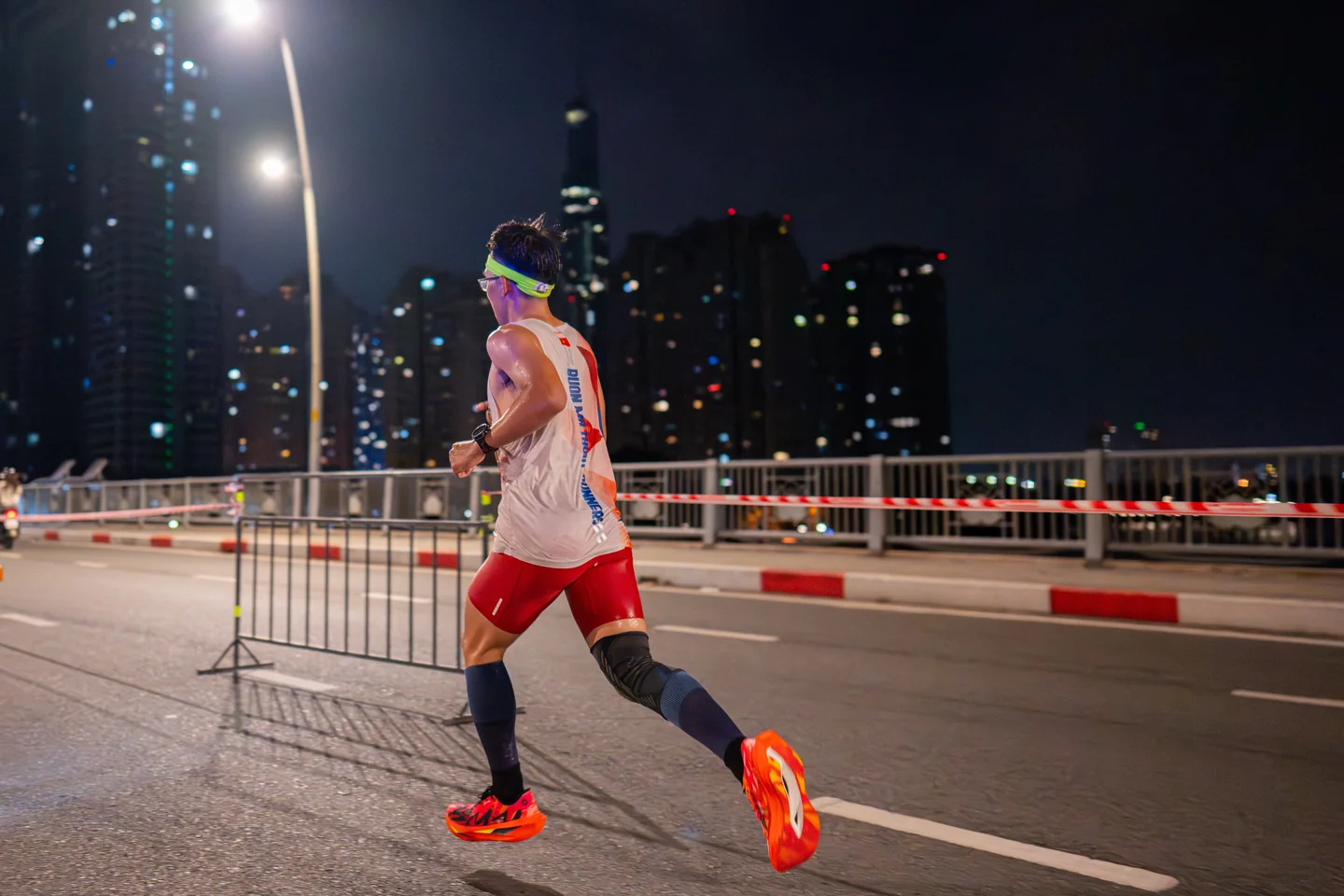
The Martín Fiz Marathon 2025 left behind a morning of mass participation athletics with a big-fest atmosphere and record figures in Vitoria-Gasteiz. The race, held on May 11, brought together thousands of runners from the shared start of the different distances and confirmed that this event is already playing in another league within the Spanish calendar: not only because of the name behind it, but because of the mix of competitiveness, civic atmosphere, and charitable spirit that surrounds it.
On the sporting side, the 2025 edition standings had very clear standout names. Ander Barrio won the marathon in 2:33:17 and Ane Alberdi was the best in the women’s category with 2:53:13, while Ander Uribe and Marta Romero led the half marathon. In the 10-kilometer race, Luis Pérez and Nati García were the winners, and in the 5-kilometer race Alberto Bellosillo and Fernanda Fleischmann stood out. The standings, beyond the times, paint a very recognizable picture of current running: local elite, club runners, ambitious recreational runners, and families sharing the same course.
A May midday that shaped the podium
The start was clean, massive, and simultaneous for all distances, a decision that turned the first minutes into a parade of colors and paces. The clock showed 8:30, and Vitoria still had that fresh spring light that favors long days. From Paseo de Cervantes, the human tide moved forward cautiously at first, aware that a race like this is not won in the first meters, but by managing the legs, the wind, and the mind well.
A reading of the standings shows an important fact: the course rewarded patience. The wind appeared as the hours went by and punished the second half of the marathon especially, so those who pushed too hard paid for that extra effort in the final stretch. This was not an edition of impossible times, but of intelligent races, endurance, and know-how. That also explains why the winners spoke more about sensations than about a display. Winning here required running with the right plan, not just with fast legs.
Ander Barrio’s victory carried an extra symbolic weight. The Vitoria-born athlete recorded 2:33:17 and reaffirmed his bond with a race he had already won in 2022. The local crowd immediately recognized that home victory, one of those wins celebrated with a mix of sporting pride and closeness. In the women’s race, Ane Alberdi completed the 42.195 kilometers in 2:53:13 and managed to resist the push of Verdeliss, who had led part of the course before finishing second in 2:57:00. The women’s podium was completed by Jone Galán in 3:17:21.
The marathon distance: craft, wind, and a local victory
In the queen distance, the margin between running fast and running well was very clear. Ander Barrio crossed the finish line with a lead based on solidity, not on explosiveness. The athlete later acknowledged that he wanted to go under 2:30, but the day’s conditions forced a different plan. That detail matters because it explains the standings better than the simple clock time: mass participation road races do not always follow training charts, and the wind in Vitoria acted as a silent judge.
The men’s marathon was completed by Miguel Araque in 2:41:38 and Alberto Martínez in 2:42:56, two times that confirm a notable level behind the winner. The depth of the standings speaks well of the race’s appeal, capable of bringing together runners who perform solidly at serious times. For a city marathon, that intermediate layer is essential: it marks the difference between an event with just one bright name and one with a true competitive ecosystem.
In the women’s category, Ane Alberdi built her victory through a mature reading of the race. Verdeliss’s early advantage at the halfway point did not become a sentence, and that says a lot about how the day unfolded. Alberdi knew how to wait, push when needed, and take advantage of the tougher second half. The marathon was decided by management, a less flashy word than attack, but much truer to what happens when the pavement starts to weigh on you and the air gives nothing away.
Verdeliss, second in 2:57:00, once again offered a very recognizable image for the general public: brave start, constant presence, and the ability to sustain the effort to the end. Her name adds media attention, but it does not overshadow the essential point: the victory belonged to a local runner who read the race better. That is one of the strengths of the Martín Fiz standings in 2025, which did not stop at a viral photo or the phenomenon of a single athlete, but instead delivered a solid and coherent athletic conclusion.
Half marathon and 10 kilometers: speed also matters
The half marathon provided a parallel story of great interest. Ander Uribe won in 1:10:41 and held off Víctor Guerra and Peru Robles, who completed a very tightly packed men’s podium. In the women’s race, Marta Romero took the win in 1:31:14, ahead of Marta Urbistondo and María Ayuso. These are not pure exhibition times, but they do show strong competitiveness in a race where the route and the wind also force every kilometer to be considered.
The presence of Vitoria-born athletes at the top reinforces an idea that is repeated in this event: the city does not only host the race, it also produces it. When the podiums are filled with local names, the event takes on a different texture. Runners from the area know the terrain, feel supported by their own people, and turn the standings into a kind of shared story. It is no coincidence that the half marathon also brings together many participants looking for a demanding distance that is still compatible with very different paces.
In the 10-kilometer race, Luis Pérez was the fastest of the men’s day with 1:14:04 in a very close battle right up to the final turn. Nati García took the women’s victory and left a striking image because of her emotional connection to the city and to the race. The 10K remains the most visible gateway for many runners, a distance that allows real competition without the full wear and tear of the marathon and that in this event works as a bridge between the mass atmosphere and sporting ambition.
The 5-kilometer race opened the field even more. Alberto Bellosillo and Fernanda Fleischmann were first across the line in a format designed to broaden the reach of the day. That 5K is no minor add-on: it is one of the elements that best explains why the race has grown so much. It allows different profiles to join in, from runners looking for intensity to those who simply want to enjoy the atmosphere and feel part of the celebration.
A standings list shaped by the scale of the event
The image of Vitoria-Gasteiz that Sunday was that of a city turned into a giant conveyor belt of runners. More than 4,000 participants, later more than 4,500 according to the summary released in other recaps of the day, took to the streets in club jerseys, groups of friends, families, and solo runners. The standings are only the visible tip of a much broader event, where traffic, the tram, volunteers, and the public all form part of the same mechanism.
That context helps explain why the sporting reading becomes more valuable when viewed broadly. The race does not just record times; it also organizes a city, changes its rhythm for several hours, and projects a very specific image of Vitoria as a host of major mass-participation events. The streets in the southern area, especially around Mendizorroza, and several points near Ariznabarra and San Martín, suffered closures and restrictions, a usual consequence in an event of this size. When a marathon reaches that level of participation, it is no longer just a competition: it is an urban operation that requires coordination and leaves its mark on daily life.
The final standings, therefore, should not be read only as a list of names ordered by times. They also reflect the success of a proposal that manages to bring together very different profiles without losing competitive rigor. There are runners who come to set a personal best, others to finish with dignity, others to run for solidarity, and others to test themselves over a new distance. That mosaic explains the event’s strength far better than any isolated figure.
The Txiki Race and the day’s charitable dimension
Amid the spotlight on the overall winners, the Txiki Race added a particularly valuable emotional layer. It was held in Parque del Prado and aimed at the youngest runners, with a charitable component that directed the proceeds to Aspanafoa, the association of families of children with cancer in Álava. Solidarity was not decoration, but one of the essential pieces of the day’s story.
That dimension changes how the overall standings are perceived. Not everything is measured in wins, podiums, or pace averages; what also matters is an event’s ability to build community and give something back to the environment that hosts it. The Txiki Race turned the morning into a broader experience, in which sport ceased to be just performance and became participation. For many families, that part is worth as much as a victory, because it introduces the youngest children to a culture of effort that does not exclude closeness or a social cause.
The Martín Fiz marathon has always had that dual heartbeat: competitive and human. In 2025, it remained intact. While the front-runners gritted their teeth in the final kilometers, other participants walked toward the finish line with the medal as a reward for persistence, and many more watched their children run a few meters in Parque del Prado. The official standings organize the result; the city, in contrast, remembers the full emotion.
What the standings say about the state of mass running
The 2025 edition left another clear signal: Spanish mass running thrives on races that combine identity and variety. A marathon with a half marathon, 10K, 5K, and children’s race not only multiplies participation, it also multiplies motivations. That mix keeps the standings alive because it prevents interest from depending on a single leader or a single distance. When a race is well organized, each start creates its own story and each finish its own order.
The presence of athletes known to the general public, such as Verdeliss, adds a showcase, but the real journalistic value lies in the texture of the whole. A rich standings list is not measured only by first place; it is measured by its ability to offer reference points for runners of every level. Whoever ran 2:33, whoever finished in 3:17, whoever did a 1:31 in the half marathon, or whoever went under 16 minutes in the 5K found there a possible mirror, though different, for measuring their own effort.
The profile of the winners also matters. Barrio, Alberdi, Uribe, Romero, Pérez, and García represent a very recognizable cross-section of long-distance athletics: people who train consistently, who understand the value of good preparation, and who know how to suffer when the race demands it. Their victories do not need added drama; the times, the context, and the way they were achieved are enough. That sobriety is very journalistic because it leaves room for the truth of competition.
In terms of result analysis, Martín Fiz 2025 was a useful race for anyone following the Spanish long-distance calendar. It showed what happens when a fully committed city, a well-established organization, and a course that gives nothing away come together. The result was a broad, varied standings list with a very clear message: the best combination of pace, judgment, and endurance won.
A race that keeps growing without losing its signature
The strength of this race lies in having found a formula that is very hard to copy. It bears the name of a world champion, but it does not rely only on nostalgia or on a photo with the legend. It is sustained by a race structure that opens the door to different levels and, at the same time, preserves real demands for those aiming for a serious goal. That balance between mass appeal and sporting level is what keeps attention alive year after year.
The 2025 standings also confirm that Vitoria-Gasteiz has consolidated an event capable of attracting runners from within and beyond the Basque Country. There were athletes from many provinces and also international participants, a sign that the event now works as a reference beyond its immediate surroundings. The city gains visibility, the race gains depth, and the runner gains a recognizable competitive framework.
Ultimately, that is what explains why the day’s results are so interesting. It is not just about knowing who won, but about understanding what kind of race produced that outcome. And the answer is quite clear: a high-participation urban marathon, with wind, with strong local podiums, with distances for everyone, and with a charitable dimension that makes it more complete. The Martín Fiz 2025 standings were not an isolated fact; they were the sporting summary of an entire city running at the same time.
That is the kind of race that leaves a mark. Medals are put away, times are filed, and podiums are remembered, but what also remains is the feeling of having witnessed a morning in which the pavement was filled with purpose. Vitoria-Gasteiz once again showed that it knows how to turn a race into an event, and the final standings served to bring order to a day that, for hours, was pure movement, breathing, and endurance.
You may also like: Vitoria Half Marathon 2025 standings: this is how it ended.
Official results: maratonmartinfiz.com.



How to prevent thigh chafing: causes and real solutions

Women’s running windbreakers: seven jackets and how to choose

Do more workouts get rid of soreness? A guide for runners

Jaén Half Marathon 2026: Record 3,800 Runners Registered

Men’s short running tights: how to choose the right pair

World Triathlon confirms data breach involving medical data

Izan Edo targets podium at Miyazaki World Cup

María Pérez ranks ninth in World Athletics’ 2026 top ten

Dos Santos, Duplantis and Sawe: World Athlete of the Year finalists

San Silvestre Vallecana 2026: 42,000 places, prices and start times

 Races3 months ago
Valencia Half Marathon 2027: date and registration

 Races3 months ago
Valencia Marathon 2026: entry, ballot and course

 Reviews and Comparisons4 months ago
Asics Gel-Roadmiles 3 for men: review and current price

 Reviews and Comparisons4 months ago
Asics Gel Sonoma 8 Gore-Tex: complete analysis for trail and rain

 Sneakers3 months ago
Saucony Endorphin Pro 4: full review and verdict

 News5 months ago
Strava API 2026: what changes for clubs, challenges and runner apps?

 Reviews and Comparisons5 months ago
Nike Alphafly 3: opinions, sensations, and real key points

 Reviews and Comparisons4 months ago
Under Armour running shoes review 2025-2026: models and key features

 Sports Equipment4 months ago
Shoe sizes in cm: a clear guide to getting the right fit for your footwear

 Sneakers3 months ago
Skechers GO RUN Consistent 2.0 analysis: comfort and limits

 News5 months ago
Valencia Marathon 2026 route: key tips to train and run better

 Sneakers4 months ago
Adidas Adizero Boston 13 for men: review and verdict