Races
María Luisa Park Race 2025: key points, winners, and context
Thousands of runners filled the park, race bibs sold out, and the event ended with very close victories in Seville.

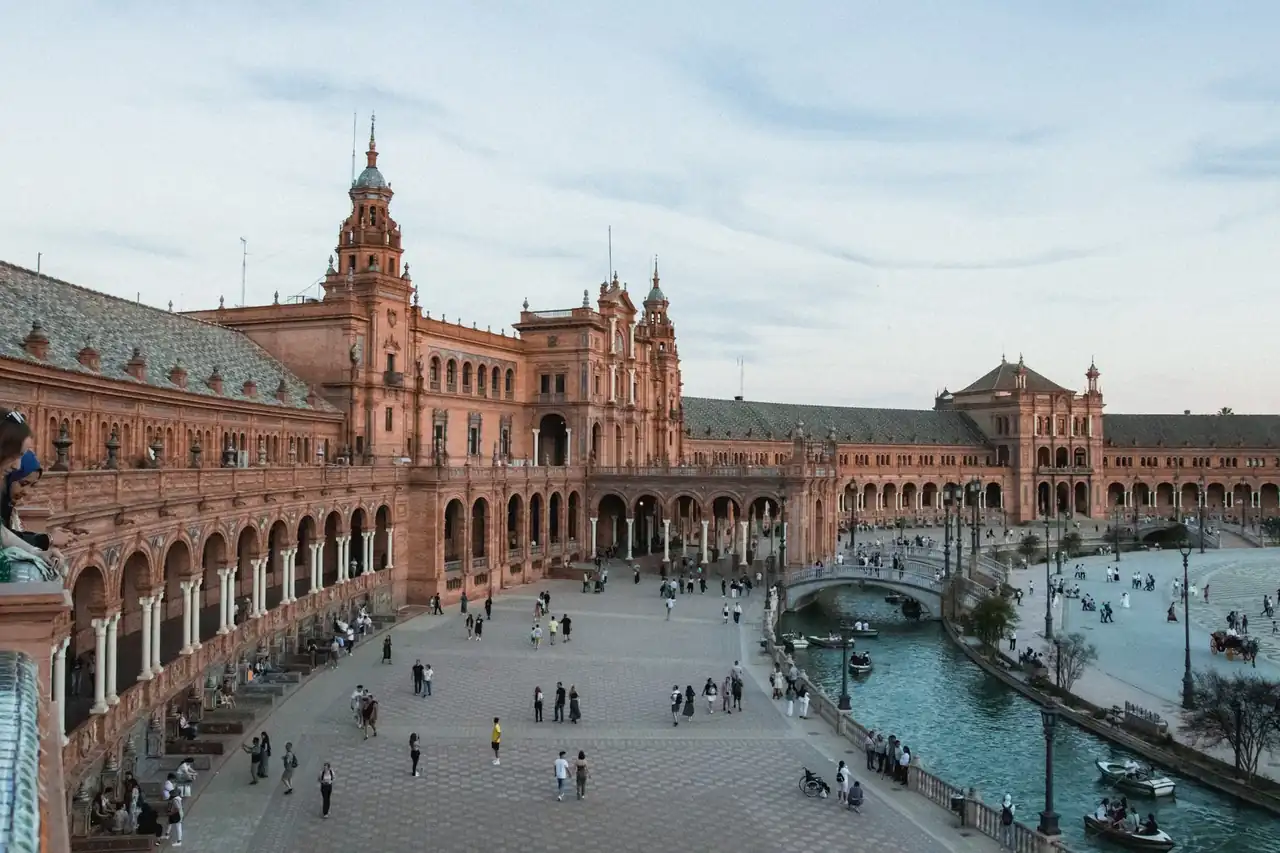
The Carrera Parque de María Luisa in Seville once again set the pace of the popular running calendar with a completely sold-out edition in its 5K and 10K distances, a familiar sight in the Andalusian capital: a historic park turned into a backdrop for strides, effort, and shared exertion. In the 2025 race, the overall winners were Adrián Andivia and Celia Romero, two names that neatly capture the tone of a fast, closely contested day decided by narrow margins.
The event also confirmed the importance of this race within Seville’s municipal circuit. It was not just another run in the park; it was the third stop in a calendar that each spring draws the attention of thousands of fans, closes its first stretch before summer, and once again places Seville among the major hubs of popular running in Spain. The combination of an urban route, green surroundings, and massive participation explains why demand for bib numbers usually far exceeds the available supply.
A park turned into a benchmark circuit
María Luisa Park offers a different picture from other urban races. It is not an endless straightaway or a boulevard open to the wind, but a space of shade, gentle bends, and monumental landmarks that forces runners to think as much as to push with their legs. The park’s architecture and dense vegetation soften the visual harshness of the effort, though they do not lessen the demands of a course that rewards consistency and punishes sudden changes of pace.
That character explains part of the race’s appeal. Recreational runners find a friendly route to enjoy, but the more competitive athlete knows that a well-managed circuit can decide victory in the final stretch. In 2025 that was clear again: the gap between first and second place in the men’s race was just eleven seconds, and in the women’s race the margin was even smaller. The race was not decided by a landslide, but by endurance, tactical reading, and finishing power.
The organizers placed the start and finish in the park area, a setup that boosts the atmosphere and concentrates the crowd in a recognizable spot for locals and visitors alike. That kind of arrangement also allows the race to function both as a sporting showcase and as a small civic event. Popular races are not only about the clock; they are also about the sound of applause, the murmur of families, and that choreography of shirts, heart-rate monitors, and footsteps that makes every Sunday unique.
A men’s victory decided in the final stretch
Adrián Andivia won in 31:21 in a race that gave him no room to comfortably manage his lead. Behind him, Mario Gil crossed the line in 31:32 and Miguel Ángel Barrera completed the podium in 31:35. The top three finished just fourteen seconds apart, a precise snapshot of the race’s competitive level, where any hesitation in the final kilometer could alter the finishing order.
That finish has sporting value and narrative value too. Andivia held a very high pace and knew how to respond when the race tightened. Gil, who led at times, came close to victory but did not secure it. Barrera, for his part, maintained a solid rhythm to claim third place on the podium. In events of this kind, where fatigue multiplies because of the density of the field and the course’s bends force runners to read every meter, victory usually belongs to the one who interprets the finish best.
A time of 31:21 places the winner in a very strong bracket for a popular 10K, even more so in a mass-participation urban setting. There is no need to overstate the figure to understand its significance: it is a fast, serious mark that is hard to sustain when the circuit is crowded with runners at different paces. Seville once again offered a setting where the local elite and recreational athletes share space, though not necessarily speed.
Romero secured a narrow win in the women’s race
The women’s event produced one of the day’s best moments. Celia Romero won in 37:01, followed very closely by Cinthya Ramírez, who finished in 37:11, and Laia Gonzalez, third in 38:33. Ten seconds separated first and second, a minimal gap that speaks to a duel sustained almost to the finish mat. There was no easy jog to the line, no comfortable cushion: there was sporting tension right to the end.
Romero confirmed in Seville a dominance built more on consistency than on a sudden surge. When a women’s race is decided by such a small margin, the merit lies not only in accelerating, but in maintaining the right form when the body is already asking for respite. Ramírez pushed until the finish and turned the closing stretch into a clean chase, without drama but with intensity. Laia Gonzalez completed the podium with a very competitive time, rounding out a strong top three and keeping the race within the demanding standard that the circuit has been setting.
The picture left by this women’s finish is valuable because it neatly sums up the spirit of the event: a city that supports, broad participation, and sporting competition that does not reduce the race to a mere celebration. The event’s popularity does not diminish its competitive appeal; on the contrary, it adds depth. The more runners there are, the harder it is to run cleanly, choose space wisely, and manage effort in a park that, beautiful as it is, also demands racing intelligence.
Handbike and competitive diversity on the same day
One of the features that most enrich this event is the presence of the handbike category, which adds visibility and diversity to the day. Javier Reja won the men’s race in 21:10, while Susana Marín prevailed among the women in 47:26. The race thus expands beyond the overall standings and builds a program that recognizes different ways of competing and moving over the same course.
Handbike introduces a different sporting language, but one that fits perfectly into the same civic story. The sight of these bikes powered by the upper body adds rhythm and variety to the whole and reminds us that modern popular running is no longer understood as a single, homogeneous experience. Here too María Luisa Park provides a pleasant setting, with the crowd close by and enough visibility to follow every effort from several points along the route.
From an editorial standpoint, this dimension matters because it gives the event more depth. A race that only crowns the fastest finisher may be useful for the stopwatch, but an event that brings together different races, ages, and profiles gains social weight. The value of the day lies not only in the winners, but in the breadth of participation and in the feeling that the city recognizes itself in a shared sporting gesture.
Sold-out bibs and ever-growing demand
One of the most significant facts from the 2025 edition was that bibs sold out for the 5K and 10K distances. In practice, that means demand exceeded available capacity and the race once again operated as a highly attractive event within the Seville circuit. A full field is not just a logistical anecdote; it is a sign of sporting and social health.
Popular races that reach this level of interest usually combine several ingredients at once: a recognizable route, stable organization, a date well placed in the calendar, and an environment that encourages even those not chasing a time to participate. María Luisa Park brings these elements together naturally, which has made it a reference point. The race offers enough prestige for the experienced runner and enough atmosphere for those seeking a sporty day without drama.
In the 2025 edition, that combination was reinforced by the fact that the race closed the first cycle of competitions before the summer break. The effect is twofold: on one hand, it becomes a kind of full stop within the calendar; on the other, it leaves a sense of continuity that will resume in autumn. The circuit is not exhausted in one spring morning, but stretches out like a sporting narrative across neighborhoods and dates.
This race’s place within the Seville circuit
The María Luisa Park event was part of the municipal circuit organized by the Seville City Council, a structure that spreads popular interest throughout the year and reaches different parts of the city. Before this stop, the calendar had passed through Triana-Los Remedios and Cerro-Amate, so the city approaches running as a mosaic of neighborhoods, identities, and routes. Each race brings its own landscape, but all share the same logic of mass participation.
This format has a very clear effect: it prevents interest from being concentrated in a single major date and creates a recognizable sequence for those following the circuit. Runners are not only competing against the clock; they are also, symbolically, competing for positions within a longer story. The third race of the calendar usually serves as a hinge between the start of the season and the summer break, and that is why María Luisa carries special value. It neither opens nor closes the year, but it does leave a visible mark on the standings and on the city’s sporting conversation.
In 2025, that continuity was further underlined by the later schedule. The circuit will return in October with two final races, one in Nervión-San Pablo and another in the Old Town. That late return prolongs interest and keeps alive an urban race ecosystem that, in Seville, has managed to establish itself over the years. The park race is not understood in isolation, but as a central piece of a calendar that gives identity to local running.
What makes the race appealing to recreational runners
Beyond the podiums, the race is appealing because it offers a balanced experience. It does not impose extreme difficulty, nor does it fall into the monotony of a flat, soulless route. It strikes just the right balance between speed and scenery, between competitiveness and enjoyment. For many recreational runners, that balance is worth as much as a good time. The feeling of running among trees, monuments, and a very present crowd lingers in the memory as much as the final time.
The format also matters. The 5K and 10K distances give the event two different entry points: one for those starting out or preferring a shorter effort, and another for those seeking a serious test on urban asphalt. That duality broadens the participant profile and explains why bibs usually fly. In the same day you can find a debut, a personal-best attempt, and a battle for leading positions. It is both a neighborhood race and a reference event for more ambitious runners.
The setting of María Luisa Park also carries symbolic value that should not be underestimated. Running there means crossing one of Seville’s great spaces at a different pace, as if the city were agreeing, for a few hours, to measure itself against the stride of its runners. The monumental history of the site, the greenery of its avenues, and the proximity of Plaza de España make each edition very photogenic, but also deeply recognizable for anyone who experiences sport as part of urban culture.
What the 2025 edition leaves for the road ahead
The 2025 edition leaves several takeaways. The first is sporting: the winners prevailed convincingly, but without breaking the race apart, and the podiums were tightly packed. The second is organizational: the sold-out field confirms that demand remains strong and that the race still has immense pull among recreational runners. The third is symbolic: Seville keeps alive a circuit that no longer depends on a single date, but on a sporting culture spread throughout the city. The race serves as a participation barometer and as a showcase of local identity.
It also offers a simple lesson about the value of well-established urban races. When an event combines history, accessibility, atmosphere, and competitive level, it ends up going beyond the strictly sporting frame. It becomes a shared habit, a date marked on the calendars of thousands of people who may not be chasing podiums, but do want to be part of a collective scene. That is where much of this Seville event’s strength lies. It is not just a fast race; it is a way of measuring how the city breathes when it runs.
María Luisa Park thus closed its spring chapter with a morning of visible effort, tight times, and participation that exceeded expectations. In the stopwatch, the names of Andivia, Romero, Reja, and Marín remained; in the atmosphere, the image of a Seville fully engaged with its most recognizable popular race in this green corner of the city. And in the memory of the calendar, the certainty that October will once again put that same urban pulse to the test.



How to prevent thigh chafing: causes and real solutions

Women’s running windbreakers: seven jackets and how to choose

Do more workouts get rid of soreness? A guide for runners

Jaén Half Marathon 2026: Record 3,800 Runners Registered

Men’s short running tights: how to choose the right pair

World Triathlon confirms data breach involving medical data

Izan Edo targets podium at Miyazaki World Cup

María Pérez ranks ninth in World Athletics’ 2026 top ten

Dos Santos, Duplantis and Sawe: World Athlete of the Year finalists

San Silvestre Vallecana 2026: 42,000 places, prices and start times

 Races3 months ago
Valencia Half Marathon 2027: date and registration

 Races3 months ago
Valencia Marathon 2026: entry, ballot and course

 Reviews and Comparisons4 months ago
Asics Gel-Roadmiles 3 for men: review and current price

 Reviews and Comparisons4 months ago
Asics Gel Sonoma 8 Gore-Tex: complete analysis for trail and rain

 Sneakers3 months ago
Saucony Endorphin Pro 4: full review and verdict

 News5 months ago
Strava API 2026: what changes for clubs, challenges and runner apps?

 Reviews and Comparisons5 months ago
Nike Alphafly 3: opinions, sensations, and real key points

 Reviews and Comparisons4 months ago
Under Armour running shoes review 2025-2026: models and key features

 Sports Equipment4 months ago
Shoe sizes in cm: a clear guide to getting the right fit for your footwear

 Sneakers3 months ago
Skechers GO RUN Consistent 2.0 analysis: comfort and limits

 News5 months ago
Valencia Marathon 2026 route: key tips to train and run better

 Sneakers4 months ago
Adidas Adizero Boston 13 for men: review and verdict