Races
María Luisa Park Race 2025: date, route, and key details
Seville sets schedules, route, and distances for a popular event with high demand and a family atmosphere.

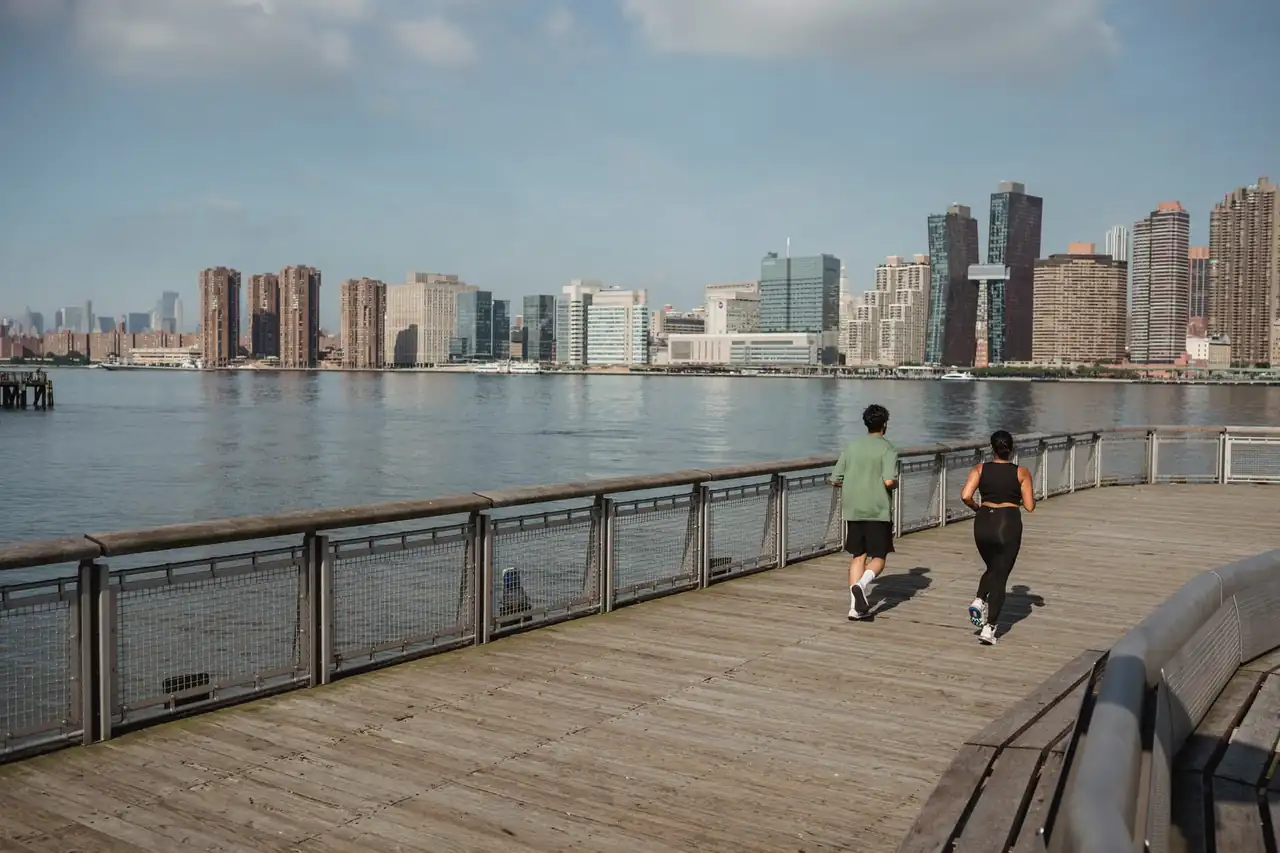
The Carrera Parque de María Luisa 2025 once again puts Seville at the center of one of its major popular running Sundays, with María Luisa Park and the surrounding avenues turned into a scene of high participation, fast pace, and a lively atmosphere. The race remains part of the city’s urban circuit and brings together distances for regular runners, first-timers, and schoolchildren on the same day.
The 2025 edition is marked by a fast course, a very well-established organization, and demand that often sells out race bibs in a short time. With the 10K start scheduled for 9:00 and a program that continues afterward with the 5K and school races, the event combines competition, popular participation, and a format designed to fill the whole morning with safe, orderly starts.
An event that is already part of Seville’s calendar
María Luisa Park is not just a backdrop. In this race, it serves as a central piece of Seville’s athletic calendar, a space that blends shade, wide avenues, and very recognizable urban links. That combination explains much of the race’s appeal: it is not a showcase race, but an event with its own identity within the municipal circuit.
The 2025 edition once again confirms that status as a recent classic. The race is part of the Divina Seguros #Sevilla10 Race Circuit, a series that spreads its season across several neighborhoods and parts of the city. Before reaching the park, the circuit will already have passed through Triana-Los Remedios and Cerro-Amate, so this stop keeps the competitive momentum going and brings together a large number of runners in an environment very familiar to local fans.
Beyond the names themselves, the appeal lies in the full experience. The route runs through areas many Seville residents recognize instantly, passes along wide avenues, and offers the feel of an open race, with fewer abrupt changes than other urban events. That consistency in the course favors steady paces and explains why the race attracts both those chasing a time and those simply hoping to finish a 5K comfortably.
Date, times, and start order
The official date is Sunday, May 10, 2026, although searches for 2025 usually refer to the María Luisa Park race within the same organizational format. For that specific edition, the program starts early and is structured in blocks, a formula that avoids overlap between distances and allows the day to run with fairly clean logistics.
The handbike start is scheduled for 8:30, although it may vary for organizational reasons. At 9:00, the 10-kilometer race begins and, once the last runner in the 10K passes the intermediate checkpoint located on Ramón Carande Avenue, the 5K gets underway. After that, once the main race has been resolved, the school races begin, starting around 10:30 and following one another by category.
The 10K awards ceremony is scheduled for between 10:00 and 10:30, approximately, while the school categories’ ceremony is set between 12:30 and 13:00. This staggered schedule makes the event a long morning, but a well-sequenced one, in which each group has its own space and the park never loses its movement. It is also worth noting that each race starts only once the last runner in the previous event has crossed the finish line.
The 10K and 5K course: fast, but not completely flat
The 10K starts on Borbolla Avenue and connects with Manuel Siurot, Cardenal Illundain, La Palmera Avenue, Paseo de las Delicias, La Rábida, Palos de la Frontera, Portugal Avenue, Doctor Pedro de Castro, Ramón Carande, Nuestra Señora de las Mercedes, Alcalde Juan Fernández, Ramón y Cajal, Ronda del Tamarguillo, Poeta Manuel Benítez, and Alfonso Lasso de la Vega, before returning via Cardenal Illundain and Manuel Siurot to the finish in Borbolla.
The 5K shares part of the final section of the 10K and is routed from Ramón Carande along the same return roads, with the finish also on Borbolla Avenue. The overall feeling is that of a course well suited to fast running, but with gentle pace changes and long straight sections that require careful energy management. It is not a mountain race or a technical event, although the asphalt and the length of the effort do not forgive too much enthusiasm in the early kilometers.
That profile also makes this race a useful benchmark for those who want to measure their fitness over a manageable distance. The city supports the effort, the surface helps, and the atmosphere encourages pushing hard, but the key is usually not to get carried away at the start. In Seville, these popular races are often run with the head: starting too fast usually comes back to bite in the return stretch, especially when the heat begins to make itself felt.
Registration, bibs, and race pack collection
Registration for this edition opens on Tuesday, April 28, 2026. The deadline for group registration is set for Monday, May 4 at 23:59, while individual registration ends on Thursday, May 7 at 23:59. That time window sums up very well the huge interest the race usually generates, where high demand has been a constant for several seasons.
Race bib collection has two main windows at Torre Sevilla Shopping Center, in Plaza Alcalde Alfredo Sánchez Monteseirín, block 10, number 2. On Friday, May 8, race packs can be collected from 11:00 to 21:00, and on Saturday, May 9 from 10:00 to 16:00, continuously. On Sunday, May 10, it is only available for runners not residing in Seville city and with separate times: from 07:30 to 08:30 for the 10K and 5K, and from 09:00 to 10:30 for the school races, in a tent located in Spanish Army Square, next to Captaincy.
That differentiated organization avoids unnecessary queues and reminds us that the event moves thousands of people in a very short time. Added to this is a baggage check area set up near the start, open from 7:00 to 11:00, a simple but very useful detail on a morning when every minute counts. In a city race of this size, logistics matter almost as much as the legs.
A morning to compete, but also to share
The race is not just about the front-runners. A major part of its success lies in the mix of participants: experienced runners, enthusiasts chasing a time, families coming to watch the school races, and handbike athletes completing the competitive offering. That diversity gives the day a broader tone than a simple results list.
The event’s very design helps make that coexistence possible. The 10K opens the program, the 5K brings in those who prefer a shorter distance, and the school races extend the morning with age-based categories. Cadet, child, under-10, under-8, and under-6 gradually come into play as the main race fades, turning María Luisa Park into a kind of small athletic fair with different paces and ages sharing the same space.
In that context, the race is better understood as a city event than as an isolated appointment. Seville uses it to reinforce its image as a capital of popular running, and María Luisa Park adds the extra value of the landscape: trees, avenues, urban geometry, and an atmosphere that, while not silent, is friendlier than that of harsher traffic-heavy settings. The setting is recognizable, memorable, and repeated, and that is where much of its strength lies.
What the circuit offers runners
The #Sevilla10 circuit is designed to test runners without overly punishing them. Most of its venues share a common idea: well-connected urban routes, massive but organized starts, and an approach that allows competition at different levels. In practice, that means a single event can be used to chase a podium finish, compare paces, or debut a bib without fear of an unfriendly environment.
The Carrera Parque de María Luisa fits especially well into that philosophy. Its combination of long avenues, predictable turns, and sections that do not require excessive technique makes it one of the most rewarding events for sustained running. Those who arrive with a clear strategy usually benefit, because the race punishes disorder less than other more broken-up or narrower events.
Previous editions also leave a clear lesson: collective enthusiasm helps, but it does not replace effort management. The temperature, runner density, and Sunday-morning atmosphere can push people into starting too eagerly in the first minutes. In a race like this, the final time usually rewards those who know how to wait for their moment and keep a cool head as the park opens up toward the final stretch.
What the race usually leaves in the memory
The Carrera Parque de María Luisa has something of an athletic postcard about it. Not because it is artificial, but because it brings together elements that work well in memory: a recognizable start, a city fully engaged, a park with personality, and a finish that feels like shared effort. What remains in the mind are compact groups, applause on the corners, and that mix of heavy breathing and brief conversation that appears after crossing the line.
Results from previous editions also confirm that this is real competition. Winning in Seville in this setting requires running well below strolling pace and accepting that the race is decided by details. A well-timed change of pace, a breakaway at the front, or ten seconds of margin can decide everything, both in the men’s and women’s races, giving the event genuine sporting value beyond urban folklore.
The presence of handbike competition adds another layer of interest and underlines that the event is not limited to conventional athletics. The variety of participants, the importance of the categories, and the continuity of the circuit make the day a useful barometer of Seville running. And in 2025, with the same format as always and the park as the main stage, the race remains one of the easiest to identify and one of the hardest to confuse within the city’s popular calendar.
Seville, the park, and a race that keeps setting the pace
Some races are explained by their numbers and others by their place in the city. This one belongs to both categories. It brings together thousands of entrants, spans several distances, includes school categories, and maintains a level of interest that repeats year after year. But it also relies on a setting that means far more than a mere backdrop: María Luisa Park, with its urban memory and its ability to turn a May morning into a celebration of popular sport.
That is why the 2025 edition is best understood as a continuation rather than an isolated novelty. The runner finds a race with clear rules, defined times, a familiar route, and a city response that is usually up to the task. In a calendar crowded with events, that combination of order, atmosphere, and favorable course still makes the difference, and explains why this race retains so much importance in Seville.
In the end, the key lies in that mix of tradition and efficiency. The circuit moves forward, the park fills with life, and the city runs again on a morning that delivers effort, times, and memories. There is no need to add much more: when the bib is pinned on, the clock starts, and Borbolla Avenue takes the start, the race has already said everything it needed to say.



How to prevent thigh chafing: causes and real solutions

Women’s running windbreakers: seven jackets and how to choose

Do more workouts get rid of soreness? A guide for runners

Jaén Half Marathon 2026: Record 3,800 Runners Registered

Men’s short running tights: how to choose the right pair

World Triathlon confirms data breach involving medical data

Izan Edo targets podium at Miyazaki World Cup

María Pérez ranks ninth in World Athletics’ 2026 top ten

Dos Santos, Duplantis and Sawe: World Athlete of the Year finalists

San Silvestre Vallecana 2026: 42,000 places, prices and start times

 Races3 months ago
Valencia Half Marathon 2027: date and registration

 Races3 months ago
Valencia Marathon 2026: entry, ballot and course

 Reviews and Comparisons4 months ago
Asics Gel-Roadmiles 3 for men: review and current price

 Reviews and Comparisons4 months ago
Asics Gel Sonoma 8 Gore-Tex: complete analysis for trail and rain

 Sneakers3 months ago
Saucony Endorphin Pro 4: full review and verdict

 News5 months ago
Strava API 2026: what changes for clubs, challenges and runner apps?

 Reviews and Comparisons5 months ago
Nike Alphafly 3: opinions, sensations, and real key points

 Reviews and Comparisons4 months ago
Under Armour running shoes review 2025-2026: models and key features

 Sports Equipment4 months ago
Shoe sizes in cm: a clear guide to getting the right fit for your footwear

 Sneakers3 months ago
Skechers GO RUN Consistent 2.0 analysis: comfort and limits

 News5 months ago
Valencia Marathon 2026 route: key tips to train and run better

 Sneakers4 months ago
Adidas Adizero Boston 13 for men: review and verdict