Races
Marxa Solidària de Muntanya al Garbí 2026: date and route
Estivella will host a new edition of this charitable mountain event on Sept. 27 across the Garbí range.

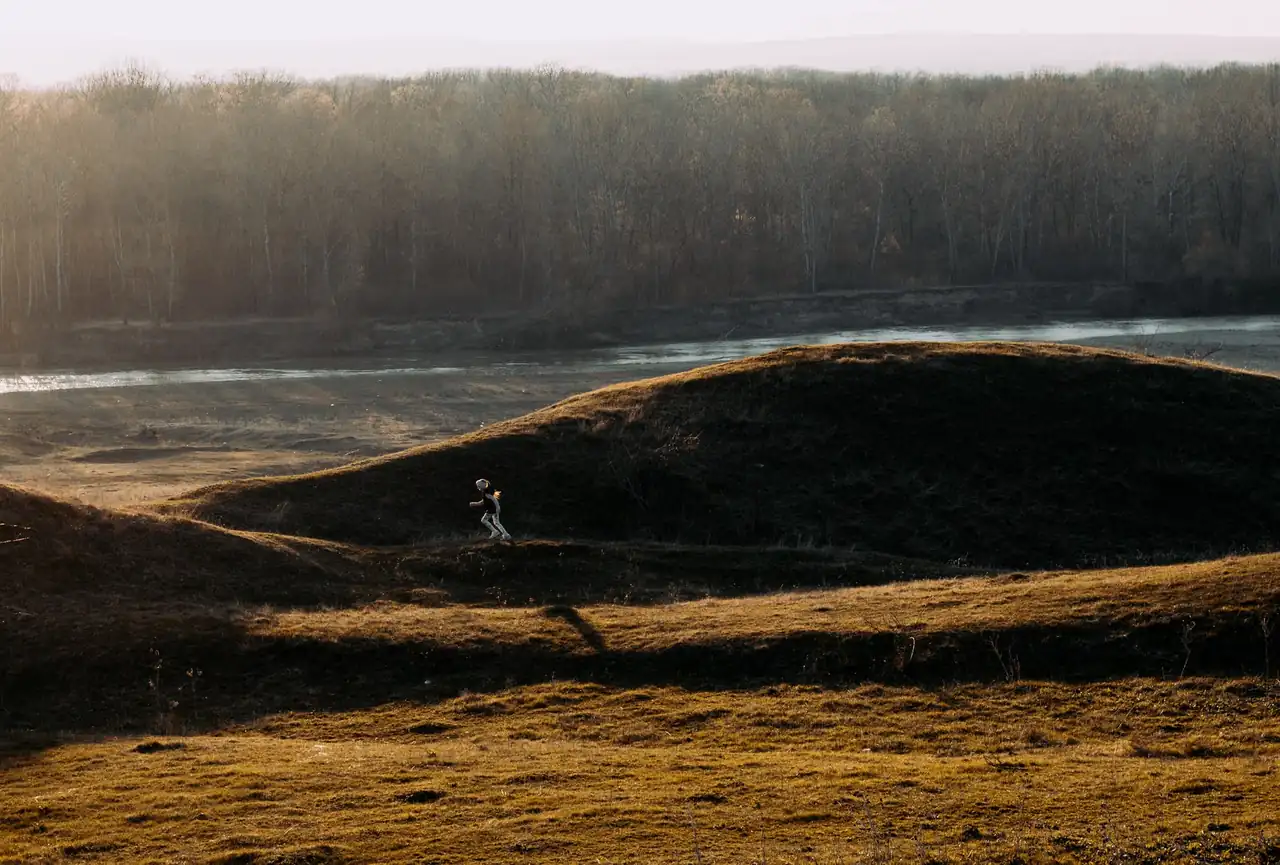
Estivella will host the 25th edition of the Marxa Solidària de Muntanya al Garbí on Sunday, Sept. 27, 2026. The 16-kilometer mountain event combines physical activity, scenery and social commitment. The start is scheduled for 8 a.m., with the Garbí range providing the setting for one of the most recognizable outdoor events in the Camp de Morvedre area.
The event reaches a meaningful anniversary after twenty-five editions. Available information places the celebration in Estivella and confirms an approximate distance of 16 kilometers over mountain terrain. Its charitable character is part of the march’s identity, although public details about the beneficiary cause, registration process, entry fee and complete 2026 regulations have not yet been released.
A well-established event in the Garbí range
Reaching a 25th edition represents more than administrative continuity. A mountain march depends on a delicate relationship between organizers, participants, paths and the landscape. The fact that the Estivella event has remained present for a quarter of a century makes it one of the area’s most established popular activities.
The march should not be confused with a road race or a certified urban circuit. Its appeal comes from moving along trails, tracks and mountain paths, where pace depends on gradient and surface. Walking on the steepest slopes is a normal part of the effort, while running becomes more practical on flatter sections and descents.
The name Garbí evokes a landscape closely associated with views across the Valencian coast. From the higher parts of the range, participants can see the Camp de Morvedre, farmland and, on clear days, the Mediterranean. The combination of proximity to Valencia and a sense of remoteness helps explain the appeal of an event held away from major urban settings while remaining accessible to many runners and hikers.
Date, schedule and host town
The 25th edition will take place on Sunday, Sept. 27, 2026, in Estivella, a municipality in Valencia province. The start is listed for 8 a.m., a suitable time for a mountain activity in late September because it normally provides cooler conditions and enough daylight before the warmest part of the day.
The start time also affects participants’ planning. Anyone travelling from Valencia or nearby towns will need to allow time for the drive, parking and possible bib collection if the organizers schedule that process on the morning of the event. The exact start location and bib-collection timetable still need to be confirmed in the official 2026 information.
Estivella lies in the Palancia Valley, in a transition zone between the coastal plain and the first elevations of the Calderona range. The town and nearby roads may experience unusual activity during the event, including participants, volunteers and support vehicles. Access and parking instructions will therefore be important parts of the final event program.
What is known about the 16-kilometer route
The announced distance is 16 kilometers. Although no official 2026 track has yet appeared in the reference information, the figure places the event in the middle range of popular mountain outings. It is not a short urban introduction, but neither is it an ultra or a long-distance trek. Difficulty will depend mainly on accumulated elevation, surface and the distribution of climbs.
On a route of this length, finishing times can vary widely. An experienced trail runner may run much of the course at a steady pace, while a hiker may complete it by alternating brisk walking and running. Sixteen kilometers alone do not define difficulty: positive elevation, highest point, time limit and the proportion of trails, tracks and paved sections are still unknown.
The Garbí landscape generally includes uneven ground, rocks, roots, tight turns and frequent changes of direction. Even when no climb is especially extreme, a succession of short ascents and descents can build fatigue in the quadriceps and calves. Reading the terrain matters as much as speed, especially on descents, where an overly long stride increases the risk of slipping or twisting an ankle.
The charitable march may attract very different participants, from people seeking to complete the course without competitive pressure to runners using it as training for other events. That mixture requires respect for each person’s pace and caution on narrow sections. In the mountains, passing is not always possible, and forcing a manoeuvre may affect both the person overtaking and the group occupying the trail.
The charitable purpose and event history
The social dimension distinguishes this march from many other mountain activities. Information available for the previous edition stated that the entry fee was allocated entirely to a charitable cause. That precedent helps explain the event’s purpose, but it does not establish which organization will benefit in 2026 or whether exactly the same fundraising system will continue.
Sporting charity events may operate through an entry fee linked to an association, a direct donation or cooperation with a local organization. To assess the contribution properly, regulations should explain where the funds go, how much is raised and how the transfer is made. Transparency about the cause and the use of registration fees is as important as sporting information, particularly in an edition carrying such symbolic weight.
The event also has its own memory through its tributes. Information released for the 2026 edition mentions the 19th Juan Correcher Correcher Memorial and the 18th Miguel Ángel Soriano Renau Memorial. These references place the march within a local history in which sport serves to remember people connected with the organizing community and the Estivella area.
An event with twenty-five editions is sustained by more than an attractive route. It requires volunteers, municipal coordination, crossing management, incident response and care for the paths. The march’s continuity highlights the value of local organization, which is less visible than large commercial races but essential to maintaining a varied Valencian mountain calendar.
Reasonable preparation for a mountain march
A 16-kilometer route calls for a sufficient aerobic base and some familiarity with elevation. There is no need to turn preparation into an elite training plan, but it is sensible to have completed outings on uneven ground of a similar duration. The body must recognize the difference between running on asphalt and moving along a trail where every foot strike changes slightly in height.
General preparation can combine easy runs, hilly walks and sessions that practise the transition between walking and running. Climbs allow participants to work on consistency without obsessing over pace, while descents develop control and confidence. The ability to regulate effort from the first kilometer is usually more useful than starting fast and facing fatigue in the second half.
Feet and ankles also deserve attention. Trail shoes provide more grip and protection than most urban models, although the choice should depend on the surface and each participant’s experience. Wearing new shoes on event day adds unnecessary risk because blisters and discomfort may appear several kilometers in, when there is little opportunity to correct the problem.
Pre-event nutrition should be familiar and simple. A normal breakfast taken with enough time is generally more reliable than testing new products before the start. On a 16-kilometer activity, needs vary according to duration, intensity, temperature and digestive tolerance. Hydration should begin before intense thirst appears, without forcing fluids to the point of causing discomfort while moving.
Useful equipment without an overloaded pack
Suitable equipment does not need to be bulky. Grippy trail shoes, tested socks and light clothing suited to the forecast cover much of what participants need. September mornings in Valencia province can still be warm, but wind and shade at higher elevations may change the perceived temperature within minutes.
A hydration vest or belt should fit securely to prevent bouncing. If the organizers confirm aid stations, the amount of water carried can be adjusted according to the distance between them and the day’s conditions. The 2026 information does not yet detail those stations, so aid should not be assumed to be guaranteed until it appears in the regulations or official event communication.
A cap, sunglasses and sun protection may be useful even with an early start. Open areas increase exposure, and pale ground reflects part of the light. Carrying a phone with enough battery is also sensible, although it does not replace course markings or instructions from organizers. The phone should be a backup resource rather than the only navigation tool.
Poles are not essential for 16 kilometers, but some participants use them to reduce leg strain on climbs. They require practice and consideration for others, especially on narrow trails. Carrying poles without knowing how to fold, store or coordinate them can become a nuisance. In an event with varied participants, simple equipment often supports a safer experience.
Safety, weather and respect for the landscape
The date places the event in the transition between summer and autumn. Heat may still be present, while weather patterns can be less predictable than in August. A cool morning does not rule out a significant rise in temperature during the route. The forecast in the days before the event should be checked carefully, particularly if it predicts storms, strong wind or unusual heat.
Late-summer storms can arrive quickly in mountain areas and affect rock grip. Organizers will determine safety measures, possible changes and whether the event can go ahead, but each participant must also assess their own condition. Turning back in time is a responsible decision, not a failure, when dizziness, sharp pain, disorientation or severe fatigue does not improve.
The Garbí is a landscape of ecological and scenic value. The march should remain on the authorized route, with no shortcuts or discarded waste. Wrappers, gels and small bottles weigh little in a pack but leave a disproportionate mark when abandoned on a trail. Respecting gates, vegetation, wildlife and other users of the countryside is part of taking part.
Caution also matters at crossings shared with hikers, cyclists and authorized vehicles. A popular event does not turn the entire mountain into a closed circuit. Instructions from volunteers should be followed calmly, and participants must stay alert where the course uses public paths. Collective safety also depends on individual behaviour that may seem minor but prevents incidents.
Registration and information still pending
The published event information confirms the date, time, town and distance, but it does not yet provide the entry fee or registration process. The participant limit, opening date, closing deadline, refund policy and included services are also unavailable. These details are normally defined in the regulations and online form when registration opens.
The lack of a confirmed fee means no figure should be presented as final. Previous charitable marches cannot be used to calculate the price because each organization manages fundraising differently. The registration amount should be checked through the official channel before any payment is made, together with the destination of the contribution and participation conditions.
It will also be important to know whether the activity is presented as a non-competitive march, a mountain race or a combination of both. The available sports listing identifies it as a mountain race, while its traditional name refers to a charitable march. That distinction may affect classifications, checkpoints, mandatory equipment and results, so the regulations will need to settle the issue.
Practical information normally includes the exact start location, bib collection, access times, finish services and downloadable route. Until those details are released, any description should distinguish between confirmed facts and pending information. This prevents participants from arranging travel based on details from earlier editions.
Its place in the Valencian mountain calendar
The Valencian Community calendar includes very different events: coastal road races, mountain ultras, hiking marches and small races organized by clubs or local associations. The Garbí event has its own place because of its moderate distance, its proximity to densely populated areas and its charitable focus. It can be a first step into mountain running for people who already have some experience away from asphalt.
Its late-September date can also serve as a transition into the autumn season. After the hottest months, many runners return to elevation and medium-distance events. The calendar, however, does not determine individual preparation. A 16-kilometer mountain march can be demanding for anyone unused to uneven ground, even if the distance seems accessible on paper.
Estivella’s proximity to Valencia makes the event reachable for runners from several metropolitan towns and the Camp de Morvedre. At the same time, it retains a local scale that allows participants to discover paths and landscapes less familiar to those who normally train in cities. This combination of accessibility and natural surroundings is a defining feature of many Valencian mountain events.
The value of these events is not measured only by finishing times. A popular race supports accommodation, shops and local services, brings families and clubs together and keeps paths in use as part of everyday heritage. The sporting result is recorded in a classification, but the impact of a mountain day extends through streets, squares and trails linking the town with the range.
A special edition for Estivella and the Garbí
The 25th edition carries clear symbolic weight. Such an anniversary offers a chance to look back, but also requires the relationship between sport and landscape to be updated. Mountains are not interchangeable backdrops: they face erosion, visitor pressure and changes in land use. An established event must protect the environment with the same attention it gives to times, bibs and checkpoints.
The 2026 event has a recognizable identity: a 16-kilometer distance, an early start, the Garbí setting and a charitable purpose. The regulations will need to define the actual experience of the day. The final route, beneficiary cause and official logistics will complete the information participants need.
While those details are being released, the event already marks an important date in the Valencian mountain calendar. Estivella will once again welcome participants willing to move across terrain that offers neither constant pace nor straight lines, but provides a direct connection with the landscape. Around the Garbí, every kilometer has a different texture: stone, earth, shade, slope and horizon.
The XXV Marxa Solidària de Muntanya al Garbí represents, above all, the continuity of a rooted initiative. Its value lies in bringing together exercise, local memory and solidarity without separating the sport from the place that makes it possible. Once the 2026 information is complete, participants will be able to finalize their plans with registration and route details; for now, the date, time, Estivella and 16 kilometers form the confirmed core of this edition.



How to prevent thigh chafing: causes and real solutions

Women’s running windbreakers: seven jackets and how to choose

Do more workouts get rid of soreness? A guide for runners

Jaén Half Marathon 2026: Record 3,800 Runners Registered

Men’s short running tights: how to choose the right pair

World Triathlon confirms data breach involving medical data

Izan Edo targets podium at Miyazaki World Cup

María Pérez ranks ninth in World Athletics’ 2026 top ten

Dos Santos, Duplantis and Sawe: World Athlete of the Year finalists

San Silvestre Vallecana 2026: 42,000 places, prices and start times

 Races3 months ago
Valencia Half Marathon 2027: date and registration

 Races3 months ago
Valencia Marathon 2026: entry, ballot and course

 Reviews and Comparisons4 months ago
Asics Gel-Roadmiles 3 for men: review and current price

 Reviews and Comparisons4 months ago
Asics Gel Sonoma 8 Gore-Tex: complete analysis for trail and rain

 Sneakers3 months ago
Saucony Endorphin Pro 4: full review and verdict

 News5 months ago
Strava API 2026: what changes for clubs, challenges and runner apps?

 Reviews and Comparisons5 months ago
Nike Alphafly 3: opinions, sensations, and real key points

 Reviews and Comparisons4 months ago
Under Armour running shoes review 2025-2026: models and key features

 Sports Equipment4 months ago
Shoe sizes in cm: a clear guide to getting the right fit for your footwear

 Sneakers3 months ago
Skechers GO RUN Consistent 2.0 analysis: comfort and limits

 News5 months ago
Valencia Marathon 2026 route: key tips to train and run better

 Sneakers4 months ago
Adidas Adizero Boston 13 for men: review and verdict