Races
Mexico City Marathon 2026: course, schedules and rules
Date, course, schedules, prices and conditions for Mexico’s major 2026 road race.

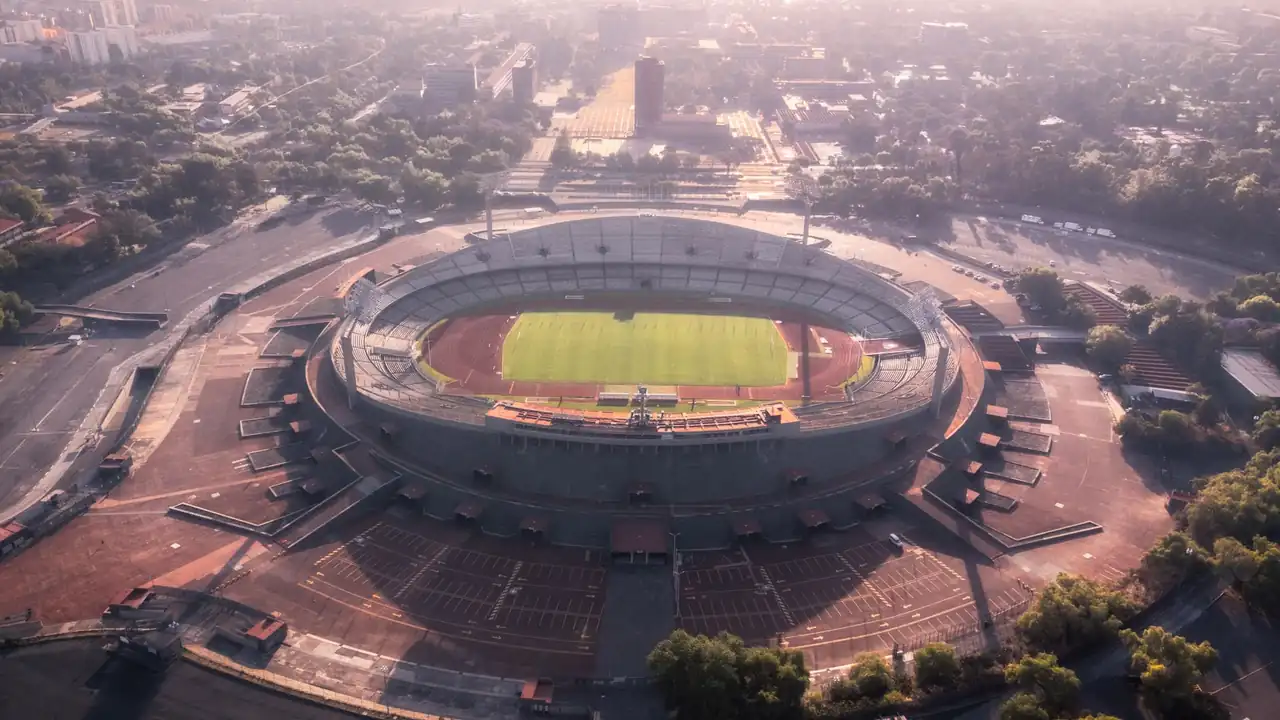
The 43rd Mexico City Telcel Marathon will take place on Sunday, Aug. 30, 2026, covering 42.195 kilometers from University City to the Zócalo. The race is expected to welcome up to 30,000 participants, with staggered starts beginning at 5:45 a.m. and a six-hour time limit. All information should be checked against the popular race calendar and the event organization, particularly because places appear sold out on one international registration platform.
The Mexican race combines elite-level sport with an exceptional urban itinerary through Insurgentes Avenue, Paseo de la Reforma, Chapultepec, Roma, Condesa, Polanco and the Historic Center. The course certified by World Athletics and AIMS is not completely flat and requires careful management of altitude, mid-course climbs and the final kilometers.
Marathon date, start and finish
The 2026 edition is scheduled for Sunday, Aug. 30. The start will be on Insurgentes Avenue, next to the Central Library and the UNAM Olympic Stadium, a venue built for the 1968 Olympic Games. The finish will be in Constitution Square, known as the Zócalo, in the heart of Mexico City’s Historic Center.
The organizers have planned several waves to prevent excessive congestion in the opening meters. Wheelchair athletes and runners with visual impairments will start at 5:45 a.m.; the elite women’s field will start at 5:50. Elite men and Block A will start at 6:00, while Blocks B and C will begin at 6:15 and 6:30, respectively. The assigned wave must be respected, since entering another block may lead to disqualification.
The difference between the start and finish requires advance planning. This is not a loop course that returns to its starting point: the race ends in the Historic Center, many miles from University City. Public transportation, road closures and access openings may change normal travel times during the morning.
A course among monuments and historic neighborhoods
The route follows one of the capital’s main arteries and uses its monuments as visual landmarks. After leaving the university area, runners travel along Insurgentes and connect with Paseo de la Reforma, passing landmarks such as the Angel of Independence, Torre Mayor and the Bosque de Chapultepec. The course also reaches Polanco, Roma and Condesa before heading downtown.
The final section leads toward the Bellas Artes area and the Juárez Hemicycle before reaching Constitution Square. The finish becomes a recognizable urban sequence: the noise of the avenues gradually gives way to historic facades and the open space of the plaza. The Zócalo finish is one of the defining features of this edition.
The published elevation varies depending on the measurement used, although available references place the course at a moderate profile, with an approximate gain between 65 and 109 meters. That figure does not tell the whole story. The route includes a more demanding section between kilometers 10 and 25 and a noticeable incline in the final 10 kilometers, when fatigue limits the ability to change pace.
Altitude, the factor that changes the race
Mexico City sits approximately 2,240 meters above sea level. For runners arriving from coastal cities or regularly training at low altitude, reduced oxygen availability can increase perceived effort even at apparently comfortable paces. Heart rate may rise earlier, breathing may become deeper and recovery between pace changes may take longer.
Altitude does not automatically make the course extreme, but it changes how times should be interpreted. A result achieved there should not be compared without qualification with one recorded at sea level and under different weather conditions. Caution during the first half is often more valuable than chasing an ambitious pace from the opening kilometers.
August also coincides with the rainy season in the Mexican capital. Conditions may include overcast skies, high humidity and intermittent showers, although early-morning temperatures are usually more manageable than those at midday. The combination of initial coolness, humidity and altitude can mislead runners: a lack of intense heat does not mean energy expenditure is low.
Schedules, categories and eligibility
The race call is open to people who will have turned 18 by race day. General classification is organized by gender and age groups, beginning with ages 18-34 and continuing in five-year brackets through 65 and older. Wheelchair athletes and runners with visual impairments in T11, T12 and T13 classifications are also included.
The elite category has a separate entry process and is limited to a maximum of 100 athletes per gender. International elite athletes must provide endorsement from their relevant federation and proof of immigration status. For other foreign runners, travel documents and valid identification are part of the usual checks for an international race.
In the visual impairment categories, organizers require original medical documentation issued or endorsed by public institutions, along with the relevant classification forms. T11, T12 and T13 athletes must run with a guide under the conditions stated in the race call. The specific requirements cannot be substituted: a standard entry does not replace the certificates required for these divisions.
Registration, prices and place availability
The official call set an initial price of 850 Mexican pesos for national participants. A fee of 125 U.S. dollars was published for foreign athletes, while the Expo Marathon information indicated a price of 1,200 pesos for participants registering or completing procedures during that period. Some international platforms also displayed fees close to 131 dollars, so the final price depends on the channel, nationality and registration date.
National entries were handled through Emoción Deportiva and Martí stores, while the international platform Race Roster published categories for foreign runners. The call lists Wednesday, Aug. 26, as a deadline for certain channels and Saturday, Aug. 29, at 4 p.m. for the Expo, or earlier if capacity is reached. Registration may close before the announced date if the 30,000-runner limit is reached.
The reference information shows a situation that should be distinguished: some pages describe registration as open, but Race Roster marks the event as full and shows the international categories as sold out. Availability should therefore not be assumed and may vary by category. Once assigned, the bib is personal and nontransferable and is linked to the timing chip.
Timing controls and the six-hour limit
The official time limit is six hours, equivalent to an approximate pace of 8 minutes and 30 seconds per kilometer. Runners who do not maintain that average may be removed by the sweep vehicle and taken to the finish, but they will not appear as official finishers. Completing the full 42.195 kilometers within the limit is essential for a valid result.
The timing system uses a tag linked to the bib and several checkpoints distributed around the course. Passing over the electronic mats allows organizers to verify that an athlete completed the full route. An incomplete record, an unusual sequence or a missing checkpoint may lead to a review and subsequent disqualification.
The bib must be worn visibly on the front of the body, approximately at chest height. Runners are also advised to write their name, blood type and any relevant allergy or medical condition on the back. Event medical coverage may depend on the participant correctly wearing the official number.
Why organizers monitor the course so closely
The marathon has a recent history of mass disqualifications. In 2017, 5,806 participants were excluded, while the figure reached 3,090 in 2018. In 2023, around 11,000 of the 30,000 entrants were removed from the official classification for failing to complete the required route or producing records inconsistent with checkpoint passage.
These figures explain why runners must remain on the course, avoid shortcuts and not re-enter from another point. Accompanying registered runners without an entry, using a fake bib or crossing the finish without passing all checkpoints may also be considered violations. Timing technology is not decorative: it protects competitive fairness and validates every runner’s result.
The strict rules may seem uncomfortable to someone who views the marathon only as a participation experience, but the event brings thousands of athletes onto restricted urban roads. A shortcut of a few hundred meters changes the standings and can affect services intended for runners who meet the conditions. Organizers may also ban future participation in races connected to the marathon brand when a fraudulent bib is detected.
Race services and the finish-line experience
Official participants have access to aid stations assigned to their bib and to the recovery area at the finish. After crossing the line, runners are expected to receive a medal, fruit, water and an isotonic drink. These services are reserved for athletes with an official number, a measure designed to control capacity and ensure supplies reach registered runners.
The shirt included in the race package depends on availability and distribution by the organizers. The size entered during registration is used for statistics but does not guarantee that the runner will receive that exact size. Packet pickup is scheduled at the Expo Marathon from Aug. 27 through Aug. 29, 2026, according to the published information.
The atmosphere changes from one section to another. University City is defined by the openness of the Olympic venue; along Reforma, spectators gather around monuments and broad avenues; downtown, the finish at the Zócalo feels more compact and monumental. The race also works as a journey through the city’s urban memory, from the university architecture to the country’s historic and political center.
More than four decades of history
The marathon was created in 1983, at a time when interest in long-distance racing was growing in Mexico. During its first decades it was mainly a national competition, but it gradually attracted international athletes from Kenya, Ethiopia, Peru, the United States, Russia, Lithuania and Bolivia. That evolution reflects Mexico City’s consolidation on the international road-racing calendar.
The race received Gold Label status from the then-IAAF in 2018 and remains a prominent event in Latin American road running. Its winners include Mexican athletes and African specialists who have made the course a regular high-performance stage. The race began as a national competition and acquired a global dimension.
Historical records cited for the event include Bolivian Héctor Garibay’s 2:08:23, set in 2023, and Ethiopian Amane Beriso’s 2:25:04 in 2022. The winners list also highlights María del Carmen Díaz’s four victories and Kenyan Hillary Kipchirchir’s three wins. These figures help show the course’s demands, although conditions can change from one edition to another because of rain, temperature, crowd density and race strategy.
Mexico City’s international dimension
The race call expects national and foreign runners in a city offering an unusual mix of altitude, urban density and heritage. The course moves through neighborhoods with very different identities, from the university zone and major financial corridors to residential districts and the Historic Center.
For a European athlete, travel adds variables absent from a local race: time-zone adjustment, long transfers, different weather and an altitude that can affect early training. It is not enough to carry over a target pace from another marathon. The Mexican capital’s physiological context must be part of the overall planning, particularly for runners arriving from sea level.
The event weekend includes activities linked to the marathon, such as the Expo, a cycling ride and children’s races. These events broaden the race’s presence across the city, but they do not change the official distance of the main competition. The sporting focus remains the 42.195 kilometers between UNAM and the Zócalo.
What to check before traveling
The first check should be the actual registration status and the channel used to enter. Fees, capacity and closing dates are not identical for national and international runners. It is also important to keep payment confirmation, review the assigned wave and check the final Expo instructions.
Accommodation requires a practical decision. Staying near the start makes the early transfer easier but means solving transportation from the finish; staying downtown simplifies the return after the race but requires traveling before dawn to University City. The start and finish are separated, a detail that completely changes race-day logistics.
Clothing should suit a potentially cool and humid morning, while also allowing for rainfall and changing sensations over several hours. Race equipment, identification and documents should be prepared the night before. A race beginning before 6 a.m. requires arriving with enough time to pass through controls and find the assigned wave without rushing.
A monumental finish for a demanding race
The 43rd Mexico City Telcel Marathon is defined by more than its monuments and large field. Its appeal lies in the combination of a certified course, a huge city and a physiological challenge shaped by altitude. The route offers constant visual stimulation, but it also punishes pacing mistakes once the climbs appear and many kilometers remain.
The 2026 edition retains the structure of one of Latin America’s major urban races: an Olympic start, historic avenues, electronic checkpoints, inclusive categories and a finish in a meaningful public square. Organizers announce 30,000 places and a six-hour limit, while registration status should be checked through each channel because published information is inconsistent.
When runners cross the Zócalo, they will have covered much more than a regulated distance. They will have moved from UNAM’s murals and facilities to Reforma’s monumental avenues and the architecture of the Historic Center. The race ends in a square, but its route tells the visible story of an entire city.



How to prevent thigh chafing: causes and real solutions

Women’s running windbreakers: seven jackets and how to choose

Do more workouts get rid of soreness? A guide for runners

Jaén Half Marathon 2026: Record 3,800 Runners Registered

Men’s short running tights: how to choose the right pair

World Triathlon confirms data breach involving medical data

Izan Edo targets podium at Miyazaki World Cup

María Pérez ranks ninth in World Athletics’ 2026 top ten

Dos Santos, Duplantis and Sawe: World Athlete of the Year finalists

San Silvestre Vallecana 2026: 42,000 places, prices and start times

 Races3 months ago
Valencia Half Marathon 2027: date and registration

 Races3 months ago
Valencia Marathon 2026: entry, ballot and course

 Reviews and Comparisons4 months ago
Asics Gel-Roadmiles 3 for men: review and current price

 Reviews and Comparisons4 months ago
Asics Gel Sonoma 8 Gore-Tex: complete analysis for trail and rain

 Sneakers3 months ago
Saucony Endorphin Pro 4: full review and verdict

 News5 months ago
Strava API 2026: what changes for clubs, challenges and runner apps?

 Reviews and Comparisons5 months ago
Nike Alphafly 3: opinions, sensations, and real key points

 Reviews and Comparisons4 months ago
Under Armour running shoes review 2025-2026: models and key features

 Sports Equipment4 months ago
Shoe sizes in cm: a clear guide to getting the right fit for your footwear

 Sneakers3 months ago
Skechers GO RUN Consistent 2.0 analysis: comfort and limits

 News5 months ago
Valencia Marathon 2026 route: key tips to train and run better

 Sneakers4 months ago
Adidas Adizero Boston 13 for men: review and verdict