Races
Midnight Sun Marathon: Arctic race under the midnight sun
Tromsø turns an urban race into an Arctic experience with the midnight sun, mountains, and a great atmosphere.

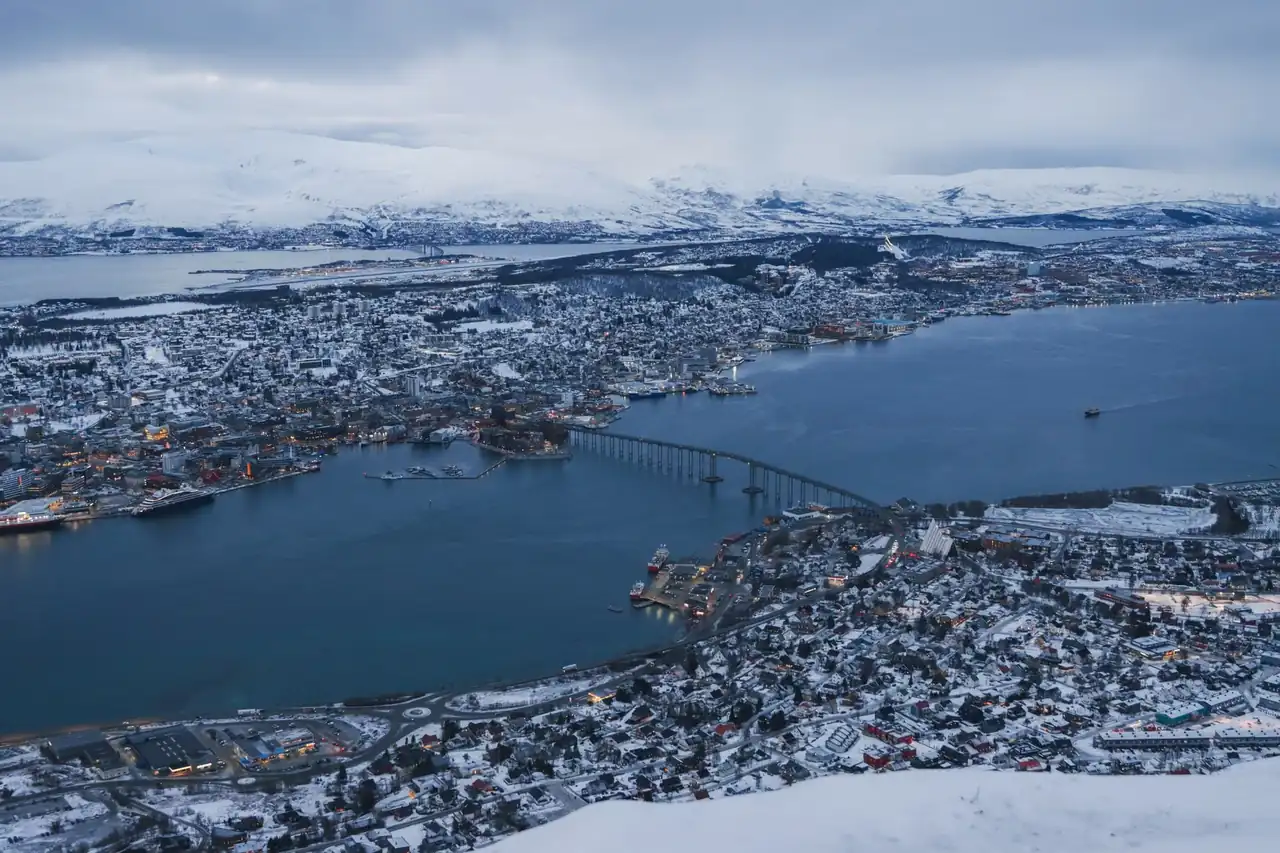
Midnight Sun Marathon is not just a long-distance race in Norway: it is an urban race turned into an Arctic postcard, with the sun still above the horizon when elsewhere the streetlights have already gone out. Tromsø, more than 300 kilometers north of the Arctic Circle, sets the stage; the streets, the bridge, the harbor, and a light that seems never to want to leave do the rest.
The race has gained importance on its own merits. In 2026 it brought together 9,000 runners from 97 countries, a figure that places it among the major массов events on the international calendar. The organizers speak of five distances and a festival atmosphere, and that description does not sound exaggerated: the whole city accompanies the finish, the crowd turns out in force, and the landscape provides the backdrop without asking permission.
An urban race on the edge of the map
Tromsø has that mix of a compact city and vast territory that completely changes the running experience. The streets are manageable, the center feels close, and at the same time the surroundings impose their scale: mountains, fjords, cold water, and a brightness that in summer disorients anyone. The midnight sun race takes advantage of that setting with a course certified by AIMS, something that gives it sporting value as well as visual appeal.
The route starts in the center and crosses the Tromsø Bridge after about two kilometers. From there, it opens up to a wide view of Tromsdalstinden and the Arctic Cathedral, two landmarks enough to remind you that this is no ordinary road race. The course then continues through Tromsdalen, turns south, returns over the same bridge, and skirts the southern part of Tromsøya before heading back to the center and finishing on Storgata, next to Kirkeparken. It is a route designed to show off the city while competing, without gimmicks and with a very clear logic.
The profile is practically flat and the surface is road, which makes it accessible to a very wide range of participants. That combination explains part of its success: the race retains the demands of a marathon or a half marathon, but avoids the technical punishment of other more hilly routes. In other words, the challenge lies in maintaining pace and dealing with the emotion of the surroundings, not in surviving endless climbs.
The distances and the popular character of the event
The organizers offer five distances, a structure designed to open the door to different runner profiles. The marathon provides the main storyline, but the half marathon, the 10K, the 5K, and the mini event broaden the reach of the occasion and explain why the event has become a true sporting celebration. That range allows beginners, travelers, and experienced endurance runners to share the same day.
The flagship race remains the marathon, also considered the world’s northernmost marathon certified by AIMS. That fact, often repeated by the organizers and international running platforms, is not merely a tourist gimmick: it sums up the event’s value in the running imagination. Running 42.195 kilometers under the midnight sun, with the feeling that time is losing its usual routine, adds an emotional layer that is hard to replicate anywhere else.
The half marathon and the 10K, usually marketed as Coop Mila, follow a very different logic, one that is more open and less intimidating. These are distances that attract people who want to experience the atmosphere without necessarily taking on the full marathon workload. The 5K and the mini race complete the circle and reinforce the family-friendly, popular component, something crucial for getting the whole city involved, not just the most ambitious athletes.
Why running at night with light remains so special
The event’s great secret lies in an apparent contradiction: it is run at night, but there is no true darkness. The light of the Arctic summer changes the perception of effort. The watch still records splits, the pulse responds the same, and the legs feel just as heavy, but the brain receives strange signals, as if the day had stretched beyond its usual measure. That effect alters the sensory experience and turns a standard race into something the runner remembers for years.
In sporting terms, the absence of total darkness also changes the emotional atmosphere. There is no sharp mental shift between dawn, midday, and late afternoon; everything seems suspended in a silvery, clean, almost liquid light. For many participants, that atmosphere reduces the sense of isolation that sometimes accompanies long races. Here there is more visual company, more lit-up city, and a kind of electric calm that accompanies every stride.
The organizers insist that they cannot guarantee the sun, but they can guarantee an extraordinary experience. That phrase neatly summarizes the nature of the event: its appeal does not depend on a single perfect postcard, but on the sum of many factors. Even when the sky does not deliver the best day, the combination of latitude, scenery, and crowd still offers a race that is hard to classify with simple labels.
An event that has grown without losing its local identity
The jump in participation recorded in 2025 and 2026 has not erased the character of the event. On the contrary, the race retains a close, municipal-celebration feel, even though its scale is now clearly international. The arrival of runners from 97 nationalities in the 2026 edition shows notable global reach, but the tone of the race still rests on Tromsø’s involvement and on the sense of belonging created by finishing in the city center.
That balance between a mass event and an intimate atmosphere is not easy to achieve. Many races grow through spectacle, bigger aid stations, or flashy branding; this one does so through the setting and its geographic identity. The result is less noisy and, precisely because of that, more memorable. The runner does not just complete a distance: they enter a city that seems designed for the finish to be heard with applause rather than with loudspeakers.
The event has also managed to position itself on the international running map because of its geographic uniqueness. Runner’s World included it in 2024 among the ten marathons not to miss, recognition that helps explain its prestige among distance runners and sports travelers. This is not just an exotic whim, but a race that combines good organization, certification, atmosphere, and a very solid story.
Course, certifications, and details that really matter
For those who value the competitive side, the key point is that the race is measured and certified by AIMS. That means the course has official measurement and that the distance meets internationally recognized standards. In a race with such strong tourist appeal, this precision prevents geographic charm from overshadowing sporting seriousness, something essential for runners seeking times or fair comparisons.
The route also benefits from an easy-to-follow logic. Start in the center, cross the bridge, pass through Tromsdalen, return along the same axis, and finish in the city. For the runner, the feeling is one of moving among recognizable landmarks, as if the city were unfolding with each passing kilometer. The bridge acts almost like a narrative hinge, the place where the race stops being a simple outing and becomes a complete experience.
The weather, of course, remains an important factor. Even in the middle of the Arctic summer, the climate can remind you that you are running far to the north: wind, temperature changes, and a light that misleads the body about the real time. That context calls for a prudent approach to clothing and effort management, even if the race is not defined by technical difficulty. Beauty here does not soften the challenge; it makes it more interesting.
The atmosphere: when the city becomes the finish line
One of the most talked-about features of the event is the role of the public. It is not just spectators lined up at certain points along the course, but a city that accompanies the finish as if it were its own celebration. That involvement changes the perception of effort and gives the finish a far greater emotional weight than in many mass races where the runner ends up lost among volunteers and barriers.
The 2024 edition, with 7,000 participants from 88 countries, already hinted at the size of the community forming around the race. A year later, the jump to 9,000 runners confirmed that the demand was not temporary. That growth, however, does not seem to have eroded the intimate atmosphere that so many participants mention when they return. Many come back precisely for that reason: because the event has something of a shared ritual and something of a personal journey.
There are races remembered for the weather, others for the setting, and others for the noise. This one brings together all three, but with a very particular nuance: the noise does not drown out the scenery, the scenery does not overwhelm the runner, and time seems to flow at a different pace. That balance explains its magnetism and why it has established itself as a reference event for those looking for more than just a bib number.
Which distances suit each runner profile best
The marathon attracts those who want to complete a classic distance in an exceptional setting, while the half marathon works well for those seeking intensity without the strain of 42.195 kilometers. In a race like this, the choice depends not only on physical level, but also on how each runner wants to remember the trip. Some seek the pure sporting challenge, while others prefer to enjoy the Arctic postcard with enough room to take in the surroundings.
The 10K and 5K, meanwhile, open the door to runners less used to long distances or to travelers who want to join the event without specific long-distance preparation. The mini version expands that idea of shared celebration even further. The variety of distances is not a logistical detail; it is the foundation of the race’s social success and one of the reasons the event appeals to several audience segments at once.
From an editorial standpoint, that breadth of choice helps explain why the Midnight Sun Marathon brand is so strong. The name points to the full marathon, yes, but the complete package is broader. The city, the date, the sun, the course, and the mix of levels turn the whole thing into an experience that works as an entry point into Nordic running and, at the same time, as an ambitious target for serious endurance runners.
What this event leaves on the world running map
The Tromsø race no longer depends only on the exotic appeal of its latitude. It has built a recognizable sporting identity, with strong participation numbers, official certification, and a powerful narrative that goes beyond the low sun in the sky. Its real value lies in the combination of context, organization, and memory: a city north of the Arctic Circle that manages to turn a road race into a cultural event.
That is why the race keeps growing without losing part of its original charm. Whoever crosses the finish line on Storgata takes away not just a time or a medal, but a scene that is hard to copy: the bridge, the endless light, the nearby sea, the gathered city, and the feeling of having run in a place where the clock seems to obey the landscape less than usual. On the global calendar there are faster, more famous, or flatter marathons; few offer such a clear and recognizable story as this one.
Midnight Sun Marathon has achieved something unusual in modern running: bringing together brand, territory, and emotion without sacrificing sporting credibility. That is probably why so many runners return. They are chasing not just a distance; they are chasing a light, a latitude, and an atmosphere unlike any other.
You may also like: Sunrise Marathon: complete guide to the dawn race.



How to prevent thigh chafing: causes and real solutions

Women’s running windbreakers: seven jackets and how to choose

Do more workouts get rid of soreness? A guide for runners

Jaén Half Marathon 2026: Record 3,800 Runners Registered

Men’s short running tights: how to choose the right pair

World Triathlon confirms data breach involving medical data

Izan Edo targets podium at Miyazaki World Cup

María Pérez ranks ninth in World Athletics’ 2026 top ten

Dos Santos, Duplantis and Sawe: World Athlete of the Year finalists

San Silvestre Vallecana 2026: 42,000 places, prices and start times

 Races3 months ago
Valencia Half Marathon 2027: date and registration

 Reviews and Comparisons4 months ago
Asics Gel-Roadmiles 3 for men: review and current price

 Races3 months ago
Valencia Marathon 2026: entry, ballot and course

 Reviews and Comparisons4 months ago
Asics Gel Sonoma 8 Gore-Tex: complete analysis for trail and rain

 Sneakers3 months ago
Saucony Endorphin Pro 4: full review and verdict

 News5 months ago
Strava API 2026: what changes for clubs, challenges and runner apps?

 Reviews and Comparisons5 months ago
Nike Alphafly 3: opinions, sensations, and real key points

 Reviews and Comparisons4 months ago
Under Armour running shoes review 2025-2026: models and key features

 Sports Equipment4 months ago
Shoe sizes in cm: a clear guide to getting the right fit for your footwear

 Sneakers3 months ago
Skechers GO RUN Consistent 2.0 analysis: comfort and limits

 News5 months ago
Valencia Marathon 2026 route: key tips to train and run better

 Sneakers4 months ago
Adidas Adizero Boston 13 for men: review and verdict