Races
Moncófar Half Marathon 2025: route, schedule, and key details
The Moncófar race returns with 21.097 km, starting next to the library and services designed for the race.

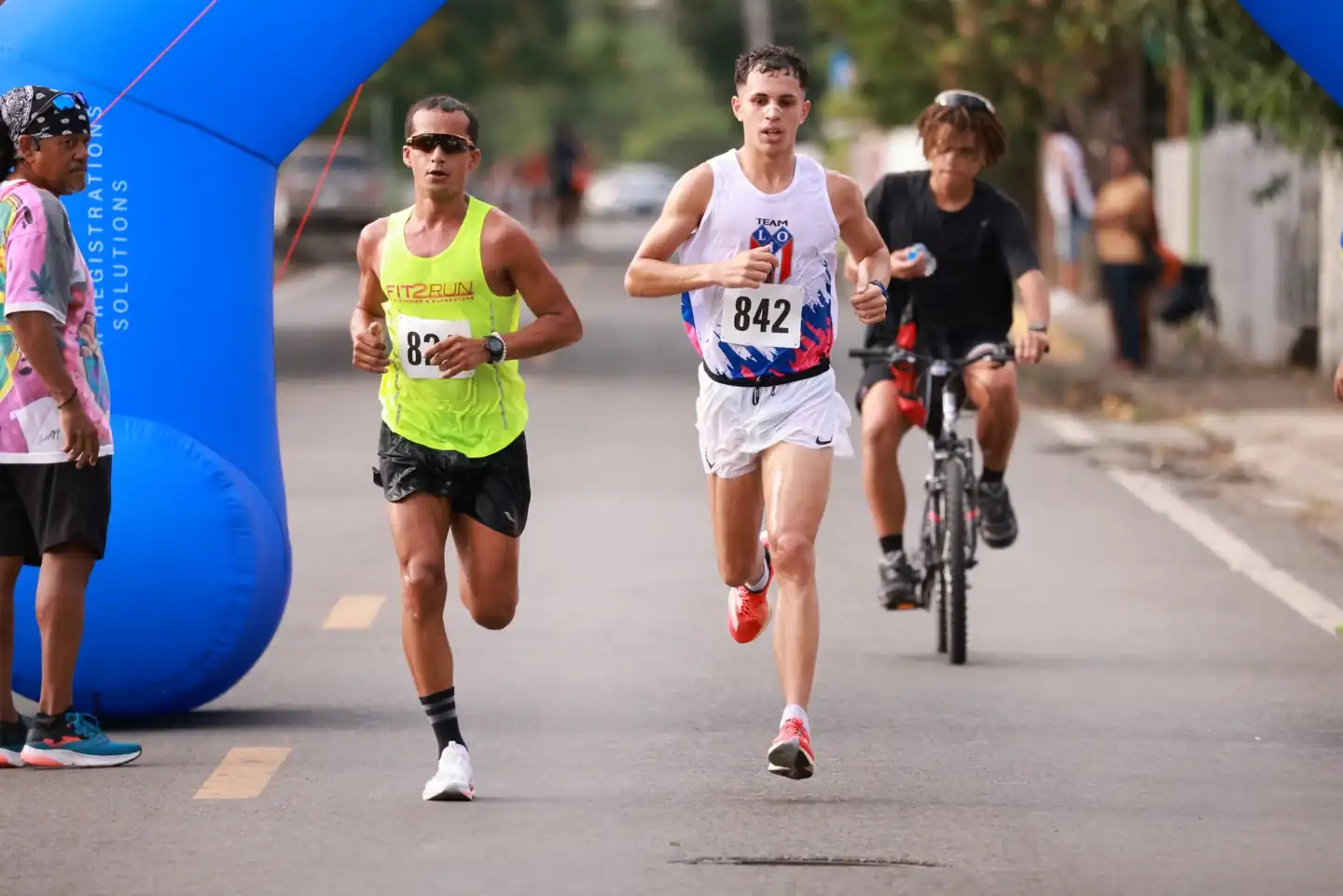
Moncófar will once again bring together hundreds of runners in one of the most recognizable half marathons on the Castellón coast. The eighth edition will take place on September 21, 2025, starting at 9:00 from Avenida Ramón y Cajal, in front of the municipal library, with an urban route that winds through the town streets with the Mediterranean very much present in the atmosphere.
The race is organized by the Moncófar Town Council and retains the federated half marathon format, with judges from the Spanish Athletics Federation, aid stations approximately every five kilometers, medical assistance and a limit of 2 hours and 15 minutes to complete the 21,097 meters. Registration costs 15.60 euros and closes on September 18, 2025, unless the expected quota is reached earlier.
An event that combines coast, streets and a steady pace
The Moncófar Half Marathon has a very distinctive identity: it does not aim for a mountain profile or the frenzy of a massive big-city race, but rather a more compact experience, with a local flavor and a direct relationship between the course and its surroundings. Moncofa, in the province of Castellón, offers that uncommon balance between a Mediterranean town, proximity to the sea, and a circuit that allows runners to feel the pulse of the locality for much of the effort.
That character explains much of its appeal. For many participants, the race is not just about the stopwatch, but about the feeling of moving through a recognizable setting, with open streets, a friendly atmosphere, and organizational control typical of a well-established event. The 2025 edition is also part of the III Circuit of Popular Races of Moncofa, a reference that reinforces its importance in the local calendar.
The start on Avenida Ramón y Cajal, in front of the library, marks a practical and accessible beginning. From there, a supervised and precisely measured course is built, something essential in a certified half marathon where every second counts. The wave of running shoes, the sound of footsteps, and the regular aid stations create a very recognizable scene for anyone who follows road running in the Valencian Community.
Course, control and services designed to support the effort
The Moncófar route is urban and federated, with passage through Moncofa’s streets and mandatory control points that guarantee the race’s competitive validity. Unlike other races where the scenery can blur pace references, here the consistency of the course helps measure effort, maintain splits, and manage prudently the changes in intensity that any half marathon demands.
Aid stations approximately every five kilometers are a relevant detail for those arriving with a more refined race strategy. Over a distance of 21.097 kilometers, this distribution makes it possible to drink, recover and recalibrate sensations without losing too many places or emptying the tank too early. Medical support has also been arranged, part of the safety standard of a serious event and a source of peace of mind for both recreational runners and those seeking a competitive time.
The organizers complete the experience with bag drop, changing rooms, showers and toilets at the sports center, a detail that often seems secondary until the end of the race arrives. After the effort, having functional spaces avoids improvisation and makes the day more comfortable, especially if competing on a warm September morning, when the body appreciates a quick change of clothes and a brief recovery before heading home.
The runner’s bag and the commemorative technical T-shirt remain part of the appeal for many entrants. They are common elements in popular running, but that does not make them minor: they condense the physical imprint of the day and act as an extension of the event. In Moncófar, moreover, the organizers have announced a very specific practical detail: the T-shirt is guaranteed for the first 300 registered runners, a fact worth keeping in mind in a race limited to 350 bibs.
Schedule, bibs and real room to register
The start is scheduled for 9:00, a reasonable time for a late-summer race that avoids, at least partly, the harshest midday heat. Bib pickup will take place on race day itself, at the start, between 7:15 and 8:30 a.m. That window requires the morning to be organized precisely, because in a short race with a fixed schedule it is best not to arrive too early or with just enough time.
Registration closes on September 18, 2025 at 11:59 p.m. or earlier if the field is filled. The fee is set at 15.60 euros, a figure in line with other popular half marathons in the Valencian Community and one that places the event within an affordable range for most regular runners. The time limit of 2 hours and 15 minutes also speaks to the kind of event it is: a race open to recreational runners, but within a framework that calls for a minimum level of preparation to reach the finish line comfortably.
That balance between accessibility and demand defines the race’s personality well. It is not an event meant for strolling, but neither is it designed for extreme performance exclusivity. Its natural space is that middle ground runner who wants to complete 21 kilometers with good sensations, gauge pace, or even make their debut at the distance in a controlled and very manageable logistical setting.
What its eighth edition reveals about the Valencian popular racing calendar
The eighth edition confirms that Moncófar has already found its place within the half marathon calendar of the province of Castellón. Not all events reach that continuity, even less so in an environment where urban races, night events, triathlons and coastal races with packed schedules compete for attention. The fact that a half marathon remains alive through eight editions speaks of a community that responds and an organization that has managed to give it a stable form.
On the Valencian running map, Moncófar occupies a very useful place for those who prefer medium-sized races, with less noise than the major events and more connection to the territory than huge-format competitions. The Castellón coast has a strong presence in the September calendar, and this race benefits from that tradition without losing its own identity. It is no coincidence that promotional texts emphasize the atmosphere, the sea and the carefully designed course; in a half marathon, the surroundings matter as much as the elevation profile.
It also matters that the circuit is daytime and federated. These are two labels that, together, describe the nature of the event well: it is run in daylight, with official timing, judges and a structure aimed at giving validity and seriousness to the results. That attracts both runners looking to improve their times and fans who value the security of clean, recognizable organization.
Moncófar as a setting: sea, breeze and a very runner-friendly profile
The appeal of running along the coast is not just a tourist adornment. In Moncófar, the proximity of the sea changes the perception of effort: the light, the air and the open views make runners experience the race differently. It is not magic, but context. A course through open streets and generally pleasant weather can turn hard kilometers into a more manageable sequence, especially when the body enters that constant negotiation between breathing, stride and mind.
The town also provides a human scale that favors mass participation. Moncofa does not overwhelm; it accompanies. And that fits very well with a half marathon where logistics matter as much as the feeling of being well looked after. The area near the beach, the route through the streets, and the finish with well-resolved basic services make the event feel more like a complete sporting experience than a mere crossing of a finish line.
The distribution of services itself reinforces that reading. Aid stations, timing, medical safety and a recovery area are not extras, but the invisible infrastructure that allows a race like this to run smoothly. When all that works, the runner only has to worry about pace, heart rate and how to manage the final kilometers, which in a half marathon always arrive with their own particular price.
The 21.097-kilometer distance and what it really demands
The half marathon is a deceptive distance. At first glance it seems like a reduced version of the marathon, but its demands follow a different logic. It requires sustained speed, enough endurance, and a certain tactical intelligence. In Moncófar, that combination becomes important because the course and the time limit penalize improvisation and reward the runner who knows how to distribute their effort.
The 21,097 meters call for a cautious start. The body still remembers the first kilometers when it begins to pay for rushed decisions, and that is where a well-measured race becomes an ally. Aid stations every five kilometers help mentally segment the effort: you do not think about the whole race, but in manageable blocks, almost as if the race were unfolding in short stages within the same morning.
In events of this kind, recreational runners often encounter a very concrete reality: the last five kilometers are another race. Moncófar does not change that physical law, but it does wrap it in a more welcoming setting, with a circuit that allows steady pacing without the noise of a large city and with services that prevent fatigue from turning into chaos. That is why many coastal half marathons have such a particular magnetism; the effort is the same, but the scenery makes the hardship more livable.
What to consider before running in September on the Castellón coast
September can be treacherous. Although summer is coming to an end, temperatures on the Mediterranean coast can still be high enough to affect race plans if you start too fast or neglect hydration. That makes aid stations and the start time more important than they may seem at first glance. Starting at 9:00 helps, but it does not completely eliminate the heat factor.
It is also worth reading the race for what it is: an urban late-summer race with clear rules, timing and a maximum time that leaves little room for breakdown. Athletes who arrive with a solid mileage base will find a welcoming environment; those tackling the distance with just enough in the tank will feel the cost of every spike in heart rate sooner. Moncófar does not deceive, but it does not give anything away either.
In that sense, the race fits well with the profile of runners looking for a half marathon without gimmicks. Its appeal lies not in the extravagance of the route, but in its coherence. There is a clear start, official control, support, category prizes and a finish bag that completes the experience. It is a classic recipe, well assembled, which explains why these events continue to be in demand year after year in the Valencian Community.
A race sustained by consistency and local character
The Moncófar Half Marathon does not need grandiosity to be interesting. Its value lies in the sum of concrete details: a date well placed in the calendar, an urban course by the sea, sufficient services, a moderate entry fee and a municipal organization that gives it identity. That combination, more than any flashy appeal, is what ultimately sustains the reputation of a popular race.
The runner looking at this event finds a clear proposal, without unnecessary layers. They know where the start is, how long the course is, what margin they have to reach the finish, and what they will receive at the end of the race. In an increasingly saturated sporting ecosystem, that transparency has value. The Moncófar half marathon relies precisely on that: a recognizable race, useful for competition and friendly for those who simply want to complete 21.097 kilometers with the sound of the Mediterranean nearby.
Perhaps that is why it continues to work. Because it does not try to be something else. It is a local calendar event with enough ambition to bring together many enthusiasts and the sobriety needed to make everything come together. In running, as in almost everything, continuity usually depends on that difficult mix of identity, order and trust. Moncófar has found it, and the 2025 edition makes that clear once again.



How to prevent thigh chafing: causes and real solutions

Women’s running windbreakers: seven jackets and how to choose

Do more workouts get rid of soreness? A guide for runners

Jaén Half Marathon 2026: Record 3,800 Runners Registered

Men’s short running tights: how to choose the right pair

World Triathlon confirms data breach involving medical data

Izan Edo targets podium at Miyazaki World Cup

María Pérez ranks ninth in World Athletics’ 2026 top ten

Dos Santos, Duplantis and Sawe: World Athlete of the Year finalists

San Silvestre Vallecana 2026: 42,000 places, prices and start times

 Races3 months ago
Valencia Half Marathon 2027: date and registration

 Races3 months ago
Valencia Marathon 2026: entry, ballot and course

 Reviews and Comparisons4 months ago
Asics Gel-Roadmiles 3 for men: review and current price

 Reviews and Comparisons4 months ago
Asics Gel Sonoma 8 Gore-Tex: complete analysis for trail and rain

 Sneakers3 months ago
Saucony Endorphin Pro 4: full review and verdict

 News5 months ago
Strava API 2026: what changes for clubs, challenges and runner apps?

 Reviews and Comparisons5 months ago
Nike Alphafly 3: opinions, sensations, and real key points

 Reviews and Comparisons4 months ago
Under Armour running shoes review 2025-2026: models and key features

 Sports Equipment4 months ago
Shoe sizes in cm: a clear guide to getting the right fit for your footwear

 Sneakers3 months ago
Skechers GO RUN Consistent 2.0 analysis: comfort and limits

 News5 months ago
Valencia Marathon 2026 route: key tips to train and run better

 Sneakers4 months ago
Adidas Adizero Boston 13 for men: review and verdict