Races
Montserrat Skyrace: route, distances and key points of the race
Two routes, a lot of elevation gain, and a unique setting: that’s the Montserrat mountain race.

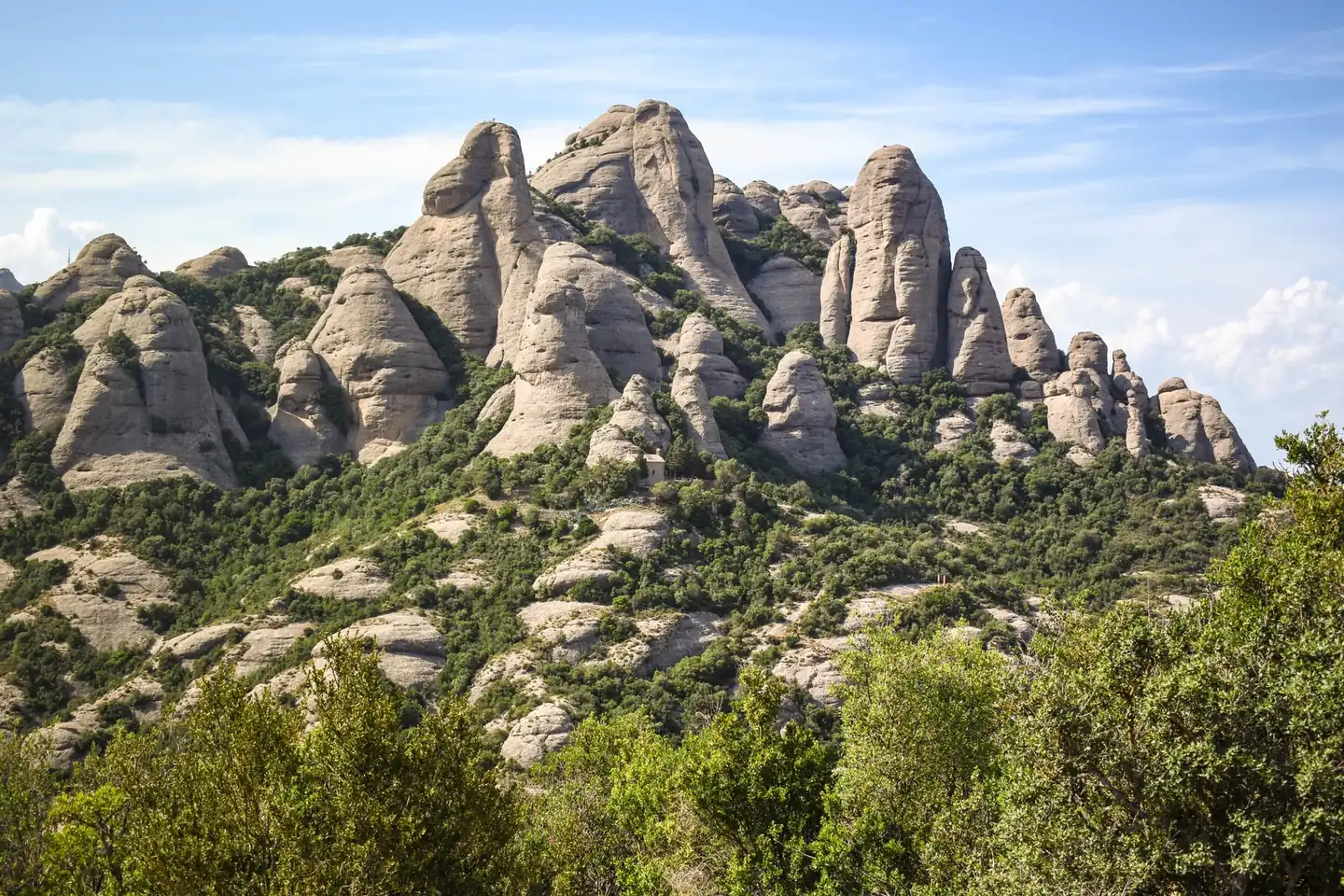
The Montserrat Skyrace has established itself as one of the most recognizable mountain races on the Catalan calendar for a reason that is hard to imitate: it runs across a massif that seems sculpted with a whimsical chisel. Its stone spires, its technical trails and the silhouette of the monastery turn each edition into an almost liturgical blend of sport and landscape, with start and finish in Monistrol de Montserrat.
The next edition, scheduled for early February 2027, will once again offer two distances, a long one of 26 kilometers and a shorter one of 13.2 kilometers, with demanding elevation gains even for runners used to the mountains. The event belongs to the world of trail running and, because of its characteristics, moves in that territory where endurance stops being only cardiovascular and also depends on technique, reading the terrain and managing effort on the climbs.
A setting that defines the character of the race
Montserrat is not a neutral backdrop. The massif imposes its own grammar. The conglomerate walls, the changes in gradient and the trails that wind between rock and forest give the event a very marked identity, almost as much as the great Alpine races, but with a Mediterranean and close personality. In practice, that means a mountain race with very leg-burning sections, technical terrain and a climb that punishes anyone who does not manage each ascent well.
The most repeated reference among organizers and reports is that of the Montserrat setting as a magical mountain. It is not an empty phrase. The place combines heritage, tourism and sport in an unusual way, and the race takes advantage precisely of that combination. Those who take the start are not only competing against the clock or against other runners; they are also negotiating with a terrain that forces constant changes of pace, as if the mountain itself were setting the pauses in the effort.
That context explains why the race appeals so much to experienced runners as well as to those looking for a mountain challenge with its own name. The attraction is not only in the finish line or the standings, but in the feeling of crossing one of the most singular landscapes in Catalonia with a bib and trail shoes. The race sells toughness, but also visual memory: open views, vertical stone, silence in certain sections and the sensation of climbing through a place that has something of a natural amphitheater.
The distances and the kind of effort they demand
The organization has kept two formats that cover different runner profiles. The main race reaches 26 kilometers and adds around 1,450 meters of positive elevation gain, a figure that by itself is enough to understand that this is not a gentle trail. The shorter distance, known as the Montserrat Express, covers 13.2 kilometers with around 830 meters of positive elevation gain, an equally serious amount for a race of that size.
The difference between the two is not just about kilometers. In the mountains, a mid-distance race with sustained elevation gain can feel much more demanding than a much longer road race. Here, the stride shortens, breathing gets messy and technique matters with every foot placement. The long climb, the transitions between track and trail and the condition of the ground make the body absorb the impact in a different way. The Montserrat Skyrace demands legs, head and balance in almost equal measure.
In the long distance, effort management is decisive. Runners who start too fast usually pay the price on the steepest ramps and on the sections where the accumulated elevation turns into an endless climb. The short version, although more accessible, gives nothing away either: its profile makes it ideal for fast runners, but also for those who are just getting into the mountains and want to try a route with a real skyrunning feel without yet stepping into more extreme distances.
A format designed for several runner profiles
One of the keys to this race is that it has not been locked into a single participant profile. The 26-kilometer distance attracts those looking for a full day in the mountains, with enough toughness for the standings to have sporting value, while the 13.2-kilometer route opens the door to runners with less experience or with training focused on intense, contained efforts. That double offer explains a good part of its staying power on the calendar.
In trail running, the word accessible needs nuance. The short version of Montserrat may be manageable for many runners who have already spent time on trails and trained climbs, but it is still a real mountain race. There is no flat route disguised as trail. What it offers is a shorter entry into a demanding geometry, where elevation gain and technique matter as much as pure speed.
The long distance, for its part, has that profile of a race that leaves a mark on the season. The 26 kilometers in Montserrat are not just a number; they are an accumulation of climbs, controlled descents and sections where attention cannot drop. The rocky terrain and the constant alternation of rhythms make the experience feel like a battle with the landscape. For anyone looking for a mountain benchmark in Catalonia, that combination is especially appealing.
A route with technical DNA and very recognizable views
The Montserrat massif is known for its unmistakable shape, and that carries over into the route. The trails cross an environment in which rock dominates the horizon and where the elevation gain appears abruptly, with not too many warnings. That visual personality is matched by a very specific demand: precise foot placements, steep sections and descents that call for control rather than impulsiveness.
In previous editions, the long race route has passed through very recognizable spots in the Montserrat area, such as Santa Cecília, Sant Salvador, the Sant Benet refuge, the Patriarchs caves, Pla dels Ocells or the Holy Cave. These are names that, for anyone who follows trail running in Catalonia, work almost like landmarks on an emotional map. They do not just orient you; they also build the idea of a race that does not merely add kilometers, but travels through a mountain full of references.
The short version keeps that essence, although compressed into less time and less volume. That makes it a very useful race for understanding the logic of Montserrat without yet taking on the full punishment of the long distance. The result is an event with two layers: one more demanding and another more compact, but both united by the same terrain and the same visual impression of a place that seems permanently tilted.
The relationship between time, elevation gain and strategy
In a race like this, the final time depends less on average speed than on the ability to manage energy on the climbs. Positive elevation gain consumes more resources than a simple figure in kilometers suggests. Anyone who arrives in Montserrat with a road-running mindset soon discovers that a linear pace does not exist here; what matters is adapting to each section, each bend and each change in surface.
The descents also carry their own weight. In technical terrain, running downhill does not mean simply letting go. The conglomerate ground, the uneven areas and the narrow trails demand constant concentration. The difference between gaining time or losing stability can come down to one poorly resolved foot placement. That is why this race usually rewards complete runners, not just the most explosive uphill or the fastest on the flat.
The February weather adds another layer of uncertainty. Without needing extremes, the morning cold, humidity or slightly wetter ground can alter how participants feel. In the mountains, weather does not decorate the race: it defines it. And Montserrat, with its open relief and exposed areas, amplifies that effect in a very visible way.
Why it attracts so much attention in the trail calendar
The Montserrat Skyrace occupies a special place because it brings together several factors that rarely appear together so clearly. It has a powerful geographical setting, a well-established organization, balanced distances and a level of demand that makes it respected without falling into excess. That combination places it in a very valuable middle ground: tough enough to challenge, clear enough to understand, iconic enough to remember.
In addition, the race fits well into the early-season calendar. February often serves as a thermometer to measure fitness after winter, and a mountain trail with elevation gain offers a much more precise reading than a flat race. Anyone who runs in Montserrat measures not only speed, but also endurance, strength and the ability to suffer. It is a global test with postcard scenery, and that duality explains its appeal.
The fact that the race has maintained a presence in different years and specialized platforms reinforces its international visibility within the trail circuit. In that conversation, Montserrat appears linked to mountain races with their own stamp, where the territory is not just a backdrop but the central part of the sporting story. That identity helps explain why the race continues to arouse interest among runners and fans.
What is worth reading between the lines before running it
Beyond the technical sheet, there are a series of signs that help interpret the race properly. The first is obvious: elevation gain rules. The second, less obvious, is that the terrain does not allow much improvisation. A runner who dominates the flat may feel out of place if they have not trained climbs, technical descents and pace changes. The third is that the short distance should not be confused with an easy race. In the mountains, length is less deceptive than gradient.
It is also worth paying attention to the logistical setting. The start and finish in Monistrol de Montserrat make the day easier to organize, but at the same time place participants in a space closely tied to road access, parking and schedule coordination. In races like this, the experience begins well before the starting gun and ends after the last recovery stretch, when the runner measures the mountain again with a mix of fatigue and respect.
That is one of the less visible values of this event. It is not just a sporting event, but a very specific way of inhabiting the massif for a few hours. The mountain stops being seen from afar and becomes surface, slope, breathing and the rubbing of a shoe. Montserrat is not only contemplated: it is crossed. And that is a substantial difference when it comes to understanding the weight this race has among trail events in Catalonia.
A mountain benchmark that keeps its magnetism
With two well-defined distances, severe elevation gain and an unmistakable geological setting, the Montserrat Skyrace preserves a formula that explains its continuity. It does not need gimmicks. It is enough with a unique mountain, a technical route and the simple logic of well-measured effort. In times when many races look alike, that uniqueness is worth gold.
The strength of the race lies in the fact that it offers something very concrete and very recognizable: mountain trail with its own identity. Those who choose it know they will find rock, elevation gain, demanding sections and a landscape capable of dominating memory long after crossing the finish line. That is why it continues to hold a notable place among the early-year events in Catalonia, and why its name remains linked to one of the most powerful mountain running settings in Spain.
In an increasingly broad calendar, Montserrat retains that quality of races that cannot be explained by numbers alone. They are understood by running them. And, in that sense, few events show the relationship between sport and territory as well as this mountain race that turns the massif into a living, vertical and memorable route.



How to prevent thigh chafing: causes and real solutions

Women’s running windbreakers: seven jackets and how to choose

Do more workouts get rid of soreness? A guide for runners

Jaén Half Marathon 2026: Record 3,800 Runners Registered

Men’s short running tights: how to choose the right pair

World Triathlon confirms data breach involving medical data

Izan Edo targets podium at Miyazaki World Cup

María Pérez ranks ninth in World Athletics’ 2026 top ten

Dos Santos, Duplantis and Sawe: World Athlete of the Year finalists

San Silvestre Vallecana 2026: 42,000 places, prices and start times

 Races3 months ago
Valencia Half Marathon 2027: date and registration

 Races3 months ago
Valencia Marathon 2026: entry, ballot and course

 Reviews and Comparisons4 months ago
Asics Gel-Roadmiles 3 for men: review and current price

 Reviews and Comparisons4 months ago
Asics Gel Sonoma 8 Gore-Tex: complete analysis for trail and rain

 Sneakers3 months ago
Saucony Endorphin Pro 4: full review and verdict

 News5 months ago
Strava API 2026: what changes for clubs, challenges and runner apps?

 Reviews and Comparisons5 months ago
Nike Alphafly 3: opinions, sensations, and real key points

 Reviews and Comparisons4 months ago
Under Armour running shoes review 2025-2026: models and key features

 Sports Equipment4 months ago
Shoe sizes in cm: a clear guide to getting the right fit for your footwear

 Sneakers3 months ago
Skechers GO RUN Consistent 2.0 analysis: comfort and limits

 News5 months ago
Valencia Marathon 2026 route: key tips to train and run better

 Sneakers4 months ago
Adidas Adizero Boston 13 for men: review and verdict