Races
Móstoles Race Against Cancer 2025: date, route and price
The solidarity event in October in Móstoles combines sport, neighborhood spirit, and support for research, with race bibs starting at 6 euros.

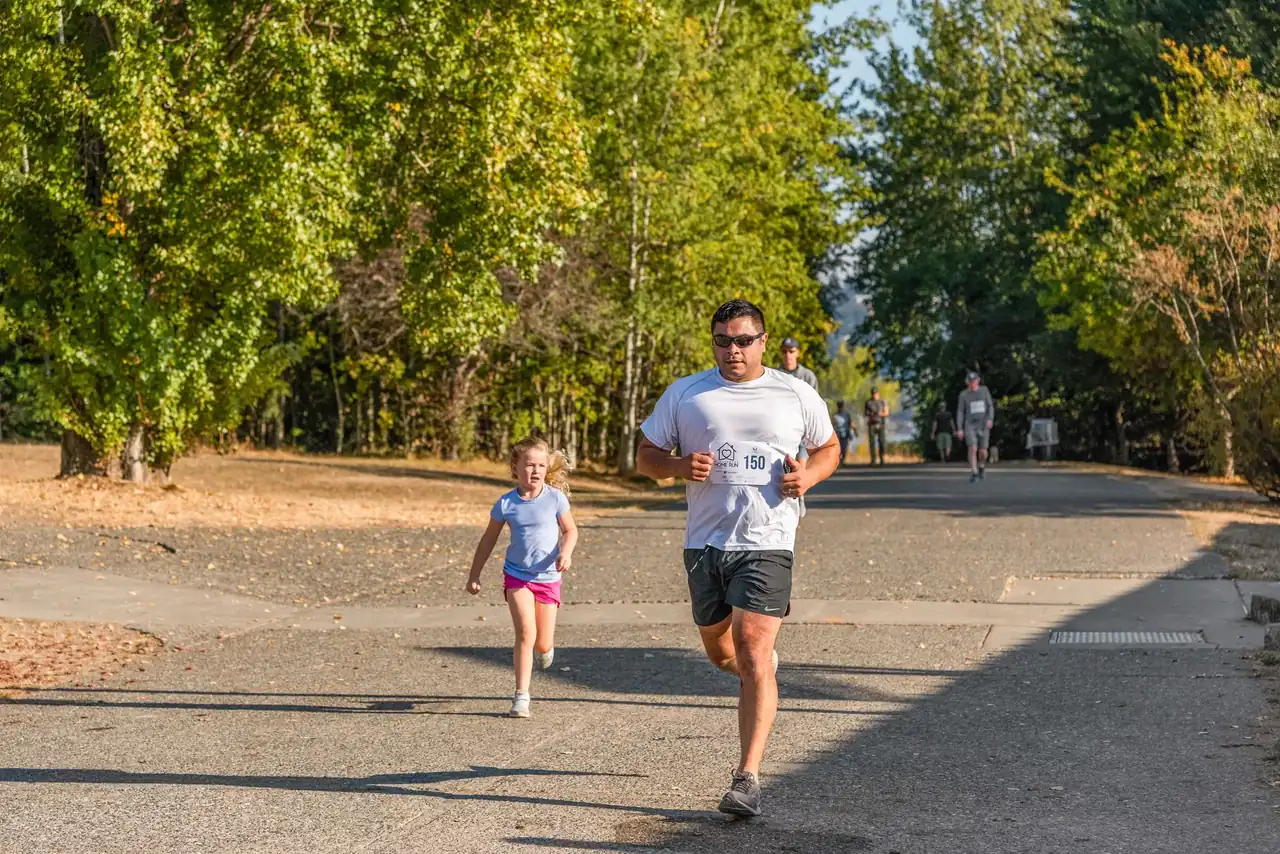
The solidarity event in October in Móstoles once again puts sport at the service of a cause that spans generations and neighborhoods. The eighth edition of the walk, promoted by the Spanish Association Against Cancer in the city, will take place on Sunday, October 6 and will bring together runners, families, and walkers on an accessible route, starting next to the Andrés Torrejón sports center and finishing on the lawn of El Soto Natural Park.
The event keeps a simple and effective formula: two distances, affordable prices, and an urban-natural route that makes participation easier for adults and children. Registration costs 9 euros for adults and 6 euros for minors, a range that places the event among the most affordable popular events on the local calendar and that, moreover, turns each bib number into a direct contribution to cancer research.
A race that is already part of the Móstoles autumn
The anti-cancer walk in Móstoles has been gaining weight in the municipality’s sports and social agenda until becoming one of those events recognized for its mix of family atmosphere, shared T-shirts, and relaxed conversation before the start. It does not aim for the shine of major road races or the toughness of mountain competitions; its value lies elsewhere, in broad participation and a collective gesture that adds up small contributions with real impact.
The fact that the event is organized by the Spanish Association Against Cancer in Móstoles, with the collaboration of the Móstoles City Council through the Sports and Health departments, explains much of its continuity. This is not just a sports day, but a civic act in which the city comes together around a common message: support for research and accompaniment for those living with the disease.
At its core, that is the reason why these walks work so well on the popular race calendar. They do not require specific preparation, they accommodate different paces, and they allow the experience to go beyond the stopwatch. What matters is being there, even if the start sets a specific time and the route requires distributing energy between the track, the park, and the final stretch back to the lawn.
Start, route, and timetable: what shapes the day
The race will start at 10:00 a.m. from Iker Casillas Avenue, in front of the entrance to the athletics tracks of the Andrés Torrejón sports center. From there, the route enters El Soto Natural Park, a place well known by local runners for its comfortable profile, green surroundings, and ability to absorb a large pack without losing fluidity.
The two official distances are 2 and 5 kilometers. That combination explains the event’s profile: a short option for those who prefer to walk or accompany the youngest, and another, somewhat more demanding, for those who want to run at a brisk pace without leaving the participatory format. The finish is located on the park lawn, where the most emotional and visible part of the event usually gathers, with participants crossing the line at different paces but within the same celebratory atmosphere.
The route is not meant to be technically complicated. Its design allows a clear reading of the event: accessibility, continuity, and a friendly setting. In events of this kind, the comfort of the circuit matters almost as much as the cause that inspires it, because it determines whether entire families, groups of friends, or people who do not usually take part in a popular race will join in.
Prices, registration, and an in-person information point
The registration fee is one of the elements that most facilitates participation. For this reference edition, the organization set a fee of 4 euros in the children’s category in the information released, and 8 euros for adults in the previous call, while in the most recent edition the published reference places the cost at 6 euros for children and 9 euros for adults. This slight adjustment reflects the usual evolution of many charity races, where the final cost depends on the year, logistical resources, and the scope of the event.
Registrations can be made in person at the Active Space Against Cancer, on San Marcial Street, 1, during public service hours on weekdays. That point not only works as a registration office, but also as a reference space for those who wish to resolve questions about the race, collect materials, or find out about the available forms of support beyond the traditional bib.
In addition, the organization has also enabled digital channels and QR codes on the promotional poster, a format that is already part of the usual landscape of popular races. The coexistence of in-person and online registration broadens the event’s reach and prevents participation from being limited to those who go to the physical point. Administrative accessibility has become one more part of the experience, just like the route or the commemorative T-shirt.
A circuit designed to add people, not exclude them
The logic of this event is that of an open walk. Those who attend do not find a rigid competitive filter, but rather a format that accommodates runners seeking a moderate effort as well as families who prefer to walk. That broad range of profiles is part of its success and explains why charity races have found their own space in medium and large cities across the country.
In Móstoles, El Soto Natural Park also provides a recognizable image, almost like a local postcard. The greenery of the surroundings, the openness of the space, and the feeling of a route close to the neighborhood turn the start into something more than a simple sports activity. The race speaks with the city: it does not cut through it abruptly, but rather fits into it, like a conversation between pavement, trail, and lawn.
That balance between sport and community matters because it places the race in a very different setting from purely competitive events. Here, the bib matters less than the gesture, and the final time matters less than the fact of taking part. Even so, the organization still awards prizes to the first finishers on the longer course, a way of recognizing those who turn solidarity into a real race, without the event losing its open spirit.
Research as the destination of every bib
The underlying message does not change from one edition to the next: the funds raised are directed toward cancer research, one of the areas where social involvement has the most tangible return in the medium and long term. The race does not promise shortcuts or magic solutions, but it does promise a sum of concrete efforts that help sustain scientific projects and support campaigns for patients and families.
The presence of partner entities such as Solán de Cabras, mentioned in the reference information as an in-kind donation, and the institutional backing of the City Council strengthen the day’s logistics. In events of this kind, practical details often go unnoticed, although they are essential: hydration, signage, volunteers, access control, bib distribution, and coordination with the natural setting. All of that supports a morning that, from the outside, may seem simple, but in reality requires a precise machine.
Symbolic value also matters. Every registration turns an individual act into a collective sign. Popular sport, when aligned with a health cause, stops being just leisure or exercise and becomes a shared language. In Móstoles, that language has the advantage of being supported by a short route, open participation, and an organization that is familiar to neighbors.
What it brings to those who run and those who accompany them
For the regular runner, an event like this offers a different opportunity: not the tension of a bib sought for months nor the obsession with average pace, but the possibility of running with a different mindset. The effort is still there, but the context transforms it. You run to accompany, to add your bit, and to be part of a much broader picture than a ranking.
For families, the race works as a shared morning with a clear symbolic component. Minors can take part in a short distance, while adults find an easy setting to run or walk. That crossing of ages is part of the appeal of charity races and explains their visual power: a start line where colorful sneakers, strollers, school groups, and more experienced runners coexist.
The social dimension is no less important. In a city like Móstoles, where popular initiatives have a special ability to generate conversation, these events reinforce the idea that local sport is not measured only by results. It is also measured by participation, neighborhood fabric, and continuity. And in that respect, the anti-cancer walk has managed to establish itself as an event with its own identity.
Why this event matters within the popular race calendar
Many races are born and disappear quickly; others find a place because they provide something the public really needs. This walk does that in several ways at once. It is close, it is affordable, it has a clear cause, and it offers a route without major barriers. That reduces the distance between someone looking at the poster and someone deciding to pin on a bib.
It also helps that the event is linked to a disease that affects thousands of families in Spain every year. Cancer is no longer something viewed from afar; it has entered everyday conversation with a mix of prevention, research, and support. In that context, a popular race gains special resonance because it turns abstract concern into a visible and shared action.
In journalistic terms, that is the key to the event: it is not just a race, it is a way of putting your body behind a cause that usually calls for concrete gestures. Running, walking, or signing up with a bib becomes a way of taking part in the real debate about the disease, without noise and without grandiosity, but with impact.
A morning when Móstoles runs with another outlook
On October 6, Móstoles will once again see the park, the avenue, and the lawn filled with shared movement. Some will measure the effort in seconds and others will simply hope to finish calmly, but everyone will be part of the same city snapshot. The start at 10:00 a.m., the passage through El Soto, and the finish line will create a recognizable scene: that of a municipality using sport as a loudspeaker for a health cause.
In that scene, bib numbers are more than a number. They are a small piece of funding, a gesture of support, and a way of saying that research matters. The solidarity race in Móstoles does not need embellishment to make sense: it only needs a date, a park, two distances, and a community willing to fill the route with useful steps.
That is why its interest goes beyond the sports calendar. Each edition reinforces a simple and powerful idea: when a city runs together, individual effort stops being just exercise and becomes a sign of collective support, clear and visible, in the face of a disease that still calls for science, persistence, and commitment.
You may also like: Catalunya Bike Against Cancer: date, price, and key details and Cancer race in Huesca 2025: date, price and route.



How to prevent thigh chafing: causes and real solutions

Women’s running windbreakers: seven jackets and how to choose

Do more workouts get rid of soreness? A guide for runners

Jaén Half Marathon 2026: Record 3,800 Runners Registered

Men’s short running tights: how to choose the right pair

World Triathlon confirms data breach involving medical data

Izan Edo targets podium at Miyazaki World Cup

María Pérez ranks ninth in World Athletics’ 2026 top ten

Dos Santos, Duplantis and Sawe: World Athlete of the Year finalists

San Silvestre Vallecana 2026: 42,000 places, prices and start times

 Races4 months ago
Valencia Half Marathon 2027: date and registration

 Reviews and Comparisons4 months ago
Asics Gel-Roadmiles 3 for men: review and current price

 Races4 months ago
Valencia Marathon 2026: entry, ballot and course

 Reviews and Comparisons4 months ago
Asics Gel Sonoma 8 Gore-Tex: complete analysis for trail and rain

 Sneakers4 months ago
Saucony Endorphin Pro 4: full review and verdict

 News5 months ago
Strava API 2026: what changes for clubs, challenges and runner apps?

 Reviews and Comparisons5 months ago
Nike Alphafly 3: opinions, sensations, and real key points

 Reviews and Comparisons4 months ago
Under Armour running shoes review 2025-2026: models and key features

 Sports Equipment4 months ago
Shoe sizes in cm: a clear guide to getting the right fit for your footwear

 Sneakers3 months ago
Skechers GO RUN Consistent 2.0 analysis: comfort and limits

 News5 months ago
Valencia Marathon 2026 route: key tips to train and run better

 Sneakers4 months ago
Adidas Adizero Boston 13 for men: review and verdict