Races
Mozarabic Way Half Marathon 2026: route and key details
The Los Pedroches race combines sport, heritage, and several starts on the same day.

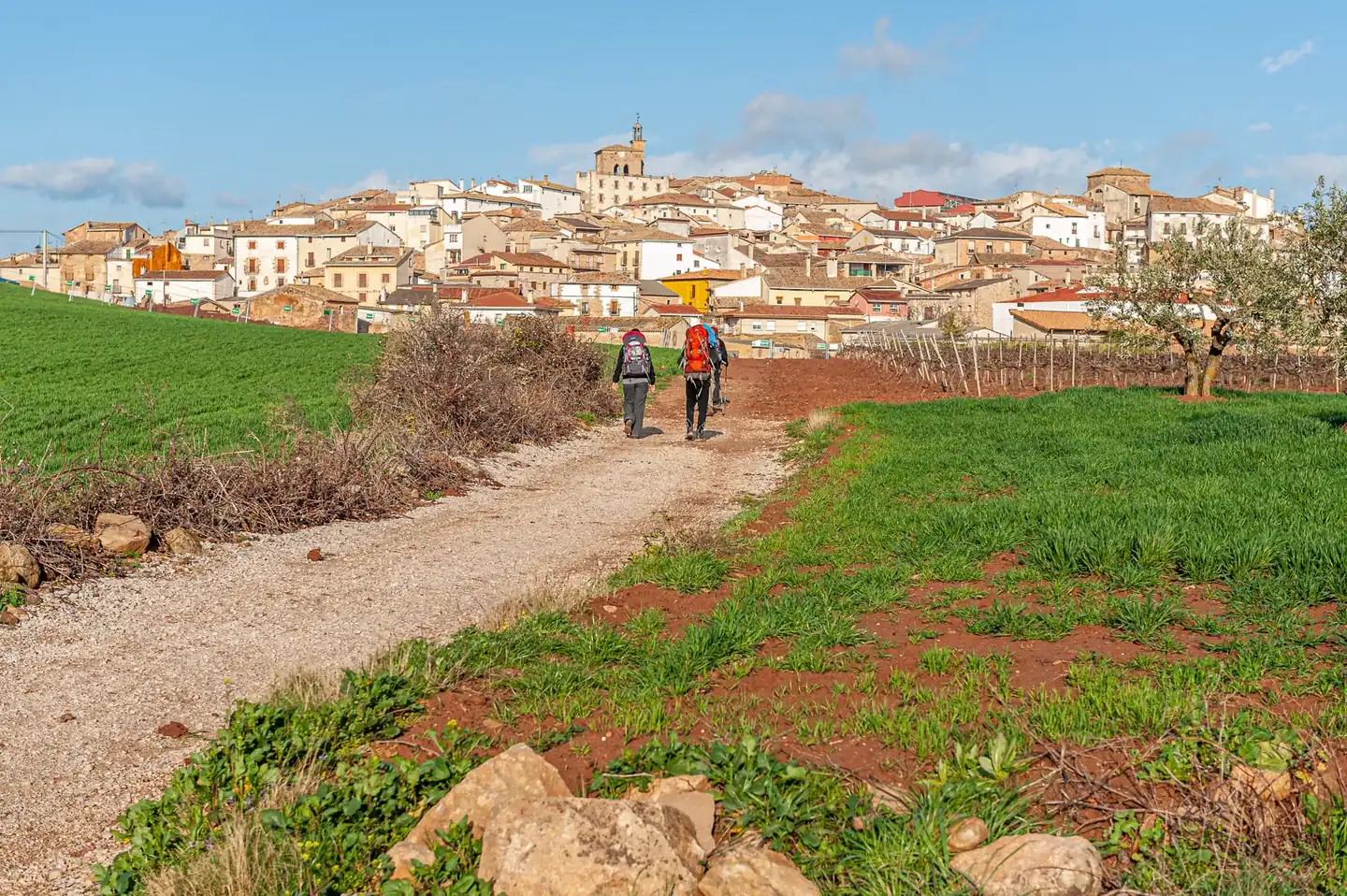
The Camino Mozárabe Half Marathon once again puts Los Pedroches on the Andalusian running map with a distinctive proposal: a race that measures not only effort, but also territory, history, and togetherness. The 2026 edition takes place on February 21 and brings together several modalities with staggered starts in different municipalities of Córdoba, an unusual formula that turns the day into a sporting journey along the Camino Mozárabe de Santiago.
More than just a half marathon, the event works as a piece of calendar with its own identity. It brings together runners, hikers, and participants in an inclusive format, and finishes in Hinojosa del Duque, where the finish line acts as a meeting point for an entire region. The appeal lies in that combination of different distances, shared logistics, and a landscape of dehesa and whitewashed villages that gives the race its character.
A race with several starts and a single finish
The organization has designed a day with very specific start times to avoid overlaps and organize the flow of participants. The hiking modality starts at 10:00 from Villanueva del Duque; the half marathon starts at 11:30 from Alcaracejos; the 13-kilometer distance, known in the race as the Half of the Half, sets off at 11:45 from Fuente la Lancha; and the inclusive race begins at 12:30 from the Residencia de la Bella. All of them converge in Hinojosa del Duque, where the finish closes at 14:00.
That design, as practical as it is symbolic, reinforces the feeling that the race does not belong to a single municipality, but to a broader territorial corridor. In a time when many events seek uniqueness through spectacle, this one keeps a different logic: following the Camino Mozárabe as the guiding thread, with each start linked to a specific town and a shared experience at the end of the route.
The official half marathon covers 22,150 meters, a distance slightly longer than the homologated 21.097 kilometers because of its specific route design. Added to that are the 13,000 meters of the Half of the Half, the 18,200 meters of the hiking route, and an inclusive course of 1,500 meters. The offer is not the result of whim, but of a clear idea: to broaden access to the day without giving up the competitive component of the main race.
Los Pedroches as a sporting setting
The charm of this event also lies in the place where it happens. Hinojosa del Duque, Alcaracejos, Villanueva del Duque, and Fuente la Lancha form a corridor with a very marked identity, with roads, squares, and streets that still preserve the human scale of inland Córdoba. The race takes advantage of that geography to shape an experience that is not limited to the clock: it offers a reading of the territory at the pace of each stride.
The Camino Mozárabe, one of the historic routes of access to the Camino de Santiago from southern Spain, adds extra value that goes beyond sport. Each step works like a small landscape postcard, with stretches that transition between urban center and rural surroundings, something especially appreciated by those looking for events with their own story. In this case, the story is clear: running in a region that recognizes itself in its heritage, its local mobility, and its Jacobean tradition.
There is also an emotional dimension that should not be overlooked. These kinds of events, closely tied to the municipal fabric, generate a different atmosphere from that of the big urban masses. The scale is smaller, but the sense of community is usually greater. You can feel it in the volunteers, in the shared transfers, in the starts from squares familiar to local residents, and in the final arrival, where the public does not watch from a distance, but becomes part of the overall mood of the day.
Timetables, transfers, and practical organization
The event logistics are one of the most delicate aspects and, at the same time, one of the most useful for participants. The organization has arranged a bus service from Hinojosa del Duque to make the transfers to the starts easier. Between 8:30 and 9:30, hikers are transported to Villanueva del Duque; between 9:30 and 10:30, athletes are taken to Fuente la Lancha and Alcaracejos; and at 12:00, transport for inclusive participants is organized to the Residencia de la Bella.
That detail matters more than it may seem. In events with several starting points, punctuality stops being a generic recommendation and becomes a real condition for running. The organization has already warned that it does not guarantee transport for those who do not arrive within the stated times, so the margin for improvisation is minimal. In that sense, the race works with the precision of a village clock: discreet, but strict.
For the main race, the half marathon start is set at 11:30, while the intermediate 13-kilometer distance begins at 11:45. The hiking section opens the day at 10:00, which makes it possible to stagger the flow of participants and avoid excessive crowding at the finish. The closing of the finish line at 14:00 also sets a clear limit, especially useful for calculating paces and understanding that the event has a finite, well-ordered duration.
This kind of practical information is often decisive for anyone planning the trip, coordinating with family, or sharing transport with other runners. In a regional race, logistical planning is not an add-on, but part of the day’s success itself. Arriving on time, recognizing the correct starting point, and accepting the return schedule are all pieces of the same puzzle.
Distances designed for different profiles
The Camino Mozárabe Half Marathon is not limited to the most demanding distance. On the contrary, its strength lies in a structure that opens the door to very different participant profiles. The 22,150-meter race is for the runner looking for a long event, with a certain challenge and a route that does not feel like a standard urban circuit. The 13-kilometer version suits those who prefer an intermediate distance, while the 18,200-meter hiking route offers a more relaxed way to explore the surroundings.
The inclusive modality, with 1,500 meters, adds a layer of integration that sets this event apart from other calendar offerings. It is not just about adding a short distance, but about remembering that a sporting event can be built from accessibility and support. That diversity of formats explains, to a large extent, the growth of the event and its ability to attract not only athletes, but also hikers and families.
In the 2026 edition, the organization has also announced a very significant figure: more than 650 registered participants in the sporting modalities and around 300 participants in hiking. These are numbers that speak of consolidation, but also of trust. A race grows when word of mouth works, when the route sparks interest, and when the event does not lose its close, local character despite expanding its reach.
Within the calendar of northern Córdoba, that mix has strategic value. The runner looking for a different, less predictable half marathon finds here a hybrid profile between sporting event and territorial getaway. And the hiker, in turn, can take part in a shared experience with a solid structure, without being pushed into a secondary format.
Price, registration, and race status
Registration for the 2026 edition is listed at a price of 18 euros in the available technical information. That figure places the race in a reasonable range for an event with several modalities, organized transfers, and municipal logistics. It is neither strikingly cheap nor high; it is in line with what a day of this kind usually offers when basic services and coordination between towns are properly handled.
The reference consulted also includes the notice registration closed, an important detail for anyone checking the race after the deadline. Although, from an editorial standpoint, the overall status of the race may appear open due to the lack of a more complete official listing, the operational message is clear: the organization had already shown the quota as closed in the associated technical material. It is worth keeping in mind because, in events like this, places tend to fill quickly as soon as the final program is published.
The existence of information points and the municipal phone number also reinforces the local nature of the race. The administrative headquarters is located at the Hinojosa del Duque Town Hall, at Plaza de la Catedral, 1, with the phone number 957 14 00 50 and the email informacion@hinojosadelduque.es as references provided by the council itself. These are administrative details, yes, but they also reveal the institutional backing that supports the event.
That public support explains part of the race’s continuity and its growing presence in the ecosystem of popular races in Andalusia. It does not depend on a major commercial brand or a private circuit, but on an alliance between municipalities, professional timing, and the local community. In the end, that is where much of its personality lies.
A race with a regional vocation and an inclusive outlook
The 2026 edition maintains a line that had already been taking shape in previous years: the race cannot be understood without the region as a whole. The start in Alcaracejos, the passage through Villanueva del Duque and Fuente la Lancha, and the finish in Hinojosa del Duque make up a kind of moving map. It is not just a route; it is a way of stitching together municipalities that share landscape, history, and habits of relationship.
The special recognition of Afemvap, the Association of Families and Mental Health Patients of the Valle de los Pedroches, adds a social component that gives the day real weight. It is not common for a popular race to naturally include a gesture like this, and that places it on a broader level than the purely competitive one. The race is presented, then, as a space where sport and inclusion do not compete for prominence, but coexist.
The inclusive 1,500-meter race sums up that spirit very well. Its short distance does not make it lesser; on the contrary, it makes it essential within the event’s structure. On a day like this, the value of a race is measured not only by kilometers, but by the number of people it manages to bring together without reducing the shared experience. And at that point, the Camino Mozárabe Half Marathon has found a recognizable formula.
The decision to add a hiking modality also speaks to a broad view of sport. The popular runner, the walker, and the inclusive participant share the same stage, even if each experiences the race differently. It is a powerful image: one same Camino, several paces, a shared destination. The metaphor works because it faithfully reflects what happens on the ground.
What this edition leaves in the Andalusian running calendar
The Camino Mozárabe Half Marathon does not compete to be the fastest or the most media-driven. Its strength lies elsewhere: in its territorial identity, in the mix of routes, and in its ability to turn a sporting event into a regional experience. In a calendar saturated with similar races, that nuance makes a real difference.
It also leaves a useful lesson for the runner who chooses carefully where to race. Not all half marathons offer the same texture. Here there are pre-race transfers, starts in different municipalities, a common finish, hiking participation, and inclusion within the same framework. All of that makes for a less linear and richer day, with a human background that many bigger races simply do not reach because of scale alone.
On February 21, 2026, Los Pedroches will once again show that a race can be sport, landscape, and shared memory all at once. The Camino Mozárabe Half Marathon rests on that triple foundation, and that is why it draws interest beyond the final result. What remains is not just a time in the standings, but a trace of roads, villages, and people aligned for a few hours around the same idea: moving forward together along an ancient route that still has meaning today.



How to prevent thigh chafing: causes and real solutions

Women’s running windbreakers: seven jackets and how to choose

Do more workouts get rid of soreness? A guide for runners

Jaén Half Marathon 2026: Record 3,800 Runners Registered

Men’s short running tights: how to choose the right pair

World Triathlon confirms data breach involving medical data

Izan Edo targets podium at Miyazaki World Cup

María Pérez ranks ninth in World Athletics’ 2026 top ten

Dos Santos, Duplantis and Sawe: World Athlete of the Year finalists

San Silvestre Vallecana 2026: 42,000 places, prices and start times

 Races3 months ago
Valencia Half Marathon 2027: date and registration

 Races3 months ago
Valencia Marathon 2026: entry, ballot and course

 Reviews and Comparisons4 months ago
Asics Gel-Roadmiles 3 for men: review and current price

 Reviews and Comparisons4 months ago
Asics Gel Sonoma 8 Gore-Tex: complete analysis for trail and rain

 Sneakers3 months ago
Saucony Endorphin Pro 4: full review and verdict

 News5 months ago
Strava API 2026: what changes for clubs, challenges and runner apps?

 Reviews and Comparisons5 months ago
Nike Alphafly 3: opinions, sensations, and real key points

 Reviews and Comparisons4 months ago
Under Armour running shoes review 2025-2026: models and key features

 Sports Equipment4 months ago
Shoe sizes in cm: a clear guide to getting the right fit for your footwear

 Sneakers3 months ago
Skechers GO RUN Consistent 2.0 analysis: comfort and limits

 News5 months ago
Valencia Marathon 2026 route: key tips to train and run better

 Sneakers4 months ago
Adidas Adizero Boston 13 for men: review and verdict