Races
New York Half Marathon 2025: route and travel
Route, schedules, accommodation, and prices for the United Airlines NYC Half 2025, with clear details.

The United Airlines NYC Half 2025 once again put New York on the map of mass participation running with a hard-to-match mix: a very recognizable urban course, strict organization, and a start designed to coexist with a city that never stops. The race took place on March 16, 2025, and brought together thousands of runners on a route that connects Brooklyn and Manhattan with the classic finish in Central Park, a finale that is as photogenic as it is demanding.
Beyond the bib number, interest in this half marathon also comes down to travel logistics, the hotel, transfers, and access to an entry that is not always easy to secure on your own. For many runners, the real value lies in reaching the start without setbacks, with accommodation sorted and with a plan that reduces friction in a city where every minute counts.
A race that turns New York into a postcard-worthy course
The New York Half Marathon is not just a sporting event; it is a moving reading of the city. The route links neighborhoods with their own character and places the runner in front of some of the world’s most recognizable settings, from Brooklyn to Times Square, passing along the East River waterfront and the vertical energy of Manhattan. That contrast explains much of its magnetism: in just a few kilometers, the scenery changes as if the city were turning pages at high speed.
The appeal also lies in the balance between beauty and toughness. The course was described as demanding because of its profile, the usual cold of March, and the accumulation of effort in the second half. It is a race that rewards pace control, but it also punishes early overexcitement, especially when the climbs appear and the final stretch in Central Park tightens the legs like a last warning.
In 2025, the race once again grew in international presence and maintained its status as a major showcase for running in the United States. Participation figures, above 28,000 finishers in that year’s edition according to sports coverage, reflect a well-established phenomenon: the New York half marathon has become one of the most sought-after urban races on the calendar, because of its course, atmosphere, and the symbolic weight of running in a metropolis that always seems to be in wide shot.
The course: Brooklyn, the bridge, and the heartbeat of Manhattan
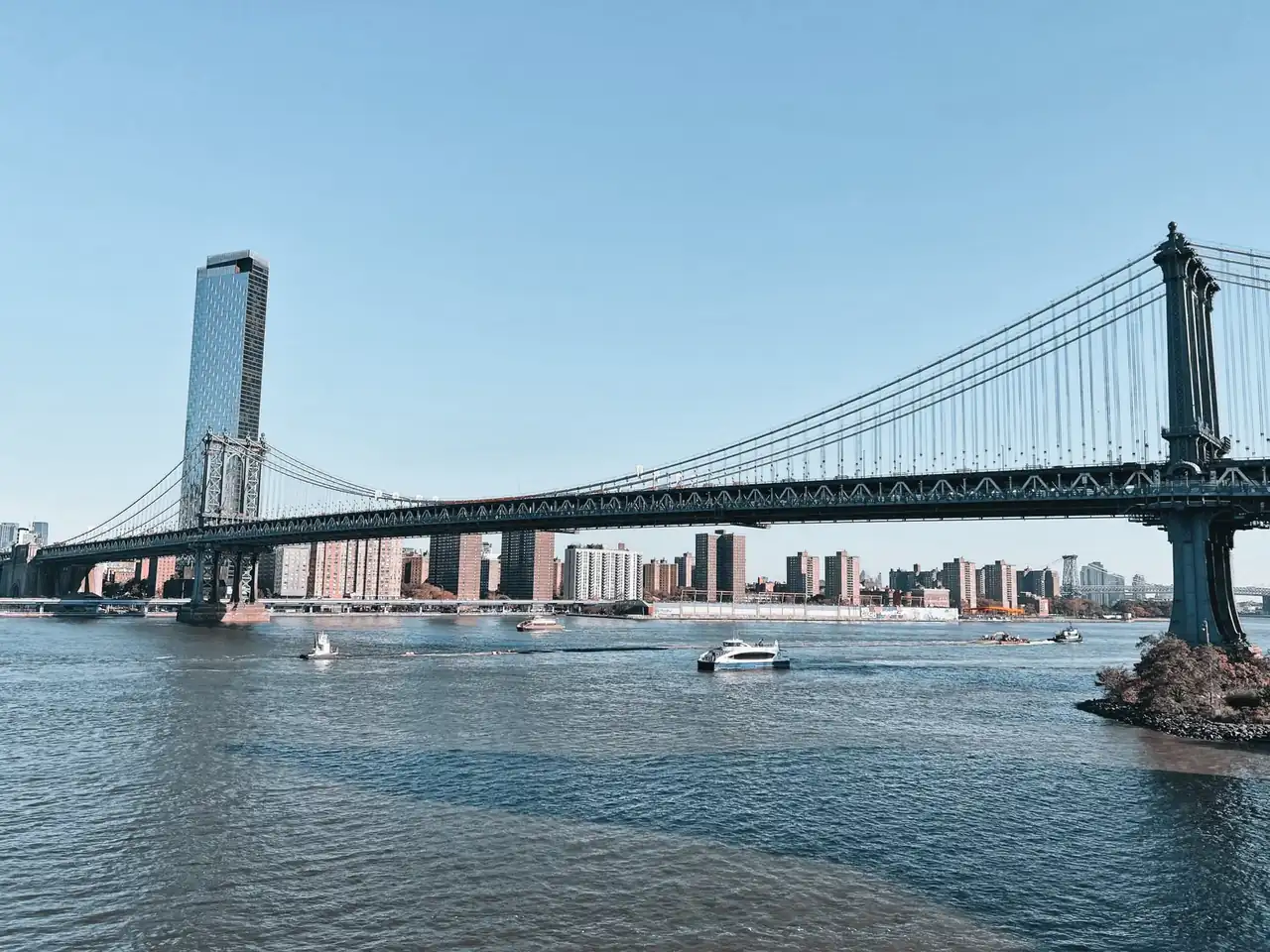
The start is in Brooklyn, in the Prospect Park and Grand Army Plaza area, before facing a sequence that grows more intense from the first kilometers. The move into Manhattan includes crossing the Manhattan Bridge, one of the race’s most recognizable images, and continuing along the FDR Drive beside the East River, where the runner watches the city unfold like an open set, with traffic, skyscrapers, and water fitting into a single panorama.
Then comes the most iconic section. Times Square appears in the middle of the effort as an explosion of light and noise, even when the race cuts traffic and the city seems to surrender for a few minutes to the runners’ passage. That part of the route is not just a postcard; it also works as a psychological gear change. The surroundings push you forward, but they also deceive you, because the excitement can make you think there is plenty left in the tank when the most uncomfortable part is still ahead.
The finish in Central Park preserves the essence of the great urban races: entering the park, the curves, a terrain that no longer lets you hide, and a finish line that feels more like relief than immediate celebration. The final straight is not a stroll; it is an elegant and hard bill at the same time. Those who arrive with room to spare enjoy it. Those who arrive on the limit suffer through it. And that is part of the prestige of this half marathon: it does not let itself be tamed easily.
Registration, entry limits, and the reality of getting a bib
Registration does not work like an ordinary race. The NYC Half operates with entry limits, access criteria, and, in many cases, a lottery system when demand exceeds supply. That barrier makes the race even more desirable, especially among international runners who fit it into a broader trip to the city. Simply securing a spot is already part of the experience.
The competition for a bib explains why alternative options appear in the sports-tourism market. Some agencies work with limited allocations and closed packages that include accommodation, transfers, and access management, which reduces uncertainty. In 2025, several offers ranged from approximately €1,620 to €2,510 per person depending on room and number of nights, with the bib separate or conditional on the package selected. It is not a small figure, but it is also not unusual for a trip to New York in peak season and for a race with such strong appeal.
The difference between traveling independently and taking an organized package is not only financial. It is logistical too. The runner who improvises usually has to deal with flights, hotels, airport transport, bib pickup, and getting to the start; the one who buys a package pays to remove that burden. In a city where traffic, distances, and access times can cause problems, that peace of mind has real value.
Times, early starts, and March weather
The race start is scheduled very early, around 7:30 in the morning, a logical decision in a city with enormous traffic density. For the runner, that means getting up early, spending time in corrals or waiting areas, and accepting that the race begins when the body has not fully woken up yet. That detail is no small thing: standing still before the starter’s gun on a cold New York morning can stiffen the legs more than the first kilometer itself.
March in Manhattan usually brings variable but cool conditions. Recent years’ reference points place temperatures at only a few degrees at dawn, with feels-like readings that require good protection before the start. That combination of cold, waiting, and nervous tension makes the pre-start period as important as the final kilometers. Anyone who miscalculates their warm clothing or warm-up time reaches the gun with a body that is only half ready.
There is also a minimum pace requirement that affects the slower part of the field. The organizers require maintaining an approximate speed of 13 minutes and 45 seconds per mile in order not to be directed to the sidewalk in certain sections. That is an important detail because it defines the type of runner who can enjoy the race with confidence: it is not enough to want to be there; you need to sustain a minimum forward pace to stay within the official flow.
Traveling to run without carrying the whole machine
Organized trips for this half marathon are usually built around a very clear goal: simplifying the experience. The packages observed in the reference include direct flights from Madrid, airport-hotel-airport transfers, accommodation in Manhattan, private transport to the start, and assistance during the stay. In a city with so much on offer and so much geographic spread, sleeping near Times Square or Midtown shortens transfers and removes small frictions that, when added up, wear you down more than you might think.
Accommodation in hotels such as M Social Times Square follows that logic. It is not just a catalog name, but a strategic point within Manhattan, with reasonable access to the city and the added value of being close to key areas for tourism and the race. After crossing the finish line, the runner deeply appreciates not having a long trek ahead just to get back to the hotel.
That kind of trip also tends to attract companions who are not running but do want to experience the city during those days. The mix of excursions, cultural activities, and free days turns the getaway into something broader than a simple sporting participation. In New York, moreover, the line between tourism and racing is easily blurred: a runner can be thinking about target pace in the morning and about a musical or an NBA game in the afternoon.
Prices, conditions, and what the runner is really paying for
The price of the trip is not limited to the flight and hotel. What makes these packages more expensive is the full structure: private transfers, coordination, basic insurance for certain residents, administration, and, in some cases, guaranteed entry or hospitality access. In 2025, different rates were offered depending on length of stay and room type, with a bib and hospitality cost of around €300 in one of the proposals reviewed, always subject to availability and specific conditions.
Payment is usually split into several installments, which is common in trips of this kind. Staggered cancellation penalties also appear, which in some reviewed programs can reach 100% from January onward. That fine print is not a formality: it defines the real risk of booking months in advance for a trip where flights, places, and bibs are locked in long before departure.
The presence of a guaranteed bib does not remove all the nuances. Often the race fee is excluded from the base package or depends on the chosen option, and that means reading carefully what is included and what is not. On an international trip of this kind, the feeling of an all-inclusive package can be misleading if you do not carefully check the room, insurance, checked luggage, cancellation fee, and optional services.
What happens before and after crossing the finish line
The day before the race usually centers on bib pickup, visiting the race expo, and the final gear check. Expo logistics vary by edition, but the pattern is the same: lines, accreditation, nerves, and the feeling that the challenge becomes tangible when you hold the bib in your hands. For many runners, that moment is worth as much as the start itself.
Then comes the most enjoyable part of the trip: the city in celebration mode. New York offers an almost cinematic contrast between the physical effort of the half marathon and the possibility of walking, eating, window-shopping, or going up to an observation deck the next day. The body is heavy, yes, but the city invites you to keep moving, only at a different pace, one that is less heroic and more contemplative.
That balance between sacrifice and enjoyment explains why the race attracts such different profiles. Some runners chase a time, others the experience, and others the photo offered by the bridge, Times Square, or Central Park. They all share something: the certainty that this is not just any half marathon, but a race in which the setting matters almost as much as the clock.
A race that keeps growing among the big names on the calendar
The New York Half Marathon 2025 produced striking images and confirmed that the race is no longer a rarity on the international circuit, but a benchmark event. The victories of Abel Kipchumba and Sharon Lokedi reinforced the competitive level of a race that is not merely attractive to look at; it also brings together athletes capable of running at very serious paces and raising the day’s demands for the entire field.
In practice, the NYC Half combines several common runner desires: living in a great city, tackling a recognizable course, taking part in a massive popular event, and testing oneself in an environment that offers no reprieve. That mix, as simple to state as it is difficult to replicate, is what continues to fuel demand for entries and specific travel packages each season.
There is a clear lesson for anyone preparing it months in advance: here, it is not enough to think about the 21.097 kilometers. You have to think about the whole journey, from registration to leaving the hotel, from the coat for the wait to the final turn in Central Park. The race is only part of the story; the rest is written by New York, with its noise, its cold, its bridges, and that very New York way of turning effort into a stage.
The New York Half Marathon 2025 cannot be explained only by the clock or the bib, but by the kind of trip it demands and by the city that surrounds it. For the runner, it ends up being an athletic challenge; for the memory, it almost always becomes a complete scene: the bridge, the asphalt, the avenue, the crowd, and the finish line in a park that seems to finally bring order to all the noise of the Big Apple.



How to prevent thigh chafing: causes and real solutions

Women’s running windbreakers: seven jackets and how to choose

Do more workouts get rid of soreness? A guide for runners

Jaén Half Marathon 2026: Record 3,800 Runners Registered

Men’s short running tights: how to choose the right pair

World Triathlon confirms data breach involving medical data

Izan Edo targets podium at Miyazaki World Cup

María Pérez ranks ninth in World Athletics’ 2026 top ten

Dos Santos, Duplantis and Sawe: World Athlete of the Year finalists

San Silvestre Vallecana 2026: 42,000 places, prices and start times

 Races4 months ago
Valencia Half Marathon 2027: date and registration

 Races4 months ago
Valencia Marathon 2026: entry, ballot and course

 Reviews and Comparisons4 months ago
Asics Gel-Roadmiles 3 for men: review and current price

 Reviews and Comparisons4 months ago
Asics Gel Sonoma 8 Gore-Tex: complete analysis for trail and rain

 Sneakers3 months ago
Saucony Endorphin Pro 4: full review and verdict

 News5 months ago
Strava API 2026: what changes for clubs, challenges and runner apps?

 Reviews and Comparisons5 months ago
Nike Alphafly 3: opinions, sensations, and real key points

 Reviews and Comparisons4 months ago
Under Armour running shoes review 2025-2026: models and key features

 Sports Equipment4 months ago
Shoe sizes in cm: a clear guide to getting the right fit for your footwear

 Sneakers3 months ago
Skechers GO RUN Consistent 2.0 analysis: comfort and limits

 News5 months ago
Valencia Marathon 2026 route: key tips to train and run better

 Sneakers4 months ago
Adidas Adizero Boston 13 for men: review and verdict