Races
Pas Ras al Port de València 2026: date and route
Valencia’s oldest 10K returns with a new date, a certified course, and an ideal route to fly along the sea.

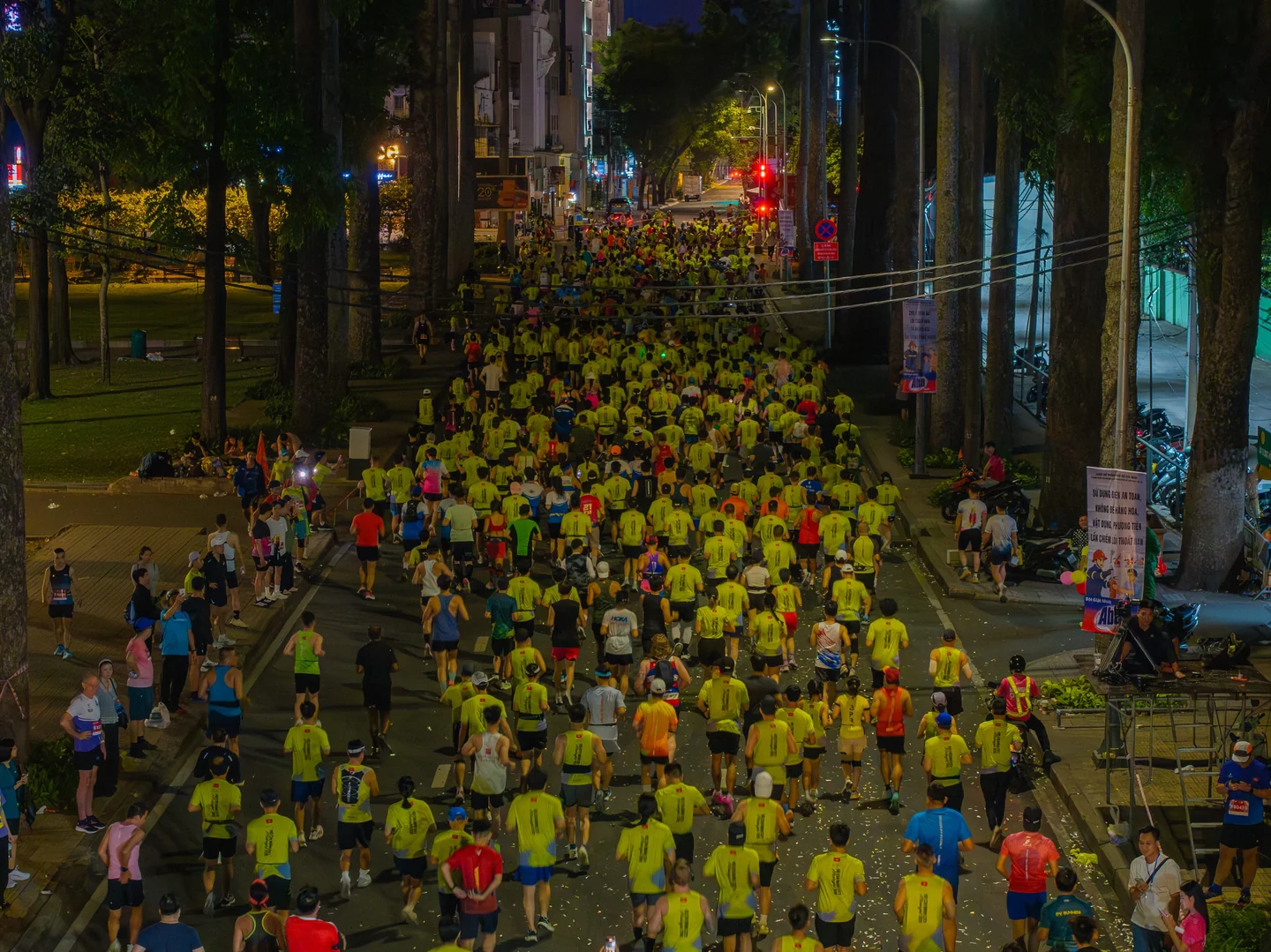
The Pas Ras al Port de València is once again looking out to sea with an edition marked by postponement, safety, and a course as flat as it is fast. The organizers have set the race for March 22, 2026, after suspending the date scheduled for December due to the forecast of rain, a decision that fits the cautious nature of a race deeply rooted in Valencia’s popular racing calendar.
The event retains its essence as a certified 10-kilometer race and adds special appeal for those chasing a personal best: the route is practically flat, runs through La Marina and the seafront, and is valid for athletes with a current federative license. This is not just another race in the Valencian winter, but an event with its own weight, veteran status, and a very recognizable finish near the port and in an environment that combines asphalt, sea breeze, and high pace.
A race with tradition on the Valencian calendar
The history of the Pas Ras al Port de València is long and quite unique. It was born in 1988 and, except for the unavoidable pause in 2020 due to the pandemic, it has been held continuously until becoming the oldest 10K in the city. That fact is not just a badge of seniority; it also explains why the race holds a special place among recreational runners, clubs, and federated athletes looking for a fast setting without giving up the urban flavor of València.
The 2026 edition will be the 37th edition of a race that has learned to balance tradition and modernization. It does so with a course certified by the RFEA, a technical detail that gives confidence to those who need an official time, and with an organization that in recent years has strengthened its image as a solid race, easy to understand, and closely tied to the coastline. Few urban races achieve that blend of neighborhood feel, port, and seafront promenade so naturally.
At its core, its appeal does not depend only on the final time. It also lies in the feeling of running in an open setting, with the port landscape on one side and the Mediterranean line on the other. That combination makes the start feel like a kind of navigation lane for runners: everything leads forward, without major climbs or abrupt changes in terrain, as if the city were yielding to the effort of those competing.
The new date and the context of the postponement
The race scheduled for December 14 was postponed due to the forecast of rain. The new date, March 22, 2026, not only reshuffles the calendar but also changes the sporting context. March usually brings milder temperatures and different humidity on the coast, something that can affect perceived effort and the pace participants are able to sustain.
The postponement was taken as a safety-oriented decision, a word that in popular races does not sound bureaucratic but essential. Running through the port, crossing open areas, and sharing space with athletes, technical staff, and organizational services requires the weather to cooperate. When rain can make the surface or setup more difficult, moving the date is not a whim: it is a way of protecting the full race experience.
That move to March also connects the Pas Ras with a time of year when València is already beginning to leave behind the harshest cold. For many runners, that has a clear meaning: less thermal discomfort, a greater chance to push harder, and a course that invites sustained speed. In that sense, the race changes season but not character.
A route made to run fast
The course is one of the race’s biggest selling points. The start is located on Paseo de la Remor, at the height of the Lanzadera Building, and from there the route advances through the port area toward the Clock Building, the Fishermen’s Hall, and the movable bridge, before linking up with Paseo de Neptuno and José Ballester Gozalvo and Eugenia Viñes streets. It then returns to La Marina, crosses the bridge again, and heads back inside the port to complete a circuit that finishes near Veles e Vents.
It is a practically flat 10K and 100% on asphalt, with no trails, no notable elevation changes, and a very clear tactical reading: those who pace themselves well can sustain their rhythm, while those who start too enthusiastically pay for it in the final kilometers. That apparent simplicity is precisely what makes it interesting. There are no mountain tricks or complex technical turns; there is a straight, fast canvas where the clock matters more than epic drama.
The setting also adds visual value that few urban races can match. Running among warehouses, port buildings, and the seafront promenade creates a sense of continuity between city and sea that accompanies the runner almost like a soundtrack. The asphalt transmits every stride with predictable firmness, and the broad, open landscape helps maintain mental effort when the body starts asking for a negotiation.
Certification, times, and the real value of the stopwatch
The course certification is one of the most relevant features of this edition. The 10-kilometer route once again has official validation, which gives confidence to the times achieved by those who hold a current federative license. For a recreational runner, it may seem like a technical detail, but for anyone seeking a reliable result it is an important guarantee: the distance is not approximate, but certified.
That nuance raises the race’s appeal in a calendar crowded with all kinds of events. A certified race reduces doubts, makes comparisons clearer, and allows the effort to translate into real statistics, rankings, and personal goals. In a city like València, where running culture has normalized fast paces, the Pas Ras fits as a useful and very specific piece of the competitive puzzle.
The race also has a symbolic dimension: being fast does not make it superficial. On the contrary, it forces runners to read their body, the wind, positioning in a group, and the exact moment to change gear. It is the kind of race where a small energy saving in the port can make the difference in the final kilometers, where the clock no longer forgives.
Categories, youth development, and a pulse that goes beyond the open race
The main race does not come alone. Alongside it, several races for younger categories are held, with distances of 500 meters, 1,000 meters, and 1,500 meters depending on age, as well as a designated area for the youngest children. That part of the program matters because it turns the day into something broader than just an adult race with a bib number: it brings in youth development, family, and atmosphere, three elements that sustain the fabric of recreational athletics.
In the overall standings, Sub 20, Sub 23, Senior, and Veteran A, B, and C categories are included, using the usual criterion of age attained during the year. This breakdown is not a minor formality. It allows effort to be measured with some fairness across very different generations, from young athletes just beginning to enter competition to veteran runners who continue to fine-tune their times with experience.
The organization also adds a competitive dimension that recognizes performance beyond the general classification. Trophies are awarded to the top three men and women, and there is a prize for the club with the most finishers, as well as specific recognition for female participation in the port area. This combination of awards introduces a choral reading of the event, where the collective matters as much as the individual performance.
Prizes, records, and a race with memory
The race records remain a living reference within the Pas Ras. The men’s best time is still held by Hassane Ahouchar, with 29:40 since 2016, while the women’s record belongs to Alicia Álvarez Gutiérrez with 34:53 set in 2024. These times help show the level of the race and also the speed its course allows when the right conditions come together.
The organization has planned a special reward if those marks are broken, an incentive that adds sporting tension without changing the event’s popular character. Records in this kind of race serve a function similar to lighthouses on the coast: they do not determine the whole journey, but they guide what can happen when the course, the weather, and the legs align at the same point of balance.
There is also an interesting historical reading. The fact that the men’s record has stood for years and the women’s record is relatively recent shows that this race maintains a demanding competitive standard. It is not just about attracting participants, but about sustaining a recognizable sporting identity, with times that the environment respects and that runners know even before pinning on their bib.
The port logistics and life around the start
València’s Port conditions the race and, at the same time, makes it special. The start on Passeig de la Remor, the proximity of the Clock Building, and the passage through La Marina create a setting that is easy to identify and very different from other, more enclosed urban races. Here the runner is not boxed in by façades: they move through an open space, with salty air and clear horizons.
The organizers and the Traffic Management Center have also reminded participants of parking restrictions around the port area in the hours leading up to the race. That kind of notice often goes unnoticed by those who only look at the bib number, but it is key to understanding that an event of this kind moves much more than athletes: it mobilizes access, parking, setup times, and a small urban choreography that must work precisely.
The runner’s experience begins before the start and ends well after crossing the finish line. The surroundings of La Marina, the arrival at Veles e Vents, and the atmosphere of the promenade shape a day that feels less like an isolated event and more like a city morning focused on sport. In such a setting, the stopwatch matters, but so does the way people enter and leave the event without friction.
Why it keeps attracting recreational and federated runners
The Pas Ras al Port de València retains a formula that rarely fails: speed, accessibility, and a very clear identity. For recreational runners, it offers a real chance to improve a personal best in a friendly setting; for federated athletes, a certified distance that gives value to the performance; for fans of Valencian running, an event with pedigree and sporting memory.
The race also fits well at a point in the calendar when many people are looking to regain sensations after months of training or connect intermediate goals before bigger races. Its 10-kilometer distance acts like a kind of thermometer: it does not require the preparation of a half marathon, but it does demand much more than an informal outing. That makes it a good fitness test for anyone wanting to gauge themselves without drama.
There is also a less visible and more human reason: the pleasure of running in a place that needs no embellishment. The port, the promenade, the sea, and the straight finish are enough. The race does not try to impress with steep gradients or grand scenery; its appeal comes from a simple, almost clean geometry, where everything comes down to running well and intelligently reading one’s own effort.
An event that confirms the weight of running in València
València did not build its prestige as a running city solely on the back of major marathons. It also did so with medium-sized, highly recognizable races that sustain the competitive habit throughout the year. The Pas Ras al Port de València belongs to that category of events that do not dominate the headlines, but do help explain why running culture has such fertile ground in the city.
The 2026 edition, postponed and adjusted because of the weather, reinforces precisely that idea of continuity. Tradition is not broken; it is adapted. The focus is not lost; it is shifted by a few weeks. And in that movement there is something very typical of popular athletics: the ability to reorganize without losing momentum, as if the calendar were a flexible track but the race’s identity remained fixed in the same point of the port.
What remains is an event that combines history, speed, and seafront scenery with uncommon naturalness. Those who come to the start will find a race built to run for real, without artifice, with a route that does not lie and an environment that turns every stride into a postcard of València by the sea.



How to prevent thigh chafing: causes and real solutions

Women’s running windbreakers: seven jackets and how to choose

Do more workouts get rid of soreness? A guide for runners

Jaén Half Marathon 2026: Record 3,800 Runners Registered

Men’s short running tights: how to choose the right pair

World Triathlon confirms data breach involving medical data

Izan Edo targets podium at Miyazaki World Cup

María Pérez ranks ninth in World Athletics’ 2026 top ten

Dos Santos, Duplantis and Sawe: World Athlete of the Year finalists

San Silvestre Vallecana 2026: 42,000 places, prices and start times

 Races3 months ago
Valencia Half Marathon 2027: date and registration

 Races3 months ago
Valencia Marathon 2026: entry, ballot and course

 Reviews and Comparisons4 months ago
Asics Gel-Roadmiles 3 for men: review and current price

 Reviews and Comparisons4 months ago
Asics Gel Sonoma 8 Gore-Tex: complete analysis for trail and rain

 Sneakers3 months ago
Saucony Endorphin Pro 4: full review and verdict

 News5 months ago
Strava API 2026: what changes for clubs, challenges and runner apps?

 Reviews and Comparisons5 months ago
Nike Alphafly 3: opinions, sensations, and real key points

 Reviews and Comparisons4 months ago
Under Armour running shoes review 2025-2026: models and key features

 Sports Equipment4 months ago
Shoe sizes in cm: a clear guide to getting the right fit for your footwear

 Sneakers3 months ago
Skechers GO RUN Consistent 2.0 analysis: comfort and limits

 News5 months ago
Valencia Marathon 2026 route: key tips to train and run better

 Sneakers4 months ago
Adidas Adizero Boston 13 for men: review and verdict