Races
Ponle Freno Zaragoza 2025: route, schedules and key details
Start at Plaza del Pilar, 5K, 10K and handbike: this was Zaragoza’s charity race.

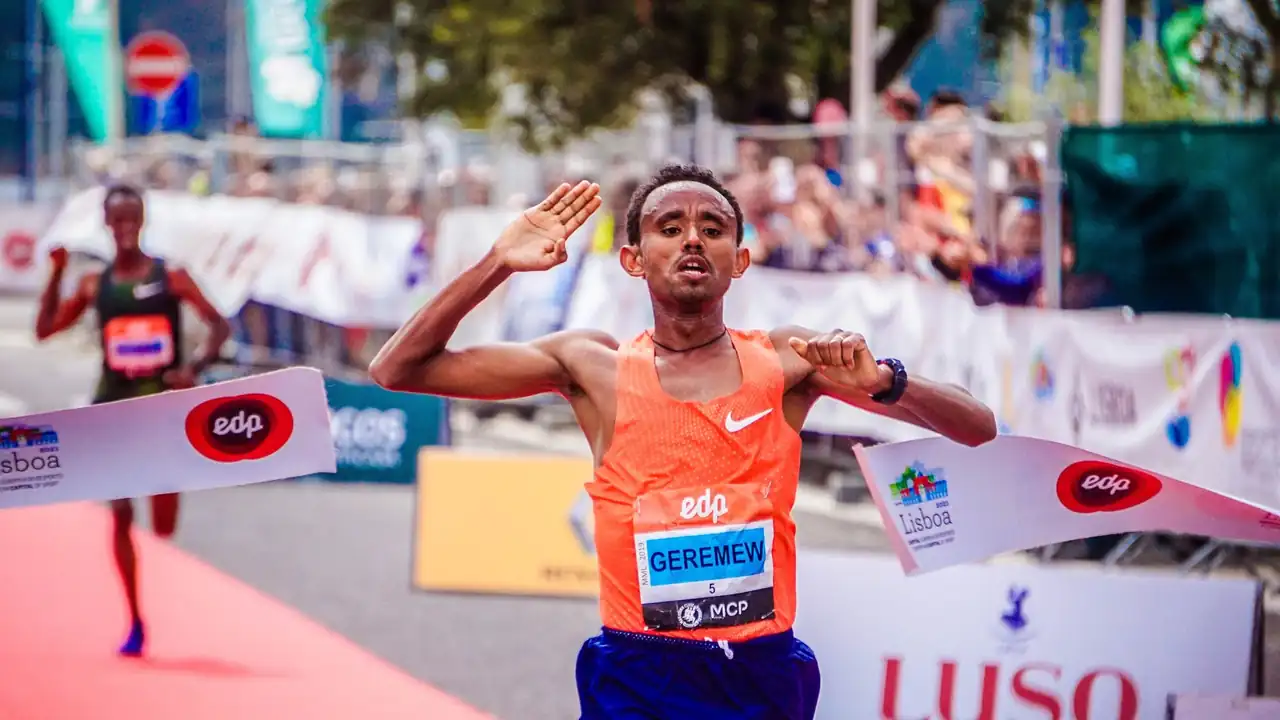
Ponle Freno Zaragoza 2025 combined popular sport, a social cause, and the city center into one morning. The event on May 18 brought together two distances, the presence of handbike competitors, and a fully paved course that took thousands of runners through the heart of the city, with start and finish at Plaza del Pilar.
The race, part of the national circuit promoted by Fundación AXA and Atresmedia, directed the proceeds from registrations to a project supporting victims of traffic accidents. That charitable component, together with a very visible route and a classic street-race atmosphere, explains why this event became one of the most recognizable on the Aragonese popular running calendar.
An urban race with a charitable stamp
The Zaragoza edition kept the format that best defines this circuit: an open competition for licensed and unlicensed athletes, with a straightforward concept that is easy to understand and easy to experience from the inside. 5 kilometers, 10 kilometers, and handbike were enough to accommodate very different profiles, from those looking for a short effort to those wanting to complete a more demanding distance on central city pavement.
The value of this kind of race is not measured only in times. It also includes the effect of temporarily closing emblematic streets, of seeing families, clubs, and independent runners sharing the same start line, and of turning an ordinary Sunday into a snapshot of a city in motion. In Zaragoza, that landscape was concentrated around the Ebro, the historic center, and the main promenades in the downtown area, with a route that offered constant visual reference and plenty of crowd support at the busiest points.
The organizers made it clear from the regulations that the money raised would go entirely to a social initiative linked to victims of road accidents. That detail gives context to everything else: the commemorative T-shirt, the trophies, the refreshments, the timing chip bib, and even the event communication all revolve around a race whose purpose goes beyond the final result.
Start, finish, and schedule in central Zaragoza
The day took place on the morning of Sunday, May 18, 2025, with the start scheduled for 10:00 a.m. from Plaza del Pilar. The regulations, however, left open the possibility of moving it up to 9:30 a.m. if high temperatures or other operational circumstances made it advisable, a common precaution in spring events with a forecast of heat.
The location was no accident. Plaza del Pilar works as a natural stage for a popular race: it is spacious, recognizable, easy to find, and allows the start, finish, and complementary activities to be concentrated in a highly visible space. For runners, that kind of setting simplifies logistics and increases the feeling of taking part in a city event, not an isolated race on the outskirts.
Alongside the main race, the organizers reserved the same area for the children’s races, with their own midday schedule. This arrangement helped ease the morning’s flow and kept the sporting atmosphere alive in the square after the 5K and 10K participants had already finished their effort.
Two distances and a handbike category
The sporting program included a 5-kilometer race and a 10-kilometer race, both on an uncertified urban circuit, as well as a specific 10K handbike category. The shorter distance gave access to runners with less training volume or those who preferred a more intense but brief experience, while the longer one added a second pass through much of the central course and required more careful pace management.
The handbike event was non-competitive and reserved for athletes with physical disabilities who could not run on foot. The regulations also set a very specific safety rule: these participants could not overtake the first three runners on foot. That detail reveals the balance these events seek between inclusion, sporting order, and coexistence between modalities on the same course.
The shared route allowed both distances to cover the first part of the course together, passing through spots such as Calle Salduba, Paseo de Echegaray y Caballero, Santiago Bridge, Avenida Pirineos, Paseo de la Ribera, and Azud del Ebro Bridge. The 5K runners finished earlier, while the 10K runners completed the additional loop via Calle Don Jaime, Coso, Plaza de España, Paseo de la Independencia, and Plaza Aragón before the final return to the Pilar.
A route designed to showcase the city
The route drew a very recognizable Zaragoza, with the Ebro as its axis and the urban center as its backdrop. The entire course was on asphalt, a condition that changes the experience quite a bit compared with other dirt or mixed-surface races: footing is more consistent, pace is easier to maintain, and each segment is clearer for those competing for a time or simply trying to keep a steady rhythm.
In urban popular races, the course matters almost as much as the distance. Here there were wide sections, turns, bridges, and historic streets that forced runners to alternate between comfortable stride and attention to the route. The bridges over the Ebro and the passage through central streets added visual variety, but also small technical demands, especially during direction changes and at moments of higher runner density.
The 10K also had the appeal of offering a second emotional lap through the heart of the city. That partial repeat is often an advantage for those seeking reference points: the runner already knows the terrain, identifies effort markers, and can better regulate their internal clock. In races like this, the mind runs too, and a lot.
Registration, price, and closing deadline
The fee was set at 10 euros for both the 5K and 10K, while the children’s races were free. Registration closed on Saturday, May 17 at 2:00 p.m. or earlier if all available bibs were taken. That time limit is important in high-demand events, because it leaves little room for hesitation and forces the organizers to fine-tune resources with considerable precision.
Entries were processed through the circuit’s official website, and the regulations emphasized that the fee would not be refunded once registration was completed. It also specified that unregistered bibs not issued in the participant’s name and runners not registered at the time of the start would not be accepted. These are common rules, but in mass-participation races they take on special importance for safety, timing control, and insurance coverage.
The registration process, simple and with a single fee, reinforced the race’s popular appeal. There were no tiered rates or complex pricing structures; the message was direct, almost like a classic race poster: a modest fee, a city event, and a charitable purpose that gave meaning to every bib.
Timing, results, and runner services
Time was measured using a timing-chip bib, visible from the front and mandatory throughout the race. That system is now standard in medium-to-large urban races because it allows more precise results and more reliable classification, both overall and in handling incidents. For runners, the key is to place it correctly and not lose track of it before the start.
The race included overall classification with men’s and women’s categories for both the 5K and 10K events. In addition, the organizers announced pace references through pacers at 4:00, 4:30, 5:00, 5:30, and 6:00 per kilometer, a very useful aid for those chasing performance goals and who do not want to navigate blindly in the middle of the crowd.
Planned services included a bag drop, photo coverage, a highlight video, water at kilometer 5 for 10K entrants, and a second refreshment point at the finish for everyone. Medical support and civil liability and accident insurance were also provided for properly registered participants. In an urban race, that support package matters as much as the route itself: it reduces friction, organizes the experience, and adds a basic layer of reassurance.
T-shirt, trophies, and prizes with symbolic value
Pick-up of the timing-chip bib included a Joma commemorative T-shirt, a piece that is now almost inseparable from the identity of this circuit. In popular races, the T-shirt is not just technical clothing or a souvenir; it also works as physical proof of having been there, a kind of soft medal that many runners keep with the same care others reserve for bibs or photos.
The top three overall finishers in the 5K and 10K each received a trophy and a gift, a formula that rewards performance without diluting the open spirit of the event. At the same time, the children’s races gave medals to all children at the finish, reinforcing the family-friendly and festive side of the event. That distribution of recognition fits the Ponle Freno model well: competition, yes, but also participation, visibility, and a shared memory.
The structure of prizes and gifts helps explain the event’s overall tone. This is not an elite meet or a competition closed in on itself, but a race where symbolic value carries a lot of weight. The T-shirt, the medal, the finish photo, and the passage through the Pilar are all part of the same sporting story.
Safety rules and coexistence on the course
The regulations were clear on several points that directly affect safety. Running with pets was not allowed, nor was being accompanied by unregistered family members or friends, or following runners by bicycle, motorcycle, or any vehicle not belonging to the organization. The local police and technical staff could remove anyone who failed to comply with these conditions to prevent incidents.
Sporting behavior was also mandatory, and any participant with someone else’s bib, without a visible bib, or outside the rules could be disqualified. In street races, these rules are not a formality; they are the way to protect the runners who have gone through the registration process, ensure the traceability of times, and maintain reasonable coexistence in a shared public space.
The time limit also defined the operational character of the day: 45 minutes for the 5K and 1 hour and 15 minutes for the 10K. Anyone who did not finish within that window could continue at their own risk and while respecting traffic, but outside the organizers’ coverage. In other words, the race had a planned pace and a very clear safety window.
The children’s races completed the morning
The children’s program added layers to the day and prevented all the attention from focusing only on the adult distances. Three short races were held in Plaza del Pilar itself, with approximate distances of 750 meters, 500 meters, and 150 meters, depending on age. The format was simple, visual, and very compatible with the atmosphere of a square full of families.
These races did not follow the same competitive logic as the 5K and 10K. Their role was different: to introduce younger children to running, reward participation, and make the sporting morning continue after the adults had finished. The result is a scene that tends to repeat itself in these events: children on the finish straight, applause all around, and a sense of civic celebration that lasts beyond the clocks.
The fact that the children’s races were held after the main events was no small detail. It made it possible to better organize access, make use of the start/finish setup, and keep the event moving for several hours. In that sense, the organizers designed a full day, not just an isolated race.
What an event like this leaves for Zaragoza’s calendar
The Ponle Freno Zaragoza 2025 Race offered a very precise picture of what a large, well-integrated urban popular race can be: asphalt, historic center, solidarity, broad participation, and regulations designed so every part of the mechanism works. There was no artifice, just a tried-and-tested formula that combines public visibility and social purpose.
For Zaragoza, this kind of event strengthens the link between sport and urban space. For a few hours, the city changes scale: streets are no longer just traffic routes but become a stage, a start line, a finish line, and a memory. For runners, that has a particular value, because running in such an environment means not only competing or covering kilometers; it also means reading the city from a different height, with the sound of footsteps in the background and architecture as witness.
The May 18 event thus closed another edition of a circuit that has managed to preserve a clear identity: running to add, in every sense. Adding kilometers, adding participation, and adding support for a cause that goes far beyond the clock and the finishing position.
You may also like: I 5K Arcosur against Perthes 2026: details, schedule, and route.



How to prevent thigh chafing: causes and real solutions

Women’s running windbreakers: seven jackets and how to choose

Do more workouts get rid of soreness? A guide for runners

Jaén Half Marathon 2026: Record 3,800 Runners Registered

Men’s short running tights: how to choose the right pair

World Triathlon confirms data breach involving medical data

Izan Edo targets podium at Miyazaki World Cup

María Pérez ranks ninth in World Athletics’ 2026 top ten

Dos Santos, Duplantis and Sawe: World Athlete of the Year finalists

San Silvestre Vallecana 2026: 42,000 places, prices and start times

 Races3 months ago
Valencia Half Marathon 2027: date and registration

 Races3 months ago
Valencia Marathon 2026: entry, ballot and course

 Reviews and Comparisons4 months ago
Asics Gel-Roadmiles 3 for men: review and current price

 Reviews and Comparisons4 months ago
Asics Gel Sonoma 8 Gore-Tex: complete analysis for trail and rain

 Sneakers3 months ago
Saucony Endorphin Pro 4: full review and verdict

 News5 months ago
Strava API 2026: what changes for clubs, challenges and runner apps?

 Reviews and Comparisons5 months ago
Nike Alphafly 3: opinions, sensations, and real key points

 Reviews and Comparisons4 months ago
Under Armour running shoes review 2025-2026: models and key features

 Sports Equipment4 months ago
Shoe sizes in cm: a clear guide to getting the right fit for your footwear

 Sneakers3 months ago
Skechers GO RUN Consistent 2.0 analysis: comfort and limits

 News5 months ago
Valencia Marathon 2026 route: key tips to train and run better

 Sneakers4 months ago
Adidas Adizero Boston 13 for men: review and verdict