Races
Pontevedra Half Marathon 2026: date, route, and key details
Start at Padre Fernando Olmedo, 21.097 km urban, 10K, and everything essential about the Pontevedra event.

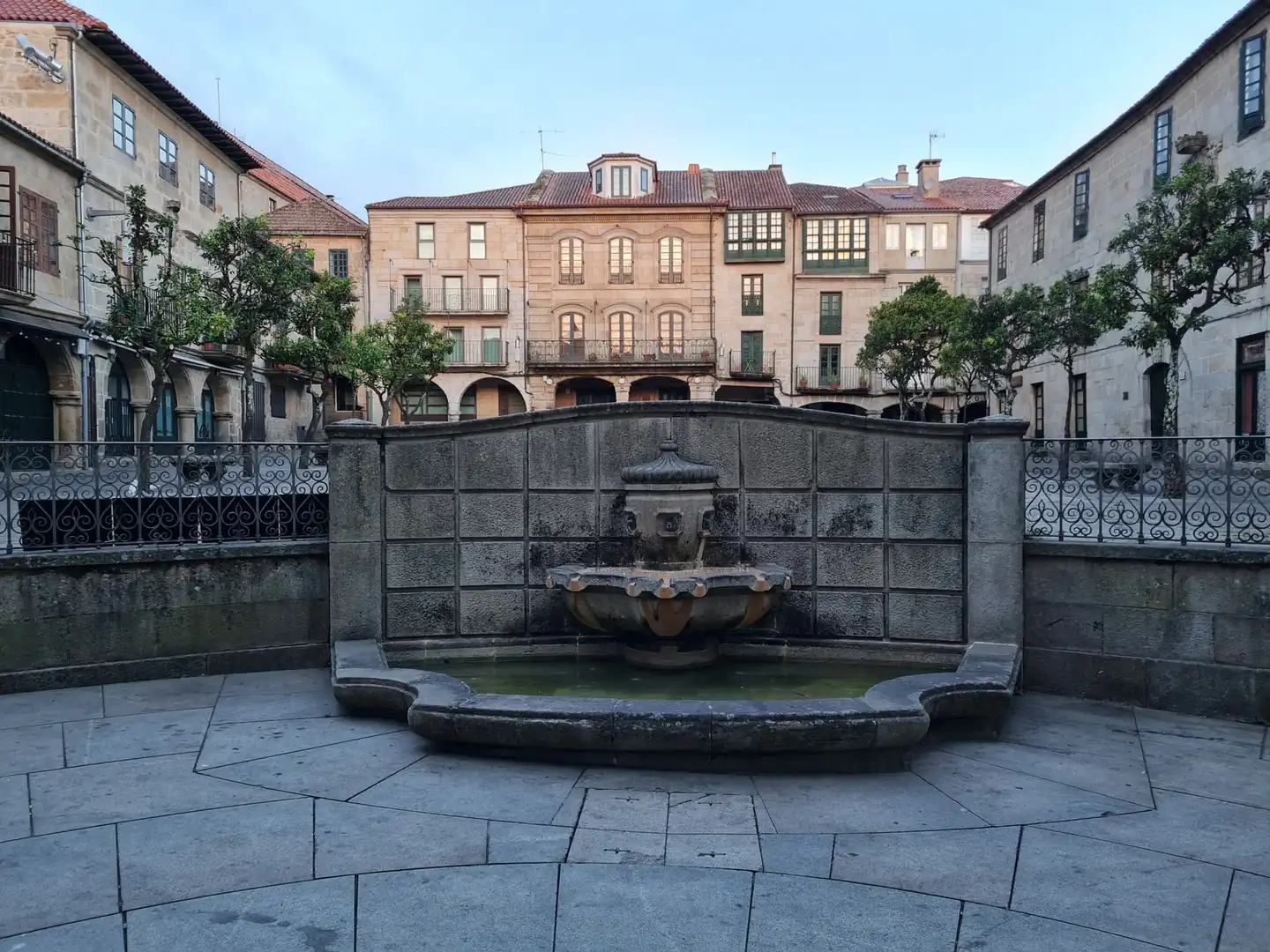
Pontevedra Half Marathon 2026 will once again turn the urban center and the banks of the Lérez into a long-distance course with its own identity. The race is set for October 18, 2026, with start and finish on Padre Fernando Olmedo Street and a route that, once again, relies on the city’s most recognizable features: the historic center, broad avenues, and a continuous passage through one of the most pleasant Galician capitals to run in.
This year’s edition keeps the format that has established the race as a benchmark in the northwest Iberian running calendar: 21.097 kilometers for the half marathon and a parallel 10-kilometer distance, designed for those who prefer a shorter effort without giving up the atmosphere of a major popular race. The event is organized by the Pontevedra City Council and the start is scheduled for 11:00, a time that suits a still-friendly day for running, although Galician autumn always has its own nuances in store.
A race shaped by the city and its urban route
Pontevedra has an unusual profile in the Spanish running scene: a compact historic center, very limited traffic in many areas, and a natural connection between streets, the river, and pedestrian life. That combination explains why the half marathon is so appealing to runners looking for more than just accumulating kilometers. The course is not just a succession of straight stretches; it offers a changing urban landscape, with pavement, gentle bends, open avenues, and sections where the monumental setting matters as much as the clock.
The thirty-first edition of the flagship distance will start and finish on Padre Fernando Olmedo, a detail that simplifies logistics and concentrates attention on the same point. From there, the urban circuit is laid out in two laps, a format that makes the route easier to recognize, helps pace efforts more clearly, and takes advantage of the public’s support in the most visible sections. The reference distance of 21.097 meters places the race within the international half-marathon standard, with the exact demands of a distance that seems friendly from the outside but, from kilometer 15 onward, requires every movement to be managed with care.
The route runs along broad, runner-friendly avenues, a feature that is far from minor in an urban race. Wider streets usually reduce bottlenecks and make it easier to maintain a steady pace, something very valuable for those aiming for a personal best. At the same time, the presence of the monumental area and the banks of the Lérez adds a visual element that sets the race apart from more impersonal half marathons. Here, the runner does not cross a neutral backdrop; they move through a city that reveals itself, with stone, water, and everyday life in the foreground.
Date, time, and basic logistics for the day
The event takes place on Sunday, October 18, 2026, and the start is set for 11:00. That schedule places the sporting action right in the morning stretch, when the city is already awake but has not yet fully reached its weekend pace. For runners, this means a relatively comfortable morning for travel, warm-up, and bib pickup, although the precise timing calls for sensible planning: breakfast early, check the chosen kit, and avoid improvisation on a day that, by its very nature, punishes any lack of organization.
The organizers have put 1,200 bibs on sale, a figure that places the race on a broad but still manageable scale. It is neither an anonymous mass event nor an industrial-sized race; it still has a popular feel in which the pre-race movement, access control, and start-area circulation retain a certain human scale. That balance helps participants better absorb the atmosphere and prevents them from being lost in an overly rigid setup.
Registration was priced, according to the available information, in a range of 16 to 30 euros, a typical bracket for urban races at this level that usually varies by registration phase or associated services. The presence of a 10-kilometer category broadens the range of participants and turns the day into something like a showcase of local running: those aiming for the classic distance and those preferring a more contained challenge share the start, finish, and setting. That coexistence increases the race’s appeal without diluting its main identity.
Runner services and an organization designed for real effort
Beyond the course itself, the Pontevedra Half Marathon stands out for a set of services that matter as much as the route. The race includes refreshment stations approximately every 5 kilometers, a reasonable spacing for an urban half marathon and enough to maintain hydration and control sensations. Over a distance of 21.097 kilometers, water and energy management stop being a minor detail and become part of performance itself.
There will also be physiotherapy, a baggage check, showers, changing rooms, and medical support. This set of services reflects an organization that sees the race as a complete event, not just a course with a stopwatch. The baggage check reduces pre-race stress, showers make the trip home easier, and physiotherapy adds a layer of care that, in popular races, often makes the difference between a merely functional experience and one that feels truly well looked after. For many runners, these elements matter almost as much as the quality of the course.
The maximum time allowed to complete the race is set at 2 hours and 15 minutes, a limit that gives a good indication of the typical participant profile for this kind of event. This is not a half marathon for improvisation or for taking it too easy. It demands a sufficient pace to stay within the cut-off and, at the same time, gives room to those used to managing themselves without anxiety. The fact that each kilometer is marked with signs adds another layer of clarity that helps sustain the effort and avoids that all-too-common feeling in urban races of losing reference points in the landscape.
The route as a sporting and tourist attraction
Pontevedra’s strength in this race lies not only in its organization, but in the value of the setting itself. The city offers an unusually rare mix of heritage, human scale, and urban continuity. Running through its centuries-old historic center is not just an ornamental label; it means moving through a street network where stone, arcades, and pedestrian density create a recognizable, almost cinematic atmosphere that completely changes the perception of effort.
The Lérez area introduces another rhythm. The river acts as a breathing line within the race, a kind of visual pause amid the urban pulse. For the runner, that contrast between the monumental and the riverside works like a silent soundtrack: it alternates narrowness and openness, stone and horizon, shade and brightness. In a half marathon, that kind of variety does more than beautify the route; it also helps sustain focus, which is especially welcome when the mileage starts to demand more than it seemed to at the beginning.
That is why the race tends to attract very different profiles. Some travel looking for a reliable time, others prioritize the experience of running in a pleasant and beautiful city, and some combine the bib with a weekend getaway. Pontevedra also fits that dual purpose well because it allows for competition without giving up a post-race walk, Galician cuisine, or a relaxed visit to the old town. In this case, the half marathon does not separate sport and city; it blends them into the same day.
The 10-kilometer distance and the importance of the shorter race
The presence of a 10-kilometer race is not a minor add-on. In events with this structure, the shorter distance often serves as an entry point into the race atmosphere and as a way to democratize the experience without trivializing it. Many runners find those 10,000 meters to be a realistic option for racing hard, while others use it as an intermediate step toward the half marathon. In both cases, the coexistence of distances strengthens the event and broadens its social reach.
From an organizational standpoint, this dual offering also softens the pace distribution and reduces the sense of monopoly that sometimes dominates races designed around only one long distance. The race gains density, variety, and street presence. And for spectators, seeing a fast 10K pack pass first and then those tackling the 21.097 kilometers adds a richer narrative, almost as if the city had two layers of effort on the same morning.
The half marathon remains the main focus, of course. But the 10-kilometer distance helps define the spirit of Pontevedra’s Gran Fondo: a competition that does not close in on itself, but instead aims to bring together different levels of participation without losing coherence. At a time when many races tend to segment their offerings too much, this format preserves a classic virtue: letting each participant find their challenge without taking them out of the same setting.
Registrations, bibs, and demand that usually moves quickly
Registrations were already open in the reference information, and the figure of 1,200 bibs suggests significant demand. In a race like this, the capacity limit is not just a decorative detail; it shapes the experience, defines the size of the pack, and even affects the smoothness of the course. When participation is well calibrated, the race breathes better and the runner feels less noise around the effort.
Bib pickup was planned between October 14 and 17 at Miler Vintage Running Club, on Peregrina Street, in the morning and afternoon, and also on race day itself at the University Pavilion, between 8:30 and 10:30. That combination of options makes pre-race logistics much easier and reduces the risk of queues or unnecessary travel. In urban races with several hundred participants, that operational margin matters just as much as the bib itself.
The collection structure reveals a race that is already well established in the city. It does not seem like an improvised event or one that lives only off its name; there is a clear machine behind it, with pickup points, time slots, and an organization that has already learned how to distribute the flow of runners. That predictability, which sometimes goes unnoticed, is one of the reasons certain races earn a stable place on the calendar.
Prizes, classification, and the sporting value of competing in Pontevedra
The event awards trophies to the top three male and female finishers in each category and adds cash prizes for the overall winners. This recognition system keeps the competitive side of the race alive without turning it into an event reserved for elites. There is space for those chasing the podium, for those aiming to improve their time, and for those running on a more personal level, but in all cases the race retains a clear and recognized framework for measuring performance.
The traditional runner’s bag completes a package that is part of the ritual of almost any major popular long-distance race: bib, course, timing, finish line, and a small material reward that symbolizes the day’s effort. It is not a minor detail, because it contributes to the physical memory of the race, so important in events where the remembrance is not limited to the final time, but also includes the atmosphere, the treatment, and the feeling of having taken part in a well-organized event.
From a sporting perspective, Pontevedra offers an interesting setting for running smartly. The urban circuit, the passage through wide avenues, and the absence of major climbs described in the available information favor a steady pacing plan. That does not mean it is an easy half marathon, because the distance always imposes its own grammar, but it does suggest that the race is designed to allow a certain continuity in stride. In long-distance running, that continuity is gold: a steady pace is often more reliable than the overexcitement of the first third.
A key date on the Galician running calendar
The Pontevedra Half Marathon does not exist in isolation. It is part of a busy autumn race calendar, where road races hold a central place in Galicia and much of the northwest. Its specific importance comes from that combination of factors that do not always come together: a welcoming city, a recognizable route, distances accessible to different audiences, and an organization that has maintained the race consistently over time.
That explains why the event continues to interest both regular runners and those who only line up for one bib a year. The half marathon has something of a symbolic threshold: serious enough to feel like a real race, familiar enough not to intimidate, and demanding enough that the previous training truly shows. In Pontevedra, that threshold is crossed in an environment that adds value without distracting from the main goal.
The result is a race with its own personality, quieter than other larger half marathons, but very solid in its concept. Date, route, services, and surroundings fit a race that has managed to build prestige from what is close at hand: a compact city, a living historic center, and a course that turns every kilometer into part of the same athletic postcard. It does not need any more embellishment. The Pontevedra Half Marathon stands on its own, with the sobriety of races that last because they are well thought out and because the runner, upon crossing the finish line, remembers more than just the clock.



How to prevent thigh chafing: causes and real solutions

Women’s running windbreakers: seven jackets and how to choose

Do more workouts get rid of soreness? A guide for runners

Jaén Half Marathon 2026: Record 3,800 Runners Registered

Men’s short running tights: how to choose the right pair

World Triathlon confirms data breach involving medical data

Izan Edo targets podium at Miyazaki World Cup

María Pérez ranks ninth in World Athletics’ 2026 top ten

Dos Santos, Duplantis and Sawe: World Athlete of the Year finalists

San Silvestre Vallecana 2026: 42,000 places, prices and start times

 Races3 months ago
Valencia Half Marathon 2027: date and registration

 Races3 months ago
Valencia Marathon 2026: entry, ballot and course

 Reviews and Comparisons4 months ago
Asics Gel-Roadmiles 3 for men: review and current price

 Reviews and Comparisons4 months ago
Asics Gel Sonoma 8 Gore-Tex: complete analysis for trail and rain

 Sneakers3 months ago
Saucony Endorphin Pro 4: full review and verdict

 News5 months ago
Strava API 2026: what changes for clubs, challenges and runner apps?

 Reviews and Comparisons5 months ago
Nike Alphafly 3: opinions, sensations, and real key points

 Reviews and Comparisons4 months ago
Under Armour running shoes review 2025-2026: models and key features

 Sports Equipment4 months ago
Shoe sizes in cm: a clear guide to getting the right fit for your footwear

 Sneakers3 months ago
Skechers GO RUN Consistent 2.0 analysis: comfort and limits

 News5 months ago
Valencia Marathon 2026 route: key tips to train and run better

 Sneakers4 months ago
Adidas Adizero Boston 13 for men: review and verdict