Races
Puente Genil Half Marathon 2025: date, route and details
The 2025 race had 21.1 km, started in Puente Genil, and featured a route that combined the town center, entertainment, and open areas.

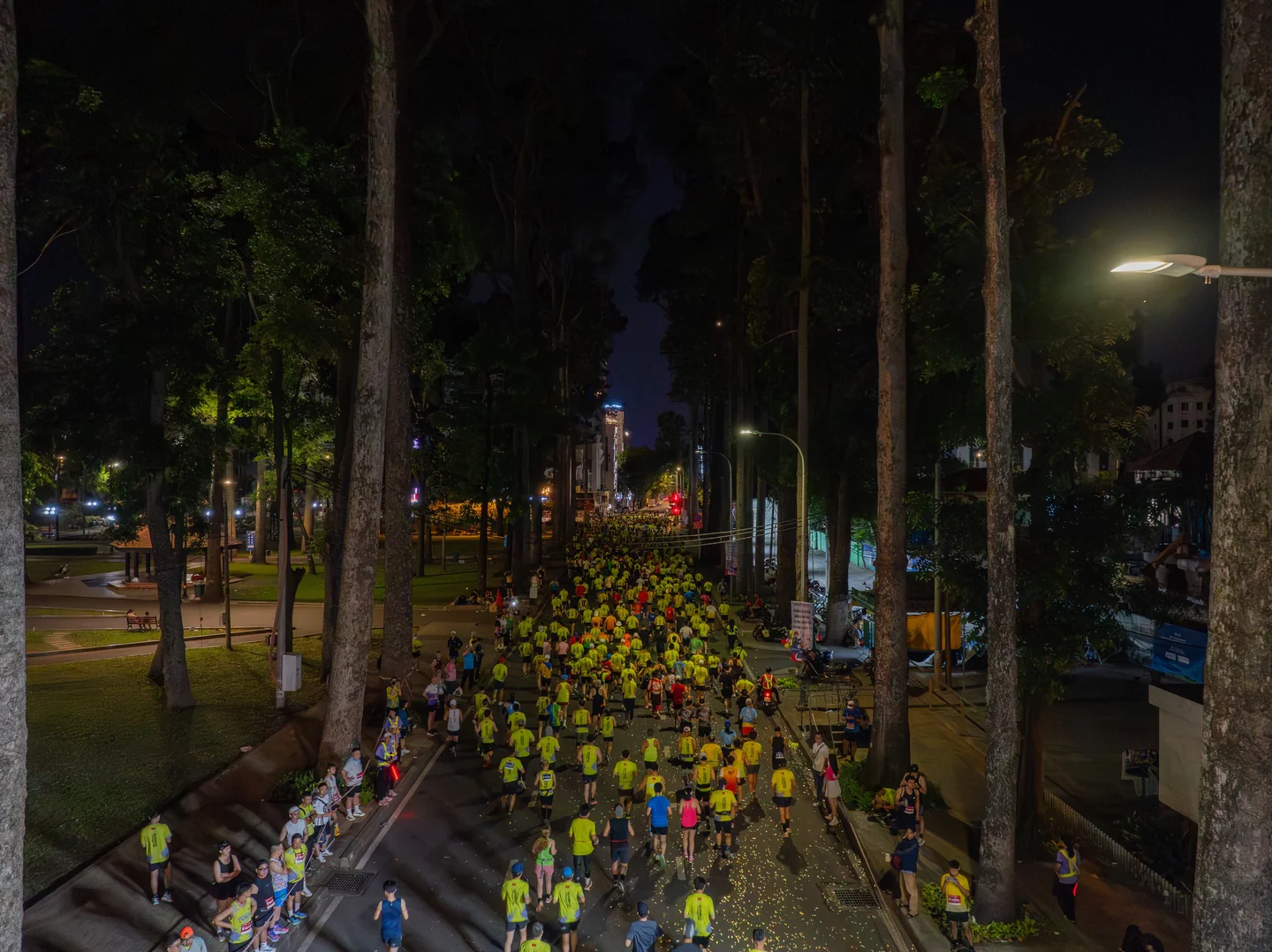
Puente Genil once again put its name on the map of Andalusian athletics with a half marathon that combined history, popular participation, and a course designed to showcase the town at running pace. The 2025 edition was held on February 9, with a 10:00 a.m. start and a 21.1-kilometer route that began on Elio Antonio de Nebrija street, next to the Employment Office area, and returned to the same point after passing through some of the most recognizable streets in the Cordoban municipality.
The race had a registration fee of 12 euros and was organized by the Puente Genil City Council, with the support of the Sports Department. Beyond the technical details, what explains the interest it generates every year is the mix of urban racing, passage through everyday places, and an atmosphere closely tied to the local sports calendar, where the runner not only competes: they also travel through a city that sees itself reflected in shared effort.
A race that brings together the town center, popular rhythm, and local scenery
The Puente Genil half marathon is not understood as a mere sum of kilometers. Its identity comes from a circuit that takes advantage of busy streets and more open stretches, with the aim of alternating the pulse of the center with sections where the runner can find a little relief and, at the same time, better gauge their effort. In 2025, the route passed through streets such as Aguilar, Madre de Dios, Cosano, Santos, Paseo del Romeral, and La Matallana, as well as areas near the Canal road.
That layout of the course gives a clear clue to its character: it is not a flat circuit in the emotional sense of the term, because it crosses areas where the crowd presses in, corners narrow, and the sound of footsteps echoes between façades; but neither is it limited to a dull lap around the urban perimeter. It has something of a municipal narrative, with settings that change like a sequence of shots: first the nervous start, then the search for rhythm, later the stretch where the body begins to demand order, and finally the return to the finish area with legs already accustomed to the effort.
The start and finish lines coincided on Elio Antonio de Nebrija street, a detail that simplifies logistics for athletes and companions and reinforces the feeling of a closed, almost ceremonial circuit. For many recreational runners, that kind of route offers a clear psychological advantage: the beginning and the end are anchored in the same place, as if the race were drawing a kind of orbit around the city before returning to the starting point, now turned into the finish.
Date, time, and registration for a much-anticipated edition
The 2025 edition was contested on Sunday, February 9 at 10:00 a.m., a common time slot for events of this kind because it allows for daylight starts and leaves room for the city atmosphere to accompany the event without the rush of earlier competitions. The detail is not minor: in 21-kilometer races, the start time affects the morning chill, the feel of the legs in the opening stages, and the turnout of spectators on the streets.
Registration opened on December 5, 2024 and closed on January 26, 2025, a reasonable window for an event of this size. The cost was 12 euros, a contained fee within the usual range for popular half marathons in Spain, especially when they are linked to city councils or local circuits. That amount usually covers part of the basic logistics, organizational support, and the runner’s bag, although the real value of registration is also measured by what the event offers around the race: signage, safety, assistance, and a reasonably well-cared-for experience for those wearing a bib.
The organizers emphasized that registration remained open as the weeks leading up to the event progressed, a formula that fits the dynamic of many popular races in which registration is not just a formality, but a way of gauging the level of interest in the town. In Puente Genil, moreover, the event arrived on the back of other recent competitions in the local calendar, which helped sustain runners’ attention and consolidate the idea of sporting continuity throughout the winter.
The route: a course designed for running and for looking
The organizers described an itinerary passing through streets such as Aguilar, Madre de Dios, Cosano, Santos, Paseo del Romeral, and La Matallana, as well as the area around the Canal road. That list of names is not just an urban roster; it draws a map with its own personality, blending commercial stretches, residential areas, and wider transit spaces. In a half marathon, visual variety matters as much as the width of the asphalt: breathing changes, mood changes, and the way the runner interprets the effort changes too.
The start on Elio Antonio de Nebrija street, in the La Pitilla neighborhood, provided a clear and easy-to-identify reference point. From there, the race covered a significant part of the urban fabric before returning to the same spot, where the awards ceremony took place. That structure has a very practical effect for both runners and spectators: the race becomes an accessible circuit, with a visible finish, easy to locate and useful for concentrating cheering, photography, and participant tracking.
There is also symbolic value in the fact that the route returned to the start. The city becomes a circular stage, not just a backdrop. Every street the pack runs through leaves a brief imprint, a vibration of footsteps, breaths, and applause, and then the race returns to the place where it all began. That back-and-forth logic turns the half marathon into a kind of sporting ceremony that fits Puente Genil’s size and identity very well.
Municipal organization and the importance of local athletics
The race was driven by the Sports Department of the Puente Genil City Council, with the telephone number and institutional email as contact channels for practical information. That municipal basis is important because it explains the kind of event being built: a race rooted in the town’s calendar, aimed at serving recreational runners and without the purely commercial logic that dominates other larger events.
The reference material highlighted the joint work of staff, volunteers, clubs, schools, and private partners. In a half marathon, that invisible network supports almost everything: from marking crossings to bib pickup, assistance at the finish, or encouragement at specific points along the route. When one of those gears fails, the race suffers; when they work, participants usually remember that more than the exact time they recorded at the finish.
The city council itself wanted to highlight the success of the Miguel Ríos Christmas Race, which brought together 1,020 entrants, as a measure of the municipality’s sporting moment. That figure helps place the context: the half marathon did not appear in isolation, but within a sequence of events that keep interest in running alive for much of the year. In towns with athletic tradition, that web of races is crucial for building enthusiasm and loyalty.
Prizes, runner’s bag, and improvements designed for recreational runners
The edition analyzed came with a structure of prizes and services aimed at enhancing the runner’s experience. The reference information explained that the runner’s bag would be expanded with new items, including socks and windbreakers, in addition to the usual material. In popular races, that detail matters more than it may seem: the bag is not just a gift, but also part of the tangible memory the athlete takes home after nearly an hour and a half of effort, depending on each runner’s level.
The organization also spoke of improvements to the cloakroom and the accessibility of the facilities, two less flashy aspects than the podium but essential for the event to run smoothly. A runner who has their belongings safely handled, finds the start area without trouble, and reaches the finish with reasonable services usually values the race more generously, even if the clock is not kind. Recreational athletics depends heavily on those quiet details.
Another highlighted element was the 1,000-euro increase in prize money compared with the previous year. Although the exact amount per placement was not broken down in the information consulted, the intention to strengthen the competitive appeal was clear. That increase does not alter the profile of a grassroots popular race, but it does send a message to the strongest athletes: Puente Genil wants to maintain a certain level of sporting attractiveness and not settle for being just another stop on the calendar.
Race atmosphere: music, live commentary, and family participation
One of the most visible additions was the boost in atmosphere with two DJs, located in San José and La Romeralera, plus two speakers stationed in Cordobilla and at the finish. This kind of resource changes the tone of the event, turning some points of the route into small energy stations, as if the race were breathing in intervals to the rhythm of music and the human voice. For the tired runner, a curve with music can be as valuable as a well-placed aid station.
The live broadcast on YouTube added a contemporary layer to an event deeply rooted in the local area. It is no longer just about running in the street, but about projecting the race beyond the physical circuit, opening it up to those who cannot attend and giving visibility to an event that wants to be more than a Sunday morning. In practice, that format extends the race’s lifespan and also turns it into digital content, something increasingly common in amateur sport.
Alongside that, the organization included parallel activities for children in the start and finish area. This decision broadens the event’s reach and places it on a more family-oriented level, where the half marathon is not solely an event for specialists or endurance enthusiasts, but a shared space. The presence of children and families helps consolidate a sporting culture that depends not only on results, but on the collective experience of the day.
Puente Genil and the mark of a half marathon with its own identity
The 2025 race confirmed something that has been evident for years on the Córdoba calendar: Puente Genil maintains a steady relationship with recreational athletics and knows how to dress its half marathon with recognizable ingredients. It does not need fireworks to explain its place on the map. A measured route, a date well placed in winter, and an organizational network that understands what runners expect are enough: order, sufficient atmosphere, and an experience that does not feel improvised.
The official name, XXXV Villa de Puente Genil Half Marathon, also refers to a tradition that carries weight on its own. Thirty-five editions are not a decorative number; they speak of continuity, of the ability to sustain a race over decades, and of a community that has made the event its own. In mid-sized towns, that persistence is often worth more than a big promotional campaign: the race is passed down, talked about, and prepared for with a mix of habit and quiet pride.
For the runner, the appeal lies in the combination of factors: 21.1 kilometers, a clear schedule, a modest price, and a course with personality. For the municipality, the race works as a sporting showcase and a day of gathering. And for anyone following running from a general interest perspective, Puente Genil offers a fairly accurate picture of what a well-established half marathon in the Spanish popular running scene looks like: an event without pretense, but with enough nuance to leave a mark.
What an event like Puente Genil leaves on the running calendar
The value of a half marathon like Puente Genil’s is not only in the names of the winners or the number of participants. It also lies in what it reveals about the state of popular running in Spain, where many mid-sized towns sustain events with a level of detail more careful than they may appear from the outside. A race like this concentrates logistics, volunteering, grassroots sport, and local life into a few Sunday hours, with the asphalt as the common thread.
The 2025 edition left a clear image: athletics still has strength when it is understood as part of the city. Puente Genil chose to improve services, renew the circuit, and give greater prominence to the experience of runners and spectators. That combination explains why its half marathon continues to attract attention within the Andalusian calendar and why each edition is still checked with interest, whether for the date, the route, or the simple desire to test oneself in a race with history.
In an era of fleeting events, stability also matters. And the Puente Genil half marathon, with its start on Elio Antonio de Nebrija street and its return to the same point, offers exactly that: a full lap around a town that recognizes itself in its race, in its people, and in the way shared effort ultimately becomes tradition.



How to prevent thigh chafing: causes and real solutions

Women’s running windbreakers: seven jackets and how to choose

Do more workouts get rid of soreness? A guide for runners

Jaén Half Marathon 2026: Record 3,800 Runners Registered

Men’s short running tights: how to choose the right pair

World Triathlon confirms data breach involving medical data

Izan Edo targets podium at Miyazaki World Cup

María Pérez ranks ninth in World Athletics’ 2026 top ten

Dos Santos, Duplantis and Sawe: World Athlete of the Year finalists

San Silvestre Vallecana 2026: 42,000 places, prices and start times

 Races3 months ago
Valencia Half Marathon 2027: date and registration

 Races3 months ago
Valencia Marathon 2026: entry, ballot and course

 Reviews and Comparisons4 months ago
Asics Gel-Roadmiles 3 for men: review and current price

 Reviews and Comparisons4 months ago
Asics Gel Sonoma 8 Gore-Tex: complete analysis for trail and rain

 Sneakers3 months ago
Saucony Endorphin Pro 4: full review and verdict

 News5 months ago
Strava API 2026: what changes for clubs, challenges and runner apps?

 Reviews and Comparisons5 months ago
Nike Alphafly 3: opinions, sensations, and real key points

 Reviews and Comparisons4 months ago
Under Armour running shoes review 2025-2026: models and key features

 Sports Equipment4 months ago
Shoe sizes in cm: a clear guide to getting the right fit for your footwear

 Sneakers3 months ago
Skechers GO RUN Consistent 2.0 analysis: comfort and limits

 News5 months ago
Valencia Marathon 2026 route: key tips to train and run better

 Sneakers4 months ago
Adidas Adizero Boston 13 for men: review and verdict