Races
Ruta de las Canteras returns to Fortuna with trail races and relays
Caprés hosts long and short trail races, relays and a walking event on 17 October, starting at San Jerónimo Hermitage.

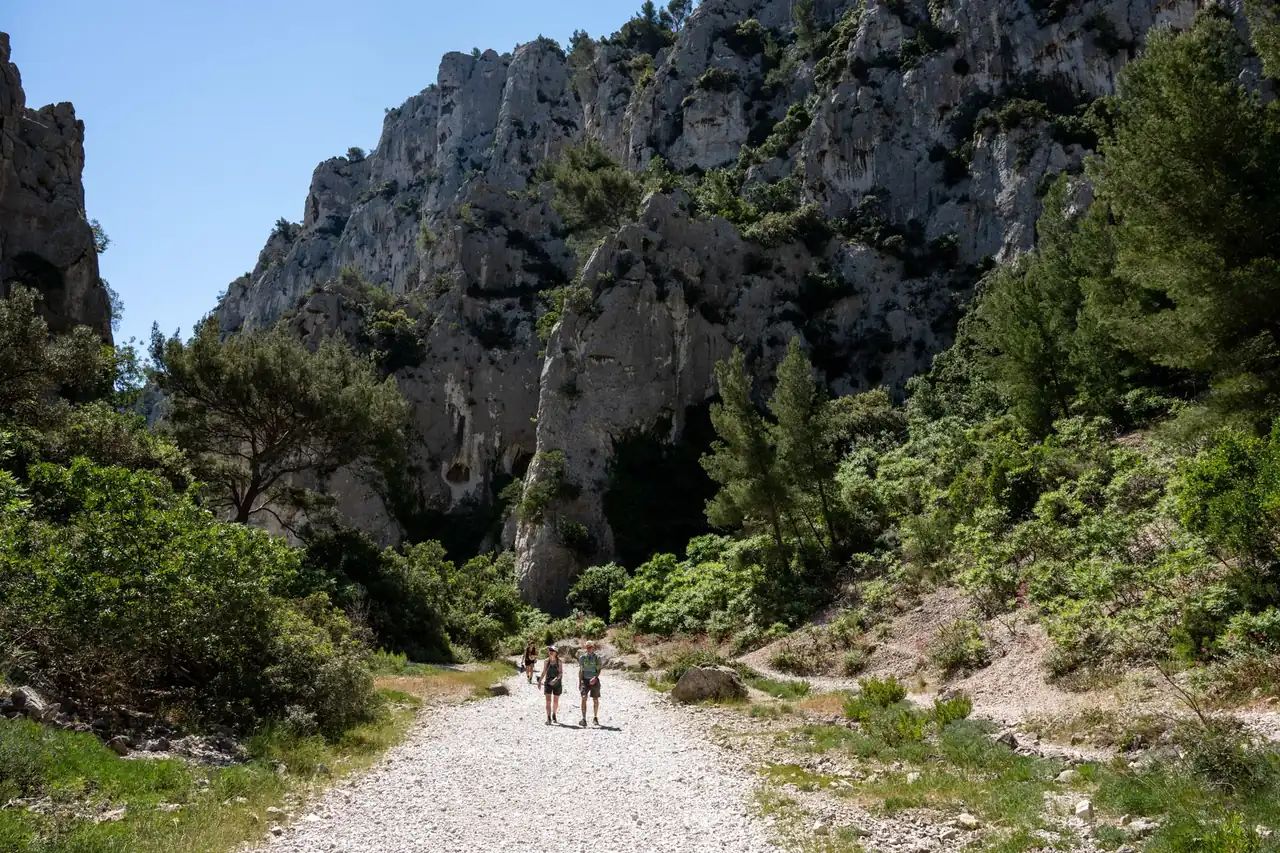
The fifth edition of Ruta de las Canteras Murcia Trail will take place on Saturday, 17 October 2026 in Caprés, within the municipality of Fortuna. Part of the Trail Tour FAMU circuit, the event brings together a 32.5-kilometre race, a 10-kilometre race, a relay format and a walking option. San Jerónimo Hermitage will serve as the shared start and finish location for every format.
The longer race will start at 8:30 a.m., with the 10-kilometre start scheduled for 9 a.m. According to the event announcement, entries remain open until 8 p.m. on 15 October, unless capacity is reached sooner. The programme also includes the Region of Murcia Trail Running Relay Championship, an addition that broadens the sporting appeal beyond individual competition.
The setting is in Murcia: this event is not connected with Las Canteras beach in Gran Canaria or its walking routes. It is a trail event in Fortuna, with Caprés as the reference point for arriving participants. That distinction matters when booking accommodation, planning a journey or locating the start, because the name also appears in connection with tourist destinations that have nothing to do with this race.
The event is organised by the Association of Aggregate Manufacturers of the Region of Murcia, AFAREM, in collaboration with Fortuna Town Council and the Athletics Federation of the Region of Murcia. This relationship between local industry, the municipality and athletics underpins an event now reaching its fifth edition. Its official presentation took place at the town hall, although the available information does not establish the exact day reliably.
For runners, the key consideration is the choice between two very different efforts. The 32.5-kilometre distance calls for different preparation and race management from a 10-kilometre run. It is neither a standard 42.195-kilometre marathon nor a 21.097-kilometre half marathon: it is this event’s own distance. Identifying it correctly helps prevent runners from automatically applying targets, paces or expected finish times from road races of another length.
In trail running, however, the number alone does not tell the whole story. A sustained climb, a technical descent or uneven ground can substantially change the demands of a given distance. The supplied announcement does not specify total elevation gain or the course profile, so it provides no basis for describing the longer race as fast, easy or particularly technical. Nor does it support a reliable finish-time estimate based on road-running results.
The two announced starts are 30 minutes apart. Runners in the longer event will set off at 8:30 a.m., while the 10-kilometre start is scheduled for 9 a.m. Those times should shape the competition morning, but they do not explain every operational detail. The available information does not describe starting pens, pre-race checks or separate instructions for each format.
The 10-kilometre distance offers several ways to take part: individual racing, relays and walking. That range allows people to share the same sporting day without everyone having to undertake the longer effort. It does not mean that the conditions are identical, however. A runner competing for a placing, a team member and someone entered to walk may be subject to different rules and procedures.
The walking option is linked to the shorter distance, but no separate start time is specified for it. Consequently, walking-specific arrangements, such as a distinct departure or a maximum completion time, cannot be treated as confirmed. Walking 10 kilometres off-road also requires an assessment of the terrain and personal fitness; changing format changes the pace, but does not automatically turn the route into an effortless stroll.
Relays bring another dimension to the race: the result depends on a shared performance rather than one individual alone. The event will host the regional relay championship, but the reference information does not state how many runners each team must have, how long each leg is or where the handover takes place. The advertised distance should not be interpreted as 10 kilometres per team member without consulting the rules.
It is also important to distinguish between entering an event that hosts a championship and meeting the conditions to compete for its titles. The eligibility requirements, accepted licences and required team composition are not included in the available details. It would be inaccurate to say that any registered group can compete for the regional championship. That distinction may affect the official standings even when runners share the day’s atmosphere and course.
Entries are handled through Alcanza Tu Meta. The announced deadline combines a date with a condition: 8 p.m. on Thursday, 15 October, or the point when the participant limit is reached, if that happens earlier. No capacity figure has been supplied, so the number of remaining places cannot be calculated, nor can availability be presented as guaranteed until the final hour of the registration window.
The announcement does not provide a verifiable entry fee for the different formats. Assigning an estimated price based on other races would be inaccurate, even if those races belong to the same circuit. No supplements, pricing tiers, refund conditions or possible differences between licensed and unlicensed runners are specified. A participant’s budget should separate the actual registration charge from external expenses such as travel, accommodation and meals during the trip.
Race numbers will be available for collection on race day at the start area, from 8 a.m. The organisers state that participants must show their DNI or another identity document. The supplied information does not announce earlier collection or establish whether someone else may collect a number on the entrant’s behalf. It also does not specify additional documentation for teams, minors or participants in the regional championship.
There will be just half an hour between the announced opening of number collection and the start of the longer race. For 10-kilometre participants, the interval will be an hour. That difference has practical consequences: collecting a number, attaching it and getting ready all use some of the available time. No queue estimates have been announced, so the opening time should not be mistaken for a guarantee of immediate service.
San Jerónimo Hermitage is the start and finish location for every format, providing a straightforward geographical reference for the day. Knowing that location, however, does not resolve all access arrangements. The announcement does not describe parking areas, possible road closures, group transport or the distance between parking and the start line. It also does not confirm facilities such as bag storage, showers or a designated area for spectators.
For runners travelling from the Valencian Community, the destination guiding their plans should be Caprés, in Fortuna, rather than a location selected simply because its name matches. The early start may make road travel time and the final approach particularly relevant. Without information about traffic, the journey’s origin or accommodation, it would be inappropriate to offer a universal travel time or claim that arriving on Saturday morning is the best option for everyone.
The longer distance encourages runners to treat effort as a reserve to manage rather than a pace to impose from the opening kilometre. In a race of more than 30 kilometres, starting too quickly can take its toll while substantial distance remains. That is a general trail-running consideration, not a description of the Caprés course: without its profile, specific decisive climbs, favourable sections or places to recover time cannot be identified.
The shorter race changes the duration of the effort, but does not remove the need to adapt. Ten kilometres on natural terrain may demand closer attention to foot placement than an equivalent road distance. The gaze shifts between the ground nearby and the trail ahead; stride length adjusts to the surface. That context explains why an urban race result is a limited reference rather than a promise of performance in a trail event.
Equipment also depends on the rules and the actual conditions on the day. The supplied information does not publish a mandatory equipment list, so particular items cannot be described as required or permitted. Shoes with suitable grip generally make sense for trail running, but the specific choice should reflect the terrain. The same applies to poles, packs and drinking containers: their use is not confirmed here.
Food and hydration deserve particular attention in the longer race. No aid station locations, number of stations or available products are specified, so water or food cannot be assumed to be available at a particular kilometre. As a general principle, a race is not the ideal setting to try foods or quantities that have not previously been tolerated. Preparation must then be adjusted to the arrangements published for this event.
October alone does not tell participants what the morning in Fortuna will be like. Race-day weather may affect perceived temperature, equipment comfort and ground conditions, but no specific forecast forms part of the announcement. Presenting heat, rain or cold as certain would be speculation. In trail running, the same path can also behave very differently as moisture levels or exposure to sunlight change.
Another missing detail is the race time limit, along with any intermediate cut-off times. This matters both for the 32.5-kilometre race and for participants approaching the shorter distance with the aim of finishing. Without those limits, it cannot be assumed that every pace will allow an official completion. Details of age categories and specific participation conditions that the rules might contain are also absent.
The organisers announce awards for the top three in each competitive category, together with special awards for the first three overall and the club with the largest attendance. The supplied announcement does not describe those awards or state a monetary value. An award should therefore not automatically be interpreted as prize money, nor does the information establish exactly which categories will exist or how a tie in club participation would be resolved.
According to the announcement, all participants will receive a runner’s bag containing a commemorative technical shirt and food after finishing. The organisers also mention any additional gifts they manage to secure. That element remains open-ended rather than constituting a fixed inventory of products. The menu, allergy or intolerance options, shirt sizing arrangements and other services associated with the bag are not specified either.
Food after the finish adds a shared space to a day combining competition and recreational participation. It will mean something different to someone finishing after several hours than to a participant completing a shorter distance. What is confirmed is the post-race food announced for participants, not a particular dining offer or individual nutritional provision. The gathering may continue after the clock stops, but its timetable and arrangements are not detailed.
The announcement describes the event as free of CO₂ emissions and connects it with the environmental commitment of the region’s aggregate companies. This is an organiser-stated commitment, not an independent assessment included in the available information. No emissions calculations, measurement method or details of reduction or offsetting are provided. It therefore cannot be asserted that the whole event and participants’ journeys have no climate impact.
That distinction matters because a race involves different activities, including transport, supplies, waste and energy use. An environmental claim becomes clearer when it explains which emissions it covers and how they have been addressed. Here, that explanation does not accompany the supplied details. Careful reporting does not diminish the initiative’s interest; it avoids turning a general statement into a certification whose scope is unknown.
For runners, respecting the course also has a practical dimension. Keeping wrappers and other rubbish until they can be disposed of properly is a basic practice, regardless of an event’s environmental policy. Likewise, following the authorised route avoids shortcuts and reduces interference with the surroundings. These are general principles of responsible participation, not specific measures that can be attributed to this edition without being described in its rules.
Inclusion in Trail Tour FAMU 2026 places the event within a regional federation calendar and gives it context beyond a standalone race. However, the supplied information does not explain the scoring system, which formats count or the requirements for appearing in the circuit standings. Being part of that calendar does not mean that every form of participation necessarily earns points in the same way.
Caprés therefore combines two sporting dimensions: a longer endurance race and a shorter distance open to several formats, with the relay championship as a prominent feature. That range of formats explains the event’s appeal without assigning it a spectacular course, a particular difficulty level or unannounced services. The firm details are enough to distinguish it: a confirmed date, two distances, start times and a shared meeting point.
On 17 October, San Jerónimo Hermitage will be where those choices become a race: tackling 32.5 kilometres, competing over ten, sharing a relay or taking part on foot at walking pace. The event’s essential details are confirmed; other aspects, including fees, elevation gain and format-specific rules, remain unspecified in the available information. Separating what has been announced from what is still missing makes it possible to assess the event with realistic expectations before the clock begins to run.



How to prevent thigh chafing: causes and real solutions

Women’s running windbreakers: seven jackets and how to choose

Do more workouts get rid of soreness? A guide for runners

Jaén Half Marathon 2026: Record 3,800 Runners Registered

Men’s short running tights: how to choose the right pair

World Triathlon confirms data breach involving medical data

Izan Edo targets podium at Miyazaki World Cup

María Pérez ranks ninth in World Athletics’ 2026 top ten

Dos Santos, Duplantis and Sawe: World Athlete of the Year finalists

San Silvestre Vallecana 2026: 42,000 places, prices and start times

 Races3 months ago
Valencia Half Marathon 2027: date and registration

 Races3 months ago
Valencia Marathon 2026: entry, ballot and course

 Reviews and Comparisons4 months ago
Asics Gel-Roadmiles 3 for men: review and current price

 Reviews and Comparisons4 months ago
Asics Gel Sonoma 8 Gore-Tex: complete analysis for trail and rain

 Sneakers3 months ago
Saucony Endorphin Pro 4: full review and verdict

 News5 months ago
Strava API 2026: what changes for clubs, challenges and runner apps?

 Reviews and Comparisons5 months ago
Nike Alphafly 3: opinions, sensations, and real key points

 Reviews and Comparisons4 months ago
Under Armour running shoes review 2025-2026: models and key features

 Sports Equipment4 months ago
Shoe sizes in cm: a clear guide to getting the right fit for your footwear

 Sneakers3 months ago
Skechers GO RUN Consistent 2.0 analysis: comfort and limits

 News5 months ago
Valencia Marathon 2026 route: key tips to train and run better

 Sneakers4 months ago
Adidas Adizero Boston 13 for men: review and verdict