Races
San Juan Race 2025 in Ceuta: images, route, and atmosphere
Ceuta brought together more than 300 runners in a short, popular event closely linked to the eve of San Juan.

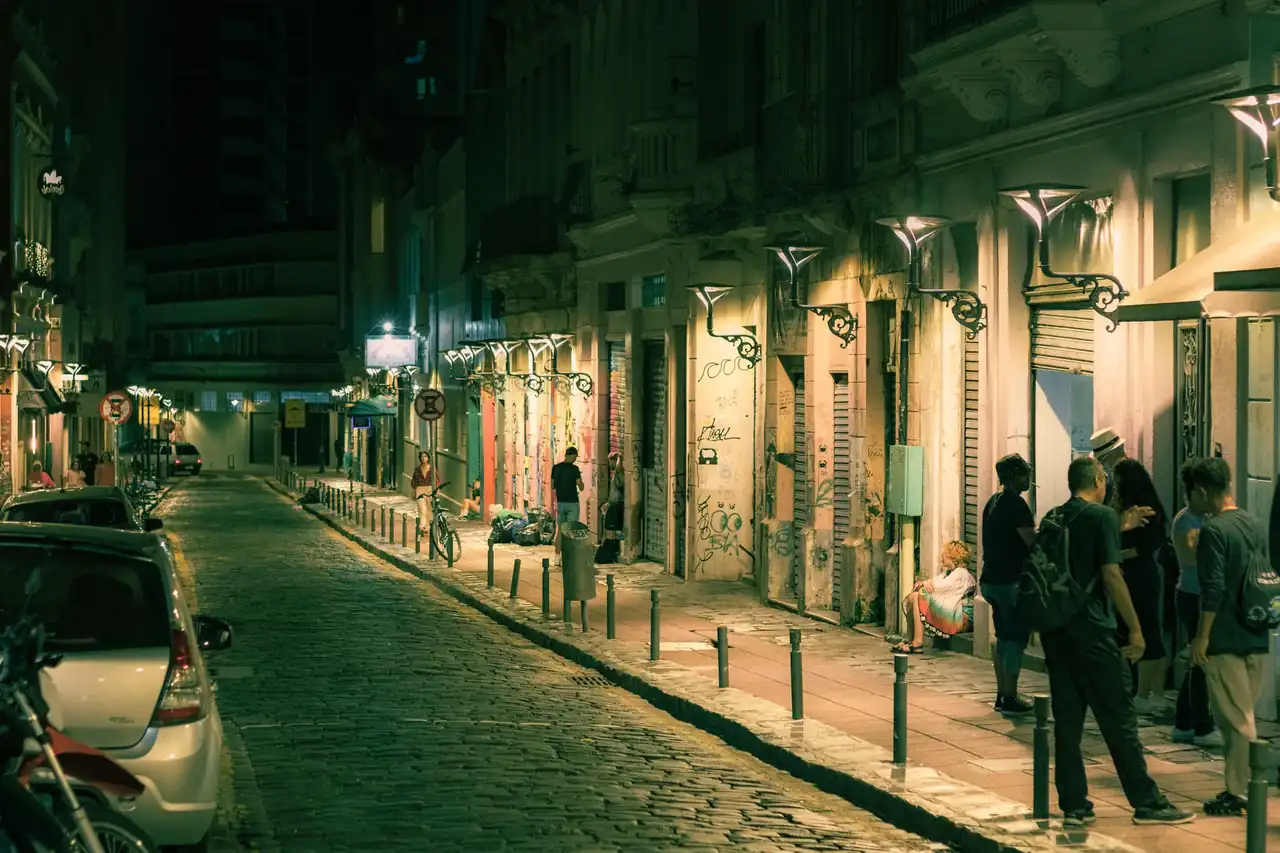
Ceuta once again blended sport and tradition on a June night marked by heat, bustle, and artificial light on the asphalt. The 2025 San Juan Race brought together more than 300 athletes in an edition that confirmed the importance of this event in the local calendar, not because of its distance, but because of its ability to turn into a shared scene for runners, families, and onlookers. The start and finish, located on the Juan XXIII esplanade, concentrated the anticipation of an event that, year after year, serves as a prelude to the burning of the juanillo.
The event marked its thirtieth year and kept its essence intact: a short, accessible course full of symbolism. The 4-kilometer absolute route, accompanied by shorter distances for the youth categories, offered an agile race, without fanfare, but with the magnetism of nights that become ritual. Juan Vivas was in charge of giving the start, a gesture that underscored the institutional character of a call that, beyond the stopwatch, speaks of roots and continuity.
A night that belongs to Ceuta’s emotional calendar
The San Juan Race is understood not only as an athletic event, but as an urban custom that returns every June with a recognizable rhythm. In Ceuta, June 23 is not just the eve of a popular celebration; it is also a date on which the asphalt takes on another texture, that of a stage where sport merges with a deeply rooted tradition. That is why the race attracts interest among runners of very different ages and retains a loyal audience even when Monday or the work calendar cuts participation down.
The image left by this race is that of a city concentrated in a few streets, with the movement of the athletes outlined against the night and the sound of the crowd mixing with the participants’ breathing. It is not an event of huge numbers or long waits, but one of those competitions in which the atmosphere weighs almost as much as the result. Its value lies in its closeness, the simplicity of its format, and the symbolic force of being held on the eve of San Juan.
The presence of more than 300 entrants confirms that the event maintains a solid base. In an era in which many races seek to stand out through the lure of distance or elevation gain, this one retains its own profile: a short route, broad participation, and a festive setting that turns every stride into part of a collective scene. For many runners, the appeal is not just in finishing faster, but in being part of a night that is already part of local memory.
The route and distances that shaped the 2025 edition
The 4-kilometer absolute route once again served as the backbone of the event, with start and finish at Juan XXIII and a passage through very recognizable streets in the city center. The organizers set out a route typical of recent editions, heading toward Martínez Catena Avenue and San Juan de Dios before returning along the avenue itself. That pattern, repeated with small variations, helps the race maintain a precise identity that is easily recognizable to those who follow it every year.
The simplicity of the course does not diminish its sporting merit. On the contrary, it forces runners to go decisively from the start, with no room for long strategies or overly cautious effort management. Over a short distance, every acceleration is felt like a jolt in the street, and every turn alters the group’s dynamics. The race demands intensity, but within a friendly framework for runners of very different levels. That mix explains much of its appeal.
In addition to the main distance, the event included staggered starts for younger categories, with 400 meters for benjamins and alevins and 800 meters for children. This structure ensures that the race is not reserved for the local elite or the most trained adults. The event thus opens up to a formative and family dimension, where the youngest have their own space and the atmosphere gains diversity without losing order.
More than 300 runners and a street atmosphere that sustains the event
Participation hovered around 300 entrants, a figure that, without needing grandiloquence, is enough to fill an esplanade with life and give depth to the atmosphere. It is not an anonymous crowd; it is a recognizable group, with familiar faces from Ceuta’s athletics scene, young people getting started, accompanying families, and runners who return every year out of commitment, tradition, or the simple pleasure of being there. That mix turns the start into a small social mosaic.
The night helped. In this type of race, the lighting, the movement of the runners, and the closeness of the people create an almost cinematic atmosphere. The sound of footsteps, the murmur of the wait, and the exact moment of the starting gun are part of the story just as much as the official times. The San Juan Race is sustained by that balance between popular sport and urban celebration.
The fact that the race took place on a Monday may have slightly reduced attendance compared with other editions, but it did not blur its personality. Popular races are measured not only by the number of bibs, but also by the loyalty of those who make them an unmissable event. In Ceuta, this race retains that kind of discreet, steady commitment, closely linked to the city’s emotional calendar.
Thirty years of history and an identity that does not fade
The 2025 edition had an added value: it celebrated three decades of a race that has managed to endure without falling into empty routine. Not all popular races manage to last so long with a recognizable personality. Some fade away after a few years; others change until they lose their essence. The San Juan race, by contrast, has endured because it belongs to a tradition larger than sport itself: that of shared nights, the street as a meeting point, and summer as a promise of celebration.
The fact that it has lasted thirty years also explains why the event feels somewhat generational. Veteran runners have passed through it, young people who grew up watching the start from the sidewalk, and children who now take part in the shorter distances. That quiet succession is one of the keys to its continuity. The race does not need to reinvent itself completely in order to stay alive; it is enough for it to preserve its recognizable signs and its intimate relationship with the night of San Juan.
The symbolism grows because the race is not held in isolation, but on the eve of a deeply rooted festival in Ceuta. The burning of the juanillo and the race are part of the same urban atmosphere, one in which sport acts as a prelude to the celebration, rather than as something separate. That link between physical effort and popular tradition explains why the event has an identity that is difficult to replicate elsewhere.
Winners, times, and the competitive pulse of a short race
On such a short distance, the margin between running and flying is minimal, which is why the winners usually make visible differences from the first meters. In this edition, Mohamed Abdeselam, known as Bily, won the men’s category with a time of 11 minutes and 52 seconds, while María Romero won the women’s race with 15 minutes and 25 seconds. The two runners from Club Ramón y Cajal confirmed the competitive level of a race that, although popular, does not give up the fight for victory.
The times help explain the kind of race it is. We are not talking about a distance to be managed patiently, but about a sustained burst, almost a precision race. Each runner tries to find the right cadence from the start, and the short course punishes any hesitation. Speed becomes the story, and the stopwatch becomes a way of measuring composure.
The presence of well-known athletes among the front positions adds a layer of familiarity to the result. They are recognizable names for those who follow local athletics and bring continuity to the race’s history. In races like this, the winner matters, but so does the way duels, surges, and the finish unfold, because all of it feeds the memory of the next edition.
The family and school dimension that gives the event depth
The 400- and 800-meter distances for the youth categories reinforce a very valuable idea: the race is not just a competition, but a gateway to athletics. The youngest participants find in this format an experience adapted to their age, with a more contained atmosphere and a distance that allows them to take part without the burden of disproportionate effort. That structure turns the event into something that speaks to several generations at once.
Emotionally, this part of the event is often the richest. Adults watch, accompany, applaud, and remember their own first races; children experience the start as a small ceremony; and the whole city seems to breathe at a gentler pace during those minutes. The picture of the San Juan Race would not be complete without that family fabric accompanying the runners from the railing or the edge of the esplanade.
That educational component also has clear sporting value. Popular races that include youth categories help normalize physical activity as an everyday practice, not something reserved for adult specialists. At a time when urban life easily pushes people toward a sedentary lifestyle, this kind of event serves as a living reminder that athletics can come in through the door of celebration and stay.
A short race, but with a lasting personality
The distance alone does not explain the interest this race arouses. There are tougher, longer, and more demanding events from a sporting point of view, but few bring together the street, the celebration, the calendar, and memory so naturally. The San Juan Race has something of a stopped clock and something of a flowing river: it lasts just long enough, but leaves a broad trace in the city.
Its short-race profile makes it especially visible to the general public. It does not require complex preparation or extensive experience to participate in the most accessible distances, and that broadens its reach. At the same time, the absolute 4-kilometer course maintains enough competitiveness for fast runners to find a real challenge. That middle ground between accessibility and demand is one of its greatest strengths.
There is also a matter of sporting aesthetics. Night races have a different texture, more intimate and more suggestive, because the body seems to stand out more strongly against the urban backdrop. In Ceuta, with a start at Juan XXIII and a setting of familiar streets, the race leaves very clear images: tight bibs, focused faces, hands raised at the finish, and a crowd that accompanies without intruding. It is a simple and effective scene.
Why this event still matters on the local sports map
The San Juan Race still matters because it does not try to compete with the major athletics event; it occupies another space, smaller and more symbolic, but just as necessary. In a city’s calendar, some events are there to measure times and others help sustain a shared identity. This one clearly belongs to the second group. Its strength lies not in spectacle, but in meaningful repetition.
Ceuta has made this event a way to open the night to runners before the beach and the bonfire take center stage. Sport comes first, as a way of lighting the atmosphere. Then comes the celebration. That simple sequence explains why the race keeps its place without needing to reinvent itself every year. What remains is precisely what the public recognizes.
In 2025, the race once again showed that popular competitions still have enormous value when they are well rooted in the territory. You do not need huge numbers to build a tradition, nor an endless route to leave a mark. All it takes is a good hour, an esplanade that breathes, a community that responds, and a night that, for a few hours, turns the city into an open track.
The memory of a night that is run year after year
What this edition leaves behind is more than a sporting result: it leaves a postcard of continuity, community, and belonging. Popular races survive when they become part of a city’s mental landscape, and the San Juan event in Ceuta has reached precisely that status. Each year adds a new chapter without breaking the underlying line, as if tradition advanced in short but steady strides.
The final image is easy to imagine: runners crossing the finish line, the crowd dispersing amid conversations and applause, the esplanade still vibrating, and, a few meters away, the city preparing for another celebration. The 2025 San Juan Race left that feeling of something well established, brief but intense, sporting and festive at the same time. In an increasingly saturated calendar, keeping such an identity is worth as much as winning a race.
That is why the picture of this edition cannot be reduced to a gallery or a result. It sums up a way of understanding popular running in the city: close, broad, and rooted in memory. And as long as the night of San Juan continues to have that power to draw people in, the race will keep finding in Ceuta a natural stage to run and celebrate at the same time.



How to prevent thigh chafing: causes and real solutions

Women’s running windbreakers: seven jackets and how to choose

Do more workouts get rid of soreness? A guide for runners

Jaén Half Marathon 2026: Record 3,800 Runners Registered

Men’s short running tights: how to choose the right pair

World Triathlon confirms data breach involving medical data

Izan Edo targets podium at Miyazaki World Cup

María Pérez ranks ninth in World Athletics’ 2026 top ten

Dos Santos, Duplantis and Sawe: World Athlete of the Year finalists

San Silvestre Vallecana 2026: 42,000 places, prices and start times

 Races3 months ago
Valencia Half Marathon 2027: date and registration

 Races3 months ago
Valencia Marathon 2026: entry, ballot and course

 Reviews and Comparisons4 months ago
Asics Gel-Roadmiles 3 for men: review and current price

 Reviews and Comparisons4 months ago
Asics Gel Sonoma 8 Gore-Tex: complete analysis for trail and rain

 Sneakers3 months ago
Saucony Endorphin Pro 4: full review and verdict

 News5 months ago
Strava API 2026: what changes for clubs, challenges and runner apps?

 Reviews and Comparisons5 months ago
Nike Alphafly 3: opinions, sensations, and real key points

 Reviews and Comparisons4 months ago
Under Armour running shoes review 2025-2026: models and key features

 Sports Equipment4 months ago
Shoe sizes in cm: a clear guide to getting the right fit for your footwear

 Sneakers3 months ago
Skechers GO RUN Consistent 2.0 analysis: comfort and limits

 News5 months ago
Valencia Marathon 2026 route: key tips to train and run better

 Sneakers4 months ago
Adidas Adizero Boston 13 for men: review and verdict