Races
2025 Reconquest Route Half Marathon: Cantabrian dominance
Villazón and Pelayo dominated in Cangas de Onís in a fast, well-attended edition with traditional prizes.

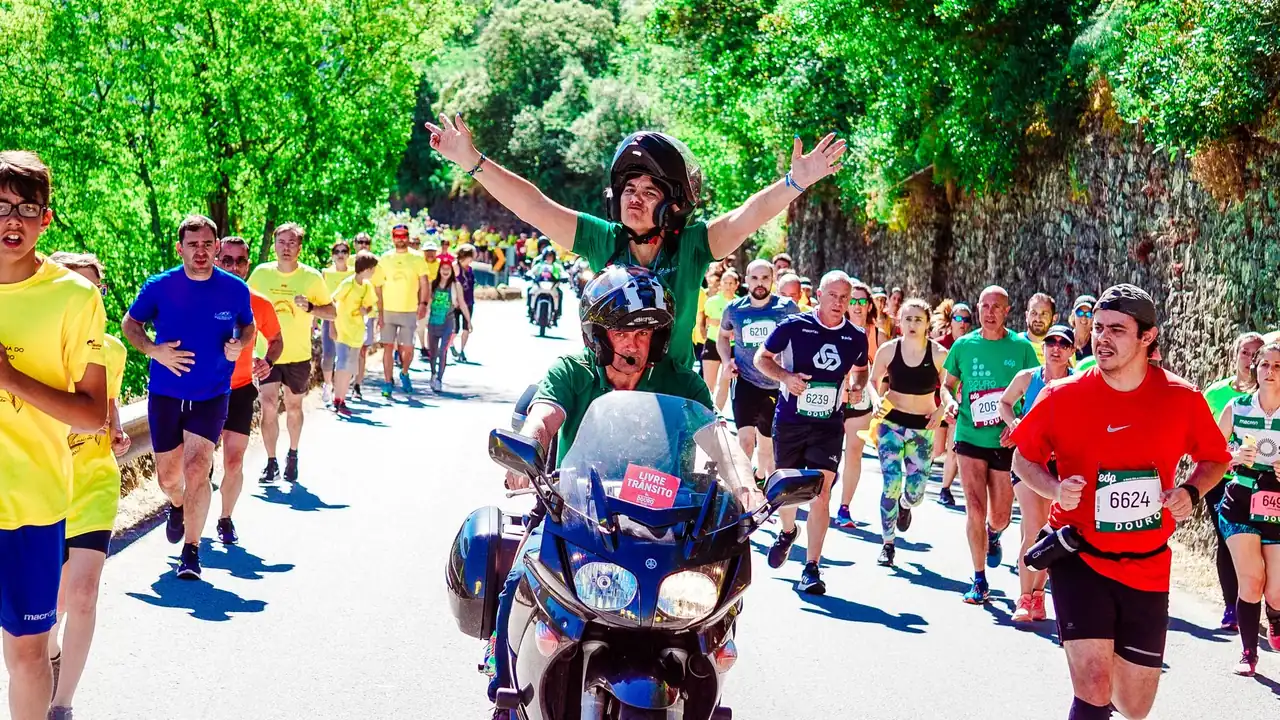
Bruno Villazón and Irene Pelayo delivered a very clear edition of the Ruta de la Reconquista, with sustained control from the first kilometers and a tactically smooth race. The Asturian event once again brought together more than 1,300 runners between Cangas de Onís and the climb to Covadonga, on a day of mild weather that favored faster-than-usual paces on a demanding uphill course.
The outcome left two unquestionable victories and a very clear picture of what this half marathon means on the popular racing calendar: toughness, tradition, and a field of participants that returns every year to a route with its own personality. Villazón crossed the finish line in 1:08:54 and Irene Pelayo in 1:16:16, two marks that sum up a race shaped by the natural selection of effort, especially in the second half.
A course that punishes and shapes the race
The Ruta de la Reconquista Half Marathon does not allow superficial interpretations. Its start in Cangas de Onís and the stretch toward the Basilica of Covadonga turn each edition into a test where elevation gain matters as much as fitness. It is not a half marathon for hiding or for trusting the final kilometer; it forces runners to race intelligently, pace themselves on the climb, and hold steady when the body is already asking to ease off.
This year, too, the mild temperatures provided a more favorable setting than on other occasions. That did not reduce the course’s demands, but it did allow for a smoother pace and enabled the favorites to execute their plan with less thermal strain. In races of this profile, a favorable breeze can be worth almost as much as a good threshold effort, because the legs wear down less and respond better on the steeper ramps.
The event maintains that rare balance between local epic and classic road racing. The scenery pushes, the crowd supports, and the profile dictates. That is why victory here is explained not only by the final clock; it is also about how each section is managed, the patience on the climb, and the ability to suffer without falling apart when the course begins to separate the best from the rest of the pack.
Villazón took control at the right moment
In the men’s race, the pace broke very early with a leading trio made up of Bruno Villazón, Xavi Tomasa and Ismael Vieitez. That opening already pointed to a selective race, with evenly distributed strength among runners capable of sustaining a high pace on a long climb with no room for mistakes. Villazón was patient at first, a decisive virtue in this event, where attacking too early usually takes its toll in the final section.
The gap began to grow shortly before Covadonga, when Villazón passed the halfway point in 35:39 and opened a 22-second lead over his pursuers. From that moment on, the Cantabrian runner no longer needed to take risks. His job was to maintain tension, avoid relaxing, and turn the race into a controlled effort. On a course like this, going off alone does not always mean escaping; sometimes it simply confirms that the runner has read the terrain better than those trying to follow him.
The return leg finished separating the contenders. Villazón arrived alone at the finish with a solid victory, while Ismael Vieitez secured second place and Marco García Brandado completed the podium after overtaking Xavi Tomasa in the final meters. The finishing order reflected the hardness of sustained effort very well: whoever manages oxygen better and does not fall apart on the upper section ends up building an advantage that, on a course like this, is almost a verdict.
Irene Pelayo set a flawless script
In the women’s race, Irene Pelayo took the lead from the opening stretch and gave no room for surprise. Her passage through Covadonga in 39:00 had already opened a significant gap over Dolores Marco and María Suárez, a sign that the race was well under control long before the finish. On this type of course, taking the initiative is not only a matter of ambition; it is also a statement of confidence in one’s own endurance.
Pelayo kept the pace on the descent toward Cangas de Onís without losing solidity, a sign of an athlete used to competing in scenarios where patience matters as much as power. The finish in 1:16:16 confirmed a very complete performance, with no phases of doubt and with authority that shows in the splits, not only in the final result. Dolores Marco was second and María Suárez completed the podium, both with consistent races in a high-level field.
The sporting reading of Pelayo’s victory is clear: she dominated from the start, held firm on the hardest part of the course, and finished with the composure of someone who knows the trade well. The Asturian runner could not match the Cantabrian’s pace at the key moments, and in a half marathon on a gentle but demanding mountain course, that is often decisive. Big gaps are not necessary when the terrain is already selecting the strongest on its own.
More than 1,300 runners and a race with memory
Participation once again was one of the day’s big headlines. More than 1,300 athletes completed the event, a figure that confirms the appeal of the Ruta de la Reconquista within the popular racing calendar of northern Spain. That is no coincidence: the race blends history, scenic beauty, and a technical challenge that makes it different from many more predictable asphalt half marathons.
That volume of participation also explains the atmosphere at the start and finish. Some races run like industrial clocks, while others retain something ceremonial. This one belongs to the second family. Avenida de Covadonga becomes a gathering point for nerves, photos, brief conversations, and glances at the watch, while the final stretch to the line offers that mix of relief and satisfaction that only races with personality can create.
Symbolically, the race remains a benchmark for many distance runners because of the fidelity of its format. Each edition adds a new layer to a long story, where it is not only the winners who matter, but also the community of runners who return year after year. In events like this, the human archive weighs almost as much as the sporting one.
The prizes and the mark left by the race
The organizers kept the usual prize structure. The overall winners received 500 euros and a Gamonéu cheese courtesy of the La Peskatería restaurant, while the second and third places received 250 and 150 euros, respectively. The special 850-euro prize reserved for anyone who broke the course records was not awarded this year, which says a lot about how difficult it is to come close to the best times on such a unique profile.
That financial detail is not anecdotal. It is part of the race’s character and helps explain why it continues to have a distinct echo on the calendar. The symbolic and sporting rewards go hand in hand, and the Gamonéu cheese adds a very local touch to a podium that does not seek to dazzle with grandeur, but to preserve a recognizable identity. On a course like this, the prize is also belonging to a tradition repeated with almost ritual precision.
The absence of records this time does not diminish what happened. On the contrary, it reminds us that the Ruta de la Reconquista demands a very specific combination of strength, patience, and reading of the elevation. Winning there is not about flying; it is about resisting better than the others when the road stops being flat and starts feeling like a rough conversation with the mountain.
Luis Salcines’ milestone and the value of continuity
Among the standout names of the day, Luis Salcines stood out for reasons that go beyond the standings. The runner completed his 37th consecutive participation and once again became a symbol of continuity within the event. His presence sums up one of the most valuable qualities in popular athletics: consistency, that form of loyalty that turns a race into part of a runner’s biography.
Finishing every edition held is no small feat, but a rarity that speaks to physical endurance, commitment, and roots. Salcines has also gone from being just another participant to becoming an emotional reference for the event. In a discipline so focused on improving times, his case reminds us that there are merits measured in decades, not seconds.
The history of this race is full of gestures like that. Some are repeated at the start, others at the finish, and others in the memory of those who follow it every year. The Ruta de la Reconquista is not sustained only by its winners; it also depends on those who make it a tradition, on those who return even though the profile remains tough, and on those who understand that athletic tradition is built by names that come back.
What this edition leaves for the popular racing calendar
The 37th edition confirmed that the Ruta de la Reconquista Half Marathon remains a benchmark for its ability to combine serious competition and an iconic setting. Villazón and Pelayo delivered two clean victories, participation was high, and the overall race left a sense of competitive order unusual in such selective events. There were no surprises, but there was enough demand for every position to matter in a real way.
The full standings were published on the race’s official website, where you can also check how positions were distributed across the various veteran categories and the rest of the table. That display of results is part of the appeal of a race that does not live only through the overall podium, but also through the breadth of its participation and the value each runner places on finishing it.
On the map of Spanish running, few half marathons combine so naturally the beauty of the surroundings, the toughness of the route, and the symbolic weight of their name. The Reconquista gives nothing away, but that is precisely why it retains its prestige. Each edition once again shows that a race can be popular without losing identity, and that a demanding course remains, for many runners, the true place where character is measured.
Media Maratón Ruta de la Reconquista 2025 left one clear certainty: when the profile bites, tactics matter, patience counts, and the favorites who read the race best usually prevail. This year they did so with authority, on a pleasant afternoon for running but faithful to the spirit of an event that continues to demand respect from the first kilometer to the final ramp.
You may also like: 2025 Reconquest Route Half Marathon: data and key points.



How to prevent thigh chafing: causes and real solutions

Women’s running windbreakers: seven jackets and how to choose

Do more workouts get rid of soreness? A guide for runners

Jaén Half Marathon 2026: Record 3,800 Runners Registered

Men’s short running tights: how to choose the right pair

World Triathlon confirms data breach involving medical data

Izan Edo targets podium at Miyazaki World Cup

María Pérez ranks ninth in World Athletics’ 2026 top ten

Dos Santos, Duplantis and Sawe: World Athlete of the Year finalists

San Silvestre Vallecana 2026: 42,000 places, prices and start times

 Races3 months ago
Valencia Half Marathon 2027: date and registration

 Races3 months ago
Valencia Marathon 2026: entry, ballot and course

 Reviews and Comparisons4 months ago
Asics Gel-Roadmiles 3 for men: review and current price

 Reviews and Comparisons4 months ago
Asics Gel Sonoma 8 Gore-Tex: complete analysis for trail and rain

 Sneakers3 months ago
Saucony Endorphin Pro 4: full review and verdict

 News5 months ago
Strava API 2026: what changes for clubs, challenges and runner apps?

 Reviews and Comparisons5 months ago
Nike Alphafly 3: opinions, sensations, and real key points

 Reviews and Comparisons4 months ago
Under Armour running shoes review 2025-2026: models and key features

 Sports Equipment4 months ago
Shoe sizes in cm: a clear guide to getting the right fit for your footwear

 Sneakers3 months ago
Skechers GO RUN Consistent 2.0 analysis: comfort and limits

 News5 months ago
Valencia Marathon 2026 route: key tips to train and run better

 Sneakers4 months ago
Adidas Adizero Boston 13 for men: review and verdict