News
Finisher medal recording Half Gandia 2026: data and context
Gandía will once again host a half marathon and 10K with a medal, a flat course, and tiered registration.

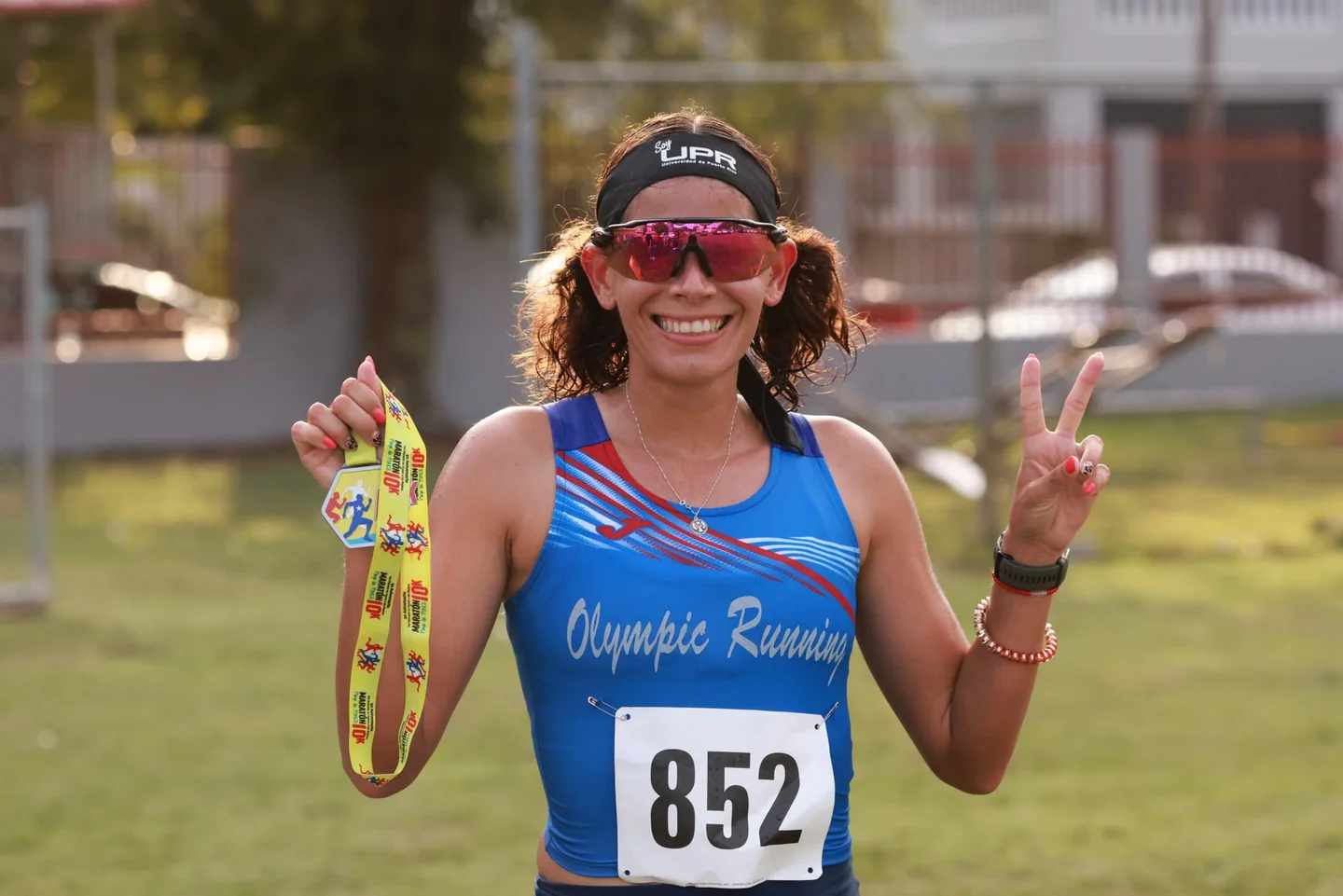
The recording of the finisher medal for the Mitja Marató Ciutat de Gandia comes tied to an edition bearing the hallmark of a major popular event: November 8, 2026, a 09:30 start, and a course that combines sea, city, and flat terrain in one of the most recognizable races in the Comunitat Valenciana. The medal is no minor detail; in races like this it serves as the final piece of a sporting story that begins long before the start shot and ends, once the pulse is dropping, with that brief gesture of hanging the metal around your neck.
In the information available about the upcoming edition, two distances appear, the half marathon and the 10K, with tiered prices and a limited number of bibs. The organization offers a finisher medal, runner’s bag, chip timing, refreshment stations, and a service package that places this event in the orbit of well-organized races, the kind that turn effort into tangible memory. The medal, engraved or personalized depending on the format adopted by each edition, sums up that passage from the finish line to the runner’s personal archive: a small object, but one loaded with context.
A medal that does more than certify a time
In Gandía, the finisher medal serves both a sporting and emotional purpose. It certifies that 21.0975 kilometers or 10 kilometers have been completed in an official race, but it also anchors a date, a city, and a shared experience. In a well-established half marathon, the metal handed over at the finish line usually becomes the most photographed object of the day, even more than the bib or the T-shirt. It is physical proof that the course ended where it should and that the runner endured the heat, the pace, and the tension of a race that demands consistency from the first kilometer.
The 2026 edition preserves the appeal of a coastal start and a fast course, two conditions that usually strengthen the symbolic value of the medal. When the route is flat and certified, the stopwatch takes center stage, but the medal steps in as the memory of the effort. In road races, the narrative does not end when you cross the line: it continues in the medal collection, in the drawer where bibs are kept, on the shelf where the runner sorts milestones with the precision of a life album measured in kilometers.
The visual component also matters. Medals from established races often incorporate references to the host city, the race profile, or the event’s identity. In Gandía’s case, the very location beside the coast and the link to a half marathon with a long history give the final piece the value of both a travel and sports souvenir. It is not just an award; it is a synthesis of a landscape, an organization, and a November morning that clings to the metal.
What defines Gandía’s next edition
The event is set for Sunday, November 8, 2026, with a 09:30 start, and Gandía as the venue with Grau i Platja as the logistical reference point in the information handled by the organizers and registration platforms. The race offers two formats: a half marathon of 21.098 kilometers and a 10K. In both cases, the finisher medal is part of the registration package, alongside other services that explain why the race is among the most followed on the Valencian calendar.
Registration opened in tiers and with limited places. The first tier for the half marathon was set at 24 euros, the second at 27 euros, and the final one at 29 euros, while the 10K went through 17, 19, and 19 euros depending on the purchasing phase in the published information. In addition, a total of 2,500 bibs were announced for the edition. That figure does not only speak to demand; it also suggests an organization that controls the size of the field to preserve the quality of the course and the service, something key when the goal is a smooth experience from start to finish.
In that context, the medal becomes a scarce piece by definition. Not because it is hard to get, but because only those who complete the race receive it. In an event with tiered registration, set times, and controlled capacity, each finisher gets an object that represents a combination of logistics, discipline, and a successfully completed race day. The medal is not understood in isolation; it is tied to the start, the shared kilometers, and the final arrival at the finish, where fatigue and satisfaction are usually mixed in equal measure.
Why the medal matters in a half marathon like Gandía
In popular races, the medal is the material close of the effort. Unlike in other sports, where the result remains in a ranking or a scoreboard, running leaves a trace the runner can touch. The piece of metal or alloy handed over at the end works like an emotional receipt: it certifies a morning of training, nerves, controlled pacing, and small internal duels along the course. That is why, when the organization takes care of that symbol, it elevates the overall perception of the event.
Gandía belongs to that category of races that build loyalty through details. The runner’s bag, chip timing, refreshments at several points, and medical support are all part of a recognizable package. But the medal is what remains when the rest of the material is used or stored away. In journalistic terms, it is the most lasting trace of the experience. In sporting terms, it is the object that reminds you that a half marathon is not improvised: it is completed step by step, with the patience of someone who knows the last kilometer is often the widest of all.
In addition, the medal has a sense of belonging. Crossing the finish line does not just end a race; it places you in a temporary community of finishers. That recognition is especially powerful in the Comunitat Valenciana, where the popular racing calendar is intense and competitive. Having a Gandía medal at home is like keeping a place in a very alive road-running tradition, with the added value of having done it at a coastal venue and in a race that already spans several decades of history.
A fast course with services designed for runners
The information released by the organization describes a flat, certified, single-loop course. That kind of route usually favors steady paces, fewer sharp turns, and a cleaner reading of the race. It also helps the final medal carry a very specific meaning: it is earned not by survival, but by execution. In other words, it is not the reward for a chaotic adventure, but for pacing control, prior work, and the ability to sustain a strategy for a little more than 21 kilometers or in the shorter 10K version.
Refreshment stations were placed at kilometers 5, 10, 15, 18, and the finish in the reference information for the long race, a logical distribution for a half marathon seeking comfort and safety. The race also mentions chip timing, starting corrals, baggage check, changing rooms, physiotherapy, medical services with a field hospital, parking, drink and nutrition stations, plus assistance for wheelchair racing and handbike participants. All of this paints a picture of a race that does not merely measure times, but organizes the experience for different participant profiles.
In that setting, the medal functions almost like an institutional epilogue. It is not handed out in a vacuum, but within an organization that tries to make the race feel professional from start to finish. The runner arrives tired, sometimes dehydrated, with legs still hot from the effort and the mind searching for the exact value of what has been achieved. The medal lands there, in that threshold moment between exhaustion and satisfaction, and that is why its engraving, finish, or iconography has such symbolic force.
What the prices and places say about demand
The tiered pricing structure reveals a registration model designed to reward early commitment. With 24, 27, and 29 euros for the half marathon, and 17 and 19 euros for the 10K, the organization follows a common logic in high-demand races: the earlier you sign up, the better the bib price. That system does not just organize sales; it also helps project an image of a well-established event, capable of attracting local runners and visitors who plan their calendars months in advance.
The cap of 2,500 bibs reinforces that reading. This is not an uncontrolled mass race, but one that seeks balance between participation and quality. In that framework, the medal acquires a practical exclusivity: everyone knows about it before racing, but only those who cross the finish line within the time limits and rules receive it. In terms of experience, that controlled scarcity usually increases appreciation for the final detail, because each piece handed out has behind it a race that could not be improvised.
The reference to the finisher medal and the included services also helps explain the sporting product Gandía offers. The runner is not just buying a start on a specific date; they are entering a competitive environment with basic guarantees, recognition for effort, and a visible final keepsake. In races of this caliber, the medal stops being an accessory and becomes a sort of physical signature of the event, the trace that confirms the day happened and the body responded.
The race within the Valencian running map
Gandía holds a stable place on the Comunitat Valenciana running calendar. Its half marathon and 10K bring together diverse profiles: experienced runners chasing a personal best, first-timers looking for a more manageable distance, and athletes who value the full experience more than the final time. That mix explains why the medal has such wide appeal. For some, it will be proof of a timed goal; for others, the memory of having completed, for the first time, a distance that requires head, legs, and some tolerance for suffering.
The city contributes to the story with a recognizable setting: a coastal atmosphere, wide avenues, and a course geometry that encourages pace. When a race relies on that kind of layout, the medal ends up representing more than the finish. It recalls the soft wind, the stretch along the coast, the sound of shoes, and that very Valencian mix of closeness and competitiveness. Gandía does not need gimmicks: its strength lies in the continuity of the event and its ability to bring together hundreds or thousands of runners under one finish line.
That is why the finisher medal of the Mitja Marató Ciutat de Gandia cannot be read as a mere add-on. In reality, it is the synthesis of a calendar, an organization, and a city that sees itself in running. It represents taking part in an official race, complying with basic rules, and remembering a morning in which sport organized the Valencian coast for a few minutes. The metal remains; the breathing recovers; the race, meanwhile, stays alive in the drawer where medals are kept.
A small piece for an effort that takes months
The paradox of running is there: the most visible thing about a half marathon fits in the palm of your hand. The medal usually measures only a few centimeters across, but it concentrates weeks of training, pacing choices, measured nutrition, and an expectation that grows as the date approaches. In Gandía, where the next edition is already dated and structured, that small object closes a very long chain of sporting decisions. It can be kept, displayed, or photographed, but above all it serves to remind you that the effort was not abstract.
There is also a very strong narrative component. The finisher does not show only a result; it shows a story. The medal, engraved or not, becomes the first physical memory of a race that, in the mind, will already be made of details: the sound of the watch, the line of runners, pace control in the middle kilometers, the light from the sea in the background. In an increasingly digital world, that gesture of receiving a tangible piece retains a valuable uniqueness. Nothing replaces the real weight of metal after crossing the finish line.
The next Mitja Marató Ciutat de Gandia will once again rely on that simple logic: a date, a city, a finish line, and a medal that sums up everything before it. Anyone who completes the route will not only add a race to the calendar; they will add an object with memory, a reminder of what it takes to complete 21.098 kilometers or 10 kilometers with confidence. And in that discreet yet powerful synthesis lies much of the strength of the races that endure over the years.
The finish line remains where the medal finds its meaning
In popular sport, the medal cannot be understood without the finish line. Before arriving, it is only an announced symbol; afterward, it becomes a reward, archive, and testimony. In Gandía, with a 2026 edition already defined by date, times, distances, and prices, everything leads to that brief moment when the organization places the piece in the runner’s hands or around their neck. There the prior work and the race itself are condensed, as if the time gone by were sealed in an object weighing only a few grams.
The importance of this medal lies in its ability to unite planning and emotion. It makes no noise, does not alter the classification, and does not change the course. But it gives shape to the memory of a race built on a fast course, a stable calendar, and careful organization. In races like this, the end does not stop at the finish line: it continues in the medal, which goes home with the runner and keeps intact the echo of the morning in Gandía.
That is, in the end, the real value of the finisher: turning fleeting effort into a lasting memory. And few cities understand that as well as Gandía when its half marathon and 10K once again bring the running community together in front of the Mediterranean.



How to prevent thigh chafing: causes and real solutions

Women’s running windbreakers: seven jackets and how to choose

Do more workouts get rid of soreness? A guide for runners

Jaén Half Marathon 2026: Record 3,800 Runners Registered

Men’s short running tights: how to choose the right pair

World Triathlon confirms data breach involving medical data

Izan Edo targets podium at Miyazaki World Cup

María Pérez ranks ninth in World Athletics’ 2026 top ten

Dos Santos, Duplantis and Sawe: World Athlete of the Year finalists

San Silvestre Vallecana 2026: 42,000 places, prices and start times

 Races4 months ago
Valencia Half Marathon 2027: date and registration

 Races4 months ago
Valencia Marathon 2026: entry, ballot and course

 Reviews and Comparisons4 months ago
Asics Gel-Roadmiles 3 for men: review and current price

 Reviews and Comparisons4 months ago
Asics Gel Sonoma 8 Gore-Tex: complete analysis for trail and rain

 Sneakers3 months ago
Saucony Endorphin Pro 4: full review and verdict

 News5 months ago
Strava API 2026: what changes for clubs, challenges and runner apps?

 Reviews and Comparisons5 months ago
Nike Alphafly 3: opinions, sensations, and real key points

 Reviews and Comparisons4 months ago
Under Armour running shoes review 2025-2026: models and key features

 Sports Equipment4 months ago
Shoe sizes in cm: a clear guide to getting the right fit for your footwear

 Sneakers3 months ago
Skechers GO RUN Consistent 2.0 analysis: comfort and limits

 News5 months ago
Valencia Marathon 2026 route: key tips to train and run better

 Sneakers4 months ago
Adidas Adizero Boston 13 for men: review and verdict