Races
Results and photos from the El Corte Inglés Race 2025
Victories for Bossy and Ouboukir, more than 40,000 runners, and a Barcelona fully engaged in a very fast edition.

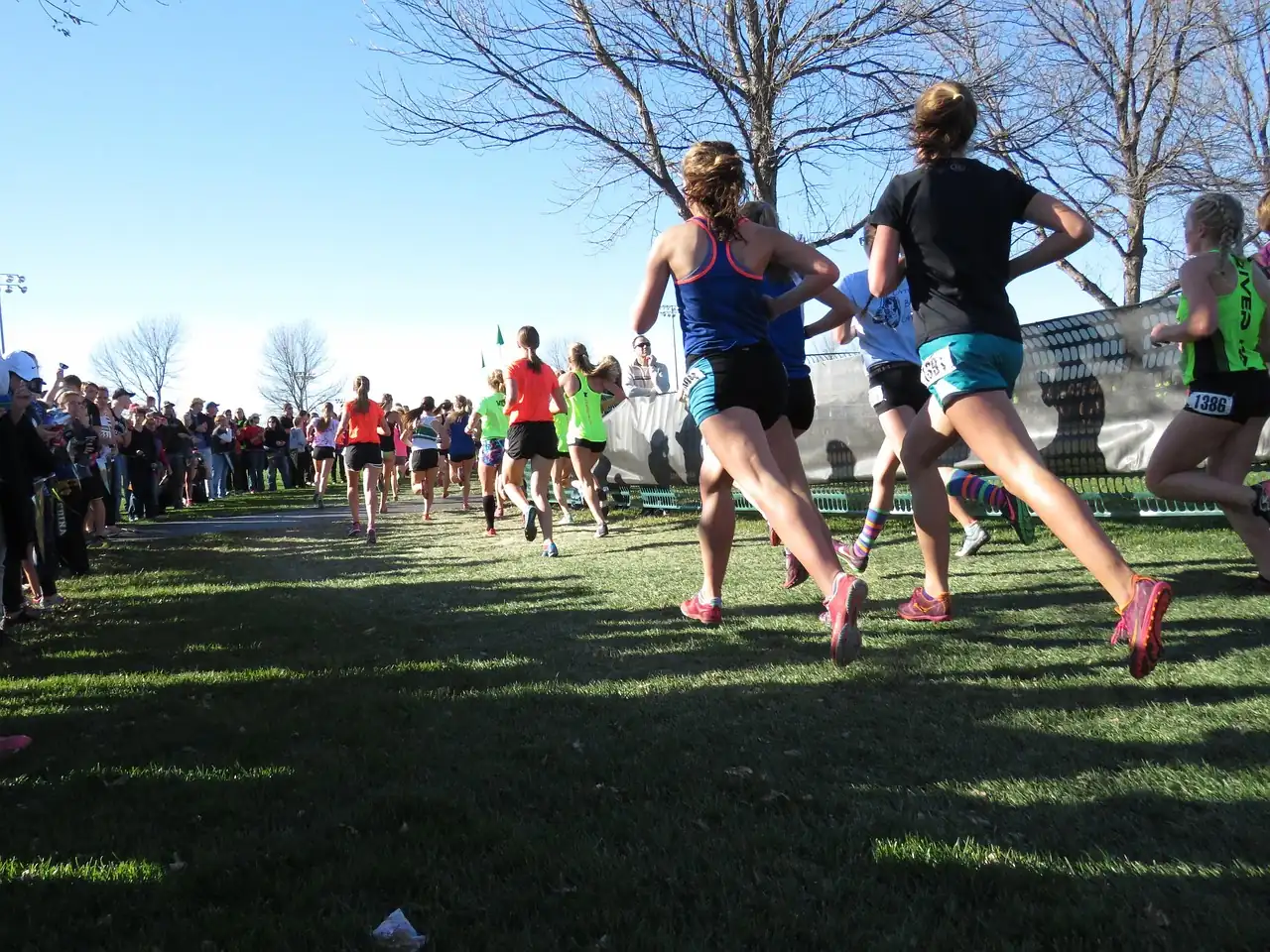
Imagen: farmama / Pixabay
The 45th edition of the Cursa El Corte Inglés left a very clear snapshot of popular athletics in Barcelona: an open city, a huge start on Avenida Diagonal, and two top-level winners on a spring morning that accompanied the effort with mild temperatures, no rain and no wind. The race, now one of the major events on Spain’s urban calendar, brought together 40,000 participants and confirmed that its appeal goes far beyond the official standings.
On the competitive side, the standout names were Artur Bossy and Douae Ouboukir, winners of the 2025 edition with times of 29:53 and 31:48, respectively. Their victories summed up a fast, clean race with room for spectacle, but also a day in which the solidarity dimension, the broad neighborhood atmosphere, and the symbolic weight of running through the center of Barcelona mattered just as much as the clocks.
An edition marked by speed and by the public response
The data from this edition help explain why the race continues to occupy such a visible place on the running map. The organizers announced the sold-out 40,000 bibs, and the city responded with a wave of T-shirts, families, groups of friends, and runners of every pace. It was not a morning reserved only for those fighting for the top places; it was, above all, a giant collective start in which the asphalt served as a common thread between generations and very different levels.
The final standings opened with a notable level, especially in the women’s race, where Douae Ouboukir and Meritxell Soler produced a razor-close duel. The gap between them was minimal, just six seconds, and that margin makes it clear that the race was decided by legs, but also by tactical reading and the ability to sustain the effort in the final meters. Ouboukir finished with a personal best, a detail that gives even greater value to her victory.
In the men’s race, Artur Bossy delivered a more controlled run, with a decisive attack in the final kilometer that allowed him to build enough of an advantage to withstand the late charge from the Frenchman Elliot Tissier. Bossy stopped the clock at 29:53, while Marc Fernández completed a podium that reinforced the quality of the front of the race. It was a finish with tension, but without artificial drama, the kind that leaves the impression of a well-measured and well-runnable race.
The women’s battle: Ouboukir and Soler, a duel of centimeters and seconds
The women’s race offered one of the most interesting stories of the day. Douae Ouboukir and Meritxell Soler, winner of the previous edition, broke away from the main group and built a shared escape that was gradually sharpened through pace changes and small fluctuations in rhythm. In a 10-kilometer race, where every decision weighs like a stone in your shoe, the margin between dominating and suffering can be minimal.
Ouboukir found the decisive move just before the final straight and executed it with enough authority to win in 31:48, at a pace of 3:10 per kilometer. Soler never lost contact with the race and finished in 31:54, also under her previous best. That double result below expectations speaks of a high-level race, with two athletes pushing each other to the visible limit.
Beyond the podium, the value of this battle lies in what it says about the form of the Spanish women’s elite and the international field that usually appears in major urban races. When a popular race is capable of producing such a finish, the result becomes more than just a list of names and times. It becomes a snapshot of progress, competitiveness, and a calendar that increasingly demands consistency and deeper competitive strength.
Bossy makes the most of his moment in the final straight
Artur Bossy’s victory was built differently, more linearly, but just as effectively. The Catalan runner knew how to save one last change of pace while the lead group was still compact and chose the right moment to break the race open. That kind of decision, brief and brutal, often separates a good time from a memorable victory. Here, it came at exactly the right moment.
The final push did not end the story immediately. Elliot Tissier pressed all the way to the finish line and forced Bossy to squeeze out every stride on the approach to Plaça Catalunya, where he ultimately claimed victory. His time of 29:53 places his win at a competitive level that matches the prestige of the event and the profile of a fast race, favorable to those who know how to read the course and manage the decisive sections well.
Marc Fernández completed the podium in an edition where the front pack once again served as a showcase for national-level quality. That combination of a local win, international presence, and strong popular participation is one of the keys to the success of the Cursa El Corte Inglés: it is not just about running through the city, but doing so within a structure where the clock, the solidarity gesture, and Barcelona’s own image as a sports setting all coexist.
An urban course that favors fast times
The 10-kilometer route passed through some of the best-known avenues in the Catalan capital, including Diagonal, Aragó, and Gran Via, a combination that offers width, visibility, and stretches suitable for running with relative ease. It is not a mountain course or a technical maze; it is an urban route designed to keep the effort steady and allow both elite runners and amateurs to find their rhythm without too many interruptions.
The weather helped. With temperatures of just over 15 degrees and no wind or rain, the conditions were almost ideal for a race of this kind. In city races, the weather can greatly alter the script, but on this occasion the day cooperated from start to finish. That was reflected in the overall fluidity of the race and also in the fact that the best athletes pushed hard without the threat of excessive heat or uncomfortable humidity.
The very structure of the event helps popular runners mix with a very visible, but not intimidating, competitive environment. The Cursa El Corte Inglés has always worked like a wide corridor in the middle of the city, a line that connects formal athletics with the everyday practice of thousands of people who go out to run for health, habit, or simply to share a different morning. That breadth explains part of its longevity.
A popular race with real social weight
The value of the event is not limited to the official standings. The 2025 edition once again emphasized its charitable profile, with the Xana Foundation as the beneficiary organization. Luis Enrique took part as an ambassador for that cause, a gesture that added a human layer to the day and put the spotlight on the social work behind many major urban races. At a time when popular sport seeks meaning as well as a bib number, that kind of presence matters.
The starting ceremony featured Elena Cullell, founder of the Xana Foundation, and Olga Pané, Health Minister, in a staging that underlined the civic character of the event. This is no small detail. The start ceremony, with institutional and social figures, reminds us that a major urban race is also a part of the city, an event that activates volunteering, mobility, safety, logistics, and visibility for specific causes.
The emotional component also had its place. Luis Enrique said that we do not always value the luck of waking up every day, an idea that fits with the mission of the Xana Foundation and the sensitivity that usually surrounds this kind of initiative. In popular athletics, times often tell part of the story, but the other part is written by gestures, T-shirts, applause, and the deeper reasons for crossing a finish line.
More than 40,000 stories under the same finish arch
The figure of 40,000 runners is not just a participation number. It measures Barcelona’s power to draw crowds when a race knows how to combine accessibility, a recognizable course, and a shared narrative. Behind every bib there was a different reason: a debut, a reunion, a personal challenge, a family outing, a time goal, or simply the desire to be part of an urban tradition that has already lasted decades.
That mix can be felt in the atmosphere, but also in the very dynamics of the start. First the fastest athletes, then the large mass of popular participants, and throughout the entire route a mosaic of footsteps, breathing, and gestures that turns Avenida Diagonal into something like a wide, living river. On a day like this, the elite result coexists with thousands of small anonymous victories that are also part of the race’s pulse.
That is why the race continues to draw interest beyond the day it takes place. The appeal of the result lies not only in who won, but in how the event unfolded, what times it produced, how the city responded, and what it says about the fitness of those who topped the standings. Bossy’s 29:53 and Ouboukir’s 31:48 are not just fast times; they are also the summary of a very well-executed edition from a competitive point of view.
What the official times and the memory of the edition leave behind
The 2025 results join a long historical list, where repeated names, scars from hard years, and moments of enormous athletic level all appear. That Bossy and Ouboukir are now among the race’s winners is no small thing in an event with such continuity. Each edition adds a layer to the event’s emotional archive and reinforces the idea that Barcelona has a very special relationship with road running.
The comparison with the past also helps provide perspective. The men’s winning time of 29:53 and the women’s 31:48 place this edition in a highly competitive zone, with demanding paces and a refined tactical reading. It is no coincidence that both winners emerged stronger in sporting terms. In a mass-participation race, winning without losing freshness is almost always an indicator of maturity and good effort management.
The interest in the official results of the Cursa El Corte Inglés 2025, therefore, goes beyond immediate curiosity. It speaks of a race that continues to bring together sport, city life, and mass participation in one setting. It speaks of a morning in which Barcelona went out running with its best qualities on display: order, energy, diversity, and a rare ability to turn asphalt into a shared celebration.
In the end, what remains in the memory of this edition is a clear image: that of a city moving to the rhythm of its runners and a race that still knows how to find the exact balance between competition, emotion, and popular celebration. Bossy’s and Ouboukir’s names will remain in the statistics; the rest, that mix of human warmth, effort, and urban landscape, is part of why this race continues to matter year after year.
Official results: sportmaniacs.com.



How to prevent thigh chafing: causes and real solutions

Women’s running windbreakers: seven jackets and how to choose

Do more workouts get rid of soreness? A guide for runners

Jaén Half Marathon 2026: Record 3,800 Runners Registered

Men’s short running tights: how to choose the right pair

World Triathlon confirms data breach involving medical data

Izan Edo targets podium at Miyazaki World Cup

María Pérez ranks ninth in World Athletics’ 2026 top ten

Dos Santos, Duplantis and Sawe: World Athlete of the Year finalists

San Silvestre Vallecana 2026: 42,000 places, prices and start times

 Races3 months ago
Valencia Half Marathon 2027: date and registration

 Races3 months ago
Valencia Marathon 2026: entry, ballot and course

 Reviews and Comparisons4 months ago
Asics Gel-Roadmiles 3 for men: review and current price

 Reviews and Comparisons4 months ago
Asics Gel Sonoma 8 Gore-Tex: complete analysis for trail and rain

 Sneakers3 months ago
Saucony Endorphin Pro 4: full review and verdict

 News5 months ago
Strava API 2026: what changes for clubs, challenges and runner apps?

 Reviews and Comparisons5 months ago
Nike Alphafly 3: opinions, sensations, and real key points

 Reviews and Comparisons4 months ago
Under Armour running shoes review 2025-2026: models and key features

 Sports Equipment4 months ago
Shoe sizes in cm: a clear guide to getting the right fit for your footwear

 Sneakers3 months ago
Skechers GO RUN Consistent 2.0 analysis: comfort and limits

 News5 months ago
Valencia Marathon 2026 route: key tips to train and run better

 Sneakers4 months ago
Adidas Adizero Boston 13 for men: review and verdict