Races
Retiro District Popular Race 2025: schedule, route, and bib numbers
The Retiro race is launched at night, sells out bibs, and delivers a downtown 5K with the start next to Atocha.

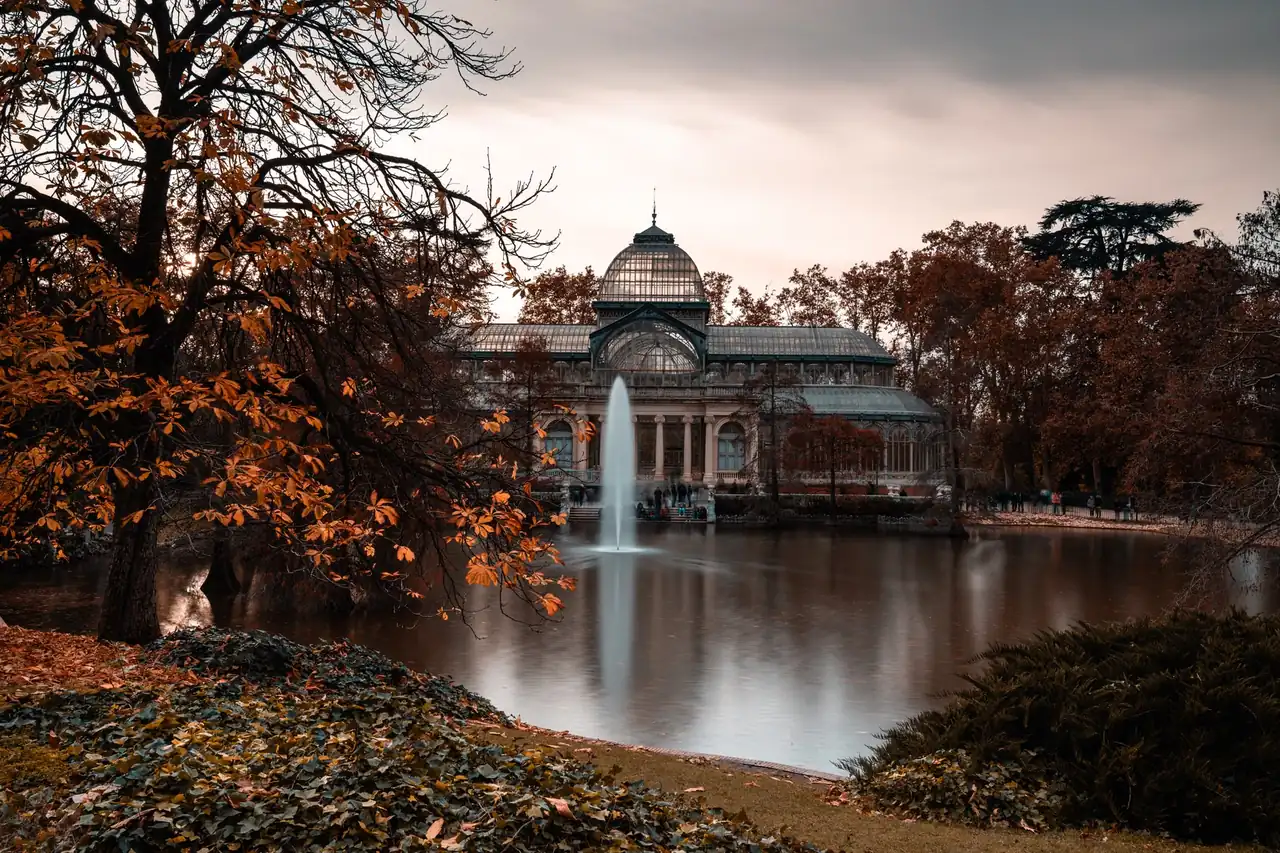
The 2025 Retiro District Popular Race experienced its most striking edition by moving to a nighttime schedule, with a start at 9:00 p.m. and a very different atmosphere from other urban races in June. The change was not just aesthetic: it also helped soften the heat, added a layer of appeal to the route, and turned the park surroundings into a more pleasant setting for running.
With 1,000 bib numbers sold out in a few hours, the event confirmed the appeal of a 5-kilometer race that blends neighborhood, park, and asphalt right in the center of Madrid. The start and finish were set on Paseo de la Reina Cristina, very close to Atocha, on a course that circles the Retiro and offers a demanding first section before heading into a faster stretch and finishing with a rolling up-and-down finale.
A nighttime 5K with a neighborhood and Madrid-calendar identity
The big new feature in 2025 was the schedule. The race abandoned its daytime format to debut at night, a decision with both practical and symbolic meaning. In June, Madrid still holds onto the day’s heat on the asphalt like a hot plate, and running at dusk completely changes the experience. The temperature usually eases, the light becomes cleaner, and the park gains a calmer atmosphere, almost like a hurried stroll, even though thousands of strides set the district’s pulse.
The organization, driven by the Retiro Municipal District Board, sought to establish a fixture that already showed promise on the capital’s popular race calendar. The goal was not merely to add another 5K, but to build a recognizable event with its own identity and an easy-to-understand story: run around one of Madrid’s most emblematic spaces, with the Buen Retiro Park as the backdrop and night as an ally.
That fit explains part of its success. The district offers a central route, highly visible and with clear urban landmarks for both runners and spectators on the sidewalk. Atocha, Menéndez Pelayo, the Puerta de Alcalá, and the park’s surroundings turn the course into a moving postcard, a sequence of familiar points that gives meaning to the effort kilometer by kilometer. The race does not sell mountain drama or very long endurance stretches; its strength lies in proximity, an accessible format, and the value of a very Madrid-like experience.
Start, finish, and route around the Retiro
Paseo de la Reina Cristina served as the event’s central axis, with the start and finish in the same area, near Atocha. From there, a 5-kilometer circuit began with the Retiro as the main visual and physical reference. It is not a flat route from the very first meter, and that should be said clearly: the opening section has a demanding profile, enough to force runners to pace themselves and avoid the all-too-common mistake of starting too enthusiastically when the pack pushes and the street seems to carry you along.
After that opening, the route circles the park and passes the Puerta de Alcalá, one of the most recognizable landmarks on the course. From there, the stretch along Menéndez Pelayo and the return toward Paseo de la Reina Cristina create a faster section, almost a relief, before a finish with small climbs and descents that punish the legs after several minutes of continuous effort. It is not a course for showing off speed alone; it also demands steady rhythm, a cool head, and the ability to read the terrain.
That combination makes it appealing to very different profiles. For some, it is an ideal short urban race to make the most of a June evening without moving up to longer distances. For others, it works as a test to gauge sensations in a central-city 5K, with more personality than a fast straight and less strain than a long circuit. The setting also adds a bonus not found on the technical sheet: running through Madrid at night, with the park on one side and the urban flow on the other, changes how effort feels and makes time pass differently.
A free bib that disappeared quickly
Registration was free, a detail that helped drive demand. The organizers opened 1,000 bib numbers and the response was immediate: they sold out in just a few hours. In an increasingly saturated calendar, with races of all kinds and rising prices in many popular events, free entry remains a decisive factor, but it does not explain the interest on its own. What truly drives it is the mix of accessibility, location, and novelty.
The number of participants also fits a philosophy of control and comfort. One thousand runners is a lot for a popular start, but still a manageable figure for an urban 5-kilometer race, especially if the start and finish are clearly defined and the route allows some fluidity. Less crowding also means less congestion in the opening meters, a key issue in short distances where every second counts and sudden overtakes can ruin the pace.
In this type of event, the free bib often acts as an entry point for occasional runners, neighborhood athletes, and hobbyists looking for a popular race without too much paperwork. But it also attracts more regular runners, interested in a quick test, a lively atmosphere, or a personal best that can serve as a benchmark for the rest of summer. The mix of all these profiles gives the race a special texture: less homogeneous than an elite event, livelier than a simple sporting stroll.
Bib collection and event logistics
Bib collection was concentrated on the Friday before the race, at the Daoíz y Velarde Municipal Sports Center, between 10:00 a.m. and 8:00 p.m. The organizers did not allow bib pickup on race day itself, a common decision in events with a nighttime start and stricter logistics control. For runners, that means planning ahead and avoids the classic last-minute rush, with queues, doubts, and races against the clock before even starting to run.
That logistical detail is more important than it may seem. An urban race is sustained not only by an attractive route; it also needs operations that reduce background noise and keep the focus on the sporting effort. Advance bib pickup brings order to the event, makes the organizers’ work easier, and improves the participant experience, who arrives on race day with less uncertainty and more mental space to concentrate on what is ahead.
The choice of Daoíz y Velarde is no coincidence either. It is a sports facility closely tied to the district and relatively near the area surrounding the Retiro, so the pickup point fits the event’s natural geography. In journalistic terms, these gestures help build a story; in practical terms, they make life easier for runners. And in a large city, where travel can weigh more than it seems, that adds up.
What makes the Retiro course different
The Retiro surroundings provide an identity that cannot be improvised. Running next to one of Spain’s great urban parks is not just about scenery, but atmosphere. The park’s greenery, the stone of the buildings, the contained traffic on the avenues, and the back-and-forth of pedestrians create a kind of urban corridor where each kilometer feels integrated into the city rather than separated from it. That quality turns the race into something more than a local event: it brings it closer to Madrid’s sporting imagination.
There is also a pacing issue. The 5 kilometers allow runners to work at threshold, or close to it, without the distance becoming overwhelming. In a race with some undulations, effort management matters almost as much as pure speed. Starting too fast usually comes at a cost in the final stretch, especially when the route combines favorable sections with small climbs and false flats that seem harmless until the legs begin to feel heavy.
That pattern makes the race interesting for runners of different levels, because it rewards both strength and tactical intelligence. Those who know how to regulate can take advantage of the faster stretch after the Puerta de Alcalá. Those who get carried away by the initial adrenaline may struggle at the end. And those who just want to enjoy themselves find a route compact enough not to get lost in the city and demanding enough to feel that Madrid’s night also has its own toughness.
Madrid, summer, and the advantage of running at night
The decision to move the start to 9:00 p.m. was no whim. In Madrid, June can be hot for much of the day, and running at dusk reduces the impact of accumulated heat. The asphalt stops returning that sharp hit that punishes the joints, and breathing finds a bit of relief. It is not a minor detail: in short races, heat can matter more than the distance suggests.
In addition, night changes the relationship with the city. Monuments and avenues take on a different texture under urban lighting, shadows soften the lines, and noise is redistributed. The night race turns the Retiro into an almost theatrical stage, while still remaining a popular event. That tension between spectacle and normality is part of its appeal: it is not a major international marathon, but it is not a minor event either. It sits in a very fertile middle ground.
At its core, the race taps into an increasingly visible trend in urban running: the races that work best are not always the longest or the fastest, but those that connect with the area and offer a recognizable experience. Here that area is very clear. The Retiro needs no introduction, and the race leans on that familiarity to build an event with personality, suitable for city runners and for visitors who want to see Madrid from the perspective of effort.
An event seeking its own place on the popular calendar
The 2025 Retiro District Popular Race was not born to be an oddity, but to establish itself. Its institutional backing, short route, and nighttime format point to a race that aims to be repeated and to gain weight with each edition. On Madrid’s calendar, there is room for races that function as a neighborhood gathering point, a showcase for the city, and an excuse to run a friendly distance on a specific summer date.
The participation success suggests that this gap exists. The fact that 1,000 bibs sold out so quickly indicates interest, but also a match between proposal and demand. Popular runners increasingly value well-located, well-explained events with a recognizable setting. If they are also free and allow running at a sensible hour, the appeal rises almost automatically.
That is why this event was more than just another 5K in Madrid. It brought together urban heat, night, heritage, park, and simple logistics in a very effective combination. The 2025 Retiro District Popular Race left a precise snapshot of what a well-designed popular race can be: short, central, accessible, and with enough personality not to be mistaken for any other. In a city that lives running intensely, that kind of race is what ultimately leaves a mark.
A night that explains why neighborhood races still matter
District races retain a value that goes beyond the stopwatch. They give visibility to everyday sport, activate runners who do not always feel part of the big circuit, and return to the streets a community function that is often hidden beneath traffic and routine. In the case of the Retiro, night added a layer of beauty, but the essence remained the same: people running through a familiar area, with an entire city watching from the sidelines.
That is, probably, the best summary of the 2025 edition. A 5-kilometer route, a 9:00 p.m. start, sold-out bibs, simple organization, and a privileged setting were enough to turn the event into a small highlight on Madrid’s calendar. The race needed no embellishments; the neighborhood, the time, and the asphalt were enough to show that popular running still finds meaning when it blends with the real life of the city.



How to prevent thigh chafing: causes and real solutions

Women’s running windbreakers: seven jackets and how to choose

Do more workouts get rid of soreness? A guide for runners

Jaén Half Marathon 2026: Record 3,800 Runners Registered

Men’s short running tights: how to choose the right pair

World Triathlon confirms data breach involving medical data

Izan Edo targets podium at Miyazaki World Cup

María Pérez ranks ninth in World Athletics’ 2026 top ten

Dos Santos, Duplantis and Sawe: World Athlete of the Year finalists

San Silvestre Vallecana 2026: 42,000 places, prices and start times

 Races3 months ago
Valencia Half Marathon 2027: date and registration

 Races3 months ago
Valencia Marathon 2026: entry, ballot and course

 Reviews and Comparisons4 months ago
Asics Gel-Roadmiles 3 for men: review and current price

 Reviews and Comparisons4 months ago
Asics Gel Sonoma 8 Gore-Tex: complete analysis for trail and rain

 Sneakers3 months ago
Saucony Endorphin Pro 4: full review and verdict

 News5 months ago
Strava API 2026: what changes for clubs, challenges and runner apps?

 Reviews and Comparisons5 months ago
Nike Alphafly 3: opinions, sensations, and real key points

 Reviews and Comparisons4 months ago
Under Armour running shoes review 2025-2026: models and key features

 Sports Equipment4 months ago
Shoe sizes in cm: a clear guide to getting the right fit for your footwear

 Sneakers3 months ago
Skechers GO RUN Consistent 2.0 analysis: comfort and limits

 News5 months ago
Valencia Marathon 2026 route: key tips to train and run better

 Sneakers4 months ago
Adidas Adizero Boston 13 for men: review and verdict