Races
Ruta 091 Madrid Charity Race 2026: date and route
Casa de Campo will host a charity morning with children’s races and a six-kilometer adult course.

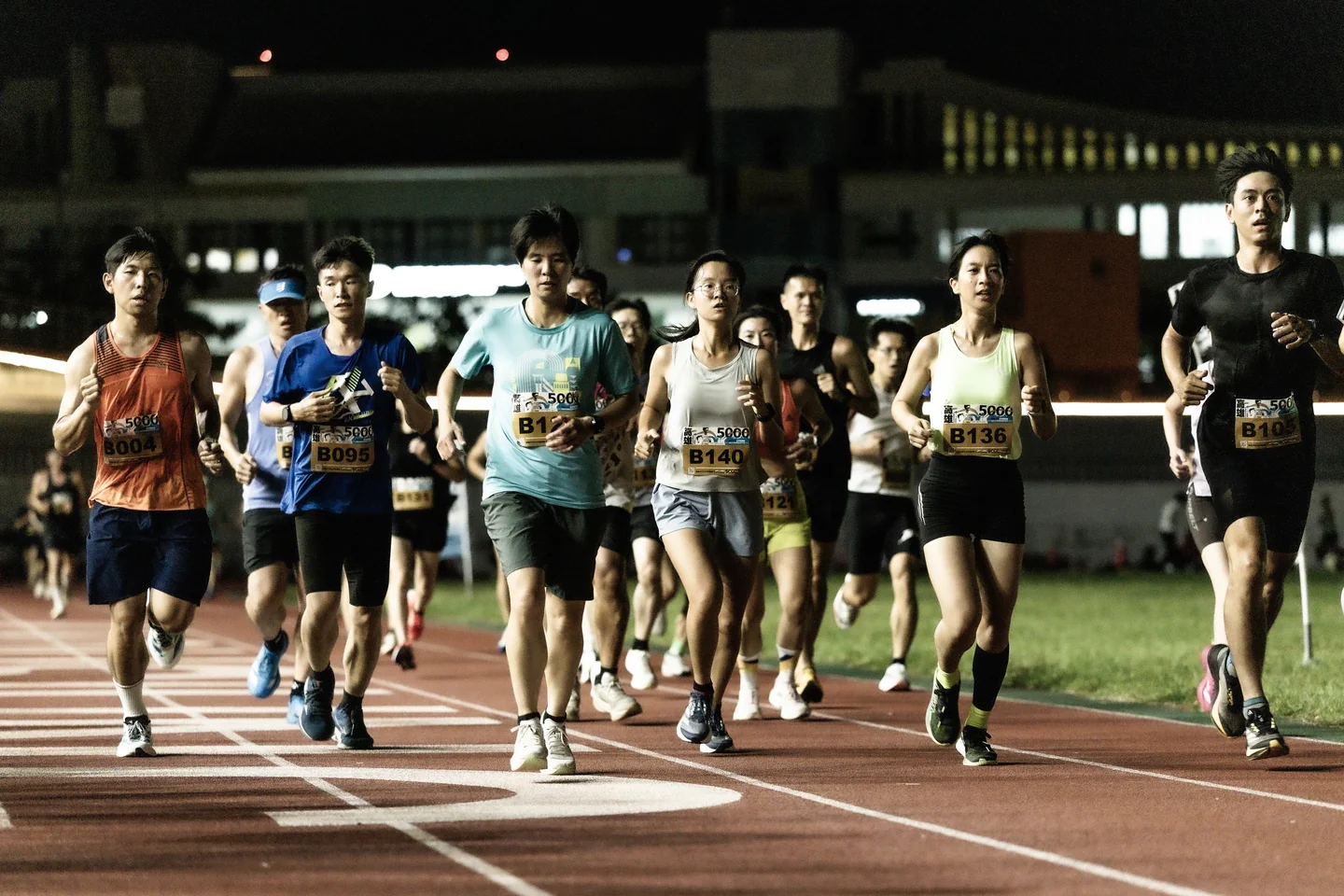
The III Ruta 091 Madrid Charity Race will take place Sunday, Oct. 18, 2026, in Casa de Campo, starting and finishing near Puente del Rey. The morning will begin at 10 a.m. with children’s races and continue at 11 a.m. with the six-kilometer adult race, organized by the Directorate-General of Police with authorization from Madrid City Council.
All proceeds will go to Fundación Contigo Contra el Cáncer de la Mujer, a nonprofit organization supporting and raising awareness of cancer affecting women. The event combines mass participation running, family activities and information about police work in one of Madrid’s most important green spaces.
Basic event information can also be checked in the popular race calendar and the popular race map, two useful resources for placing the event within the national running calendar.
A morning of running and charity in Casa de Campo
The Ruta 091 Madrid event reaches its third edition in 2026. Casa de Campo is a familiar setting for Madrid runners, with tree-lined paths, sections beside the lake and varied surfaces. The main reference point will be Puente del Rey, beside the Spanish Football Team Esplanade.
The timetable separates the children’s events from the adult race. Children will start at 10 a.m., while the adult category begins at 11 a.m., with different starting pens based on expected finishing times. The organization allows a maximum of one hour for the adult course.
The charity purpose is more than a symbolic addition. In this type of event, every entry becomes a direct contribution to a social project and allows a mass race to extend beyond sporting results. The stopwatch matters, but it shares the spotlight with participation and awareness of a health issue affecting many families.
Date, times and starting area
The event is scheduled for Sunday, Oct. 18, 2026. Children’s races begin at 10 a.m. and the adult event at 11 a.m. Both the start and finish are located at Puente del Rey, in the Casa de Campo area near the Spanish Football Team Esplanade.
The finish will be in the same general area, although the final section leads toward Puerta del Río and Paseo del Embarcadero. The finish refreshment point will also be located there, making the area the center of activity after the race.
The location offers a clear logistical advantage by bringing together the start, finish, complementary activities and police exhibition in a spacious area. Access arrangements may vary depending on the chosen transport, so runners should check the organizer’s latest operational information before attending.
A six-kilometer course around the paths and lake
The adult race covers 6 kilometers through Casa de Campo. The route starts at the Spanish Football Team Esplanade and heads toward Puerta del Río before joining Paseo del Embarcadero. It then continues along Paseo Azul, where runners can see the lake while gradually gaining elevation.
The course proceeds north along Paseo de Piñoneros and passes Puerta de Enmedio, approximately at kilometer 1. It reaches Plaza de las Moreras before descending along the similarly named path toward an intersection with Camino del Príncipe, around kilometer 2.
The circuit then follows a sequence of interior paths and park avenues. After passing the cable-car road and calisthenics area on the right, runners turn toward Paseo de los Plátanos, around kilometer 3. The scenery changes gradually as trees, bends and junctions replace the open view around the lake.
The route passes Plazuela de los Siete Hermanos and continues along Camino de Rodajos. It then turns toward the road leading to Camino del Robledal, making a half-circle before reaching Paseo de los Castaños, around kilometer 4. This section requires attention to changes of direction and group positioning.
In the final section, the course runs straight to Glorieta de los Neveros and returns to Paseo del Embarcadero, circling the lake near kilometer 5. After passing Glorieta de Las Cubas, runners return along the promenade to the finish at Puerta del Río. This is not a conventional urban race: it is a park course with bends, wooded sections and gentle rhythm changes.
What adult participants should know
The adult category is open to participants aged 14 and older. Minors must have the required authorization from a parent or legal guardian under the conditions established for bib collection. For runners aged 14 to 17, the organization also recommends staying with an adult.
The race uses different starting pens based on expected time, a common measure to prevent congestion in the opening meters. On a six-kilometer course, this can make the start smoother, especially on the initial sections near the esplanade and the route toward Puerta del Río.
The maximum time is 60 minutes. That equals an average pace of approximately 10 minutes per kilometer, although the actual result will depend on bends, crowd density, terrain and weather. This is a mass-participation race rather than an event reserved for specialists, with room for a wide range of paces.
The course uses paths and park promenades, so it should not be viewed as a completely flat asphalt circuit. Surface conditions may affect footing, particularly after rain. Stable, comfortable shoes and a controlled start are generally more useful here than forcing the pace from the first turn.
Children’s races and distances
The children’s program has three age-based distances. Children ages 5 to 7 run 200 meters; those ages 8 to 10 run 400 meters; and participants ages 11 to 13 cover 800 meters. All starts take place from 10 a.m., with separate pens by age.
The children’s races start and finish at Puente del Rey. The route follows Paseo del Embarcadero, a recognizable area close to the event’s main zone. The short distances keep the focus on taking part, the atmosphere and contact with sport rather than on the final result.
The children’s category has a combined maximum time of 45 minutes for the three events. The organization recommends that parents or guardians accompany children to the start and finish area. This is particularly relevant in a large park such as Casa de Campo, where distances between points may be greater than they appear on a map.
The children’s program gives the Ruta 091 a family dimension. While adults tackle six kilometers, younger participants can enjoy an age-appropriate sporting activity and share a day in which running acts as a vehicle for charity.
The beneficiary cause and the purpose of the event
Proceeds from the Madrid edition will go entirely to Fundación Contigo Contra el Cáncer de la Mujer. The organization works in a sensitive area involving support, awareness and information about cancer affecting women. The race helps raise funds and public visibility for an issue often reduced to figures or occasional campaigns.
Using a sporting event as a charitable channel has a simple advantage: it welcomes experienced runners, families, walkers and people who only occasionally run. The shared route creates a powerful image. For several kilometers, the group moves along the same paths, and the difference between a fast time and an easy pace is no longer the central concern.
Ruta 091 is part of a program of charity races promoted by the National Police in cities across Spain. The objective is to combine physical activity, contact with citizens and support for nonprofit organizations. Each host city adapts its distance, route and beneficiary cause while maintaining a common identity linked to the 091 emergency number.
In Madrid, that identity is reinforced by a police exhibition in the finish area. Families can view equipment and vehicles in an open, informative setting, separate from the operational tone normally associated with police news. For many participants, the exhibition is part of the experience as much as the race itself.
Services and atmosphere around the finish
The Spanish Football Team Esplanade will host the refreshment point and much of the post-race activity. The finish area will serve as a meeting point for runners and spectators, with arrivals continuing beyond those who complete the course during the first minutes.
The Puente del Rey area allows spectators to watch the start and finish without moving between several parts of the route. This makes the event more accessible for families, although following the adult course from other locations will depend on access arrangements and temporary restrictions inside Casa de Campo.
The course will be closed to traffic except for authorized vehicles and emergency services, creating a safer setting for participants. On paths that are normally used by park visitors, coordination between organizers, security staff and other users is essential to avoid unexpected crossings.
The police exhibition adds a different element to the usual mass-race program. The event is not limited to collecting a bib, running and leaving; for several hours, the esplanade becomes a place for meeting, information and support for the beneficiary organization.
Where the race fits in Madrid’s calendar
October generally offers more favorable running temperatures in Madrid than the central summer months, although conditions can vary between a clear morning and one marked by rain or wind. The 11 a.m. start places the race in midmorning, when the atmosphere may be comfortable but the forecast still deserves attention.
The six-kilometer distance sits between a short race and an endurance event. It requires sensible effort management without demanding the specific preparation of a half marathon. In Casa de Campo, the experience is shaped by both the distance and the nature of the terrain and bends.
For runners who usually train in the city, the route offers a useful change. The race leaves the grid of avenues behind and brings the pace onto paths, trees and natural landmarks. That changes the perception of effort: the landscape moves differently and every bend replaces the intersections of an urban race.
The event may also appeal to runners seeking a popular race with a clear social purpose. Here, participation is not measured only in minutes per kilometer. Fundraising, awareness and the children’s categories all form part of the day’s broader outcome.
Information to confirm before Oct. 18
The available details establish the date, times, distances, starting area and general route. However, operational information may be finalized or changed before race day, including registration procedures, entry fees, bib collection, access conditions and authorization requirements for minors.
Runners should also check the latest version of the regulations, especially regarding documentation, starting pens, bib distribution and possible route changes. At a park-based event, technical decisions may respond to maintenance work, ground conditions, safety or coordination with other uses of the venue.
The published route includes kilometer references and several named promenades, roundabouts and paths. This helps explain the course structure, but it does not replace race-day signage. The route may feel different with the field of runners, barriers, volunteers and checkpoints in place.
The race starts and finishes in the same general area, while the route description places the finish at Puerta del Río, within the Puente del Rey surroundings. This distinction helps spectators arrange meeting points and understand movement around the start and finish esplanade.
A mass race focused on people
The third Ruta 091 Madrid edition offers six kilometers in one of the capital’s largest green spaces and children’s events for participants ages 5 to 13. The 11 a.m. adult start, the 200-, 400- and 800-meter races, and the finish near Puente del Rey create an open sporting morning.
Directing proceeds to Fundación Contigo Contra el Cáncer de la Mujer places charity at the heart of the event. The National Police provides the race identity and equipment exhibition, while Casa de Campo offers a familiar setting for runners of all levels.
In a city with a packed race calendar, this event’s distinction is not only the six kilometers. It is the combination of mass running, family participation, a natural setting and support for a social organization. The bib marks the beginning of the route; the meaning of the day continues after the race ends.



How to prevent thigh chafing: causes and real solutions

Women’s running windbreakers: seven jackets and how to choose

Do more workouts get rid of soreness? A guide for runners

Jaén Half Marathon 2026: Record 3,800 Runners Registered

Men’s short running tights: how to choose the right pair

World Triathlon confirms data breach involving medical data

Izan Edo targets podium at Miyazaki World Cup

María Pérez ranks ninth in World Athletics’ 2026 top ten

Dos Santos, Duplantis and Sawe: World Athlete of the Year finalists

San Silvestre Vallecana 2026: 42,000 places, prices and start times

 Races4 months ago
Valencia Half Marathon 2027: date and registration

 Races4 months ago
Valencia Marathon 2026: entry, ballot and course

 Reviews and Comparisons4 months ago
Asics Gel-Roadmiles 3 for men: review and current price

 Reviews and Comparisons4 months ago
Asics Gel Sonoma 8 Gore-Tex: complete analysis for trail and rain

 Sneakers3 months ago
Saucony Endorphin Pro 4: full review and verdict

 News5 months ago
Strava API 2026: what changes for clubs, challenges and runner apps?

 Reviews and Comparisons5 months ago
Nike Alphafly 3: opinions, sensations, and real key points

 Reviews and Comparisons4 months ago
Under Armour running shoes review 2025-2026: models and key features

 Sports Equipment4 months ago
Shoe sizes in cm: a clear guide to getting the right fit for your footwear

 Sneakers3 months ago
Skechers GO RUN Consistent 2.0 analysis: comfort and limits

 News5 months ago
Valencia Marathon 2026 route: key tips to train and run better

 Sneakers4 months ago
Adidas Adizero Boston 13 for men: review and verdict