Races
Ruta de las fortalezas 2026: course, dates and entries
Cartagena is preparing a new edition with 53 kilometers, military heritage and places for runners of all ages.

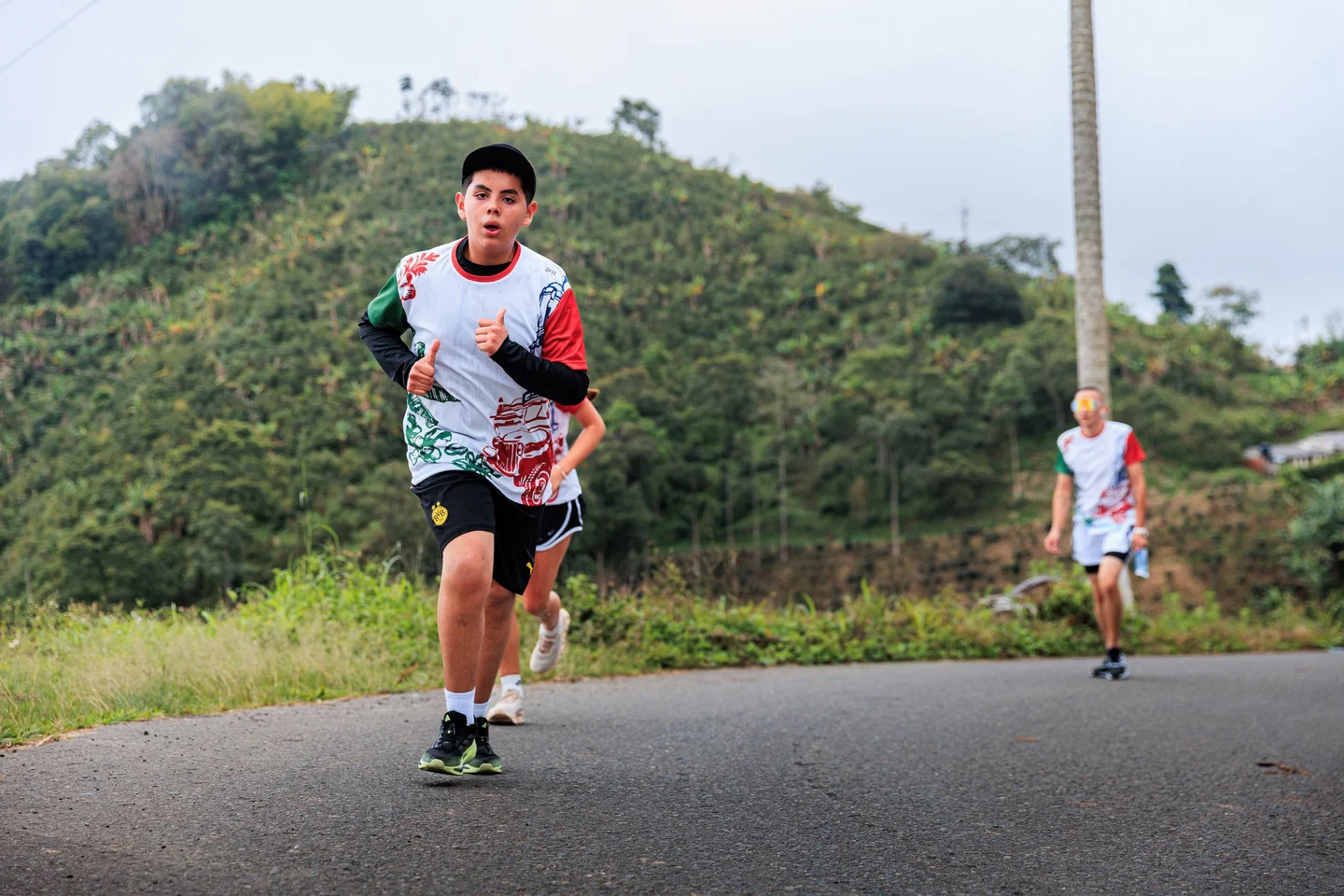
Cartagena will once again become a major sporting setting on Saturday, April 18, 2026, with the 15th edition of Ruta de las Fortalezas. The main event covers 53 kilometers and 1,631 meters of positive elevation gain along roads, tracks and trails linking castles, defensive batteries, hills and urban areas.
The event will bring together up to 6,000 runners and walkers across its different categories, with civilian and military participation. The main race has a 12-hour time limit and up to 5,000 entries, while the 17-kilometer option and the children’s events open the program to teenagers and younger participants.
A resistance event with Cartagena’s identity
The race is organized by the General Albacete and Fuster Marine Infantry School, with the support of the Spanish Navy and Cartagena City Council. Its character does not come only from the distance. The course turns the city’s military and natural heritage into a chain of visible landmarks, with climbs, descents and changing terrain that require runners to manage their strength for many hours.
Ruta de las Fortalezas began in 2010 and, after fourteen editions, has become one of the country’s most distinctive endurance events. Trail runners, walkers and participants taking on a personal challenge all share the route, far from the logic of a conventional urban race.
The charitable element is also part of its structure. Registration income is allocated to charitable organizations, associations and foundations at local, regional and national level with a base in the Region of Murcia. Since its creation, the event has raised more than 600,000 euros for aid, a figure that explains its social dimension beyond sporting results.
2026 date, schedules and events
The main event will take place on Saturday, April 18, 2026, with the start scheduled for 9 a.m. The start and finish are in Cartagena, although the route crosses different parts of the municipality before returning to the Marine Infantry School. The maximum time for completing the main distance is 12 hours.
The program includes several events. The general race covers 53 kilometers and has 5,000 entries. The promotional option reduces the challenge to 17 kilometers and has 400 places; there is also a cadet and youth version over the same distance. Children’s races, for participants aged 6 to 14, will take place on Friday, April 17, with approximate distances of one and two miles.
Together, the different categories mean the event is not limited to participants capable of taking on an ultra-distance mountain race. The children’s event takes place the day before, while the long and promotional races concentrate the main activity on Saturday. The figures published for the event add up to 6,000 participants across all categories.
The course: fortresses, batteries and hills
The general course works almost like a long-distance tour of Cartagena’s historic defensive system. After passing through the port, participants reach San Leandro Battery, San Isidoro and Santa Florentina Battery, Santa Ana Fort and Trincabotijas. Each landmark introduces a different reference in a route where the ground changes frequently.
The sequence continues toward San Julián Castle, the Calvario climb, Sierra Gorda and Cerro de Despeñaperros. Later come the Sea Wall, Concepción Castle and the Molinete Archaeological Park. The course alternates open areas and urban sections, a combination that can be deceptive: being close to the city does not remove the accumulated strain in the legs.
The final section leads to Fajardo Fort, La Podadera Battery, Galeras Castle, Atalaya Castle and Sierra de Pelayo. The finish is at the Marine Infantry School. In total, the race covers 53 kilometers on mixed surfaces, including tracks, paths, trails and road sections, with positive elevation gain reaching 1,631 meters.
How to understand the difficulty of 53 kilometers
The distance places the race in the world of ultra-endurance events, although its profile is not that of a major alpine ultra. The elevation is spread across several climbs rather than concentrated in one wall. That distribution may make the early stages easier, but it also requires runners to control their pace so they do not run out of energy before the final castles and hills.
The 12-hour limit gives participants who alternate running and walking a broad margin, but it does not turn the course into a stroll. Fatigue builds gradually: first through surface changes, then through repeated climbs and finally through the accumulation of kilometers. Effort management is as important as speed, especially for participants seeking to finish the event for the first time.
The mixed surface requires attention to footwear and technique. Tracks allow a steady rhythm, while trails and rocky sections demand a stable stride. On urban stretches, runners may recover some pace, although the accumulated elevation does not disappear upon reaching Cartagena. The experience is closer to a competitive long trek than to a road marathon.
Registration, draw and entry availability
Pre-registration for the 2026 edition was scheduled from January 15 through January 29, inclusive. Because of high demand, places were assigned by a draw on January 30. This system particularly affects the general race, which has 5,000 entries and usually attracts the greatest interest.
The price depends on the chosen event and ranges from 10 to 45 euros. The lower amount applies to shorter options or certain categories, while registration for the main race reaches the highest stated fee. Places in the promotional event and children’s categories are managed within the same general process.
High demand has led to several announcements concerning reserve draws and released entries. The status of a specific registration can therefore change because of withdrawals, draws or organizational adjustments. The reference channel for checking the call, regulations and participant instructions is the event’s official website, listed as rutadelasfortalezas.es.
Organization, safety and changes for this edition
The 2026 edition includes logistical improvements and maintains a broad safety, medical assistance and civilian and military volunteer operation. In an event of this size, checkpoints, markings and transport before or after the race are as important to the experience as the course itself. The organization also publishes specific information about buses available to participants.
The race is also part of the first mountain-race league promoted by Cartagena City Council, the Carthago Mountain League. In this context, a segment located at kilometer 27, near Concepción Castle, has been established as the scoring reference, with accumulated positive elevation reaching 779 meters at that point. The change was made because the timing mat originally planned at kilometer 20.1 could not be installed.
The change affects league scoring and does not alter the general race distance. Only participants who complete the full course count for that classification, according to the specific regulations. This detail shows how a long-distance event may need to adapt its technical operation when timing infrastructure is not available.
A course where heritage also competes
The event’s distinctive quality lies in the fact that each section has its own image. The port opens the day with a maritime atmosphere; batteries and forts take runners into the city’s defensive history; the hills introduce silence, earth and vegetation; and the passage through the urban center brings back Cartagena’s noise before the final climbs.
The presence of civilians and military personnel strengthens the relationship between the race and the city’s memory. Fortifications are not merely scenery but places that explain Cartagena’s strategic position and its connection with the Navy. Heritage is an active part of the route: it shapes the visual rhythm, helps with orientation and turns every climb into a small station within a larger story.
This balance between sport, historical education and solidarity has allowed the event to retain a recognizable identity. There are faster races, others with more elevation and some with more technical terrain, but few bring together a 53-kilometer event, such a concentrated defensive system and such a diverse field.
Cartagena prepares for another day of endurance
The 15th edition arrives with high participation, a demanding course and an organization designed for runners with very different profiles. The general race will be the center of the program, but the promotional, cadet and youth, and children’s events allow the occasion to reach a large part of the city and its families.
For those taking on 53 kilometers, the challenge will be arriving with strength at Sierra de Pelayo and the final stretch toward the Marine Infantry School. For those entering the shorter distances, the attraction will be sharing part of a day that has turned Cartagena’s fortresses into sporting landmarks. In both cases, the result will be measured by more than the clock.
On April 18, Cartagena will once again bring paths, castles and neighborhoods together in an event that reflects much of its identity. The finish will be the final chapter of a journey through history, landscape and endurance, three elements that explain why this event retains a prominent place in the mountain-racing calendar.



How to prevent thigh chafing: causes and real solutions

Women’s running windbreakers: seven jackets and how to choose

Do more workouts get rid of soreness? A guide for runners

Jaén Half Marathon 2026: Record 3,800 Runners Registered

Men’s short running tights: how to choose the right pair

World Triathlon confirms data breach involving medical data

Izan Edo targets podium at Miyazaki World Cup

María Pérez ranks ninth in World Athletics’ 2026 top ten

Dos Santos, Duplantis and Sawe: World Athlete of the Year finalists

San Silvestre Vallecana 2026: 42,000 places, prices and start times

 Races3 months ago
Valencia Half Marathon 2027: date and registration

 Races3 months ago
Valencia Marathon 2026: entry, ballot and course

 Reviews and Comparisons4 months ago
Asics Gel-Roadmiles 3 for men: review and current price

 Reviews and Comparisons4 months ago
Asics Gel Sonoma 8 Gore-Tex: complete analysis for trail and rain

 Sneakers3 months ago
Saucony Endorphin Pro 4: full review and verdict

 News5 months ago
Strava API 2026: what changes for clubs, challenges and runner apps?

 Reviews and Comparisons5 months ago
Nike Alphafly 3: opinions, sensations, and real key points

 Reviews and Comparisons4 months ago
Under Armour running shoes review 2025-2026: models and key features

 Sports Equipment4 months ago
Shoe sizes in cm: a clear guide to getting the right fit for your footwear

 Sneakers3 months ago
Skechers GO RUN Consistent 2.0 analysis: comfort and limits

 News5 months ago
Valencia Marathon 2026 route: key tips to train and run better

 Sneakers4 months ago
Adidas Adizero Boston 13 for men: review and verdict