Races
San Lorenzo del Escorial Half Marathon 2026: Complete Guide
Route, itinerary, services and key points of a demanding half-marathon in the Madrid mountains.

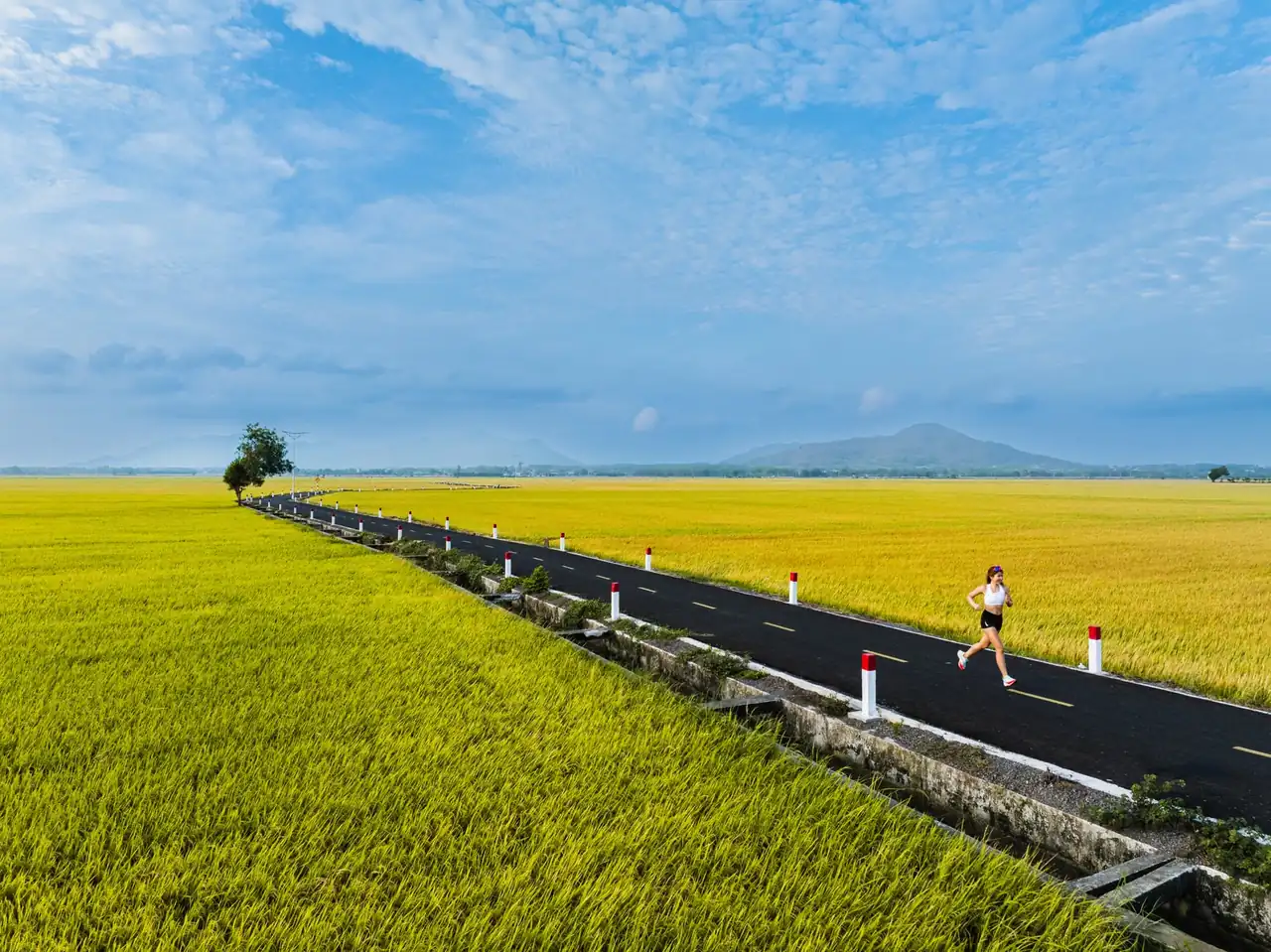
Imagen: VANNGO Ng / Pexels
The San Lorenzo del Escorial half marathon once again stands among the most distinctive races on the Madrid calendar thanks to an especially leg-unfriendly but very appealing combination for runners: 21.097 kilometers of asphalt, chained climbs, and a landscape that blends historical heritage and mountains.
The 23rd edition is set for June 21, 2026, with the start at 09:30 from the Zaburdón Municipal Sports Center and a maximum time limit of three hours, until 12:30. The organizers preserve the spirit of a tough race, highly recognizable for its leg-breaking profile and for the setting of the Royal Site, with the Monastery as a backdrop in several sections of the course.
A race that has earned its fame on its own merits
San Lorenzo del Escorial does not sell speed. It sells character. Its half marathon is one of those races where the clock matters, but does not dominate the stage. The course forces runners to measure their effort from the very first kilometer and rewards those who know how to run smart, without being tempted by the false comfort of a fast start on a course that punishes any excess.
In the popular racing calendar, few asphalt half marathons have such a strong personality. The altitude, which ranges from 950 to 1,300 meters according to specialized websites, does not turn the race into an alpine event, but it does create a feeling of thinner air, sustained effort, and a certain accumulated toughness. The race has established itself as a benchmark for those looking for something beyond a flat personal best.
The event also retains a very local, almost small-town dimension, with an organization tied to the San Lorenzo Athletic Association and participation limited to 500 runners in different editions to preserve the surroundings. Rather than detracting from its appeal, that restriction reinforces the feeling of a carefully managed, restrained race deeply connected to its territory.
Date, start, and key details for the day
The calendar already places this event in a tricky slot for recreational runners: late June, with summer just around the corner and the heat beginning to tighten its grip in the Madrid mountains. The start time, set for 09:30, aims to avoid the hottest hours, but it does not remove an important factor in race strategy: temperatures can rise quickly and change how the effort feels in just a few kilometers.
The start and finish are located at the Zaburdón Sports Center, a practical hub for event logistics and a common central point for local races. From there, a loop course begins that runs entirely within the municipal boundaries of San Lorenzo del Escorial, with urban sections and areas more exposed to gradients and the open mountain landscape.
The time limit is another relevant detail. The finish line closes at 12:30, leaving three hours to complete the distance. On a flat half marathon, that barrier may seem generous; here, it functions as a realistic cutoff for a more demanding course than usual, where managing effort is as important as physical fitness.
An asphalt course with climbs, altitude, and plenty of wear and tear
The course is consistently described by several sources as an asphalt half marathon with a tough profile, almost like gentle mountain running, while still remaining an urban race in surface terms. That mix is precisely what makes it unusual. There are no technical trails or mud, but there is a constant ebb and flow of elevation changes that break the rhythm as if an invisible hand kept squeezing and releasing your pace again and again.
Technical data point to a maximum elevation of around 1,315 meters and a positive elevation gain that appears in different references at figures close to 370 meters. Beyond the exact number, the message is clear: the route does not give you free meters. The climbs stack up, the descents do not always allow full recovery, and the legs end up paying for every change in gradient.
The beauty of the route compensates for part of that effort. Passing near the Monastery of San Lorenzo de El Escorial, declared a UNESCO World Heritage Site, adds a visual and symbolic value that few half marathons can offer. Running here is not just moving on asphalt; it is also crossing a place with historical weight, solemn stone, and an atmosphere that is instantly recognizable to anyone familiar with the area.
That is why this race is often associated with runners who enjoy a challenge. It is not the typical half marathon for chasing a flat, clean time, but rather an event where splits must be interpreted with nuance. A useful pace is not always a pretty pace. And that difference becomes apparent quickly in San Lorenzo.
Registration, slots, and the interest each edition generates
Registrations are handled online and, according to reference information, the race has limited entries to 500 bibs. That figure helps explain the pull the race still has: it is not massive, but it is desirable enough that many runners add it to their calendar well in advance.
Price references found in specialized sources point to a fee of around 25 euros, with possible discounts for residents or specific categories, although those amounts should always be read as depending on the edition and the moment of registration. In races of this kind, moreover, proximity to the event date often tightens entry availability more than the cost itself.
The demand makes sense because of its mix of factors: history, toughness, surroundings, and a well-established organization. At a time when many recreational races tend to look the same, San Lorenzo del Escorial retains the feel of a race with its own identity, a quality that weighs heavily in a runner’s decision when looking for something memorable to close the first half of the year.
Runner services and the finish-line experience
The organization provides basic but essential services for a demanding half marathon: chip bib, liquid aid stations לאורך the course, bag drop, showers, and medical support. These are not luxuries. They are the minimum infrastructure needed for a race like this to feel safe and well managed from a logistical standpoint.
Several references mention three hydration stations spread along the course, plus a final aid station at the finish. In a June race with hills and exposure to heat, that distribution matters more than it would in a fast urban race. It is not just about drinking; it is about reaching the next section with enough margin so dehydration does not become an invisible burden.
The runner’s bag usually includes a technical T-shirt and other edition-related details, while the finish area at Zaburdón concentrates the day’s most social atmosphere. That is where the effort turns into celebration: a gesture of relief, still-heavy breathing, and that blend of satisfaction and fatigue left by truly demanding races.
There are also mentions of category prizes, a finisher’s diploma, and a charitable component in some editions, with part of the proceeds going to social causes. All of this reinforces the idea that the race is not just a sporting challenge, but also an event with a community identity deeply rooted in the municipality.
How strategy changes when the course bites
In a flat half marathon, the most common mistake is starting a little faster than you should. In San Lorenzo del Escorial, that mistake comes with interest. The incline, though it may not look brutal on a map, continuously alters race mechanics and turns any rigid plan into a fantasy. Here, mental flexibility matters more than obedience to the stopwatch.
The best way to read the course is to understand that the first kilometers should not be used to force a time goal, but to take reference points. If your breathing rises too early, the middle part of the course becomes a trap. And if you reach the more favorable sections with empty legs, the final stretch can feel like a stone wall.
Preparation usually benefits from hill sessions, leg-strength work, and controlled paces under conditions similar to those on race day. Not for any heroic reason, but for simple muscular logic. Quads, calves, and glutes are the first to suffer from the succession of climbs and descents, and June heat adds another layer of demand that should not be underestimated.
There is also a less visible tactical dimension: knowing how to drink without overdoing it and without falling behind. On courses with spaced-out aid stations, the runner who waits too long sometimes arrives too late. Well-timed hydration does not win spectacular victories, but it prevents the silent breakdowns that ruin the final kilometers.
The sporting and symbolic value of running in the Madrid mountains
Running in San Lorenzo del Escorial feels like a short crossing through a setting with memory. The Monastery, the town streets, the mountain air, and the sense of altitude create a backdrop that depends on more than athletic difficulty. There is also an aesthetic, almost ceremonial, charge that turns the half marathon into a richer experience than simply crossing a finish line.
That element helps explain why the race continues to attract runners with different profiles. Some come for the challenge; others for the setting; others for the chance to test their fitness in a race that allows no shortcuts. San Lorenzo works like a kind of honest exam: it clearly shows who arrives prepared and who does not.
The race also has something very valuable in today’s calendar, where many events compete for attention with large urban formats: it keeps a human scale. The runner does not get lost in a massive sea of bibs, and the surroundings do not disappear behind screens, panels, and artifice. Here, the stone of the setting and the asphalt of the course matter more than the outside noise.
That balance between effort, landscape, and organization is what has kept the San Lorenzo del Escorial half marathon a respected event. It does not aim to be the fastest, but one of the most memorable. And in the end, for many recreational runners, that is worth almost as much as a brilliant time on the results sheet.
A half marathon that tests legs, head, and patience
The 23rd edition confirms what this race has been conveying for years: San Lorenzo del Escorial is no ordinary half marathon. Its distance is the same as any certified 21K, but its meaning changes completely when gradients, altitude, and June heat enter the picture. The result is a race that rewards intelligence as much as fitness.
Anyone who finishes this race will have run more than 21.097 kilometers. They will have crossed a course with character, a town of immense historical weight, and a route that demands respect from the start. That is why its prestige continues to grow among those who prefer races with relief, the kind that leave a deeper mark than a simple personal record.
The San Lorenzo del Escorial half marathon has earned its own place on the Spanish calendar for a very simple reason: it combines difficulty and beauty without softening either of them. That combination, so uncompromising, explains why each edition continues to spark interest among runners looking for a serious challenge in a setting of high symbolic value.
You may also like: El Escorial Half Marathon 2025: route, price and schedule.



How to prevent thigh chafing: causes and real solutions

Women’s running windbreakers: seven jackets and how to choose

Do more workouts get rid of soreness? A guide for runners

Jaén Half Marathon 2026: Record 3,800 Runners Registered

Men’s short running tights: how to choose the right pair

World Triathlon confirms data breach involving medical data

Izan Edo targets podium at Miyazaki World Cup

María Pérez ranks ninth in World Athletics’ 2026 top ten

Dos Santos, Duplantis and Sawe: World Athlete of the Year finalists

San Silvestre Vallecana 2026: 42,000 places, prices and start times

 Races4 months ago
Valencia Half Marathon 2027: date and registration

 Races4 months ago
Valencia Marathon 2026: entry, ballot and course

 Reviews and Comparisons4 months ago
Asics Gel-Roadmiles 3 for men: review and current price

 Reviews and Comparisons4 months ago
Asics Gel Sonoma 8 Gore-Tex: complete analysis for trail and rain

 Sneakers4 months ago
Saucony Endorphin Pro 4: full review and verdict

 News5 months ago
Strava API 2026: what changes for clubs, challenges and runner apps?

 Reviews and Comparisons5 months ago
Nike Alphafly 3: opinions, sensations, and real key points

 Reviews and Comparisons4 months ago
Under Armour running shoes review 2025-2026: models and key features

 Sports Equipment4 months ago
Shoe sizes in cm: a clear guide to getting the right fit for your footwear

 Sneakers3 months ago
Skechers GO RUN Consistent 2.0 analysis: comfort and limits

 News5 months ago
Valencia Marathon 2026 route: key tips to train and run better

 Sneakers4 months ago
Adidas Adizero Boston 13 for men: review and verdict