Races
Segovia San Silvestre 2025: full course
The Segovian end-of-year race once again draws attention for its route, atmosphere, and usual changes.

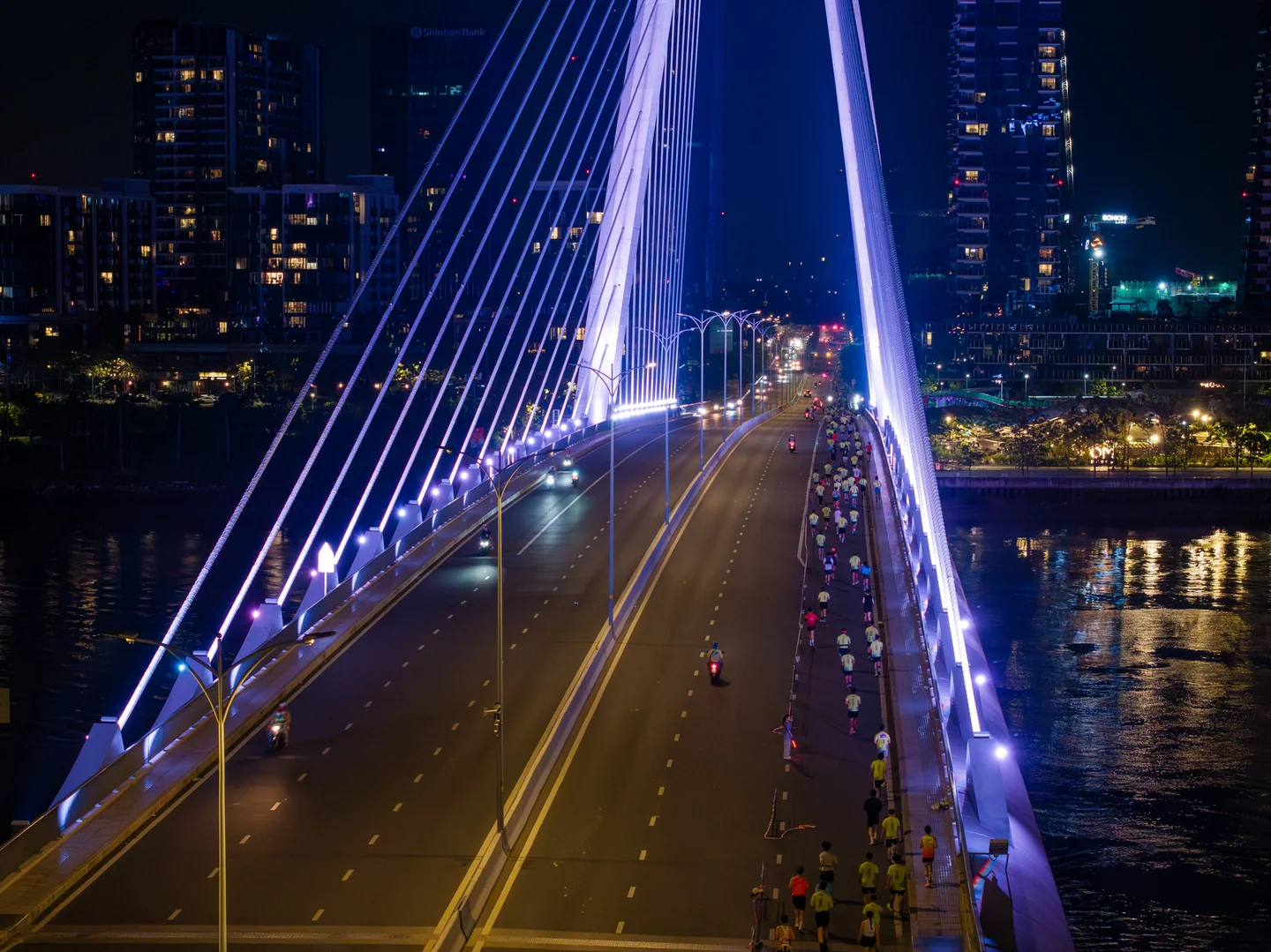
The 2025 Segovian San Silvestre returns Segovia to urban race mode, with a route that concentrates much of its appeal in the historic center, the city’s pulse, and the contrast between monumental streets and more runnable stretches. In a year-end race, the course matters as much as the stopwatch: it shapes participation, enjoyment, and the way the city becomes, for a few hours, a living circuit.
The information available about this edition points to a popular-event profile, designed to close the calendar with a festive atmosphere and the presence of runners of different levels. In this type of race, the route is not a secondary detail: it defines the full experience, from the start to the final turn, and determines whether the race feels fast, technical, demanding, or rather friendly for those looking to say goodbye to the year by running without obsessing over the clock.
A course that usually mixes heritage and pace
Segovia offers an instantly recognizable setting. Its urban layout, with moderately sloped streets, stone, open squares, and passages through very identifiable areas, turns any popular race into something more than a simple succession of kilometers. The route of the Segovian San Silvestre usually relies precisely on that contrast: stretches that let you see the city and others that require you to manage your legs well.
That combination has added value for the amateur runner. Narrow streets and frequent turns require entering the race with a certain patience, especially in the first few meters, when the pack bunches up and caution is more useful than impulse. After that, if the course opens up, a second reading appears: looking for rhythm, finding references, and letting the race unfold in view of an urban setting with a strong personality.
In Segovia, the scenery also matters. The aqueduct, the access avenues, the squares, and the neighborhoods near the center help create a race remembered more for its atmosphere than for extreme toughness. For the runner, that means an experience where the aesthetics of the route matter almost as much as the technical course. And in a San Silvestre, that mix usually acts like a magnet.
What determines the runner’s experience
The first key in any San Silvestre is the start. If the starting point is in a central area or on an avenue with room for many participants, the course gains fluidity. If, on the other hand, it concentrates too much human traffic in narrow streets, the first kilometers become a kind of bottleneck where the runner has to negotiate overtakes, sudden braking, and small pace changes. In a popular race, that detail completely changes the feel of the run.
Changes in elevation also matter. Segovia is not a flat city, and that shows. Even if it is not necessarily a mountain race, there are usually enough slope changes for effort to be distributed unevenly. Some runners appreciate this because it breaks up monotony; others suffer because it punishes constant pace. In both cases, the course stops being just a map and becomes a strategy.
That is why, when people talk about the Segovia San Silvestre, interest in the route goes beyond mere curiosity. Runners want to know whether they will be able to run at an upbeat pace, whether there will be places to overtake, whether the turns will slow the cadence, and whether the start and finish will be designed for a large turnout. All of that affects how the race is perceived, especially on a date when many people go out to run with a more celebratory than competitive spirit.
A race designed for very different audiences
The San Silvestre is not only for trained runners. Its strength lies in bringing together very different profiles: people who compete, families, groups of friends, local clubs, and those who simply want to end the year with a bib number and sneakers. Much of its success comes from that mix, and the route must function as a common space where no one feels out of place.
That is why the courses for this type of event usually seek a delicate balance. They must be agile enough not to bore the regular runner and, at the same time, accessible enough that the occasional participant does not experience the race as an endless obstacle. The design of the circuit thus acts as a kind of translator between very different paces. If it is handled well, the race flows; if not, bottlenecks appear and uncomfortable differences emerge between those who are fighting for every second and those who just want to complete the distance comfortably.
In Segovia’s case, the value of that balance increases because the city has a very strong identity. Running through Segovia is not like running through an industrial estate or along a promenade without landmarks. It is doing so in an environment where the visual backdrop accompanies you and where the course can serve as an urban showcase. That quality explains why interest in the route naturally grows each time a new edition approaches.
The importance of the city center in a San Silvestre
Year-end races that take place through a city center generate a different experience from peripheral events. In the urban core, everything happens closer: the crowd, the volunteers, the turns, the cheer points, and the feeling of taking part in a small civic event. Segovia, with its historical weight and recognizable layout, makes especially good use of that format.
The urban route also has a practical consequence: it makes it easier for the public to follow the race from several points without needing to move far. That multiplies the atmosphere and gives the event a very particular energy. A runner is not just moving along a street; they are moving among voices, applause, and corners where the sound bounces back. That sensory dimension, so simple and so effective, usually defines a San Silvestre more than any technical data.
In an edition like 2025, that urban component becomes even more relevant because San Silvestres have established their own language: shirt, costume in many cases, photos at the start, compact groups, and a finish line that feels almost like a small collective celebration. Segovia’s route fits that logic because it offers a city that is recognizable, compact, and varied enough for each stretch to have its own personality.
What those who sign up for this race usually look for
The practical question behind the interest in the course is always the same: how comfortable will the race be? Those aiming for a personal best want a clean circuit, with few changes of direction and a stable surface. Those looking to enjoy the experience prefer a scenic route, easy to follow, and with as few conflict points as possible. The Segovian San Silvestre has to respond, in some way, to both expectations.
That is why analyzing the route cannot be reduced to a map. The width of the streets, the possible participant traffic, the turning areas, the finish-line location, and the way the course distributes effort all matter. A short, attractive circuit may be ideal for those running in a group; a faster, more linear one, for those who want to push. The quality of the route is really measured by its ability to accommodate both uses without losing its shape.
In Segovia, that duality has room to work. The city allows for a course with identity, but also with a certain order. And that order is key for the race to retain its popular spirit without losing something as valuable as the feeling of being well organized from the very first meter.
The city as part of the bib number
There are races in which the surroundings remain in the background, like a distant backdrop. And there are others in which the city gets inside the bib number. Segovia belongs to this second group. The visual richness of the historic center, the presence of its best-known arteries, and the weight of its urban landscape make the route also a way of telling the city step by step.
That explains why the local San Silvestre draws attention beyond the strictly sporting circle. The route works as a calling card. For those who do not know the city, the race offers a path; for those who do, it offers a different reading of familiar streets, almost as if the city were being seen from inside a moving photograph. The symbolic value of the course ends up being as important as the sporting one.
In this type of event, even small details such as the sound of shoes on asphalt, the cold December air, or the short afternoon light help create memory. Segovia, with its altitude, winter climate, and monumental identity, has more than enough ingredients to ensure that that memory is not generic. The race is lived and remembered with its own texture.
What can change from one edition to another
In popular races like this one, the route does not always remain identical. The start, the finish, a turn, the use of certain streets, or the direction of the course may vary for logistical, safety, or urban traffic coexistence reasons. That is why, when a specific edition attracts interest, attention usually focuses on the stable elements and on the possible adjustments introduced by the organizers each year.
In practice, this means that runners should look at the route not as a fixed photo, but as a structure that adapts. Segovia may preserve the essence of its San Silvestre and still move pieces around to improve participant flow or make race control easier. The organizational logic matters as much as the desire to offer a visually appealing race.
That room for variation is one of the reasons why the search for the 2025 edition’s route has so much traction. Runners do not just want to know where the race will go; they want to check whether that year’s version respects the spirit of the previous one or introduces changes that affect pace, distance, or the overall experience.
Segovia in December: a setting that changes the race
The date matters too. Running in December is not the same as doing it in spring or deep autumn. The cold changes the warm-up, breathing, and sense of effort. In a San Silvestre, that weather usually works in favor of the atmosphere, but it also means you need to start with some caution. Cold hands, dry air, and a body still half asleep affect the opening stages.
In Segovia, that winter component can be even stronger. The city is known for low temperatures and a clear atmosphere, with crisp light and biting air. That adds character to the race, but it also makes it more demanding in the lead-up. The route and the weather blend together to the point of defining the race: it is not just about where you run, but under what conditions you run.
That context turns the Segovia San Silvestre into more than just another popular year-end race. The runner moves among heritage, winter, and sporting celebration. And that mix, so easy to describe and so easy to remember, explains why interest in the itinerary does not end with the technical detail. The circuit is part of the story of the day.
A farewell to the year that also organizes the city
San Silvestres have a visible effect on urban life. For a few hours, streets that normally serve everyday traffic become shared space, with pedestrians, runners, volunteers, and spectators. That requires closures, diversions, and coordination that, when done well, almost goes unnoticed. In that sense, the route does not just draw a race: it also reorganizes the city.
In Segovia, where heritage and mobility coexist with a delicate urban layout, that balance is especially important. The event must respect the logic of the city without giving up its sporting character. A good course is one that manages that dual task without creating a sense of chaos or turning the race into a mere administrative formality.
That is why the 2025 edition’s route is being followed closely. It is not just about knowing whether one street or another will appear on the map, but about understanding how the city prepares to welcome its runners. In an event with such symbolic weight, the route functions as a small statement of intent: to celebrate the year that is ending and to run in a setting that needs no artifice to be memorable.
What remains when the last bib number crosses the line
When the start-line buzz fades and the finish area is empty, what remains is the overall image of the race: the route, the participation, the crowd’s response, and the way the city lent itself to the game. In Segovia, the course has the power to leave a mark precisely because it is not merely functional. It has depth, it has a scene, and it has context.
That explains why interest in the 2025 route goes beyond simple practical consultation. Those who run a San Silvestre in Segovia do not just want to complete kilometers; they want to be part of a local tradition that mixes popular sport and urban life. The route is the backbone of that experience, the thread that connects the start, the livelier stretches, and the finish line.
In a city with such strong visual presence and identity, the year-end race becomes a way of crossing Segovia at a different speed and with a different взгляд. And perhaps that is its greatest virtue: not asking the runner to forget the surroundings, but making the surroundings part of the effort, the mood, and the memory that remains at the end.



How to prevent thigh chafing: causes and real solutions

Women’s running windbreakers: seven jackets and how to choose

Do more workouts get rid of soreness? A guide for runners

Jaén Half Marathon 2026: Record 3,800 Runners Registered

Men’s short running tights: how to choose the right pair

World Triathlon confirms data breach involving medical data

Izan Edo targets podium at Miyazaki World Cup

María Pérez ranks ninth in World Athletics’ 2026 top ten

Dos Santos, Duplantis and Sawe: World Athlete of the Year finalists

San Silvestre Vallecana 2026: 42,000 places, prices and start times

 Races4 months ago
Valencia Half Marathon 2027: date and registration

 Races4 months ago
Valencia Marathon 2026: entry, ballot and course

 Reviews and Comparisons4 months ago
Asics Gel-Roadmiles 3 for men: review and current price

 Reviews and Comparisons4 months ago
Asics Gel Sonoma 8 Gore-Tex: complete analysis for trail and rain

 Sneakers3 months ago
Saucony Endorphin Pro 4: full review and verdict

 News5 months ago
Strava API 2026: what changes for clubs, challenges and runner apps?

 Reviews and Comparisons5 months ago
Nike Alphafly 3: opinions, sensations, and real key points

 Reviews and Comparisons4 months ago
Under Armour running shoes review 2025-2026: models and key features

 Sports Equipment4 months ago
Shoe sizes in cm: a clear guide to getting the right fit for your footwear

 Sneakers3 months ago
Skechers GO RUN Consistent 2.0 analysis: comfort and limits

 News5 months ago
Valencia Marathon 2026 route: key tips to train and run better

 Sneakers4 months ago
Adidas Adizero Boston 13 for men: review and verdict