Races
San Silvestre txiki Vitoria 2025: schedule, route, and key details
Schedule, route, bib numbers, and price of the year-end children’s event in Vitoria-Gasteiz.

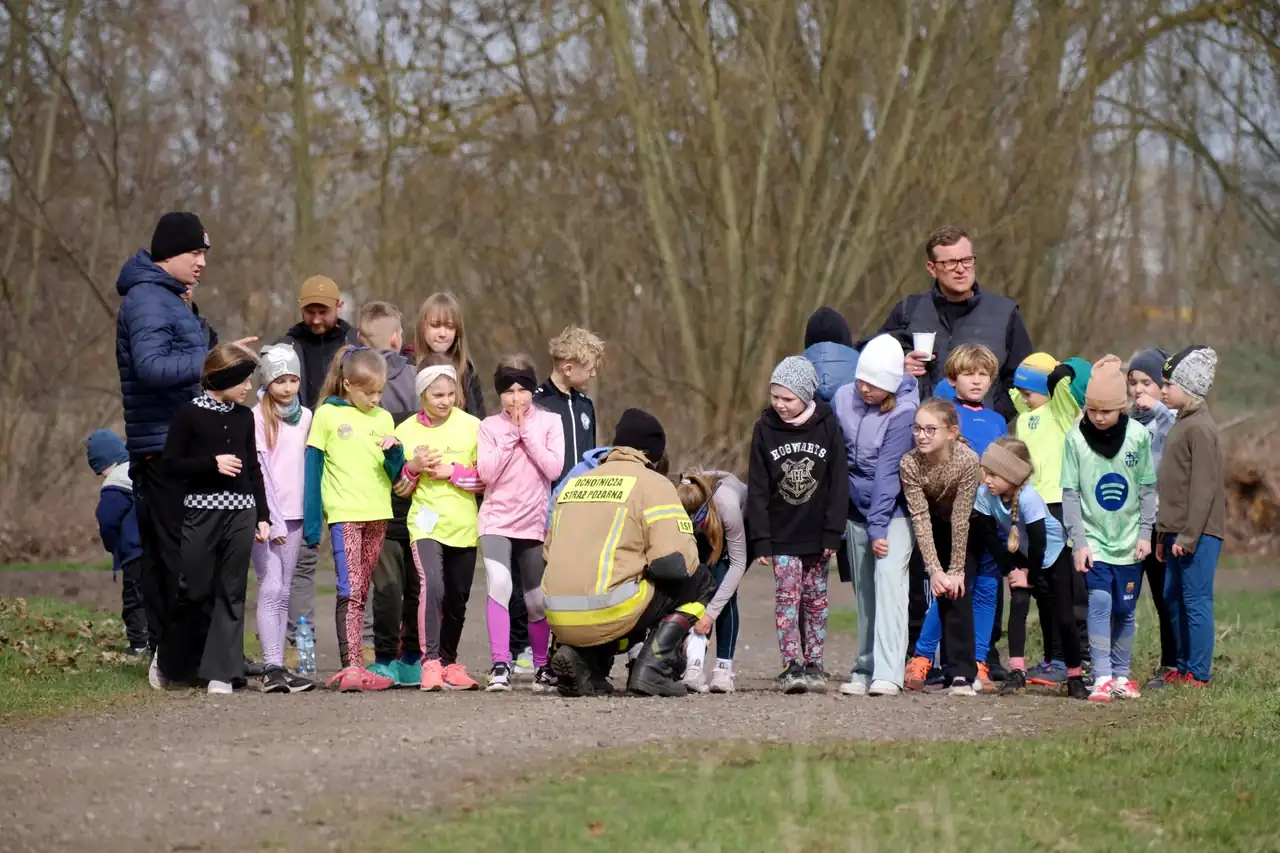
The San Silvestre txiki of Vitoria-Gasteiz once again puts the youngest participants at the center of the sports celebration on December 31, 2025, with two starts, a short circuit, and an atmosphere designed to make the race as participatory as it is safe. The event keeps the popular spirit of the capital of Álava alive on a day when Mendizabala becomes the meeting point, start, and finish of an event that has already become part of the year-end landscape.
The rules leave little room for doubt: there are 900 bibs, registration costs 2 euros, the course is 1.3 kilometers entirely on asphalt, and participation is reserved for those born in 2010 and later. The start and finish are located in the Mendizabala parking lot, while bib pickup takes place at Arkabia, on Postas Street 17, on December 29 and 30, with morning and afternoon hours.
A children’s event with the San Silvestre de Vitoria seal
The txiki is not just an add-on to the adult program, but a race with its own identity within the 41st San Silvestre of Vitoria-Gasteiz. It is organized by the Álava Athletics Federation and shares with the main event that festive spirit that mixes sport, costumes, families, and a city fully committed to bidding farewell to the year with strides. In practical terms, the proposal is designed so that the effort is manageable and access is straightforward, although the limited number of places makes demand high every season.
The children’s format responds to a very specific logic: making room for different ages without mixing paces or distances. That is why there are two separate start times and two clearly defined age groups. The first start, at 11:00, is for pre-baby and baby categories, born in 2016, 2017, 2018, 2019 and later, with the option of running accompanied by an adult. The second, at 11:45, brings together under-10, under-12, and under-14 categories, born between 2011 and 2015, already without companions.
That distribution is no minor detail. In children’s races, group safety and order are almost as important as the stopwatch, and here the rules solve it with a short route, judge oversight, and a finish without rankings. The absence of official places completely changes the tone of the event: the experience, street movement, and participation are prioritized over the result.
Times, ages, and the atmosphere in Mendizabala
The start of the day has something of a domestic ceremony and something of a small urban ritual. From 11:00 onward, the first participants set off in a period when Mendizabala usually fills with families, coats, bags, pinned numbers, and contained nerves. The 1,300-meter circuit is a brief but sufficient lap for the children to experience a real race, with start and finish at the same point and a maximum time of 15 minutes to complete it.
The maximum time detail matters because it underlines the event’s focus: a short, agile, and controlled activity, closer to an introductory race than to a long-distance competition. It is also worth remembering that the bib must be worn visibly on the chest and not folded, a simple but essential rule for proper control. The organization also insists that no refunds or transfers of ownership will be allowed once registration has been completed.
At this kind of event, the atmosphere matters as much as the route. It is common for the Mendizabala parking lot to become a small area of constant movement, with children adjusting their clothes, adults checking schedules, and an atmosphere that recalls those cold December mornings when breath turns to vapor and the asphalt looks grayer than usual. The celebration, however, needs no embellishment: it is enough to have the energy of those who set out to run and those who watch from the roadside.
Registration, field size, and price of a very limited race
Registration for the San Silvestre txiki 2025 opens from December 15 to 28, inclusive, through the official event website. Payment is made at the time of registration and credit or debit card is accepted. That tightly compressed schedule requires acting quickly within the set period, especially because the field is not large: the limit is 900 bibs.
The symbolic price of 2 euros makes the event one of the most accessible offers on the holiday calendar in Vitoria-Gasteiz. However, the fee should not mislead readers about demand: when the number of places is small and the race has a strong family component, interest usually grows as naturally as temperatures drop in the final weeks of December. A cheap bib does not mean it is easy to get one.
Registration includes specific race insurance coverage, while the organization disclaims any responsibility for those who run without having completed the formal process. This detail, common in sporting regulations, reinforces the idea that the event is highly structured and leaves no room for improvisation. It also places the txiki within a regulated framework, with clear control over who participates and under what conditions.
Bib pickup and required documentation
Bib collection is concentrated on December 29 and 30 at the new headquarters of the Vital Foundation, Arkabia, located at Postas Street 17, in Plaza de los Fueros. The schedule is generous: from 10:00 to 13:30 and from 18:00 to 20:00. That two-part schedule makes pickup easier for those who cannot come in the morning or need to fit the visit around the holiday agenda, shopping, and transfers typical of the final hours of the year.
The system is simple, but it requires planning: anyone picking up a bib must be clear that the registration is nonrefundable and nontransferable, and that access control depends on everything being in order. The rules also make it clear that the bib must be worn visibly on the chest, unfolded, an instruction that avoids issues at the start line and in identifying participants along the course.
Concentrating pickup in a single location is no accident. It helps organize the flow of families, reduce dead time, and keep the event at a manageable scale. In children’s races, logistics matter more than they may seem: a poorly handled queue or a confusing time can spoil a morning that, by design, should be smooth, friendly, and fluid. Here, instead, the organization has opted for a recognizable and easy-to-follow structure.
The 1.3-kilometer course and what it means to run it
The official distance of the txiki is 1.3 kilometers, entirely on asphalt, with start and finish in the Mendizabala parking lot. The race offers no rankings and the maximum time to complete it is set at 15 minutes, so the route functions as a short, controlled lap without technical complications. That apparent simplicity is part of its appeal: it does not aim for selectivity, but for participation.
The choice of asphalt is no accident in a children’s race of this kind. The stable surface makes it easier for groups of very different ages to move through, reduces the circuit’s complexity, and improves safety in an environment where there may be companions, changes of pace, and a high density of young runners. In sporting terms, the course does not require specific preparation; in organizational terms, it does require careful supervision and an orderly start.
The fact that there are no places or rankings changes how the route is perceived. The point is not to seek a personal best, but to complete a race experience that, in many cases, is the first of the year or even one of the first in the participants’ sporting lives. That educational dimension matters as much as the competitive one and turns the txiki into an initiation event rather than a traditional race. Running in Mendizabala on December 31 has something of a festive prelude and something of a small personal achievement.
Two starts, two paces, and one shared finish
The age split allows each group to find its own rhythm. In the 11:00 start, pre-baby and baby runners can be accompanied by an adult, a formula that reduces family tension and accommodates those who still need a close reference. In the 11:45 start, the under-10, under-12, and under-14 runners tackle the course without accompaniment, which better organizes the group and fits their independence.
The race is designed as a step in learning, not as an exam. The rules do not include rankings, so the focus shifts from position to action: lining up at the start, recognizing the route, sustaining the pace, and reaching the finish. For many children, that sequence is worth more than any medal or diploma, because it leaves the physical sensation of having taken part in an event that is part of the city’s main calendar.
In addition, the organization sets a very clear age limit: those born in 2010 and later. That boundary places the event within childhood and early adolescence, leaving out older participants and protecting the spirit of the event. In a year-end race, age grouping does not reduce excitement; it concentrates it. Each group competes against time, against the cold, and, at heart, against the impatience of reaching the end.
Context of the San Silvestre of Vitoria and its importance in the city
The San Silvestre of Vitoria-Gasteiz is not an isolated race, but one of the most recognizable events on Álava’s popular calendar. The 2025 edition is presented as the 41st, a fact that speaks of continuity and of a tradition that has managed to grow without losing its festive character. Within that set, the txiki fulfills an essential role: it extends the event to younger ages and reinforces the idea of a family race.
The solidarity dimension is also part of the context. The organization has indicated that part of the proceeds will go to ASAFES, the Álava Association of Families and People with Mental Illness. That gesture adds another layer of meaning to the event, because it links popular sport with a specific social cause without altering the event’s playful nature. The result is a race that does not merely bring runners together, but also projects a small community contribution.
Vitoria-Gasteiz has a very particular relationship with year-end races: the cold, the urban center, the wide avenues, and the presence of families in costume or festive clothing make the atmosphere less solemn than in other athletic events. The txiki captures that climate and adapts it to its own format. There is no elite spectacle or record chasing, but there is a recognizable urban scene, very much of here, where the city recognizes itself while running.
What to keep in mind before getting to the start
The combination of limited places, fixed dates, and a two-slot bib pickup schedule means this race requires a minimum of advance organization. Registration takes place between December 15 and 28, bibs are collected at Arkabia on December 29 and 30, and the race is held on December 31 with two staggered starts. Everything is measured so the day goes smoothly and each participant arrives at the asphalt with the essentials already settled.
At its core, the rules are meant to protect the experience. By setting ages, times, distance, maximum time, and basic bib-use rules, the organization reduces noise and leaves room for what matters: running, accompanying, watching, and ending the year with a shared moment. In children’s races, that planning is not bureaucracy; it is the difference between a chaotic morning and a pleasant one.
The San Silvestre txiki 2025 sums up quite well what makes this time of the sporting calendar special: a short distance, an active city, and a generation of young runners stepping onto the asphalt naturally. Mendizabala will be, for a couple of hours, a small starting stage. And that, on a farewell day, has a value that needs no exaggeration to be understood.
A small race that preserves the memory of year-end
Children’s races often go unnoticed compared with the headlines of major races, but in reality they sustain much of a city’s sporting memory. They are the ones many remember for cold hands, for a bib carefully pinned on, or for the mix of pride and nerves before the start. The San Silvestre txiki of Vitoria-Gasteiz follows that same logic: a short distance, yes, but a long-lasting mark on those who run it.
Its value lies in its human scale. It does not need records, big names, or an excessive stage production. It is enough for it to have a 1.3-kilometer circuit, a well-organized start, and an urban center that understands the race as part of its emotional calendar. In a city that says goodbye to the year with sport, the txiki works like the first heartbeat of the morning, the sign that the day is in motion.
That is why the 2025 event matters beyond the registered families. It speaks of a way of understanding running as a shared fabric, as a common habit that connects children, organizers, and neighbors. And it does so with a simple, almost sober formula: fixed date, reduced price, short route, and a clear finish in Mendizabala. Sometimes, the best race is the one that does not try to be more than it is.



How to prevent thigh chafing: causes and real solutions

Women’s running windbreakers: seven jackets and how to choose

Do more workouts get rid of soreness? A guide for runners

Jaén Half Marathon 2026: Record 3,800 Runners Registered

Men’s short running tights: how to choose the right pair

World Triathlon confirms data breach involving medical data

Izan Edo targets podium at Miyazaki World Cup

María Pérez ranks ninth in World Athletics’ 2026 top ten

Dos Santos, Duplantis and Sawe: World Athlete of the Year finalists

San Silvestre Vallecana 2026: 42,000 places, prices and start times

 Races4 months ago
Valencia Half Marathon 2027: date and registration

 Races4 months ago
Valencia Marathon 2026: entry, ballot and course

 Reviews and Comparisons4 months ago
Asics Gel-Roadmiles 3 for men: review and current price

 Reviews and Comparisons4 months ago
Asics Gel Sonoma 8 Gore-Tex: complete analysis for trail and rain

 Sneakers3 months ago
Saucony Endorphin Pro 4: full review and verdict

 News5 months ago
Strava API 2026: what changes for clubs, challenges and runner apps?

 Reviews and Comparisons5 months ago
Nike Alphafly 3: opinions, sensations, and real key points

 Reviews and Comparisons4 months ago
Under Armour running shoes review 2025-2026: models and key features

 Sports Equipment4 months ago
Shoe sizes in cm: a clear guide to getting the right fit for your footwear

 Sneakers3 months ago
Skechers GO RUN Consistent 2.0 analysis: comfort and limits

 News5 months ago
Valencia Marathon 2026 route: key tips to train and run better

 Sneakers4 months ago
Adidas Adizero Boston 13 for men: review and verdict