Races
San Silvestre Vallecana 2025 Results: Winners and Times
Marta García and Geoffrey Kamworor dominated a historic edition in Madrid, with benchmark times and a thrilling finish.

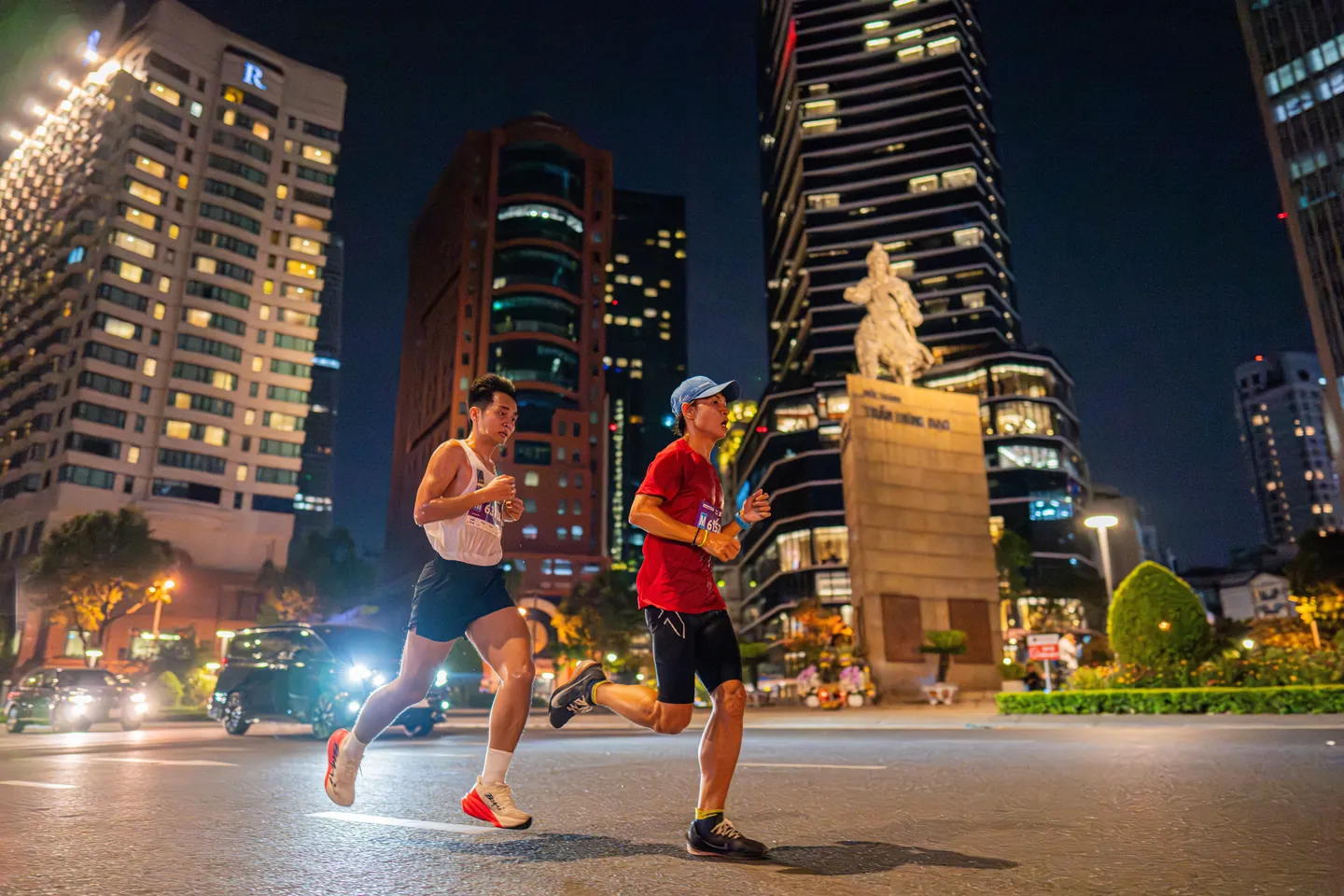
Imagen: VANNGO Ng / Pexels
The 2025 San Silvestre Vallecana left behind a year-end snapshot that is hard to match: Geoffrey Kamworor won the men’s elite race in 27:40 and Marta García once again ruled among the women with 31:11, a performance that confirmed her as the leading Spanish reference in the event. Meanwhile, the popular race once again overflowed Madrid with tens of thousands of runners and an atmosphere that blended speed, costumes, music, and that electricity so typical of the final afternoon of the athletic calendar.
The edition held on December 31, in its 61st staging, reinforced its status as an urban and sporting icon of an event that goes beyond simple classification. There was Kenyan victory in the men’s race, a second consecutive win for the Spanish long-distance runner in the women’s international race, and a name of its own in the men’s popular race, Mohamed Massat, who won again with a time of 29:28, while María Moreno took the women’s victory in a tight finish charged with competitive tension.
A night of marks, noise, and streets
The first reading of the results of the 2025 San Silvestre Vallecana is not limited to the podium. The race once again showed two very different speeds and, at the same time, two ways of understanding the end of the year. The international race, with a night start and elite atmosphere, was decided with very high paces and a clear battle for victory. The popular race, by contrast, was a human tide of thousands of runners who embrace the course as a sporting celebration, a parade of effort, technical shirts, and costumes that fill the Castellana with color.
This dual character explains why the race still occupies a unique place on the Spanish running map. On the one hand, it offers international benchmark times and the presence of athletes who know how to compete at the highest level. On the other hand, it retains its pull among amateur runners, who look to end the year with a bib, a stopwatch, and the feeling of having been part of a collective ritual in Madrid.
Kamworor’s victory followed the script of a distance runner who imposes a steady stride and gradually wears down his rivals. Marta García’s win, by contrast, carried added value: she not only won, but also posted 31:11, the best Spanish mark in the history of the race, a sign of competitive maturity that places her in an increasingly solid position within Spanish athletics.
The men’s international race, dominance and control
Geoffrey Kamworor confirmed why he started as the favorite. The Kenyan finished the race in 27:40 and left Jesús Ramos behind, second in 27:56, and Aarón Las Heras, third in 28:00. The margin was not huge, but it was enough to reflect a controlled race, with no late surprises and the feeling that victory was well on track when the Vallecas straight began to demand the final effort.
In 10-kilometer races at this level, the difference between winning and missing the podium is often measured in seconds, not meters. That is why Kamworor’s time has particular value: 27:40 is a very serious mark in a race that combines wide stretches, crowd support, and the accumulated fatigue of a demanding year-end for many athletes. The winner’s consistency prevailed over any attempt at a late break.
The presence of Jesús Ramos and Aarón Las Heras in the top 3 also left a useful snapshot for Spanish athletics. There was no home victory in the men’s international race, but there was a firm competitive response, with two runners capable of sustaining a high pace against one of the strongest names on the circuit. In a race this media-focused, that kind of result also matters: it shows depth, ambition, and a national level that continues to push forward.
Marta García delivers another statement of authority
The big news of the night came in the women’s international race. Marta García once again won the San Silvestre Vallecana, doing so with a performance of immense symbolic and technical value. Her 31:11 not only gave her the victory, but also made her the holder of the best Spanish mark in the history of this race. The figure carries more weight than a simple medal: it speaks of an athlete who is no longer just competing well, but setting the tone.
The Spaniard beat Diane Van Es, second in 31:18, and Carla Gallardo, third in 31:25, in a finish where seconds separated positions of prestige. In that context, keeping a cool head and racing with experience was as important as physical quality. Marta García did not win by momentum; she won because she knew how to sustain the pace of a fast, demanding race full of small changes in rhythm.
Winning again for the second straight year added another layer of authority to her performance. It is not easy to defend a title in a race so exposed, so closely followed, and so shaped by the talent of international rivals. Her victory solidifies a powerful image: that of a runner capable of leaving her mark on one of the most recognizable events on the Spanish calendar, just as the year says goodbye with the asphalt still warm under Madrid’s floodlights.
The popular race, another story within the same night
The popular race results follow a different logic, but no less appealing. Mohamed Massat repeated as men’s winner with 29:28, a mark that places him among the event’s most consistent names. María Moreno took the women’s victory in a tighter and less predictable finish, where the duel with Natalia Ruiz shaped much of the race’s interest. The popular race is not only about the clock; it lives on the feeling of joyful survival it leaves in the average runner.
In the popular race, atmosphere weighs as much as official time. The course from the Bernabéu area to Vallecas turns each kilometer into a different scene: wide avenues, changes of pace, shouts from the sidewalk, runners who start cautiously and others who go too hard too soon. The experience has something of an athletic pilgrimage, even if the clock still rules in the final stretches.
Massat’s victory gains significance because the San Silvestre Vallecana popular race does not hand out wins freely. The number of participants, the density at the start, and the mental wear of such a massive race mean that repeating requires more than good form. It requires reading the race, positioning well, and not losing composure when the road fills with runners, volunteers, music, and improvised flags. That is part of the result too.
What the times say about the 2025 edition
The marks from the 2025 San Silvestre Vallecana confirm a very high level in the elite race and a popular race with enormous roots. Kamworor finished in 27:40, a time that makes the winner’s caliber clear. Marta García stopped the clock at 31:11, enough for victory and for a Spanish record in the context of the race. Behind them, the podium places remained closely spaced, as is typical in a race where any drop-off is paid for immediately.
In the men’s international race, the podium of Jesús Ramos and Aarón Las Heras reinforces the reading of a fast but not out-of-control race. In the women’s race, Diane Van Es and Carla Gallardo pushed to the end and raised the value of Marta García’s win, because nobody wins a night like this by walking in the shadows; it is won by handling changes in pace and managing every meter of uphill, every turn, and every visual reference along the route.
The popular race, with Massat’s 29:28 and María Moreno’s victory, shows that the event still has an open and accessible dimension for thousands of runners. Not every San Silvestre Vallecana result is about records; it is also about participation, consistency, and a city that, once a year, agrees to turn the asphalt into a collective celebration.
Why this race still marks the end of the year
The San Silvestre Vallecana is not just a December 10K. Its strength lies in the mix of top level, tradition, mass participation, and a staging that makes any image of the race instantly recognizable. Madrid transforms, traffic adapts, the sidewalks fill up, and runners turn the last afternoon of the year into a kind of civic sporting ceremony.
That symbolic value helps explain why the results generate so much media traction. It is not just about who won, but about what winning here means. In the international race, it means entering a honors list that includes historical champions and global figures. In the popular race, it means surviving a very crowded event, with noise as its soundtrack and the finish line as a small personal victory. They are two races, but one shared emotional brand.
The 2025 edition also left a clear message for Spanish athletics. Marta García confirmed that she can now compete head-to-head with the best in a prestigious setting, while names like Jesús Ramos, Aarón Las Heras, and Carla Gallardo maintain an increasingly visible national presence in the top positions. The race remains international, yes, but it also continues to offer a powerful window into the state of Spanish distance running.
A classification that matters beyond December 31
The results of this edition do not end with the final stride in Vallecas. They are part of a sporting memory that accumulates year after year and turns each victory into one more piece of the event’s story. Kamworor expands the list of prestigious winners; Marta García adds a highly valuable Spanish chapter; Massat reaffirms his dominance in the popular race; María Moreno joins the group of winners who leave their mark on a race where every detail counts.
The number of participants, the television reach, the presence of elite runners, and the loyalty of amateur runners mean that each edition can almost be read as a small X-ray of urban running in Spain. The 2025 San Silvestre Vallecana proved it once again with a hard-to-copy balance: fast at the top, massive below, and always recognizable in the middle.
That is why its results draw so much interest. Because they are not just times, but the closing chapter of an annual story that combines sport, city, and tradition. And because, when Madrid switches off to make way for the new year, the final trace of the night is often that of a bib crossing the finish line with breath still hot and the clock recording something that remains for the statistics, but also for the memory.



How to prevent thigh chafing: causes and real solutions

Women’s running windbreakers: seven jackets and how to choose

Do more workouts get rid of soreness? A guide for runners

Jaén Half Marathon 2026: Record 3,800 Runners Registered

Men’s short running tights: how to choose the right pair

World Triathlon confirms data breach involving medical data

Izan Edo targets podium at Miyazaki World Cup

María Pérez ranks ninth in World Athletics’ 2026 top ten

Dos Santos, Duplantis and Sawe: World Athlete of the Year finalists

San Silvestre Vallecana 2026: 42,000 places, prices and start times

 Races4 months ago
Valencia Half Marathon 2027: date and registration

 Races4 months ago
Valencia Marathon 2026: entry, ballot and course

 Reviews and Comparisons4 months ago
Asics Gel-Roadmiles 3 for men: review and current price

 Reviews and Comparisons4 months ago
Asics Gel Sonoma 8 Gore-Tex: complete analysis for trail and rain

 Sneakers3 months ago
Saucony Endorphin Pro 4: full review and verdict

 News5 months ago
Strava API 2026: what changes for clubs, challenges and runner apps?

 Reviews and Comparisons5 months ago
Nike Alphafly 3: opinions, sensations, and real key points

 Reviews and Comparisons4 months ago
Under Armour running shoes review 2025-2026: models and key features

 Sports Equipment4 months ago
Shoe sizes in cm: a clear guide to getting the right fit for your footwear

 Sneakers3 months ago
Skechers GO RUN Consistent 2.0 analysis: comfort and limits

 News5 months ago
Valencia Marathon 2026 route: key tips to train and run better

 Sneakers4 months ago
Adidas Adizero Boston 13 for men: review and verdict