Races
Santa Cruz Marathon 2025: date, route, and key details
The Santa Cruz race returns with a fast course, 21K and 8K, start at La Gesta, and the atmosphere of a major urban event.

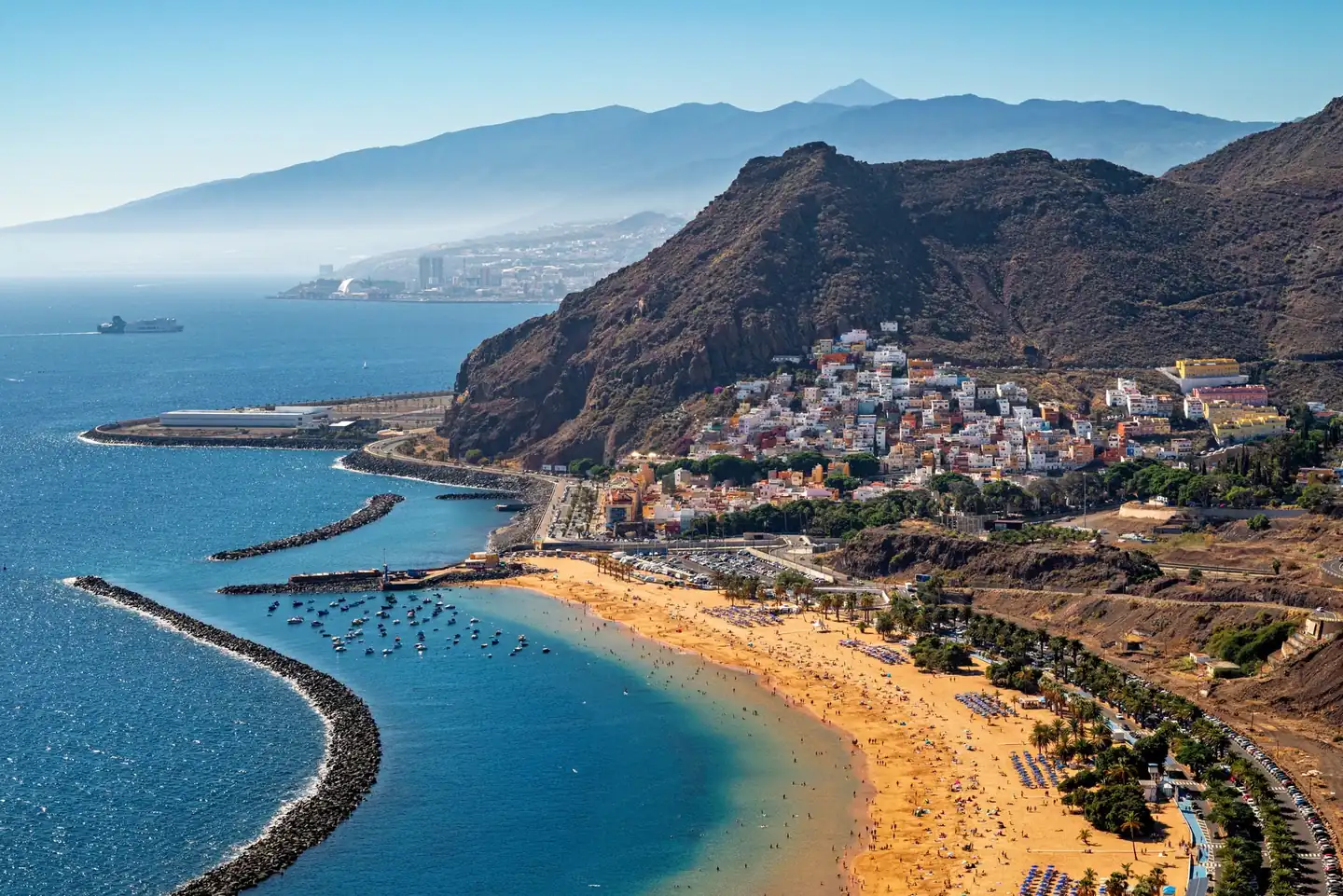
The great urban race of Santa Cruz de Tenerife arrives in 2025 with a clear profile: fast course, huge atmosphere, and a city fully committed to the asphalt. The edition scheduled for Sunday, November 16 keeps the momentum of an event that has already earned a permanent place in the Canary Islands calendar, with two main distances, 21.097 kilometers and 8 kilometers, and thousands of bibs distributed among recreational runners, first-timers, and athletes chasing a personal best.
The start is located in the vicinity of La Gesta Park, with the finish in the same area, and the route once again passes through emblematic areas of the city center and the waterfront. The half marathon is certified by the Royal Spanish Athletics Federation, a significant detail for those pursuing official times, while the short distance opens the door to a broader profile of participants and preserves the spirit of a city fully engaged with sport.
An event that already carries weight on Tenerife’s calendar
Santa Cruz has turned this race into a kind of sporting thermometer for November. It is not just a race with thousands of entrants, but a day when the city center is transformed, paces are organized in waves, and the city adopts a very recognizable choreography: barriers, volunteers, entertainment, road closures, and runners crossing familiar avenues with an almost ritual concentration.
The 2025 edition arrives with the momentum of a well-established event, supported by public institutions and private sponsors, and with specific weight within popular sport in the Canary Islands. That backing is not only logistical; it also explains why the race has been fine-tuning its identity until it became more than a half marathon. It is a showcase day for the city, an exercise in organization, and an event that, in urban terms, acts as a magnet for movement and visibility.
The volume of participation and the variety of profiles shape its appeal. In the references consulted, the organization has brought together more than 3,500 and more than 4,000 athletes across its different distances, a figure that speaks to a broad turnout and a course that combines accessibility with competitive ambition. That mix is precisely what explains its success: you do not need to be elite to be part of it, but it does offer serious conditions for those looking to run fast.
Distances, times, and sporting profile
The event is structured around two official routes: 21K and 8K. The half marathon, 21.10 kilometers according to the available information, starts at 9:00 a.m. The 8K starts at 9:45. That gap between starts allows for orderly coexistence between groups of runners and reduces early congestion, something especially important in an urban race with shared sections and a notable presence of spectators on the roadway.
The half marathon is the distance that attracts the greatest competitive interest. The route, almost flat and urban in character, favors a steady pace, without sudden changes in elevation that break rhythm. That setup explains why the race is considered suitable for setting a personal best, a magnet for athletes who arrive with the stopwatch in mind and calculate every kilometer as if it were a subway line on the map.
The 8K, by contrast, acts as a friendlier gateway to the main event. It brings together runners making their debut, those who prefer a more contained distance, or those who want to experience the atmosphere of the event without taking on the effort of the half marathon. That dual structure strengthens the whole: a longer race with technical ambitions and a shorter one with a popular vocation, both under the same organizational umbrella.
The course: from La Gesta to the coast and back to the urban core
The 2025 route preserves a very recognizable idea: take the runner out into the streets and show them Santa Cruz from within. The start leaves from near La Gesta Park heading toward San Andrés, then returns and connects the city’s most representative landmarks. In that out-and-back journey, the logic is very clear: combine the seafront with central avenues and let the race breathe both sea and city.
The arrival of runners at García Sanabria Park introduces one of the most visible changes in the recent route. That section adds meters before the final stretch and reinforces the feeling of running through a postcard urban setting, where ficus trees, facades, and Atlantic light blend with physical effort. Then comes the fast downhill on Calle del Pilar, a detail athletes do not forget because in a half marathon like this every turn and every slope counts as a small strategic decision.
The organizers emphasize a flatter and faster course than in other editions of the race. That pursuit of fluidity is not just a nod to ambitious runners; it also helps better organize the flow in a city with neighborhoods, avenues, and roundabouts that require a very precise route design. In practical terms, a friendlier course reduces muscle punishment in the opening kilometers and leaves room to maintain pace until the end, provided the runner arrives well prepared.
The certification of the half marathon adds extra value for those comparing times and seeking a valid benchmark. In popular sport, that guarantee matters. It does not change the effort in the legs, but it does change how the result is read, because it places the time within an official and comparable framework. In a racing season increasingly connected to rankings, personal rankings, and measurable goals, that seal is a major argument.
What it brings to the city beyond the stopwatch
The half marathon has become a tool for projecting Santa Cruz. Mayor José Manuel Bermúdez has defended its role as an event that reinforces the city’s image as a sporting capital, while Sports Councillor Alicia Cebrián has highlighted its value for health and civic coexistence. That institutional message fits a visible reality: for a few hours, the city stops functioning as a transit space and becomes a stage for collective effort.
The effect is not limited to symbolism. The presence of thousands of participants and companions activates restaurants, hospitality, transport, and retail. It also creates a powerful image for sports tourism, a segment that is gaining weight in island territories where climate, connectivity, and urban offerings combine to turn a race into a full getaway. In that sense, the event is not just an isolated occurrence; it is one more piece in a city strategy that seeks to associate sport, leisure, and external visibility.
There is also an emotional component that explains part of its appeal. Running through familiar streets, with spectators close by and a soundscape alternating applause, drumming, and spontaneous encouragement, turns the race into a very different experience from one held in an industrial estate or on a highway. Here the runner sees facades, crosses historic avenues, and feels direct contact with the city. It is a distance measured in meters, yes, but also in landscapes and human noise.
Registration, bibs, and logistics that pay attention to detail
Registration has appeared in the reference information with an advance closing date before the event and differentiated prices by distance and purchase time. In the 2026 edition analyzed, the 8K was listed at 22 euros in promotional pricing and the half marathon at 34 euros, with later increases. Although the final price may vary from one edition to another, that range clearly indicates the race’s positioning: a popular event with sufficient services and a cost structure aligned with a high-attendance urban event.
Bib collection has traditionally been organized in the days leading up to the race, with generous time windows to make it easier to pick up materials. That detail, which may seem minor, is often decisive for runners traveling from outside the island or fitting their schedule to the minute. In races of this size, the experience begins before the starting gun: collecting the bib, checking times, planning access to the race area, and leaving nothing to chance are all part of the ritual.
Runners’ services also reinforce the impression of a well-cared-for event. Included items comprise a finisher medal, T-shirt, timing chip, hydration and nutrition stations, medical assistance, baggage storage, and accident insurance. These elements, combined, make the day more than just a measured route. The runner is not only paying to run; they are paying for a structure that allows them to focus on the effort without worrying about basic logistics.
The cancellation and refund policy, however, requires attention. In the reference consulted for the available edition, registration was stated to be non-refundable, so this aspect should be treated as a relevant feature of the event and not as a mere footnote. In high-demand races, administrative details matter just as much as the bib number.
Why it attracts runners chasing a time and those just aiming to finish
The answer lies in the combination of course, climate, and urban context. Santa Cruz offers a race that does not punish with too much elevation gain, with temperatures usually more favorable than those in other mainland capitals at the same time of year, and with a route that allows sustained effort. For a runner with time goals, that combination is very appealing. For another who simply wants to complete a half marathon or an 8K feeling good, it is too.
Races that endure usually have a clear identity. In this case, that identity is built on three pillars: city, speed, and mass participation. There is no sense of isolation or empty scenery. There is urban movement, music, spectators, and a route that feels like a ribbon stretched across the map. That makes the event recognizable and, above all, memorable for those who experience it.
The presence of athletes of different nationalities adds an international layer that is not always easy to achieve in a race of this type. That diversity speaks well of Tenerife’s external appeal and the attraction of events that combine tourism and sport without pretense. In practice, a foreign runner finds an accessible race, well placed in the calendar, and with an urban setting that needs no artifice to look good.
There is also a more local emotional dimension. For runners from the Canary Islands, the race functions as a major nearby event, an opportunity to measure themselves at home and share the streets with thousands of people feeling the same competitive pulse. The result is a mosaic of paces: those going for a personal best, those managing their effort, those debuting cautiously, and those crossing the finish line satisfied with having lasted to the end.
An event that reflects how urban running in Spain has changed
Santa Cruz’s half marathon fits a broader trend: better designed, more visible urban races that are more closely tied to city life. It is no longer enough to put a distance on the calendar. You need to offer a coherent experience, a course that makes sense, reasonable services, and an identity that distinguishes one race from another. Santa Cruz has moved clearly in that direction.
The race also shows how popular running has become more demanding without losing its social base. Today, the runner aiming to go under 1:30 in the half marathon and the one simply hoping to finish with dignity coexist. Both goals can fit the same start if the course is well planned and if the organizers understand that differing levels are not a problem, but the true engine of these events.
In 2025, the event’s big image remains the same: an open city, a fast course, and thousands of runners moving to Tenerife’s rhythm. The rest are details, but important ones: certification, times, services, atmosphere, and the final reading of a race that has matured without losing its freshness. Anyone looking at Santa Cruz that Sunday will see much more than bibs; they will see a capital that recognizes itself in sport and that, for at least a few hours, beats in step with its runners.
The race thus leaves a very specific picture of contemporary Spanish running. Less grandiose epic, more organization; less unnecessary noise, more useful course; fewer empty promises, more measured asphalt. In that balance, Santa Cruz de Tenerife finds its place. And that is why the 2025 edition is presented as one of those events that needs no embellishment to justify interest: just watch the start, follow the flow of runners, and wait for the finish to understand why it keeps growing.
The November urban race does more than measure times; it also measures a city’s ability to make itself visible through sport. In Santa Cruz, that score has been in its favor for years. The route, turnout, and atmosphere have made the race a local symbol with external reach. And in 2025, that status seems stronger than ever.



How to prevent thigh chafing: causes and real solutions

Women’s running windbreakers: seven jackets and how to choose

Do more workouts get rid of soreness? A guide for runners

Jaén Half Marathon 2026: Record 3,800 Runners Registered

Men’s short running tights: how to choose the right pair

World Triathlon confirms data breach involving medical data

Izan Edo targets podium at Miyazaki World Cup

María Pérez ranks ninth in World Athletics’ 2026 top ten

Dos Santos, Duplantis and Sawe: World Athlete of the Year finalists

San Silvestre Vallecana 2026: 42,000 places, prices and start times

 Races3 months ago
Valencia Half Marathon 2027: date and registration

 Races3 months ago
Valencia Marathon 2026: entry, ballot and course

 Reviews and Comparisons4 months ago
Asics Gel-Roadmiles 3 for men: review and current price

 Reviews and Comparisons4 months ago
Asics Gel Sonoma 8 Gore-Tex: complete analysis for trail and rain

 Sneakers3 months ago
Saucony Endorphin Pro 4: full review and verdict

 News5 months ago
Strava API 2026: what changes for clubs, challenges and runner apps?

 Reviews and Comparisons5 months ago
Nike Alphafly 3: opinions, sensations, and real key points

 Reviews and Comparisons4 months ago
Under Armour running shoes review 2025-2026: models and key features

 Sports Equipment4 months ago
Shoe sizes in cm: a clear guide to getting the right fit for your footwear

 Sneakers3 months ago
Skechers GO RUN Consistent 2.0 analysis: comfort and limits

 News5 months ago
Valencia Marathon 2026 route: key tips to train and run better

 Sneakers4 months ago
Adidas Adizero Boston 13 for men: review and verdict