Races
Santa Marta Half Marathon 2025: date, route, and key details
The Samaria race returns with 5K, 10K, and 21K, kit pickup, prizes, and a course that blends sea, history, and heat.

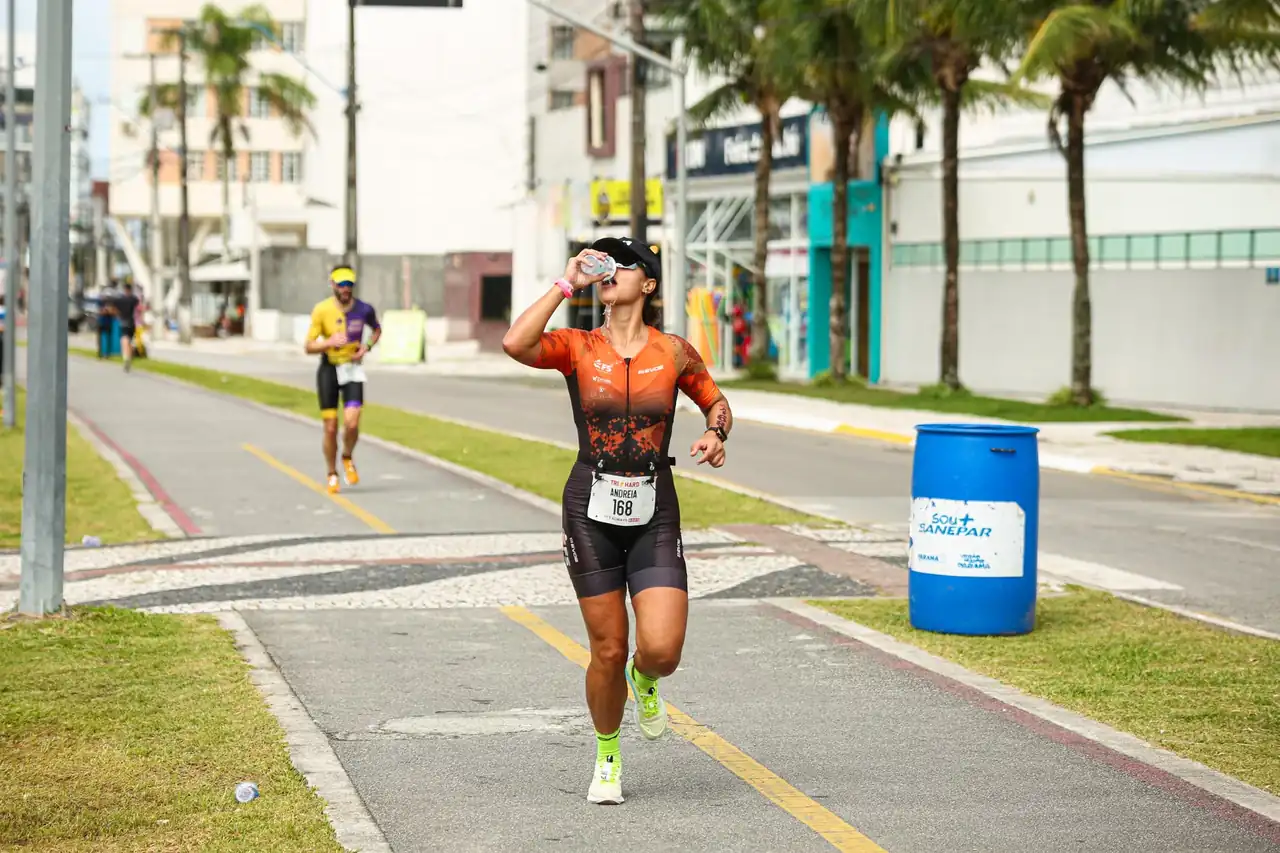
Santa Marta once again switched into runner mode with a second edition that brought together thousands of registrants, coastal scenery, and logistics designed to move the city from the historic center to the seafront strip. The race, scheduled for August 17, 2025, was organized with 5K, 10K, and 21K distances, a format that opened the door both to hobbyists and to more experienced athletes.
The race also left a very Caribbean snapshot: high humidity, persistent heat, and an urban route that passed through emblematic points of the Magdalena capital. Between medals, cash prizes, and kit pickup concentrated over two days, the Santa Marta Half Marathon 2025 became a highly visible sporting event on the regional calendar.
A race that crosses the city and its identity
The second edition arrived with a very clear story: running in Santa Marta was not just about racking up kilometers, but about crossing a city that blends colonial past, open coastline, and an urban life that beats among tourists, residents, and athletes. The planned course started in the historic center and moved toward the boardwalk and areas near the beaches, a sequence that made the route as scenic as it was demanding.
That combination explains much of the event’s appeal. The landscape works as an incentive, but also as a physical test. In hot, humid conditions, the effort is felt sooner, the stride loses some lightness, and hydration stops being a secondary detail to become a basic condition for sporting survival. That is why the Santa Marta race is understood not only as an athletic celebration, but also as an honest test for the body.
The setting, moreover, gave it a special symbolic weight. Running in a city that celebrates its founding history and its Caribbean vocation adds a layer that many urban half marathons do not have. The route does not merely connect streets; it also connects the city’s memory with its most active present, that of a community that comes out to watch, cheer, and recognize its own territory from a different angle.
The distances and participant profile
The competitive offering was concentrated in three distances: 5K, 10K, and 21K. That structure made broad participation possible, because it does not require the same kind of preparation from someone taking on a short introductory course as from someone deciding to complete the half marathon. In sporting terms, the decision is smart: it brings together very different profiles without losing the thread of the main competition.
The organizers reported the participation of more than 3,000 registered runners, including around 100 foreigners, a figure that helps put the event’s reach into perspective. This was not a small gathering or a simple urban training run, but a race with the ability to attract participants from other regions and even other countries. That kind of mix usually raises the level of demand and also the atmosphere, because the start line concentrates nerves, conversation, and overlapping expectations.
The profile of registrants also revealed something common in major Caribbean urban races: the coexistence of recreational runners and more experienced athletes. In the same crowd, paces, goals, and different ways of understanding the finish line are mixed together. For some, the day is about simply finishing. For others, it is about competing for places, improving a personal best, or sustaining a pace in a climate that offers little mercy.
Date, schedule, and kit pickup
The race was set for Sunday, August 17, 2025, while kit delivery was scheduled for August 15 and 16 at the Los Trupillos vacation center, on Avenida Hernández Pardo 34-66, with uninterrupted service from 9:00 a.m. to 7:00 p.m. That logistical detail was key, because in events of this size the kit is not just a package; it is the key that confirms registration, organizes access, and avoids last-minute mishaps.
Pickup required an identity document, either physical or digital, and one person was allowed to claim up to two kits with written authorization and a copy of the ID of the additional holder. The organizers also warned that there would be no changes to distance, size, or personal data once the kit had been handed over, a measure that forces people to check everything calmly before lining up. It is no minor point: in high-attendance races, a registration error later becomes a small chain of inconveniences.
Concentrating delivery over two days made it possible to better organize runner flow, avoid crowds, and lighten the logistical load before Sunday. In events with several thousand participants, the lead-up matters almost as much as the start. A runner who picks up their kit without rushing arrives less tense, knows where they will be, and above all enters race mode with less noise around them.
Cash prizes and age categories
The Santa Marta Half Marathon 2025 reserved cash prizes for the top three finishers in the 21K, 10K, and 5K distances, in both the men’s and women’s general categories. In the 21-kilometer race, the prize was 3 million pesos for first place, 2 million for second, and 1 million for third. In the 10K, prizes were 2 million, 1 million, and 500,000 pesos. In the 5K, the purse dropped to 800,000, 400,000, and 200,000 pesos.
The prize structure reinforces something important: the race was not limited to being a recreational experience, but maintained a serious competitive edge. Financial incentives help attract strong runners, give the event visibility, and increase interest in the main categories. At the same time, the organizers added trophies for the top three in each age group, with open, masters A, masters B, and masters C divisions.
That system is especially useful because it recognizes different realities within the same event. A 22-year-old does not run the same way as someone over 50, even if both share the same finish line. Age segmentation is not only fair; it is also a way to keep competition alive beyond the overall podium, something many city races are taking greater care with.
The heat, humidity, and the weight of the Caribbean in the legs
Santa Marta does not offer an easy course by default. August usually brings high temperatures, marked humidity, and a feels-like temperature that can punish even well-prepared runners. Run Colombia pointed to an average temperature close to 30 degrees and a hot, humid scenario with possible light rain, a climatic cocktail that forces runners to be smart and not just enthusiastic.
In that context, hydration stops being a generic recommendation. The body loses fluid sooner, sweat becomes more noticeable, and the pace that feels comfortable in another environment can be too aggressive there. The Santa Marta route requires managing energy like someone dividing up a bottle in the middle of a humid desert: no excess at the start, no empty stretches at the end, and enough reserve to sustain the effort when the sun is beating down head-on.
The proximity to the sea also plays a role. The breeze often deceives people coming from other climates, because it eases the immediate sensation but does not eliminate the physiological demand. Running by the Caribbean has that double face: a beauty that distracts and an invisible resistance that takes its toll in the final meters. That is why the race has a reputation for being spectacular and tough at the same time, a combination that makes it memorable.
Route, points of interest, and tourism value
The route connected some of Santa Marta’s most recognizable spaces, including the historic center, Parque de los Novios, Quinta de San Pedro Alejandrino, and the El Rodadero sector, according to information released by portals specializing in the race. That geography turns the course into a moving postcard, with runners crossing places usually associated more with strolling than with running.
This type of circuit serves a double purpose. On one hand, it gives the race identity and sets it apart from other, more anonymous urban events. On the other, it turns the city into both a sports venue and a tourist showcase at the same time. It is no coincidence that many races are now seeking their own stories, because the runner’s experience also depends on what they see, smell, and hear along the way.
Santa Marta has a clear advantage there. The city offers history, coastline, hotel activity, and the instantly recognizable image of a seaside destination. In a half marathon, that matters as much as the finish tape. When the runner remembers the race, they do not just think about their time: they remember the heat, the light, the sound of the crowd, and the feeling of moving among façades, palm trees, and salty breezes.
What runners expected at the starting line
The pre-race experience of a half marathon often defines as much as the course itself. In Santa Marta, the combination of kit delivery, data checks, and distance-based prizes created the sense of a well-put-together event, with several points of attention before the starting gun. For the runner, that means less improvisation and a better understanding of what comes next.
The presence of medical checks, hydration, rest areas, and support from emergency response organizations, mentioned in coverage of the competitors, reinforced the idea of a race prepared to coexist with the local climate. In an urban race under tropical heat, operational safety is not an embellishment; it is the net that holds everything else up. Without it, the rest loses consistency, even if the route is attractive and the shirt looks good.
There was also a less visible but very important element: the building of the atmosphere. In a race like this, the runner is not only competing against the clock or the pavement, but against the temptation to go out too fast, against fatigue that arrives early, and against the emotion of an entire city following them. That mix of pressure and celebration explains why the Santa Marta Half Marathon quickly entered the Caribbean athletics conversation.
The suspension and the weight of the official statement
The 2025 edition ended up marked by a suspension decided by the Mayor’s Office due to adverse weather conditions. That turn changed the event’s narrative and added a nuance no organization wants, but one that can always appear in outdoor competitions. When the weather takes center stage with force, the priority stops being sporting and becomes safety.
In cases like this, the official statement and the way medals or recognitions are handled become enormously important for registrants. It is not just about resolving logistics; it is about protecting the trust built before the race. For a runner, a suspension weighs more heavily when they have trained, registered, and organized their trip or schedule around the event.
The institutional reaction also offers a recurring lesson in the country’s race calendar: coastal and urban events depend on variables that cannot be controlled from an office. Weather, visibility, road conditions, and public safety are all part of the board. Santa Marta, with all its visual force, confirmed that reality with a decision that prioritized prudence over spectacle.
What an eagerly awaited edition leaves behind
The Santa Marta Half Marathon 2025 left behind more than a list of times and prizes. It left the idea of a city capable of turning its landscape into a sporting argument, of gathering thousands of runners, and of occupying its own place on the national running map. Few races manage to balance a tourist postcard and an athletic challenge so well.
It also left behind a useful lesson for anyone following these races from the outside: not all half marathons are run the same way. Some are defined by speed, others by elevation, and others, like Santa Marta’s, by the climate and the setting. The Caribbean gives character. Every stride feels different when the air is heavy, the sun is intense, and the sea is only a few meters away.
That is why the Santa Marta event went beyond a simple date. It brought together organization, route, prizes, heat, and a symbolic weight that made it relevant within the regional athletics calendar. And even if the calendar changes, the memory left by a race like this remains: a starting line beside history, a stretch of hot asphalt, and the feeling that running can also be a way of reading the city.



How to prevent thigh chafing: causes and real solutions

Women’s running windbreakers: seven jackets and how to choose

Do more workouts get rid of soreness? A guide for runners

Jaén Half Marathon 2026: Record 3,800 Runners Registered

Men’s short running tights: how to choose the right pair

World Triathlon confirms data breach involving medical data

Izan Edo targets podium at Miyazaki World Cup

María Pérez ranks ninth in World Athletics’ 2026 top ten

Dos Santos, Duplantis and Sawe: World Athlete of the Year finalists

San Silvestre Vallecana 2026: 42,000 places, prices and start times

 Races3 months ago
Valencia Half Marathon 2027: date and registration

 Races3 months ago
Valencia Marathon 2026: entry, ballot and course

 Reviews and Comparisons4 months ago
Asics Gel-Roadmiles 3 for men: review and current price

 Reviews and Comparisons4 months ago
Asics Gel Sonoma 8 Gore-Tex: complete analysis for trail and rain

 Sneakers3 months ago
Saucony Endorphin Pro 4: full review and verdict

 News5 months ago
Strava API 2026: what changes for clubs, challenges and runner apps?

 Reviews and Comparisons5 months ago
Nike Alphafly 3: opinions, sensations, and real key points

 Reviews and Comparisons4 months ago
Under Armour running shoes review 2025-2026: models and key features

 Sports Equipment4 months ago
Shoe sizes in cm: a clear guide to getting the right fit for your footwear

 Sneakers3 months ago
Skechers GO RUN Consistent 2.0 analysis: comfort and limits

 News5 months ago
Valencia Marathon 2026 route: key tips to train and run better

 Sneakers4 months ago
Adidas Adizero Boston 13 for men: review and verdict