Races
Santa Susanna Barcelona Spartan: guide to the Trifecta Weekend
The Catalan race returns with Sprint, Super, Beast, and Kids Race in a setting between the coast and the mountains.

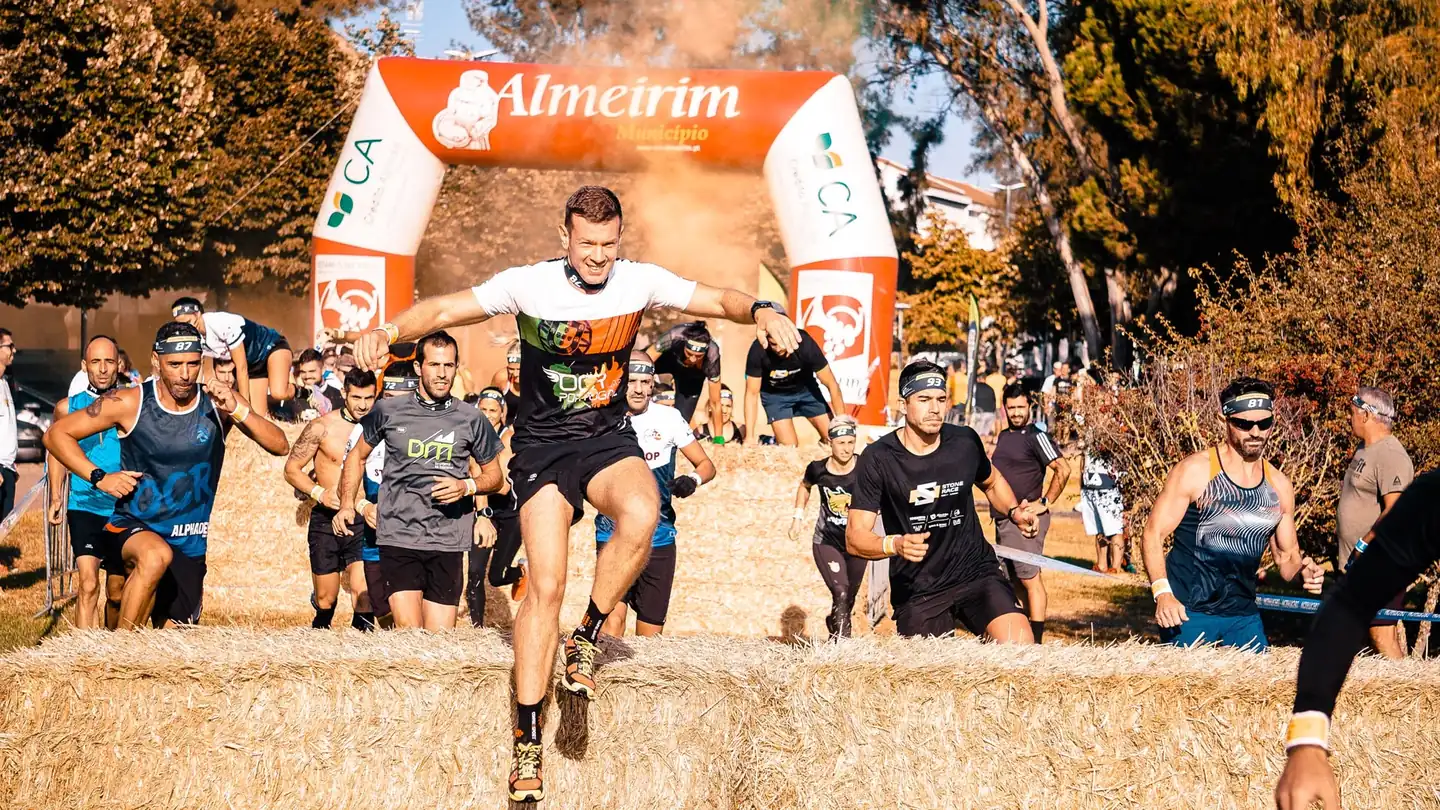
Santa Susanna is once again putting itself on the map of Spain’s major obstacle races with a weekend designed to test legs, mind, and grip. The Catalan venue, a little over 50 minutes by car from Barcelona, has established itself as one of the most striking settings on the calendar for a simple reason: it combines the Mediterranean Sea, elevation gain, and mountain trails in a single course. It is not just a race, but a complete sporting experience, the kind that turns every obstacle into a small scene of endurance.
The edition scheduled for October 2026 arrives in the usual Trifecta Weekend format, meaning the chance to complete Sprint, Super, and Beast in the same weekend. The organizers set the start at Parc del Colomer s/n, Santa Susanna, in an environment very familiar to anyone who follows the Spartan circuit: festive atmosphere, devoted spectators, and a course that alternates fast sections with tougher, more technical ones. For recreational runners, the event has a double appeal: it is demanding, but also very readable, because the setting helps you understand what is happening in each phase of the effort.
A return that strengthens Spartan’s presence in Catalonia
Santa Susanna is not an improvised venue. Its appeal to Spartan comes from the combination of accessibility and scenery, two elements that rarely come together so clearly in an obstacle race. The Maresme coastline offers easy access for runners arriving from Barcelona and other provinces, while the nearby terrain adds enough difficulty to keep the event from becoming just another urban circuit.
The context matters too. Spartan has been consolidating a calendar of several important races in Spain, and the Santa Susanna stop fits as a benchmark event for those looking to add distances and complete the brand’s classic combination. The Trifecta Weekend concept carries its own weight in that sporting culture: it is not just about running once, but about linking together three efforts with different profiles, each with its own pace, its own traps, and its own accumulated fatigue.
In 2026, the race is once again presented as a highly visual and very Mediterranean event. The runner moves between the proximity of the sea and the rough texture of the trails, with the kind of landscape that makes suffering more bearable and, at the same time, the outcome more memorable. That contrast is part of Santa Susanna’s hallmark: a place where mud, sand, rock, and heat can all coexist in the same day without anything feeling out of place.
Distances, obstacles, and the real logic of the race
The sporting offering at this event is built around three main distances. Sprint offers 5 kilometers and 20 obstacles; Super, 10 kilometers with 25 obstacles; and Beast, 21 kilometers with 30 obstacles. In addition, the schedule includes Kids Race, designed for distances of 1 to 3 kilometers with adapted obstacles. These are very different formats from one another, but they share the same philosophy: to punish endurance without losing the technical and mental component that defines Spartan.
The figure that best summarizes the logic of the race is the Sprint. Five kilometers may seem like a friendly distance on paper, but in an obstacle race they become a field of constant interruption, where the heart rate goes up and down with every wall, rope, carry, or jump. The published average finish time for the short distance is around 1 hour, 32 minutes, and 12 seconds, a useful reference for understanding that here the clock is not measured like it is in a conventional race.
The Beast, for its part, is the most ambitious version of the weekend. Its 21 kilometers and 30 obstacles require careful energy management, because muscular fatigue builds up silently: the legs feel the pace changes early, the torso suffers on climbs, and the hands end up playing a leading role. That combination explains why Spartan retains such strong appeal among distance runners, trail runners, and athletes looking for a challenge different from asphalt.
Prices and the calendar define the event’s profile
The published registration prices for 2026 reflect Spartan’s usual progressive format. Sprint starts at 70 euros and is shown with a promotional rate of 53 euros using code PRIMETIME25 in the reference material. Super is listed from 90 euros and 68 euros with the promotion, while Beast starts at 120 euros and 90 euros with the same code. Kids Race is set at 30 euros as the starting price. A Trifecta Pass Spain is also mentioned for 299 euros for those who want to take on the event’s three main distances.
These amounts are no minor detail, because they help reveal the event’s commercial and sporting structure. Spartan works with a scaling logic: those who enter through the short distance may discover the format, repeat participants move up to the middle distance, and those seeking the full experience end up in the Beast or the multi-event pass. In that sense, Santa Susanna works both as a gateway and as a test of maturity for those who already know the circuit.
The calendar also marks important differences. The event takes place on 17 and 18 October 2026, with Sprint and Beast spread across the two days and Super set for the following day according to the reference information. That distribution matters because it affects recovery, effort order, and the strategy of those who want to complete the full weekend. It is not the same to arrive fresh for a single distance as it is to pace yourself in order to chain several races within 24 hours.
The terrain: between a Mediterranean postcard and physical punishment
Santa Susanna’s great value lies in its terrain. The race is billed as an adventure that combines mountains, city, and the Mediterranean Sea, and that blend is far from empty rhetoric. For the runner, it means changing surfaces, pace transitions, and a landscape that shifts character in just a few minutes. There may be a stretch with the feel of a seaside promenade, and immediately afterward, a climb that breaks your breathing and forces you to grit your teeth.
In an OCR race, the landscape is not scenery; it is part of the script. Woodland trails, elevation changes, and the proximity of the beach provide a variety that forces the runner to read the terrain carefully. You cannot get too comfortable, because the next turn may take you from the momentum of flat ground to the strain of a slope or the instability of a strength obstacle. That alternation makes the race feel alive, almost cinematic, but with the rawness of a workout without cuts.
There is also logistical value in the setting. Santa Susanna is close enough to Barcelona to attract urban runners, yet it keeps its own identity, more open and more tied to the coast. That helps turn the race into a sporting getaway that combines competition and scenery. In the world of obstacle racing, where many venues look similar, that geographical nuance matters more than it seems.
What it means to complete a Trifecta Weekend in Spain
The word Trifecta carries an almost mythical weight within Spartan. Completing Sprint, Super, and Beast in the same year, or even in the same weekend, has become something of an internal credential that shapes goals and conversations among participants. It is not just another medal: it is a way of measuring consistency, adaptability, and tolerance for fatigue. In Santa Susanna, that logic becomes especially visible because the setting invites long-term thinking, not just the race of the day.
From a sporting perspective, the Trifecta Weekend forces you to understand effort as a sequence. The Sprint punishes explosiveness; the Super starts to demand control; the Beast rewards energy economy and mental toughness. A runner who takes on all three distances over two days is not competing only against the clock or the obstacles, but against the sum of the micro-fatigues that cling to the body like a second skin.
That is why the race attracts so many people from running as well as from other endurance sports. Endurance helps, yes, but it is not enough. You have to climb, grip, push, carry, crawl, and run again with the feeling that your hands no longer respond the same way. That is precisely the essence of Spartan’s appeal: a multisensory effort, where every part of the body gets involved in the conversation.
The race experience and the value of a family-friendly format
The Santa Susanna event is not limited to adult participants. The presence of Kids Race broadens the focus and turns the weekend into a wider gathering, where the sporting element coexists with a festival atmosphere. For families, that reduces the distance between spectator and runner, and allows the day to be experienced in a more shared way. The result is an event that feels less cold than a traditional competition and more like a large-scale sporting meeting.
This family component also helps explain the brand’s loyalty. Spartan does not sell just one race; it sells a universe with different formats, from children’s obstacle races to more severe endurance options. That diversity makes Santa Susanna function as a showcase for the full offering. Those who come out of curiosity may leave with a very clear idea of how far they want to take their next season.
Visually, the event has a rare advantage. The contrast between Mediterranean light and the toughness of the obstacles creates powerful images, almost always recognizable. Mud, sweat, and the blue backdrop of the sea produce a combination that hooks those looking for races with personality. Nothing needs to be exaggerated: the location itself already has enough presence.
A well-connected setting for a race with national reach
The location is one of the keys to the event. Santa Susanna is about 50 minutes by road from the heart of Barcelona, a reasonable distance for local participants and also for those traveling from other parts of Spain. That proximity makes weekend logistics easier and removes one of the most common barriers in mountain or obstacle races: travel time.
Being in Catalonia also expands the attraction radius to runners from Girona, Tarragona, Lleida, and the rest of the Barcelona metropolitan area. In events like this, connectivity matters almost as much as the difficulty of the course. A venue that allows you to arrive, compete, and return without complex planning has more chances of securing a place in participants’ annual calendar.
It also helps that the race is held in a tourist area with enough lodging, dining, and complementary activities. While that does not change the course’s difficulty, it does make the overall experience more pleasant. And in an obstacle race, where the body comes away battered, any external convenience is appreciated like a brief truce between two bouts of effort.
Why this race has earned its own place on the OCR calendar
Santa Susanna brings together three virtues that rarely appear together: a scenic course, an accessible location, and a format with several interesting distances. That combination explains why the event has become one of Spartan’s benchmarks in Spain. It does not compete on toughness alone; it competes on personality. And that, in an increasingly crowded race market, makes the difference.
The runner who comes to this event finds more than just a competitive start. They find terrain that demands constant adaptation, a highly recognizable collective atmosphere, and the chance to measure their fitness against a race that does not forgive shortcuts. The Spartan of Santa Susanna is, in that sense, a very honest mirror: it returns exactly the effort you put in, without embellishment and without concessions.
With the 2026 edition, the event keeps its place as one of the major references on the Catalan coast in obstacle sports. Between the sea and the mountains, with distances for different profiles and a structure designed to attract both beginners and veterans, the race confirms that adventure running continues to find one of its best homes in Barcelona and its surroundings. Santa Susanna is not just a venue; it is now a Mediterranean way of understanding the Spartan Race, with the brilliance of the coastline and the harshness of effort sharing the same stage.



How to prevent thigh chafing: causes and real solutions

Women’s running windbreakers: seven jackets and how to choose

Do more workouts get rid of soreness? A guide for runners

Jaén Half Marathon 2026: Record 3,800 Runners Registered

Men’s short running tights: how to choose the right pair

World Triathlon confirms data breach involving medical data

Izan Edo targets podium at Miyazaki World Cup

María Pérez ranks ninth in World Athletics’ 2026 top ten

Dos Santos, Duplantis and Sawe: World Athlete of the Year finalists

San Silvestre Vallecana 2026: 42,000 places, prices and start times

 Races4 months ago
Valencia Half Marathon 2027: date and registration

 Races4 months ago
Valencia Marathon 2026: entry, ballot and course

 Reviews and Comparisons4 months ago
Asics Gel-Roadmiles 3 for men: review and current price

 Reviews and Comparisons4 months ago
Asics Gel Sonoma 8 Gore-Tex: complete analysis for trail and rain

 Sneakers3 months ago
Saucony Endorphin Pro 4: full review and verdict

 News5 months ago
Strava API 2026: what changes for clubs, challenges and runner apps?

 Reviews and Comparisons5 months ago
Nike Alphafly 3: opinions, sensations, and real key points

 Reviews and Comparisons4 months ago
Under Armour running shoes review 2025-2026: models and key features

 Sports Equipment4 months ago
Shoe sizes in cm: a clear guide to getting the right fit for your footwear

 Sneakers3 months ago
Skechers GO RUN Consistent 2.0 analysis: comfort and limits

 News5 months ago
Valencia Marathon 2026 route: key tips to train and run better

 Sneakers4 months ago
Adidas Adizero Boston 13 for men: review and verdict