Races
Santander City Triathlon 2026: date, routes, and key points
The Cantabrian event sets the calendar, repeats its two distances, and maintains a very fast urban course along the bay.

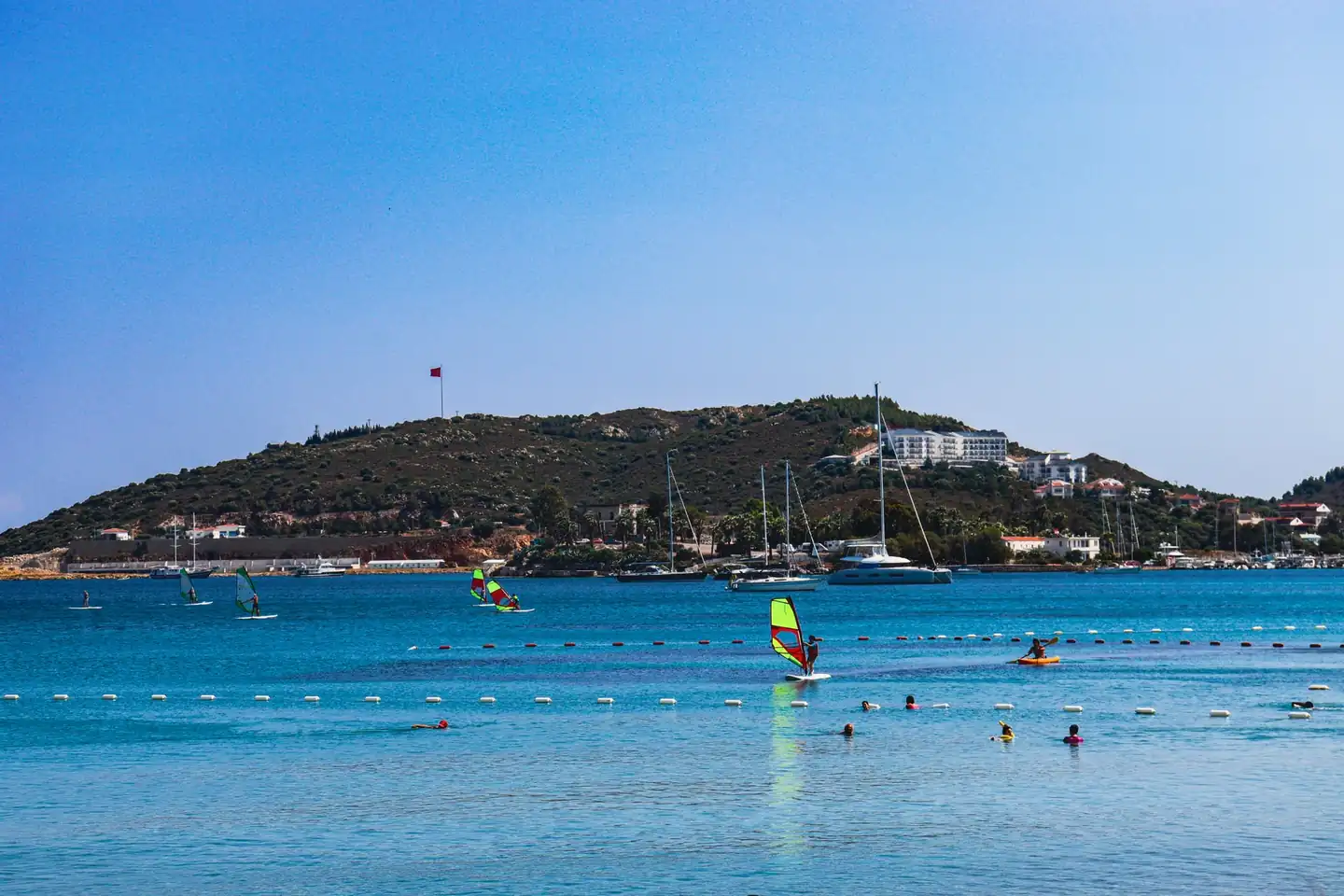
The Santander City Triathlon 2026 will return on September 20 with its two usual formats, Olympic and middle distance, in one of the most recognizable urban races in northern Spain. The organizers have confirmed a setting that combines bay, city center and coastal stretches, with the start and finish in the area of the Dique de Gamazo and the Duna de Zaera, a backdrop that is already part of the race’s identity.
The event arrives with an unusual mix of elements that explain its appeal: relatively sheltered water, a bike circuit closed to traffic and a flat, fast and highly visible run course for the public. Taken together, the event has established itself as a benchmark race for those looking for a very measurable, very tactical triathlon with little room to hide mistakes.
A date marked on the national triathlon calendar
The confirmation of September 20, 2026 places the race in a particularly attractive stretch of the calendar for triathletes arriving at the end of summer with a mature race block already behind them. Santander usually offers pleasant weather at that time of year, with mild temperatures and light that extends the feeling of racing. This is no minor detail: in a discipline where wind, humidity and course orientation matter so much, the environment can completely change the reading of the day.
The race’s appeal is not explained by the date alone. Santander has managed to build its own identity within the Spanish calendar, supported by a course that does not require leaving the city to find toughness, nor does it turn the route into a mere scenic stroll. The race has a bit of both, but in very precise doses: spectacle for the public and real demands for the athlete. That combination makes it especially appreciated by those who value honest courses, clear pacing and few improvisations.
In addition, the early confirmation of the calendar makes the race a useful reference for end-of-season planning. It is not just another date: for many triathletes, Santander functions as the last major goal of the year or as an intermediate stop to close the summer with a long effort in a very controlled urban setting. That condition explains how quickly interest moves around registrations, even before all operational details are announced.
Swimming in the bay: two distances, a favorable start
The swim segment will be held with the tide going out, a circumstance that usually favors race flow because it reduces the effect of more awkward currents and leaves a cleaner feeling in the water to move forward. In the Olympic distance, the course will be 1,500 meters; in the middle distance, 1,900 meters. On paper this may seem like a small difference, but in triathlon each additional stretch changes the effort pattern, breathing and group management in the first meters.
Santander Bay offers a very recognizable visual setting, with that mix of natural harbor, open horizon and urban relief that turns the start of the race into a moving postcard. This is not a swim segment designed to break the race through sheer harshness, but to organize the competition from the outset. Those who get well positioned and stay calm through the turns will have a strategic advantage, because swimming in races like this does not only measure technique: it sets the tone for the rest of the day.
The tide and the geometry of the course make this segment very different from other venues that are more exposed. Here the water is not an unpredictable enemy, but a board that rewards clean stroke mechanics, orientation and the ability to sustain a continuous effort without useless spikes. In a city like Santander, where the sea is always nearby but not always kind, choosing the low tide phase carries clear competitive value.
Urban cycling closed to traffic and full of visual landmarks
The cycling segment is one of the most distinctive features of the Santander City Triathlon. The organizers have confirmed a fully closed-to-traffic course, something that improves safety and allows for a more sporting reading of the effort. In the Olympic distance, the route will be 40 kilometers; in the middle distance, 80 kilometers. These are not arbitrary figures: they are distances that require sustained power, careful cornering and not losing a single meter in acceleration and braking zones.
The circuit passes through very recognizable areas of the city, such as La Magdalena, Reina Victoria, Plaza Italia, Puerto Chico, el Pereda, Muelle de Calderón and the interior of the Port of Santander. That succession of names not only helps place the race on a map, it also explains its nature: it is very urban cycling, with a bay backdrop, but without losing the feeling of a living city. For the rider, each change of setting introduces a small variation in rhythm, and that is where raw power is separated from fine bike handling.
The closed nature of the route matters for another reason. In a triathlon of this level, an open road changes the perception of effort completely, especially in a race where the group can bunch up, corner exits matter and positioning in the pack has value. Santander, in that sense, offers a modern cycling leg, tactical in reading and highly attentive to cornering technique. It is not the strongest on the straight who wins, but the one who best manages the whole set of efforts, positioning and the mental transition to the run.
The aesthetics of the course also help explain its success. Few circuits combine monumental surroundings and coastal atmosphere so well without losing sporting functionality. The city becomes part of the experience without diluting the competitive component. That matters, because there are beautiful races that are chaotic to compete in and others that are spotless but leave little visual memory. Santander tries to live in that middle ground, where beauty does not distract from the clock, but frames it.
The run, flat and highly exposed to the real pace
The final run segment is set out as a flat out-and-back circuit along the bay, passing through Castelar, Pereda, Centro Botín, Puerto Chico and the Sailing High Performance Center. In the Olympic distance, the segment totals 10.5 kilometers, split into three laps. In the middle distance, the run reaches 21 kilometers, with six laps. The repetition of turns and landmarks means the effort depends not only on the legs, but also on the ability to keep a clear head when fatigue begins to blur the margin for action.
The flat profile favors steady pacing, but it does not forgive lack of control. On a course like this, the temptation to go out too hard often takes its toll in the final third, when the body no longer gets the same response from the bike leg. Santander’s run demands precisely that: economy, consistency and tolerance for sustained effort. It is not a setting for big, cost-free comebacks; it is a circuit that quickly exposes fitness differences.
Passing landmarks such as Centro Botín or Puerto Chico also adds a visual element that affects the athlete’s mood. The crowd, the contained pedestrian traffic, the maritime landscape and the echo of the bay create a very particular atmosphere. At that stage of the race, the runner is no longer thinking only about split times: they are also managing sensations, heat, breathing and the precision of each turn. It is a segment where the noise of the city and the noise of one’s own fatigue mix without offering much mercy.
The choice of multiple laps in both distances makes competitive sense. It allows athletes to gauge references, fine-tune efforts and, at the same time, gives the public a clear reading of the race. But it also forces them to deal with repetition, which by that point in the race is no longer a relief, but a hammering. Every lap counts twice: for what it adds to the clock and for what it takes from patience.
Registrations and demand: a race that usually moves quickly
The organizers have announced that registration opening will be communicated in the coming days through the race’s official website, although no public price has yet been set in the information available. That expectation of opening usually generates early movement among triathletes who regularly follow the national calendar, especially in events that combine an attractive course, manageable logistics and a solid organizational response.
In races of this kind, interest does not come only from the competition itself. Santander benefits from a format that allows athletes to travel, race and return without needing a complex setup, something that matters a great deal in amateur triathlon and also for more experienced athletes who string together several races throughout the season. Logistical ease is part of the sporting value, even if it is mentioned less often than elevation, transitions or distance.
The urban setting, the start and finish in a very recognizable area and the fact that there are two official distances make the race especially versatile. Some use it as their main goal and others place it as a measured season closer. In both cases, demand tends to concentrate quickly once the process opens, because well-executed urban triathlon is less common than it seems. Santander does not sell mountain drama or promises of extreme suffering; it offers something rarer: order, scenery and competition in a single package.
A triathlon that has found its own personality
The Cantabrian race has been consolidating its own personality in the Spanish calendar thanks to a simple formula to explain and difficult to execute well. The bay water, cycling through emblematic areas and the run along the sea create a recognizable, almost cinematic experience, without losing its sporting core. That identity is what allows the event to remain strong within an increasingly crowded calendar of options.
In terms of course design, Santander does not need grand artifices to be attractive. Its merit lies in the fact that each segment brings a different texture, and yet they all fit together. The swim organizes, the bike selects and the run decides. There are no loose pieces. That coherence makes the race a reference for those who value triathlons that leave a clear reading of performance, without hiding behind a confusing profile or an overly whimsical structure.
There is also a territorial component worth highlighting. The city does not appear as mere scenery, but as an active part of the race. Santander lets itself be seen and run through, with a route that shows its bay, architecture and waterfront without losing the competitive focus. At a time when many races try to stand out through excess, the Santander triathlon opts for a more sober and effective formula: a recognizable course, high pace and an environment that supports it.
That is why this 2026 edition is not read as just another date on the calendar. It is another installment of a race that has understood that urban triathlon can be demanding without being hostile, visually appealing without being superficial, and competitive without giving up the pleasure of racing by the sea. That balance, so hard to find, is what keeps attention alive around the Santander City Triathlon.
The Cantabrian race that measures fitness, mindset and course reading
With a confirmed date, defined routes and an upcoming registration opening, the Santander City Triathlon 2026 is shaping up to be one of the strongest events of the late season. The tide-assisted swim, the closed-to-traffic cycling leg and the flat run along the bay create a race that looks fast on paper and is demanding in practice, where every detail matters more than it seems when looking at the map.
The interest it generates is not due solely to the beauty of the surroundings. It also comes from the feeling that performance is visible here without filters, in a city that supports without distracting and on a course that forces athletes to compete with precision. That is what turns a good race into a date marked on the calendar: not the noise, but the clarity with which it orders the day. Santander, once again, is back in that league.



How to prevent thigh chafing: causes and real solutions

Women’s running windbreakers: seven jackets and how to choose

Do more workouts get rid of soreness? A guide for runners

Jaén Half Marathon 2026: Record 3,800 Runners Registered

Men’s short running tights: how to choose the right pair

World Triathlon confirms data breach involving medical data

Izan Edo targets podium at Miyazaki World Cup

María Pérez ranks ninth in World Athletics’ 2026 top ten

Dos Santos, Duplantis and Sawe: World Athlete of the Year finalists

San Silvestre Vallecana 2026: 42,000 places, prices and start times

 Races3 months ago
Valencia Half Marathon 2027: date and registration

 Races3 months ago
Valencia Marathon 2026: entry, ballot and course

 Reviews and Comparisons4 months ago
Asics Gel-Roadmiles 3 for men: review and current price

 Reviews and Comparisons4 months ago
Asics Gel Sonoma 8 Gore-Tex: complete analysis for trail and rain

 Sneakers3 months ago
Saucony Endorphin Pro 4: full review and verdict

 News5 months ago
Strava API 2026: what changes for clubs, challenges and runner apps?

 Reviews and Comparisons5 months ago
Nike Alphafly 3: opinions, sensations, and real key points

 Reviews and Comparisons4 months ago
Under Armour running shoes review 2025-2026: models and key features

 Sports Equipment4 months ago
Shoe sizes in cm: a clear guide to getting the right fit for your footwear

 Sneakers3 months ago
Skechers GO RUN Consistent 2.0 analysis: comfort and limits

 News5 months ago
Valencia Marathon 2026 route: key tips to train and run better

 Sneakers4 months ago
Adidas Adizero Boston 13 for men: review and verdict