Races
Santiago del Teide Aquathlon returns on August 29
The Tenerife event combines running and swimming; here are its date, distances and outstanding details.

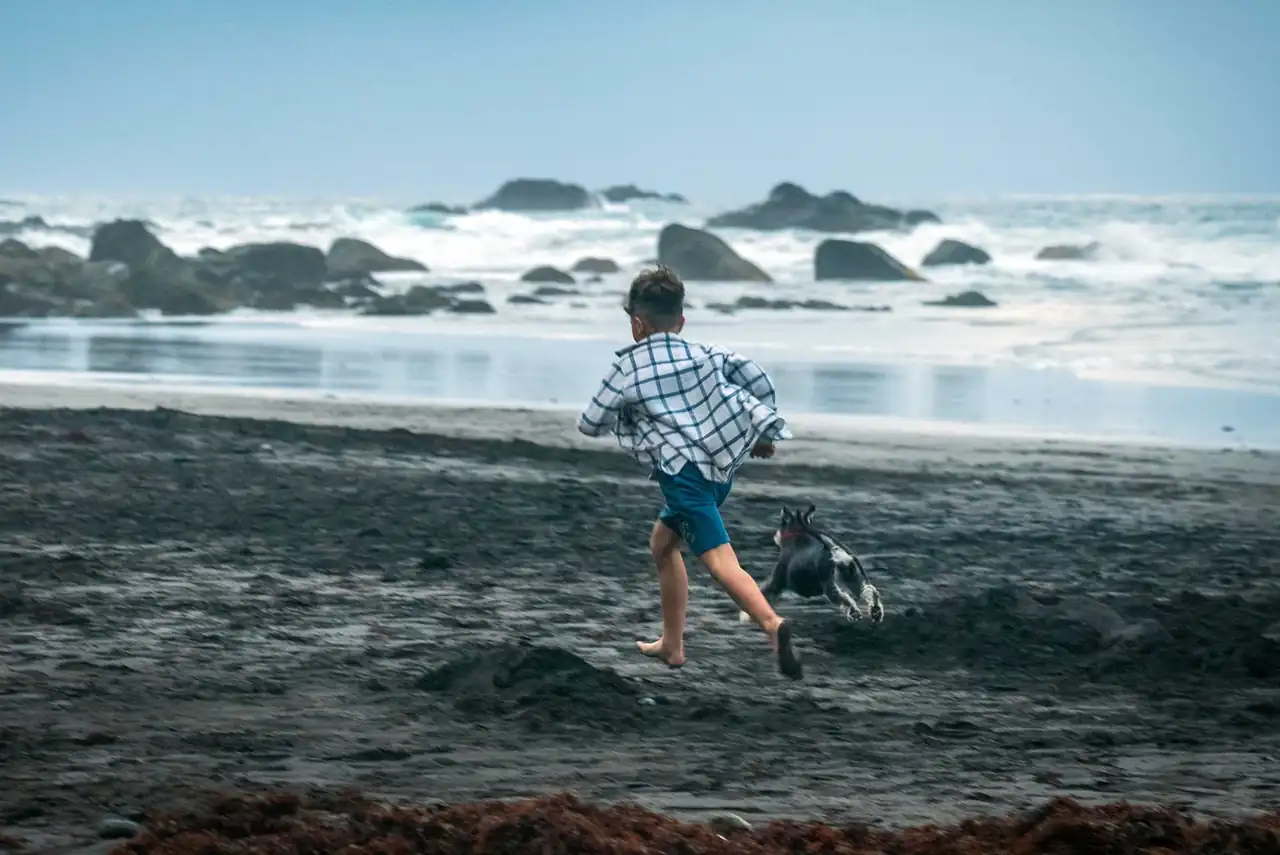
The sixth Santiago del Teide Aquathlon has a date: it is scheduled for August 29, 2027, at Playa de La Arena in the Tenerife municipality of Santiago del Teide. Available information gives an 11 a.m. start and describes a format consisting of a run, a swim and a second run, covering 2.5 kilometres, 1 kilometre and 2.5 kilometres, respectively.
The event therefore combines five kilometres of running and 1,000 metres of swimming in a coastal setting. For now, those are the specific details published for the sixth edition. Confirmed information about 2027 registration, fees, categories, relays or regulations is not yet available; details from earlier editions provide context but cannot be assumed to apply to this new event.
Race date, time and location
The competition is announced for Sunday, August 29, 2027, with a scheduled start at 11 a.m. The venue is Playa de La Arena in Santiago del Teide, on Tenerife’s west coast. The beach will be at the heart of an event that, by its very format, links the coastal environment with the race’s running sections.
The location matters for both the swim and logistics. Participants should allow enough time to collect any equipment or documents required by the organisers. However, no opening time, exact check-in point or access instructions are currently provided. Those details should be confirmed in the official event information before travel arrangements are made.
Playa de La Arena is in the municipality of Santiago del Teide, in the province of Santa Cruz de Tenerife. This distinction helps identify the event location without confusing the beach with the municipality’s name. It is also worth distinguishing the venue from the precise start and finish point: the available listing identifies the beach but does not specify a more exact location within it.
A course in three segments
The announced format follows the classic aquathlon sequence: 2.5 kilometres of running, 1 kilometre of swimming and a final 2.5-kilometre run. The two land sections add up to five kilometres, but the event’s total distance should not be described as entirely on foot because it also includes a swimming segment.
The format alternates different demands over a relatively short period. The first run builds the effort; the participant then enters the water and must adjust to a different pace and technique. On leaving the water, the body switches medium and movement pattern again to complete the final run. Transitions between disciplines are an essential part of the event, not a rest break.
The published information does not give the exact course, surface type, buoy layout, circuit direction or arrangements for entering and leaving the water. Nor does it confirm whether the route will match previous editions. The 2027 regulations will be more reliable for those details than any older description, particularly for an event whose swimming segment depends on the conditions and safety measures set for that edition.
What competing in an aquathlon involves
An aquathlon combines running and swimming, without the cycling segment found in a triathlon. The combination may look straightforward on paper, but it calls on athletes to meet two very different demands: sustaining effort on land and then navigating and moving through water. In Santiago del Teide, the announced sequence begins and ends with a run, with the swim in between.
The change is especially noticeable when returning to the sand or running surface. After swimming, the legs can feel heavy for the first few minutes, and breathing may need time to settle into a steady rhythm. That is not necessarily unusual; it is part of switching between disciplines, although each athlete experiences it differently. The total distance calls for measured effort so that the opening run does not compromise the finish.
Preparation also means being comfortable in open water, not just covering running miles. Swimming in a pool is not identical to swimming in the sea: orientation, visibility and spatial references change. Safety measures and the organisers’ instructions take precedence over individual tactics; swimming conditions and event-specific rules should be checked in the updated regulations once published.
What is confirmed and what remains unknown
The information for the sixth edition confirms a date, time, venue and sequence of distances. Specifically, the event listing gives August 29, 2027, an 11 a.m. start at Playa de La Arena, and segments of 2.5, 1 and 2.5 kilometres. That is the event’s verifiable core and the starting point for planning.
By contrast, firm details are not available about entry fees, registration opening or closing dates, participant limits, age requirements or individual and relay options. Timing arrangements, category breakdowns and accompanying activities are also unconfirmed. These details can change from year to year and should not automatically be carried over from an earlier edition.
Caution is particularly important around costs and eligibility. Specific fees and rules were published for past editions, but there is not enough evidence to attribute them to 2027. The price, eligibility rules and registration process can only be treated as confirmed when information for this edition is published. A historical figure may describe the past, but it cannot replace a current announcement.
Background from previous editions
The sixth-edition designation identifies the 2027 event as the sixth running of the competition. Search results from earlier years show that the event has appeared on Tenerife’s sporting calendars and that its customary format has combined running and swimming. That history offers context, but it does not certify that every detail will be repeated in 2027.
The 2026 event was announced with the same format of a 2.5-kilometre run, a 1-kilometre swim and a final 2.5-kilometre run, as well as an 11 a.m. start. Some notices from that year also mentioned participation options and fees. However, different pages did not agree on every detail, another reason not to extrapolate without the new regulations.
The value of looking back lies in recognising continuity in the format, not assuming that nothing changes. Organisers may adjust schedules, limits, categories or procedures, and sea conditions can affect operational plans. Historical information should be read as a reference, not as a definitive 2027 event guide. The current event details are complete only when edition-specific conditions are published.
Playa de La Arena as a sporting setting
Holding an event of this kind by the sea makes the landscape a visible part of the competition. The swim takes place in a coastal setting, while the running sections connect the effort with the town. Unlike a race held entirely in an urban environment, participants here change surfaces and reference points in a short time: the coast is not just a backdrop but part of the sporting challenge.
For spectators, the beach provides a simple landmark for finding the event, although viewing areas, access restrictions and transition spaces have not yet been specified. It is unwise to assume that the whole event can be watched from one spot. Course maps and organiser instructions will clarify where spectators can stand without interfering with the competition.
The coastal setting also makes it sensible to keep the sun, temperature and sea conditions in mind, without pretending to know what the weather will be like on the day. The forecast and official instructions should be checked closer to the date. At events with a swimming leg, any safety measures or course changes are the responsibility of the organisers and event officials.
How to read registration information
The announced date makes it possible to reserve the day, but it does not mean registration is open. At present, no registration window, active form or 2027 fee has been confirmed. Prospective participants should wait for the entry procedure to be published and check whether it requires medical documents, parental consent for minors, a licence or other conditions. Without those official details, neither eligibility nor the cost can be confirmed.
It is also important to distinguish individual entry from relay participation. Some previous editions offered more than one format, but the available 2027 information does not confirm this. The same caution applies to resident discounts, entry limits and refunds in the event of changes. These are administrative conditions that must be explicitly stated in the rules, not inferred from past practice.
Once the full event notice is available, its terms should clarify what the fee includes, what equipment is provided and what obligations participants assume. Until then, assigning a fee or format would be speculative. The most useful information available today is the announced date and sporting format; participation details remain pending.
August event awaits its full regulations
The Santiago del Teide aquathlon already has a specific date and venue: August 29, 2027, at 11 a.m. at Playa de La Arena. The published format features five kilometres of running, split before and after a one-kilometre swim. These details outline the sixth edition in broad terms, though not yet all of its practical arrangements.
The definitive information will depend on the regulations and event-specific announcements. They should set out the courses, categories, registration, requirements and safety measures for the sea segment. Until then, distinguishing confirmed facts from details carried over from previous years helps avoid confusion and makes it easier to follow the event’s development.
The appeal of the event lies in that combination of disciplines and landscape: run, enter the water and return to the run without losing the thread of the competition. The event at Playa de La Arena will bring those elements together in a summer fixture; the regulations will turn the initial announcement into a complete guide for athletes and spectators.



How to prevent thigh chafing: causes and real solutions

Women’s running windbreakers: seven jackets and how to choose

Do more workouts get rid of soreness? A guide for runners

Jaén Half Marathon 2026: Record 3,800 Runners Registered

Men’s short running tights: how to choose the right pair

World Triathlon confirms data breach involving medical data

Izan Edo targets podium at Miyazaki World Cup

María Pérez ranks ninth in World Athletics’ 2026 top ten

Dos Santos, Duplantis and Sawe: World Athlete of the Year finalists

San Silvestre Vallecana 2026: 42,000 places, prices and start times

 Races3 months ago
Valencia Half Marathon 2027: date and registration

 Races3 months ago
Valencia Marathon 2026: entry, ballot and course

 Reviews and Comparisons4 months ago
Asics Gel-Roadmiles 3 for men: review and current price

 Reviews and Comparisons4 months ago
Asics Gel Sonoma 8 Gore-Tex: complete analysis for trail and rain

 Sneakers3 months ago
Saucony Endorphin Pro 4: full review and verdict

 News5 months ago
Strava API 2026: what changes for clubs, challenges and runner apps?

 Reviews and Comparisons5 months ago
Nike Alphafly 3: opinions, sensations, and real key points

 Reviews and Comparisons4 months ago
Under Armour running shoes review 2025-2026: models and key features

 Sports Equipment4 months ago
Shoe sizes in cm: a clear guide to getting the right fit for your footwear

 Sneakers3 months ago
Skechers GO RUN Consistent 2.0 analysis: comfort and limits

 News5 months ago
Valencia Marathon 2026 route: key tips to train and run better

 Sneakers4 months ago
Adidas Adizero Boston 13 for men: review and verdict