Races
Score Marathon 2026: distances, date and key details of the event
Putrajaya hosts a historic edition with 50,000 runners, multiple distances, and international standards.

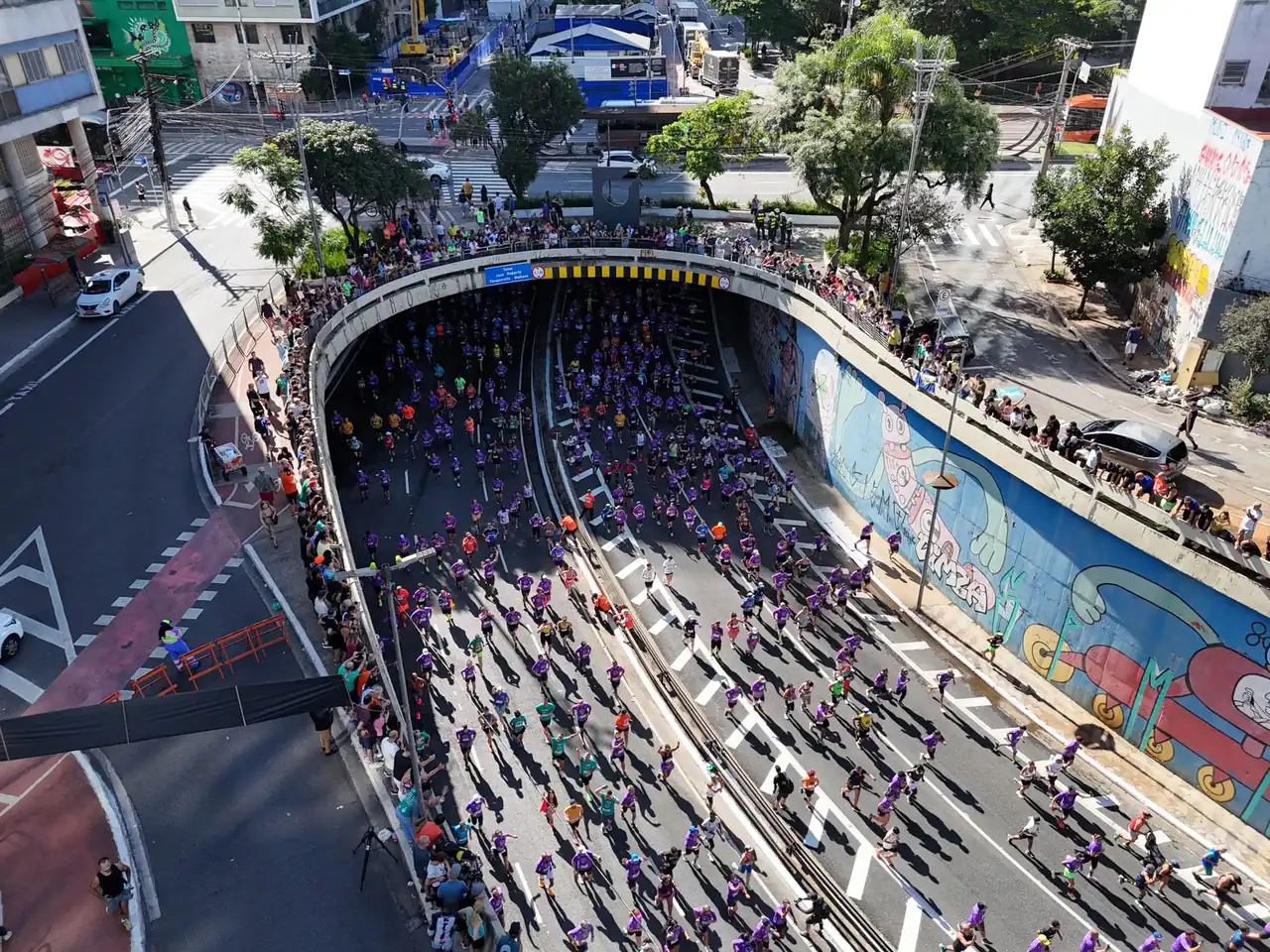
Score Marathon 2026 arrives in Putrajaya as something more than a race: it is a major event that aims to enter the Malaysian record books with 50,000 participants and a competitive structure designed to attract everyone from first-timers to experienced runners. The race will be held on 18 and 19 July 2026 at Dataran Putrajaya, a spacious, orderly and highly recognizable setting for long-distance running in Southeast Asia.
This year’s edition stands out for its scale, but also for its technical credentials. The event holds the World Athletics Road Race Label and features a course measured by AIMS, two certifications that place the race within international standards of precision and organization. In practice, that means a race with the ambition to set the benchmark, where logistics, course measurement and the runner experience matter as much as the finishing time.
An event that has gone from local fixture to regional benchmark
In less than a decade, Score Marathon has made a remarkable leap. What began as a local race has grown into one of the big names on the Malaysian calendar, with a runner base that not only wants to compete, but also to be part of a community that understands running as a shared habit. That evolution explains the interest generated by each edition and the media attention surrounding 2026.
The figure of 50,000 registered runners is not just a marketing claim. It speaks to an organizational capacity that demands a well-closed circuit, solid protocols and fine coordination between aid stations, staggered starts, safety and course control. In events of this size, every detail counts: from wave distribution to access flow and route signage.
The event’s own philosophy, summed up in the idea of One Person, One Sport, reinforces that inclusive approach. The message is not only about performance, but about embracing sport as part of everyday life. That blend of competitive ambition and community purpose helps explain why the race has secured a unique place in the region.
What distances it offers and who it is for
The 2026 edition includes several distances, with options ranging from 5K to the half marathon and the full marathon. This range allows the event to function almost like a running festival, with different profiles sharing the same weekend. For some, the starting point will be a short, accessible race; for others, the real challenge will be the 21 or 42 kilometers.
That breadth is no minor detail. In high-participation races, offering different distances multiplies appeal and makes the experience more flexible. A runner who is just starting out can choose a short distance without losing the feeling of being part of a bigger event; an experienced athlete can look for pace, a personal best or simple endurance over a longer distance with certified organization.
In addition, the measured course and international certification add value to the results. Finishing a mass-participation race is not the same as doing it on a course with official measurement and homologation conditions. For those chasing comparable times or looking for valid references for future races, that detail is decisive.
Putrajaya as a backdrop for endurance and speed
Dataran Putrajaya offers an aesthetic very different from that of a congested big city. Its wide avenues, open spaces and urban planning make it easier to gather runners and set up a large-scale race. Visually, the setting also matters: a mass start in a broad square creates the feeling of an almost choreographed event, with a sea of shirts moving across clean asphalt and long straight stretches.
For a marathon, the setting is more than a postcard. It also affects pace, focus and the race experience. A circuit with enough space usually helps the field spread out better, soften early bottlenecks and reduce the typical friction of mass events. That does not make the 42.195 kilometers any less demanding, but it can make the challenge easier to read for the runner.
Putrajaya also has a clear symbolic value: it is a modern, orderly administrative city designed for major events. In that context, Score Marathon fits as a perfect showcase of sports organization and international projection. It is no surprise that its organizers aim to place it alongside the major events that combine participation, technical control and visual spectacle.
Why the World Athletics seal and AIMS measurement matter
In the running ecosystem, the World Athletics Road Race Label is not a decorative detail. It is a certification that confirms the race meets recognized standards of quality and precision, something especially important in road races where runners seek confidence in the distance, course profile and result homologation. For many athletes, that seal separates an ordinary race from one worth planning with greater intent.
Measurement by AIMS reinforces that same idea. When a course is measured by a recognized body, runners know the kilometers are not an approximation. In the marathon and half marathon, that accuracy matters more than it may seem: it helps compare times, prepare realistic goals and better understand the effort invested in each split.
In prestigious races, technical organization becomes part of the story. The public sees the size of the event; the runner, however, reads other signs: how the start has been laid out, whether aid stations are well spaced, whether the circuit allows for smooth running and whether the finish line opens like a carpet or like an ambush. In Score Marathon, the stated ambition is clear: to offer an experience that combines scale and reliability.
A participation record that changes the meaning of the event
The expected 50,000 runners place the 2026 edition in a different category. Growth from the 33,000 participants the previous year marks not only a quantitative difference, but also a narrative one. An event that gains 17,000 entrants in a single edition moves into another league, where human-flow management, safety and the runner experience become central concerns.
The ambition to be recognized as Malaysia’s largest running event by the Malaysia Book of Records adds another layer to the race’s appeal. It is not just about filling the start line, but about sustaining a structure capable of absorbing that mass without losing quality. That is the true endurance test: maintaining a sense of order when thousands of people move at the same time, like a river trying not to overflow.
In races of this scale, public perception also changes. The race is no longer just a sporting challenge and becomes an urban, economic and cultural event. Families, companions, clubs, sponsors, photographers and volunteers all arrive. The race extends beyond the stopwatch and fills hotels, access routes, expo areas and meeting spaces that bring the weekend to life.
The human story behind the start
The 2026 edition has also attracted attention because of personal stories that explain the human dimension of the event better than any brochure. Among them stands out the story of Adry Fazmi and Ammar Naim, a pair of friends who take on the marathon as an exercise in trust, discipline and synchronization. Adry, a runner with visual impairment, depends on Ammar’s constant guidance to complete the course, a relationship that turns every step into a negotiation of mutual trust.
Their progress has not been sudden. They started with short distances, jumped to a 10K just two months after taking up running, and later completed a half marathon together at Score Marathon with only a narrow margin before the official cutoff. That kind of story connects with a truth that athletics sometimes hides: endurance is not only a matter of lungs and legs, but also of human connection, communication and composure.
The interest generated by stories like this is not incidental. In such a large event, individual achievements add texture and memory. A runner may remember a time, but also the voice that accompanied them, the moment the body started to give in, or the final straight where the crowd became fuel. That is why the marathon also works as a collection of biographies compressed into a few hours.
What a race of this size feels like from the inside
Major marathons are nothing like a neighborhood race. The scale changes the perception of effort. Even before the start, runners move through queues, checks, waiting areas and a shared atmosphere of concentration that feels more like a station at rush hour than a simple sporting event. Far from diminishing its appeal, that density is part of the draw for many participants.
During the race, the collective rhythm becomes a tactical factor. Starting too fast in such a large field can be costly, because the initial excitement and the crowd can push runners beyond their planned pace. At the same time, the wide course and orderly structure usually allow runners to settle into their stride after the first kilometers, once the pack stretches out and each person finds their place.
The finish line, in races of this kind, has something ceremonial about it. It is not just about crossing a line. It is about entering a space where fatigue coexists with euphoria and where the final time, however tight, becomes tied to the memory of a day shared by tens of thousands of people. That blend explains why so many mass races leave an emotional mark beyond the result.
What this edition says about running in Asia right now
Score Marathon 2026 fits into a broader trend: the rise of major road races in Asia, where running has become a social, aspirational and urban identity activity. The combination of modern infrastructure, strong sponsorship and a growing community has led to increasingly ambitious events with aspirations of appearing on the international map.
In that context, the Putrajaya race is not only attractive because of its size. It also projects an image of sporting modernity. Precise measurement, international certification and the interest in inclusive or inspiring stories make up a package closely aligned with what the global runner wants today: organization, symbolic value and an experience worth telling afterward.
The appeal is not limited to those who travel to compete. For the running observer, the race serves as a barometer of a bigger phenomenon: the shift from popular races to events that function as cultural platforms. Performance, belonging and spectacle all coexist there. And in the middle of it all, the same old gesture: one foot after another, for hours, until the asphalt finally yields.
A race that aims to stay in the conversation
The 2026 edition aims high in scale, technical quality and storytelling. Putrajaya provides the stage; World Athletics and AIMS, the guarantee; the 50,000 runners, the human dimension. And between those three layers, the identity of a race is built that wants to be remembered not only for the size of its start, but for the feeling of having witnessed a well-built event.
The value of an event like this is measured not only in medals or finishing times. It is also measured by the way it makes a community visible, by how it turns a city into a course, and by how it allows very different people to share the same distance, even if not the same ambition. That is the kind of marathon that leaves a lasting echo: the one that remains present when the asphalt has already emptied again.
Score Marathon 2026 brings precisely that together: a large number of participants, an emblematic location and a structure seeking international credibility. In an increasingly crowded calendar, that combination explains why the Putrajaya event has gained weight and why its next edition arrives with the label of a historic event even before the clock has started.
You may also like: Kuching Marathon 2026: route, distances, and key aspects of the race.



How to prevent thigh chafing: causes and real solutions

Women’s running windbreakers: seven jackets and how to choose

Do more workouts get rid of soreness? A guide for runners

Jaén Half Marathon 2026: Record 3,800 Runners Registered

Men’s short running tights: how to choose the right pair

World Triathlon confirms data breach involving medical data

Izan Edo targets podium at Miyazaki World Cup

María Pérez ranks ninth in World Athletics’ 2026 top ten

Dos Santos, Duplantis and Sawe: World Athlete of the Year finalists

San Silvestre Vallecana 2026: 42,000 places, prices and start times

 Races3 months ago
Valencia Half Marathon 2027: date and registration

 Races3 months ago
Valencia Marathon 2026: entry, ballot and course

 Reviews and Comparisons4 months ago
Asics Gel-Roadmiles 3 for men: review and current price

 Reviews and Comparisons4 months ago
Asics Gel Sonoma 8 Gore-Tex: complete analysis for trail and rain

 Sneakers3 months ago
Saucony Endorphin Pro 4: full review and verdict

 News5 months ago
Strava API 2026: what changes for clubs, challenges and runner apps?

 Reviews and Comparisons5 months ago
Nike Alphafly 3: opinions, sensations, and real key points

 Reviews and Comparisons4 months ago
Under Armour running shoes review 2025-2026: models and key features

 Sports Equipment4 months ago
Shoe sizes in cm: a clear guide to getting the right fit for your footwear

 Sneakers3 months ago
Skechers GO RUN Consistent 2.0 analysis: comfort and limits

 News5 months ago
Valencia Marathon 2026 route: key tips to train and run better

 Sneakers4 months ago
Adidas Adizero Boston 13 for men: review and verdict