Races
Segovia Half Marathon 2026 rankings
Placings, times and context of a race that brought together 2,700 athletes and filled Segovia with atmosphere.

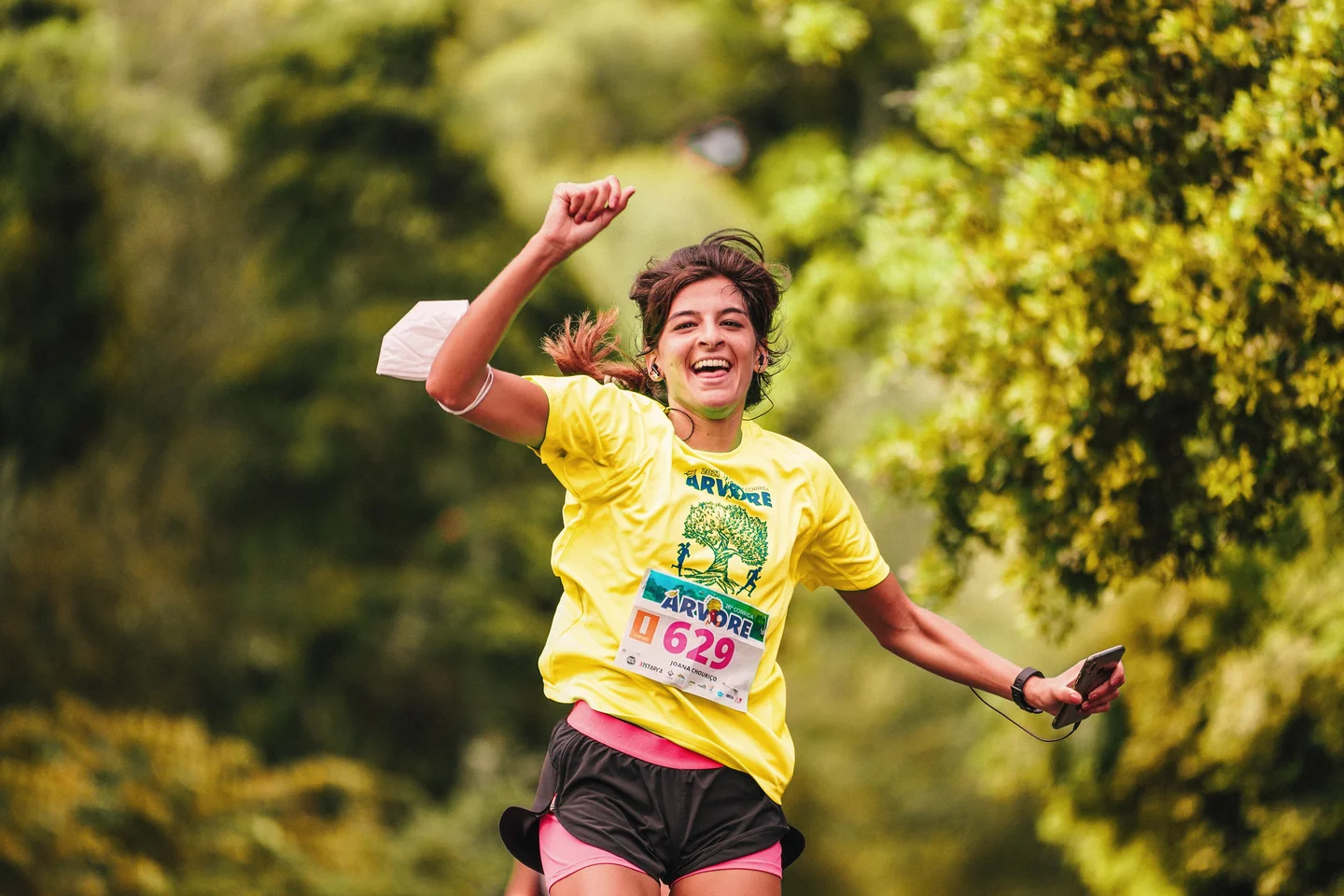
The classification of the Segovia half marathon 2026 left a clear picture: a race of great toughness, but also of huge popular appeal, capable of bringing together 2,700 runners in the city streets and consolidating a comeback with record figures. The event, held on March 28, 2026, confirmed that Segovia maintains a very special relationship with the asphalt, the elevation gain, and the crowd, a combination that turns each edition into something closer to a major urban event than a simple 21.097-kilometer competition.
On the sporting side, Iván Roade and Gema Martín Borgas dominated with authority a race that demanded legs, head, and management skills from the very first stages. But the value of the result goes beyond the names: the event relied on a new format, on a certified urban course, and on an organization that managed to restore to the Segovian half marathon a competitive and social weight that is not improvised. Each runner’s final position was thus framed within an edition marked by pace, live music, and the drive of a city fully devoted to the athletes’ passage.
A classification marked by the difficulty of the course and the support of the crowd
Segovia offers a very recognizable setting even for someone who has only seen it in passing: stone, slopes, narrow streets, monuments, and a topography that gives nothing away. That mix translates into an event where the final classification depends not only on pure speed, but also on the ability to sustain effort on a course with 290 meters of cumulative positive elevation gain. Whoever arrives fresh at the decisive stretch gains an advantage that, in this race, tends to matter more than in other half marathons with a friendlier profile.
The atmosphere was one of the day’s great assets. The race passed through very recognizable points in the Segovian capital and was accompanied by musical entertainment, something that does not change the official times, but does alter the perception of effort. In a half marathon like this, the runner also competes against visual and mental fatigue, against ramps that seem to stretch out like an endless climb. That is why the placing order tells a sporting story, yes, but also a story of resistance to wear and tear.
The spotlight on the elite coexisted with that of recreational runners. That coexistence is one of the event’s hallmarks and explains part of its growth. In that context, the classification does not just serve to identify winners; it also reflects the pulse of an event that has managed to combine sporting ambition, mass participation, and an atmosphere of a city fully behind the race. In Segovia, crossing the finish line is not only about finishing, but about surviving a course that demands reading every meter.
The names that dominated the race
The men’s victory of Iván Roade and the women’s win of Gema Martín Borgas confirmed an edition with authority at the front. In races of this kind, dominating is not just about running faster; it is about knowing when to push, when to hold back, and how to manage pace changes on a course that punishes overconfidence. The reading of the classification shows exactly that: competitive control that left little doubt in the top positions.
The race also left a striking image in terms of participation, with a large and varied field that raised the level of demand from the very first meters. When runner density is high, every corner, every turn, and every small narrowing can affect time references. That is why the final places must be read in the context of the course and the pack, not just with the coldness of the stopwatch. In Segovia, a position is also won by avoiding route mistakes and managing effort patiently.
The organization maintained the structure of a half marathon designed for performance, but also for endurance. There were strategically placed aid stations, live music, and services designed for a complete experience. All of this helps make the classification of the Segovia half marathon 2026 more than just a list of results: it is the snapshot of a very lively race, where times are conditioned by an especially intense urban and human setting.
A comeback with record figures and a more solid format
The 2026 edition confirmed the event’s growth with a particularly relevant figure: 2,700 runners filled the start line, a record participation number in the new format. That volume speaks not only of popularity, but also of trust. An event of this size needs finely tuned logistics, a clear course, and a competitive narrative that engages runners of different profiles. Segovia achieved that, and the classification ended up being the numerical reflection of that recovery.
The new race model, driven by the organization and supported by the city, restored the feeling of a major running event. The combination of the official race, pair, group, and relay formats, and a start designed to better organize the flow of athletes helped make the experience smoother. In an urban half marathon, that matters as much as the winner’s time, because the quality of the event is also measured by how the collective effort is distributed on the streets.
The full classification therefore gained a dual value. On one hand, it helps locate each runner’s position and compare performance. On the other, it helps show to what extent the race has returned to being among the most notable events on the national calendar in its category. The number of entrants, the presence of athletes from different places, and the crowd’s response paint a picture of a race that is now defined not only by its scenery, but by its real sporting significance.
What made this edition different from a competitive standpoint
A half marathon with so much elevation gain cannot be solved with a simple strategy. The runner aiming for a good placing must pace the effort from the start, because the course punishes any untimely acceleration. The 2026 classification showed exactly that logic: those who best understood the route tended to hold more favorable positions in the decisive stretch. In Segovia, patience is worth almost as much as stride length.
The presence of aid stations at key points helped maintain performance, but it does not erase the difficulty of the course. Fatigue builds up in the legs as if every cobbled street left a small bill to pay. That is why the final result has special merit for those who managed to maintain pace in the middle and final parts of the race, where the climb and fatigue usually decide more than initial intention.
The coexistence of different formats was also important. Pairs, relays, and groups add dynamism and multiply the reading of the overall classification, because they turn a single race into several simultaneous races. That diversity reinforces the event’s popular character without diminishing the elite competition. In such a context, positions stop being a cold line in a table and become the sum of efforts linked by the same course.
How to read the results without losing the context
The classification of a half marathon like Segovia’s makes sense when seen alongside the setting in which it took place. It is not the same to run on a flat course as in a UNESCO World Heritage city, with the start on Avenida del Acueducto and the finish in Plaza Mayor, where the urban landscape acts as a second rival. That detail changes the reading of the times and explains why an apparently modest placing can hide a very strong performance.
Races with elevation gain tend to reward those who sustain pace rather than chase pure times. In Segovia, the 2026 classification must be read that way: as the sum of physical capacity, effort management, and adaptation to an environment that offers no rest. There are races where the stopwatch rules; here geography also rules. And that makes them more complex, tougher, and, for many runners, more memorable.
The results list also has clear practical value for clubs, recreational athletes, and fans. It makes it possible to check category places, compare splits, and situate performance in a race with tradition and growing prestige. In an increasingly crowded calendar, having a solid classification and a race with its own identity makes a significant difference. Segovia is not only competing against other half marathons; it is competing against the idea that all urban courses are alike, and reality shows exactly the opposite.
Segovia’s place in the calendar and what its race says about urban running
Segovia has turned its half marathon into a reference for those looking for more than a fast course. The city offers a rare mix of beauty, challenge, and atmosphere, and that translates into demand for bib numbers. The 2026 classification confirms that the race is no longer a minor note on the calendar, but an event that draws attention because of its format, its recent history, and the massive response from the running community.
The participation of local, national, and international runners reinforces that idea. Not everyone arrives with the same goal or the same level, but everyone faces the same setting. That level playing field, as hard as it is honest, gives meaning to the interest in the final classification. Each position tells a small battle on a course seemingly designed to test both lungs and character.
In practice, the race also reflects a broader trend in running: the growing value of urban races with a strong identity. Runners are no longer looking only for distance and stopwatch; they are looking for experience, atmosphere, and a course that leaves a mark. Segovia fits that demand naturally, because its half marathon offers a kind of effort that is remembered. The classification, in the end, is the organized record of that competitive memory.
A list of times that serves as a snapshot of a city fully engaged with athletics
The final classification of the Segovia half marathon 2026 says much more than who arrived first and who came later. It speaks of a city that took to the streets, of an organization that chose to restore the pulse of a historic race, and of a large field that embraced the challenge of covering a demanding, beautiful, and anything but forgiving capital. The places and times are the visible skeleton; everything else lives around them.
In events with such symbolic weight, each edition leaves a mark that goes beyond the podium. The Segovian half marathon showed that a well-built event can recover prestige, grow in participation, and maintain a strong sporting identity. The 2026 classification, with its clear winners and its many finishers, works like an archive piece: it orders the result, but it also sums up the atmosphere, the toughness, and the ambition of a race that reclaimed the place many believed it deserved.
That is why the results of this edition are of such interest to both runners and observers of the national circuit. It is not just a table, but a race that left a powerful image: 2,700 athletes, a city fully behind it, and a course that makes no concessions. In Segovia, the classification was the visible end of a long morning in which the asphalt, the hills, and the crowd together wrote one of those days that explain why running keeps growing when it finds a setting with personality.



How to prevent thigh chafing: causes and real solutions

Women’s running windbreakers: seven jackets and how to choose

Do more workouts get rid of soreness? A guide for runners

Jaén Half Marathon 2026: Record 3,800 Runners Registered

Men’s short running tights: how to choose the right pair

World Triathlon confirms data breach involving medical data

Izan Edo targets podium at Miyazaki World Cup

María Pérez ranks ninth in World Athletics’ 2026 top ten

Dos Santos, Duplantis and Sawe: World Athlete of the Year finalists

San Silvestre Vallecana 2026: 42,000 places, prices and start times

 Races3 months ago
Valencia Half Marathon 2027: date and registration

 Races3 months ago
Valencia Marathon 2026: entry, ballot and course

 Reviews and Comparisons4 months ago
Asics Gel-Roadmiles 3 for men: review and current price

 Reviews and Comparisons4 months ago
Asics Gel Sonoma 8 Gore-Tex: complete analysis for trail and rain

 Sneakers3 months ago
Saucony Endorphin Pro 4: full review and verdict

 News5 months ago
Strava API 2026: what changes for clubs, challenges and runner apps?

 Reviews and Comparisons5 months ago
Nike Alphafly 3: opinions, sensations, and real key points

 Reviews and Comparisons4 months ago
Under Armour running shoes review 2025-2026: models and key features

 Sports Equipment4 months ago
Shoe sizes in cm: a clear guide to getting the right fit for your footwear

 Sneakers3 months ago
Skechers GO RUN Consistent 2.0 analysis: comfort and limits

 News5 months ago
Valencia Marathon 2026 route: key tips to train and run better

 Sneakers4 months ago
Adidas Adizero Boston 13 for men: review and verdict