Races
Serra do Candán Challenge 2026: dates, distances, and key details
Vilatuxe brings together trail, march, and kids’ trail in an edition with almost all spots filled and tough routes.

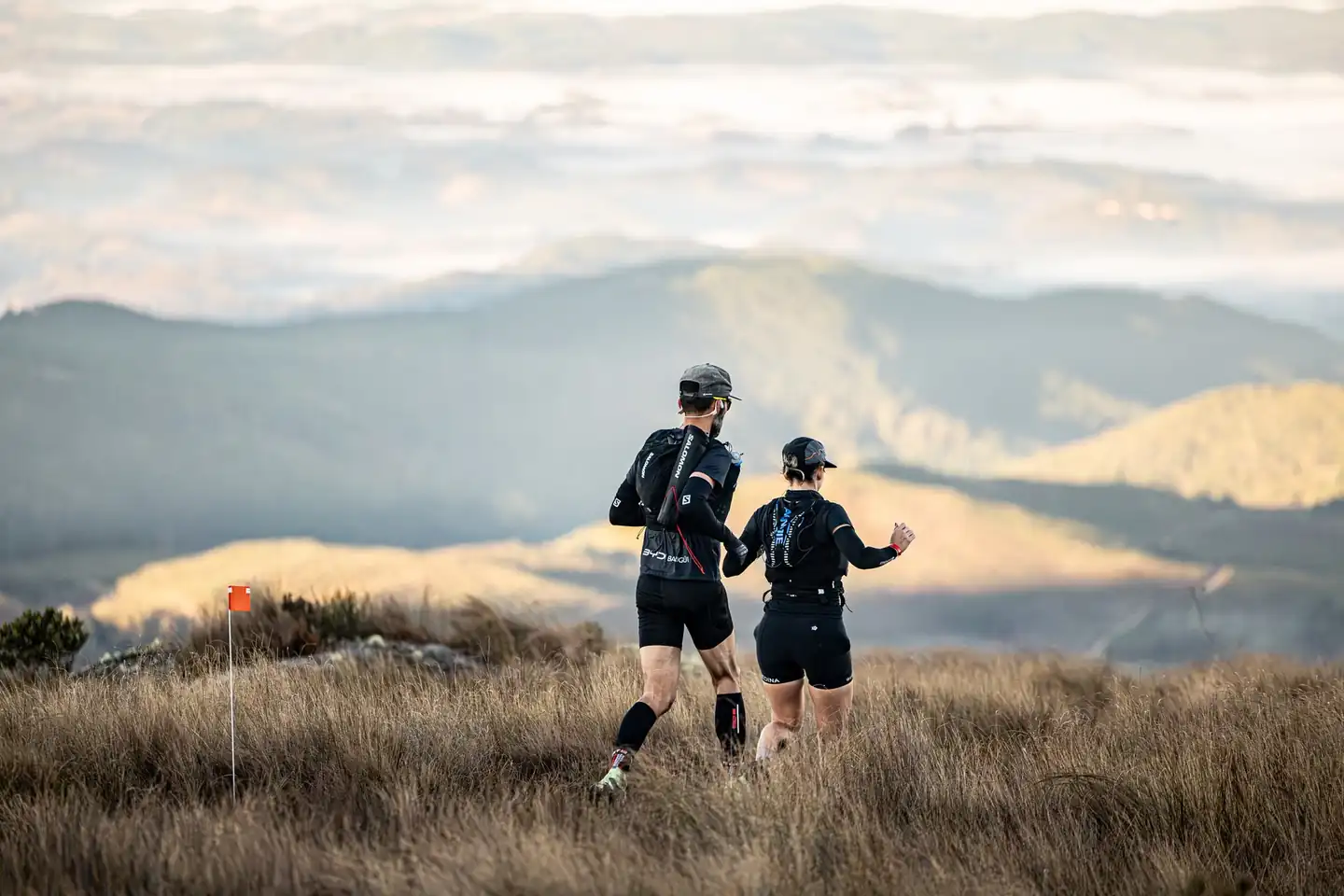
Desafío Serra do Candán puts Vilatuxe back on the Galician trail map with an edition marked by sold-out entries in almost all its categories, a fact that speaks both to the event’s appeal and to the toughness of its challenge. The race takes place on June 6, 2026 in Lalín, Pontevedra, and combines a sporting route, a mountain atmosphere, and an organization designed for different participant profiles.
The event brings together long trail, middle trail, short trail, walk, and kids’ trail, with staggered starts throughout the day and distances ranging from 33.4 kilometers to children’s races of a participatory nature. The interest is no accident: the Serra do Candán imposes technical terrain, changes of pace, and elevation gain, exactly the kind of setting where trail running stops being just a race and becomes an exercise in reading the mountain.
A race with its own identity in the Serra do Candán
The Vilatuxe race is not just another date on the calendar. It has established itself as one of the reference events in the interior of Pontevedra because of the way it takes advantage of the area’s terrain, with a start from O Pozo do Boi and a course that ventures into the hills of the parishes of Zobra and Vilatuxe. That combination of landscape, effort, and straightforward logistics has made the event a draw for those looking for something beyond asphalt and the stopwatch.
The mention of the Serra do Candán explains much of its identity. This is not a friendly route or an event designed for steady pacing; here, the terrain, foot placement, and ability to manage effort take center stage. In this type of race, every climb bites and every descent punishes, and that is why the appeal lies not only in the race bib, but in the full sporting experience.
The 2026 edition also arrives with massive participation. The available information puts the total at 689 registered runners, a notable figure for a mountain race of this kind. In an increasingly crowded calendar, reaching that level of turnout says a great deal about the confidence the event inspires and the loyalty of the trail community around it.
The distances and schedule shape a very orderly day
The structure of the day is one of the clearest features of the event. The long trail starts at 08:00, followed by the middle trail at 09:00, the short trail at 10:00, and the walk at 10:05. In the afternoon, the kids’ trail is set for 16:00, a schedule that allows the competitive aspect to be clearly separated from the family-friendly and introductory nature of the children’s event.
The official distances are equally clear: 33,400 meters for the long trail, 20,400 meters for the middle, 14,000 meters for the short, and 13,300 meters for the walk. The kids’ trail, for its part, is presented with variable distances, adjusted to its format and the ages of the participants. This variety broadens the event’s reach and ensures the mountain is not reserved only for those already experienced in long distances.
The pricing structure is also worth noting, because it helps explain the organizational approach. Registration opened months in advance with staggered pricing: 35 euros for the long trail in the first period and 40 euros later; 30 and 35 euros for the middle trail; 20 and 25 euros for the short trail; 20 euros for the walk; and 0 euros for the kids’ trail. The price differences reflect a common model in this type of event, where distance, logistical coverage, and demand determine the final cost.
Sold-out entries and demand that arrived before the closing date
Registration closed has been another of the standout features of this edition. According to the reference information, the main categories filled up, with 150 entrants in the long trail, 200 in the middle, 170 in the short, and 80 in the walk. The only remaining availability at the time of the query was in the kids’ trail, which offered 11 free spots out of 100.
This demand pattern confirms a very recognizable trend in trail running today: well-placed races in the calendar, with attractive routes and an established reputation, sell out in advance. This is no minor phenomenon. In mountain races, the availability of places is usually linked not only to organizational capacity, but also to the protection of the environment itself, which requires limiting the number of runners to maintain safety and smooth passage along paths and tracks.
It also explains why this type of event generates so much attention around registration status. In a mountain race, signing up on time matters just as much as training. When spots disappear quickly, the race stops being a weekend idea and becomes a decision made months in advance, almost like reserving a place on a crossing that already has its own timetable.
A course that demands strategy as much as legs
In the Vilatuxe trail, the landscape is not just a backdrop; it is an active part of the effort. The hills of Zobra and Vilatuxe present a profile that forces runners to pace themselves, watch their footing, and understand that the mountain rarely forgives impatience. Running technique, heart-rate management, and fueling during effort carry more weight than in a flat race, because the terrain breaks any attempt at mechanical consistency.
The main challenge is not usually just the distance, but the sum of small impacts: climbs that drain you, descents that load the muscles, and trails where footing changes from one meter to the next. That is where one of trail running’s virtues appears, that mix of athletics and basic navigation that forces you to stay alert for hours. The runner is no longer fighting only the clock, but accumulated fatigue, mud if there is any, loose rock, and the mental management of effort itself.
That is why the Desafío Serra do Candán retains such a particular magnetism. Those who enter are not looking for a straight line, but for a sequence of natural obstacles linked together with sporting purpose. The reward lies in finishing with the feeling of having read the terrain well, of having survived the climb, and of having pushed the body without breaking it too soon.
Organization designed for different runner profiles
The variety of categories is no minor detail, because it says a lot about the race’s philosophy. The long trail concentrates the most demanding side, the middle trail offers an attractive intermediate option for those who want mountains without going to the extreme, and the short trail acts as an entry point into terrain that, even with fewer kilometers, does not give up the essence of the mountain.
The walk adds another nuance: it allows participants to cover part of the area with a less competitive approach, closer to the physical experience and enjoyment of the landscape. And the kids’ trail plays an important role in the event’s base, because it introduces younger participants to the atmosphere of a sporting occasion that does not exist in isolation, but is connected to the local community and the future talent pool of trail running.
This setup multiplies the value of the day. It is not all about the podium or the fastest runners; there is also room for those looking to complete a short distance, for those who prefer to walk in the mountains, or for families who see the kids’ trail as a simple way to bring children closer to outdoor sport. That breadth, when well managed, supports the event’s growth without diluting its identity.
What it means to run in the Serra do Candán
Serra do Candán is not a typical tourist backdrop. It is a living landscape, with a character that changes depending on the light, humidity, and time of year. Running there means coexisting with a setting that alternates between woodland areas, more open trails, and stretches where the terrain seems to constantly remind you that the mountain is not made for comfort, but for respect.
In sporting terms, that translates into a very complete experience. The runner works the lower body on climbs, stability on uneven footing, and muscular endurance on descents. Effort management also comes into play in medium- and long-duration events, where starting too hard can be costly by the second third of the route. It is the kind of race where the cautious runner usually has more options than the impetuous one.
The event has also earned a reputation that goes beyond elevation gain or kilometers. In trail running, prestige is built through consistency, good treatment of participants, and routes that leave a mark. Desafío Serra do Candán brings these elements together and projects them onto a very recognizable setting on the Galician map, making it easier for those who already know it to return and for newcomers to discover a solid benchmark in the northwest of the Iberian Peninsula.
The weight of clubs and the value of the race atmosphere
One of the most striking details in the available information is the €400 prize for the clubs that record the best combined time. This incentive reinforces the collective dimension of the event and adds an extra layer to individual effort. It is not just a sum of times; it is also a way to measure a group’s cohesion and the weight of shared representation in a mountain event.
This component helps explain the atmosphere that usually surrounds this kind of race. Well-attended inland trail events tend to generate a very specific sense of community: conversations about mud, gear, uphill pace, course reconnaissance, and fueling strategies. Local runners and visitors, veterans and first-timers cross paths, and the result is a scene that feels more like a sports fair than a simple timed start.
The Vilatuxe setting also favors this mix of competition and conviviality. The start at O Pozo do Boi serves as a meeting point and a moment of pre-race tension; then, as the minutes pass, each group disperses into the mountains and the day takes on another rhythm. In trail running, the silence of the course and the pre-start noise coexist as two sides of the same event.
What a highly demanded edition leaves behind on the Galician calendar
The 2026 edition of Desafío Serra do Candán captures the current state of Galician trail running well: races with local identity, limited field sizes, strong runner response, and a balanced mix of challenge and participation. There is no need to exaggerate to understand its impact. Just look at the number of entrants, how quickly several categories filled up, and the steady interest year after year.
In a calendar full of races, not all achieve that balance between landscape, toughness, and organization. This one does. And perhaps that is where its strength lies: it does not promise an easy experience, but one that is coherent with the mountain, the surroundings, and what a runner expects from an authentic trail event. Those who pin a bib here know they will not find a comfortable straightaway, but a demanding test with the feel of a sporting celebration.
That is, in the end, the event’s strongest appeal. A race that sells out, gets talked about, and is remembered does not need big gimmicks to carve out its place. It only needs an honest course, clear organization, and a landscape that demands humility from runners. In the Serra do Candán, the calendar does not just mark a date: it also marks a way of understanding trail running.
You may also like: Camovi: mountain race in the Viveiro Mountains.



Reebok runs large or small: a real fit guide

Hoka Challenger ATR 7 GTX: complete review of the all-terrain shoe

How to clean white sneakers without ruining them

Altus Pirineos 40-liter backpack: analysis, use, and key points

20,000 mm waterproof jacket for men: key points to get it right

Under Armour HOVR Sonic 6: complete review of the shoe

incline treadmills: guide to choosing better

Achilles tendonitis: real recovery time

Pain in the Achilles heel: causes, signs, and relief

What to take for calf pain: real relief and when to worry

 Races3 months ago
Valencia Half Marathon 2026: date and registration

 Reviews and Comparisons4 months ago
Asics Gel-Roadmiles 3 for men: review and current price

 Races3 months ago
Valencia Marathon 2026: entry, ballot and course

 Reviews and Comparisons4 months ago
Asics Gel Sonoma 8 Gore-Tex: complete analysis for trail and rain
- Sneakers3 months ago
Saucony Endorphin Pro 4: full review and verdict

 News5 months ago
Strava API 2026: what changes for clubs, challenges and runner apps?

 Reviews and Comparisons5 months ago
Nike Alphafly 3: opinions, sensations, and real key points

 Reviews and Comparisons4 months ago
Under Armour running shoes review 2025-2026: models and key features
- Sneakers4 months ago
Adidas Adizero Boston 13 for men: review and verdict

 Sports Equipment4 months ago
Shoe sizes in cm: a clear guide to getting the right fit for your footwear
- Sneakers3 months ago
Neutral running shoes with lots of cushioning: the best of 2026

 News4 months ago
Where is the Hoka brand from and why was it born in France