Races
UltrArtesanos 2026: everything about the mountain race in Torrejoncillo
Three routes, lots of elevation gain, and a technical course through pastures and mountains: that’s how the Extremadura race is experienced.

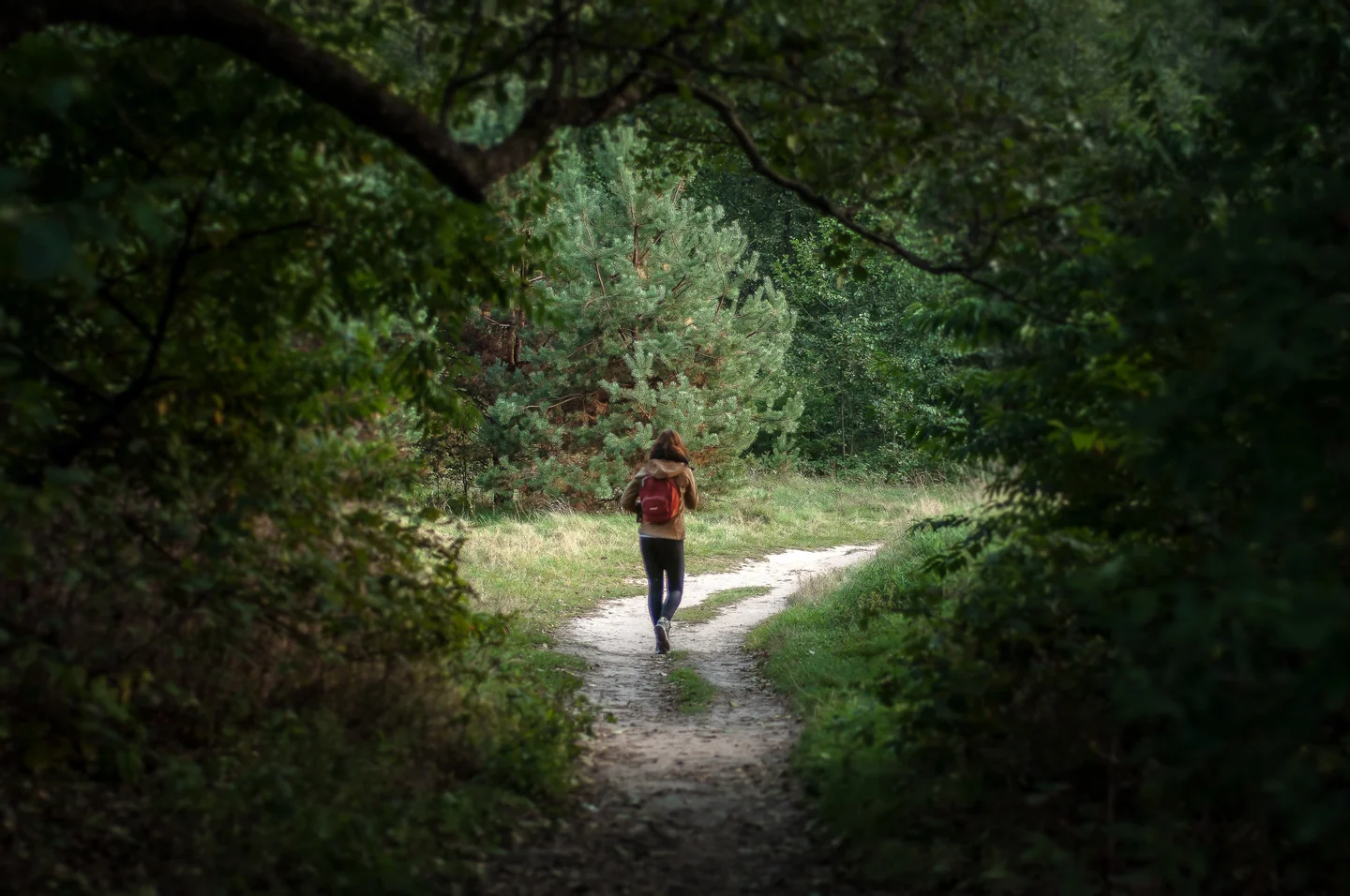
UltrArtesanos puts Torrejoncillo back on the Spanish trail map with a race that combines local identity, athletic toughness, and extreme landscapes. The event unfolds across dehesa, firebreaks, rocky sections, and mountain tracks, with a setup that demands strong legs, a clear head, and a sharp reading of the terrain.
The 2026 edition is scheduled for September 28 in the Torrejoncillo area, in the province of Cáceres, with three official distances: 52 km, 32 km, and 18 km. The available reference also mentions equivalent courses of 35.7 km, 22.4 km, and 8 km in recent editions, showing the event’s evolution and adaptation to different mountain and participation formats.
A race with a territorial stamp
UltrArtesanos is not understood only as a sporting event. It was born and has established itself as an event tied to the territory, with a route that crosses the Sierra de Arco and controlled-access areas, which forces runners to pay attention to navigation, pace, and respect for authorized paths. That relationship with the surroundings gives it a very different character from other, more urban or linear races.
The local atmosphere matters as much as the elevation gain. The race is part of Extremadura’s mountain calendar and already has more than a dozen editions behind it, which explains the mix of organizational experience and popular tradition that surrounds it. It is no surprise that each autumn the event is accompanied by side activities, photo contests, and references to the municipality’s sporting culture.
The identity of UltrArtesanos rests on two pillars: the terrain and the community. The first offers a changing landscape, with open dehesa, firebreak sections, and stretches where the ground punishes the muscles; the second brings the heartbeat of a race that does not live apart from the town, but is integrated into its social and sporting calendar.
The distances that define the race profile
The main race is built around three clearly differentiated options. The most demanding reaches 52 kilometers and is presented as a high-mountain challenge with about 2,270 meters of positive elevation gain, nine hours of maximum time, and several aid stations. It is the course that best sums up the event’s ambition and also the one that punishes pacing mistakes the most.
The intermediate distance, 32 kilometers, keeps the technical and physical demands, but reduces the overall impact of the day. Its sporting value is clear: it allows runners to enter serious trail territory without facing the load of a long ultra. The third option, 18 kilometers, serves as an entry point to the event for runners who want an intense mountain experience without taking on the hardest part of the script.
In previous references, these options appeared described as Artetrail, Trail, and Cross, with approximate distances of 35.7 km, 22.4 km, and 8 km. That distribution leaves a clear clue: UltrArtesanos works on several levels of difficulty, from the most popular course to the most demanding one, to sustain a full day of trail around the same organizational core.
A route where the terrain sets the rules
The course is neither friendly nor meant to be. Runners move along paths, tracks, firebreaks, rocky areas, and sections of concrete-asphalt at the entrances and exits of the urban center. That mix turns the race into a rhythm puzzle: the runner goes from a loose stride to short steps, from cadence to balance, from economical movement to brute force.
The toughness is not only in the accumulated climb. The unevenness of the ground also matters, forcing runners to read every foot placement calmly. On a hot or dusty day, the terrain can feel like a sheet of sand and stone; with humidity, the transitions become slippery and the runner discovers that the Extremaduran mountains give nothing away. Technical management matters as much as aerobic endurance.
The UltrArtesanos route feels less like a circuit and more like a tense conversation with the landscape. The runner moves forward, adjusts, climbs, descends again, and encounters sections where the visual reference changes quickly. That variety explains why the race appeals both to those looking to compete and to those who prefer a trail experience with its own personality.
The 2026 edition and its place on the calendar
The race is listed for September 28, 2026, a date consistent with its autumn tradition. September is still a month of lingering heat in Extremadura, with high averages and afternoons that can make the second half of the race much tougher. Recent edition weather references spoke of highs around 31 °C, lows of 18 °C, and average rainfall close to 30 mm, a picture worth keeping very much in mind.
That climate means the race is run not only against elevation gain, but also against the thermometer. Waking up early, hydrating properly, and not starting above your real capabilities becomes central here. In long mountain races, overexcitement is paid for quickly; in a race like this, even more so, because the terrain adds fatigue from the very first sections.
The 2026 edition also maintains its connection to the Extremadura Championship and to the so-called Trail Ultra Artesanos Challenge, two references that strengthen its place in the regional calendar. It is not an isolated date or a race without context: it is part of a wider competitive network, where challenges, championships, and popular participation coexist.
A landscape of dehesa, mountains, and controlled access
The geography of the area provides many of the event’s key features. The Sierra de Arco brings the most mountainous part, while the dehesa opens up more runnable sections, though no less treacherous when the heat intensifies. The result is a race of contrasts, almost as if the course were changing language as the runner progresses.
There is an important detail that sets it apart from other mountain races: part of the route crosses private property, which requires the use of official itineraries and respect for the access points marked by the organization. That condition does not reduce the interest; on the contrary, it underscores the importance of planning and of the relationship between sport and territory.
The mountain here is not a backdrop. It is a regulated, living, and shared space, where the runner enters as a visitor and must adapt to a pathway architecture that is not improvised. That reality gives the event an authenticity that is rare in an increasingly uniform calendar.
Competitive profile and popular participation
UltrArtesanos is not limited to those seeking classification or placement. The different distances open the door to very different profiles, from runners used to steep elevation gain to participants who want to try their first major trail event in a demanding but recognizable setting. That flexibility explains part of its longevity and roots.
The sources consulted mention a maximum of 110 participants across various categories and a total in the range of 0-99 runners in records from different platforms. Although the figures vary depending on the edition and source, the common point is clear: this is a contained, non-mass event, where the human scale still matters more than the volume.
That size favors a more intimate experience. It is noticeable at the aid stations, at the start, in the relationship with the town, and in the way the race becomes part of the day. Scale matters: when an event is not overwhelmed by numbers, the terrain and organization are perceived more clearly.
Recent history and the continuity of a singular event
The UltrArtesanos track record shows continuity. Previous editions date back, according to the available information, to years such as 2017, 2018, 2019, 2021, 2022, 2023, 2024, and 2025, with a break in 2020 marked by cancellation. That sequence speaks of a consolidated race, able to remain on the calendar and adapt to changing contexts.
In 2025, it was already referred to as the 17th edition, with a program that included the race, activities for children, a craft tapa route, and a photo contest. This kind of accompaniment helps explain why the event goes beyond the purely sporting result and becomes, for a few hours, a town gathering, a moment of coexistence, and shared memory.
There are also details such as posters with recognizable figures and race photography as part of the event’s universe. These are signs of organizational maturity. Races that survive with their own personality usually build a small culture around themselves, and UltrArtesanos has done so naturally.
What it takes to run in this environment
The key to performance lies in pacing effort. In a race where elevation gain, heat, and uneven footing combine, starting too fast means mortgaging the second half of the course. The runner who usually responds best is not the most explosive, but the one who knows how to hold back and adjust before the body breaks down.
Equipment choice also matters. A trail shoe with reliable grip, well-planned hydration, and clothing able to withstand heat and chafing make a big difference. On routes like this, the smallest detail can become a burden: a poorly placed stone, a downhill attacked without control, or a neglected aid station at the wrong moment.
Technique matters as much as endurance. Shortening stride on climbs, maintaining stability on broken descents, and accepting that there will be sections of fast walking are all part of the craft. This is not a race to fight the mountain, but to negotiate with it section by section, like someone who knows that victory sometimes means finishing intact.
The value of a race that does not look like all the others
In an increasingly crowded calendar, UltrArtesanos retains a valuable trait: its ability to blend sport, landscape, and local tradition without losing identity. Runners find not only kilometers and elevation gain, but also a context that explains why that race exists exactly there and nowhere else.
The Extremaduran event also keeps a rare virtue: offering a tough experience without falling into artifice. It needs no embellishment. A real terrain, tightly managed logistics, and a community that recognizes it as part of its sporting landscape are enough. That makes it attractive to anyone looking for a race with soul, not just a bib number.
At heart, UltrArtesanos works like a good mountain chronicle: it has a clear geography, measurable effort, and an atmosphere that cannot be faked. Between the dehesa and the mountains, between dust and stone, it continues to find its own place within Spanish trail running, with the same mix of ruggedness and closeness that has made Torrejoncillo a recurring reference every autumn.



How to prevent thigh chafing: causes and real solutions

Women’s running windbreakers: seven jackets and how to choose

Do more workouts get rid of soreness? A guide for runners

Jaén Half Marathon 2026: Record 3,800 Runners Registered

Men’s short running tights: how to choose the right pair

World Triathlon confirms data breach involving medical data

Izan Edo targets podium at Miyazaki World Cup

María Pérez ranks ninth in World Athletics’ 2026 top ten

Dos Santos, Duplantis and Sawe: World Athlete of the Year finalists

San Silvestre Vallecana 2026: 42,000 places, prices and start times

 Races3 months ago
Valencia Half Marathon 2027: date and registration

 Races3 months ago
Valencia Marathon 2026: entry, ballot and course

 Reviews and Comparisons4 months ago
Asics Gel-Roadmiles 3 for men: review and current price

 Reviews and Comparisons4 months ago
Asics Gel Sonoma 8 Gore-Tex: complete analysis for trail and rain

 Sneakers3 months ago
Saucony Endorphin Pro 4: full review and verdict

 News5 months ago
Strava API 2026: what changes for clubs, challenges and runner apps?

 Reviews and Comparisons5 months ago
Nike Alphafly 3: opinions, sensations, and real key points

 Reviews and Comparisons4 months ago
Under Armour running shoes review 2025-2026: models and key features

 Sports Equipment4 months ago
Shoe sizes in cm: a clear guide to getting the right fit for your footwear

 Sneakers3 months ago
Skechers GO RUN Consistent 2.0 analysis: comfort and limits

 News5 months ago
Valencia Marathon 2026 route: key tips to train and run better

 Sneakers4 months ago
Adidas Adizero Boston 13 for men: review and verdict