Races
Sky Run Barcelona 2026: date and vertical climb
Barcelona refines a vertical race with more difficulty, prizes, and a route that ends at the dome of the Hyatt Regency.

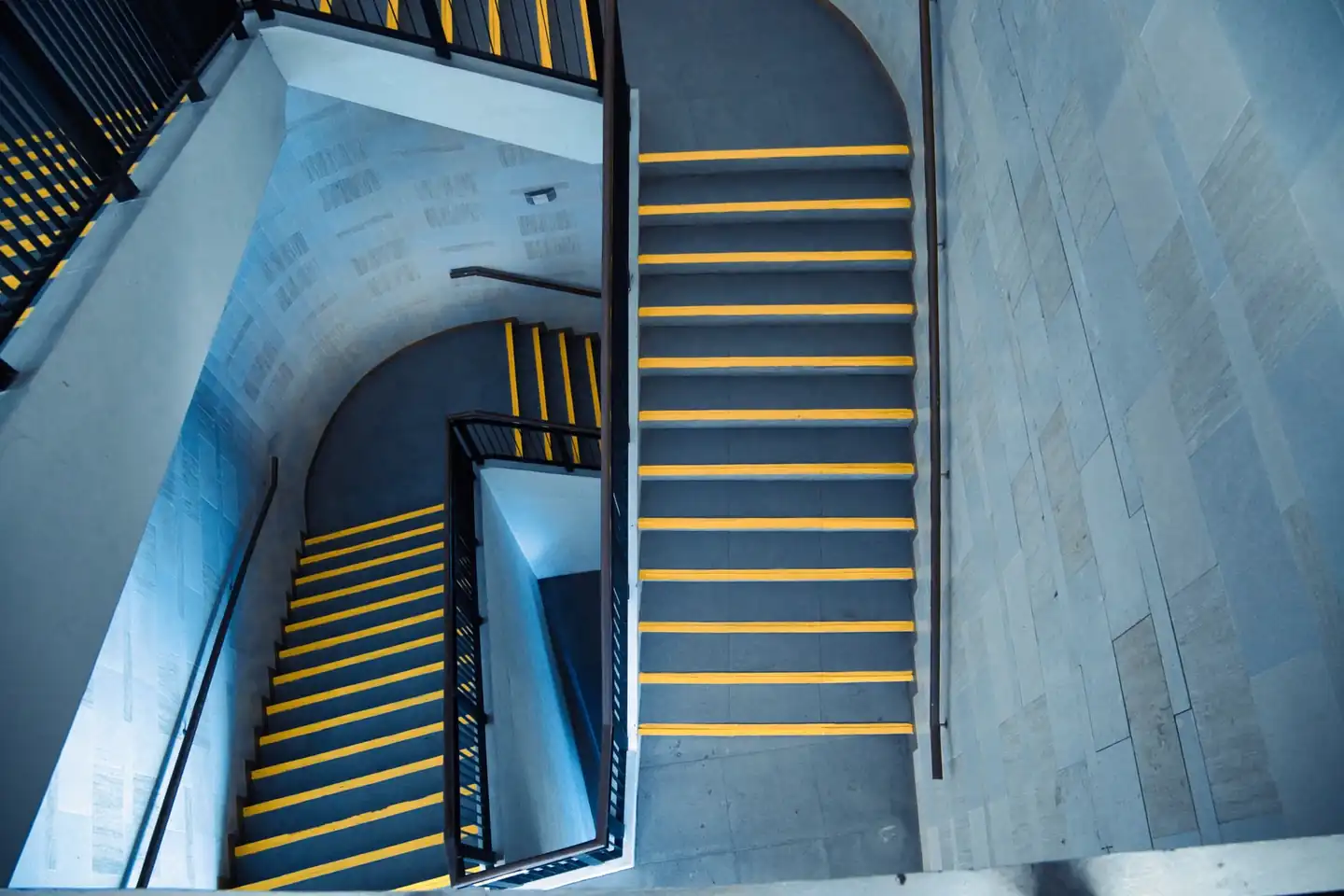
Barcelona measures its pulse vertically again with a test that turns a hotel tower into a track of effort, strategy, and rhythm. Metropolitan Sky Run returns in 2026 with a more mature, more international, and more demanding proposal, in a format that packs into just a few minutes the tension of a race and the aesthetics of a highly recognizable urban challenge.
The event brings together 569 steps, 105 meters of positive elevation gain, and 29 floors inside the Hyatt Regency Barcelona Tower, one of those buildings that is already part of the emotional landscape of vertical running in the city. The climb ends at the dome, with a sweeping view over Barcelona and its surroundings, a visual reward that completes a brief, intense experience very unlike a conventional race.
A vertical test that already has its own seal
Metropolitan Sky Run has established itself as a benchmark vertical race in Barcelona because it mixes accessibility, spectacle, and concentrated toughness. It does not demand kilometers of asphalt or long mountain stretches; its language is different. Here, what matters is the change of air, the cadence of the legs, and the ability to sustain the effort when the incline stops being a profile on the map and becomes a sequence of steps.
That change of setting explains much of its appeal. The Hyatt Regency Barcelona Tower acts as a small laboratory of effort: start at the building entrance, ascend via exterior stairs, control your movement, and finish high above. The runner does not move toward a horizontal finish line, but upward, as if each section condensed a very clean struggle between breathing, technique, and mind. It is a formula that is easy to explain and hard to imitate with that blend of architectural icon and competition.
The 2026 edition also arrives with a clear boost to its sporting reach. The race officially becomes part of the Towerrunning World Association circuit, with a Factor 120 within the international ranking. That is no small detail: it places the Barcelona climb within a global network of vertical competitions and gives it a competitive weight that goes beyond the recreational or local character that many events of this kind usually have.
The course: 569 steps and 29 floors with no room for distraction
The numbers behind Metropolitan Sky Run immediately explain the tone of the race. 569 steps and 105 meters of positive elevation gain may seem modest compared with a half marathon or a mountain ascent, but in a vertical race those figures amount to a very compact time trial. There is no steady pace running, no prolonged recovery, and almost no chance to manage energy as in a long event.
Verticality completely changes the relationship with effort. The body works at very high intensity from the first minute, and mistakes are paid for quickly: starting too hard can empty the legs before the final stretch; holding back too much, on the other hand, leaves the feeling of arriving with energy left but without having fully seized the opportunity. That is why these races are more like athletic climbing than conventional running, with a logic closer to the stopwatch than to the kilometer.
The finish at the dome adds a very distinctive dimension to the event. The arrival is not simply a finish arch; it is a panoramic, elevated, almost ceremonial space, where the runner moves from the sound of breathing to a broad image of the city. This transition from enclosure to horizon gives the race a powerful visual signature and explains why vertical races generate so much interest among fans and photographers.
A format that rewards both power and pace management
In a climb like this, performance depends not only on leg power. It also matters how you climb, the use of handrails when the rules allow it, breathing frequency, the ability to maintain technique when fatigue bites, and knowing your own threshold. The result is usually a very honest race: there are no big tricks, and the body, in the end, tells the truth.
Metropolitan Sky Run also offers a staggered start format between 10:00 a.m. and 1:00 p.m., with bib pickup opening at 9:00 a.m. This system reduces crowding, organizes the flow of participants, and turns each start into a small duel against the clock. Receiving the schedule by email and respecting it is part of the organizational machinery needed for a race of this kind to run precisely.
The organization asks participants to stick to their assigned time slot and warns that the preference indicated during registration cannot always be guaranteed. That logic fits the nature of the event: in a vertical race, logistics are part of the show, because the course is narrow, specific, and far from easy to improvise. The result is a more orderly experience, but also a more unique one than a mass urban race.
Barcelona gains an event with international reach
The 2026 edition includes a novelty that changes the race’s scope: its inclusion in the Towerrunning World Association circuit, with official competitive value in the ranking. For an event of this kind, that leap means greater visibility, stronger appeal for specialists, and a more serious reading from those who follow vertical races in Europe and beyond.
The event also strengthens its structure with cash prizes that can reach 1,200 euros, distributed between the men’s and women’s podiums. Added to this are awards and gifts for the categories, a way to reinforce the competition without losing the shared-experience component that usually accompanies these events. The financial incentive does not change the essence of the challenge, but it does raise the level of ambition at the start line.
That growth coexists with a format that remains very recognizable for the participant. It is still a race contained within a specific space, with a strongly marked visual identity and relatively straightforward logistics. The tower, the dome, the exterior staircase, and the city in the background create a postcard that works both for the competitive runner and for anyone looking for a different challenge on the calendar.
What the registration includes and why it matters in this kind of event
Registration for Metropolitan Sky Run is not limited to the bib and the timing chip. The package includes official T-shirt, runner’s bag, post-race refreshments, finisher medal, virtual diploma, and trophy for the top finishers in each category. It also includes preventive medical service, accident insurance, timing, and tracking through the Weefeel Crono app, as well as photographs during the course and recovery with Metropolitan.
In a vertical race, that package carries special weight because the effort is concentrated into just a few minutes and the support context becomes genuinely important. The medal and the post-race refreshments are not mere extras; they help close out a very intense, almost abrupt physical experience, in which the body goes from maximum effort to rest very quickly. In that transition, post-race organization makes a difference.
One curious and quite personal detail also stands out: for those who register early enough, the start can be accompanied by the song chosen during registration. It is a small gesture, but very effective in giving each runner a sense of identity. In a format where participants race one by one or in very separated starts, that sound identity adds a theatrical layer that fits the spirit of the event well.
Price, slots, and categories: a staggered registration
The price changes depending on membership status and the time of registration. For Club Metropolitan members, the fee is 19 euros. For non-members, the promotion starts at 23 euros until May 1, rises to 27 euros until September 1, and reaches 32 euros until registration closes. This tiered pricing system follows a common dynamic in urban sports events, where booking early secures a place and helps control the cost.
The organization also sets clear limits: registration is personal and non-transferable, and the race will close once it reaches 1,000 registered participants. The cap helps keep control over starts, passing times, and the overall experience. In a vertical race, more participants do not always mean a better atmosphere; often they mean more logistical friction, more waiting, and less precision.
As for categories, the rankings include overall general, Under 30, 30 to 50, and over 50 divisions, for both members and non-members. This structure allows the event to maintain a serious sporting approach without losing the broad-participation component. There is also a team classification, an addition that tends to work very well in short races, because it turns an individual effort into a collective result measured with quite a bit of ingenuity.
Teams, firefighters, and a competition that expands in layers
The option to create teams with a minimum of three members has added a very useful social layer to the event. The three best results from each group count toward the final classification, opening the door to clubs, groups of friends, or families who want to combine their effort under one competitive label. It is an intelligent solution because it preserves the individual nature of the climb while, at the same time, introducing a collective narrative.
Among the specific rules there is a special classification for firefighters and another modality linked to the Calegorax format, which combines the climb with a team effort and a free ascent. These technical details give the race its own character within the vertical ecosystem and set it apart from other events with a flatter proposal. The specialization of the rules reflects the maturity of the format and its wish not to remain a mere sporting attraction.
It is also specified that only firefighters have the option to complete two climbs. That exception, together with the rest of the rules, is part of the balance between safety, performance, and spectacle. This is not a race designed for improvisation, but rather to channel effort through very specific rules that help ensure each start makes sense within a larger whole.
Strict rules to protect the experience and safety
The regulations are especially clear on several points. The race is open to licensed and unlicensed runners, regardless of nationality, but it requires a minimum age of 18, except for justified and authorized exceptions. In addition, the competition is timed with a chip, which is mandatory to appear in the rankings. In such a short event, where every second counts, that control is essential.
The organization also states that trophies or prizes not collected on race day will not be sent afterward. It is a simple but important warning, because in events with fast awards, punctuality matters as much as performance. Likewise, it is made clear that there will be no refunds except in the case of a cancellation attributable to the organization, a common clause that protects the event’s viability against unforeseen circumstances.
In terms of safety, the race includes accident insurance and preventive medical service, as well as health coverage at affiliated centers for sports accidents within Spanish territory. The organization also reminds participants that they compete at their own risk and that the course may undergo small adjustments due to street renovations. These conditions, read calmly, describe an event that takes both logistics and legal responsibility seriously.
What makes a vertical race different from other urban events
The vertical race occupies a very singular place on the calendar because it compresses into one building what many events seek across kilometers: a sense of challenge, community, and visible effort. The city is left out, but it does not disappear; it watches from the windows, from the horizon, and from the photos at the finish. The runner, meanwhile, enters a kind of intensity tunnel where each floor adds a small weight to the chest.
In Metropolitan Sky Run, that effect is heightened by the architectural setting. The Hyatt Regency Barcelona Tower is not just a container; it is part of the story. Its silhouette, height, and dome turn the climb into an image that is easy to remember and share. Architecture acts as a silent rival: it does not run, it does not breathe, it does not tire, but it imposes a geometry that forces a response with legs and mind.
There is also a cultural component. Vertical races have been gaining ground because they fit very well with the current taste for short, intense, and highly visual experiences. The competition does not dissolve into long distances; it is condensed. And that compression creates a nearly cinematic reading of effort, with a sharp start, a closed development, and a high finish that leaves a clear image in memory.
The final postcard: a finish that matters as much as the clock
The dome of the Hyatt Regency Barcelona Tower neatly sums up what Metropolitan Sky Run offers. Up there, the runner does not find a conventional finish line, but a platform that seems to suspend gravity for a moment. The city opens up all around, and the race, as brief as it is fierce, becomes a very different scene from the initial effort. That contrast is part of the event’s magnetism.
The high finish also helps explain why this kind of event attracts such different profiles. Some come looking for a time, some want to finish the climb without losing their breath, and some simply seek an experience with its own identity. Verticality does not eliminate sporting emotion; it reorganizes it. Fewer kilometers, more intensity. Less route, more gesture. Less moving landscape, more conquered landscape from above.
In an increasingly crowded race calendar, Metropolitan Sky Run stands out because it does not imitate anyone. It borrows the language of running, takes it inside a skyscraper, and turns it into a brief, visual, and recognizable test. Barcelona thus adds an event that does not only measure legs; it also measures how urban competition is understood today when the finish line is no longer ahead, but literally above the runner’s head.
A climb that blends sport, city, and character
Metropolitan Sky Run works as a small portrait of how running in cities has evolved: more formats, more specialization, and more search for experiences with personality. Its value lies not only in the toughness of the ascent, but in the way it turns a building into a stage, a staircase into an official course, and a panoramic finish into part of the sporting story.
That is why the race fits Barcelona so well. The city has a tradition of major events, but also of alternative formats that make use of its architecture and its ability to attract diverse audiences. Here, competition becomes almost a symbol: climb, endure, look up, and finish seeing the city from a point that normally does not belong to the runner. That change of perspective is, in the end, the essence of the race.
And perhaps that is where its strength lies: in reminding the participant that running does not always move in a straight line. Sometimes it climbs, closes in, accelerates, and ends on an open-sky terrace. In that tiny journey, Metropolitan Sky Run finds its identity and secures its own space within the most distinctive events on the Barcelona calendar.



How to prevent thigh chafing: causes and real solutions

Women’s running windbreakers: seven jackets and how to choose

Do more workouts get rid of soreness? A guide for runners

Jaén Half Marathon 2026: Record 3,800 Runners Registered

Men’s short running tights: how to choose the right pair

World Triathlon confirms data breach involving medical data

Izan Edo targets podium at Miyazaki World Cup

María Pérez ranks ninth in World Athletics’ 2026 top ten

Dos Santos, Duplantis and Sawe: World Athlete of the Year finalists

San Silvestre Vallecana 2026: 42,000 places, prices and start times

 Races3 months ago
Valencia Half Marathon 2027: date and registration

 Races3 months ago
Valencia Marathon 2026: entry, ballot and course

 Reviews and Comparisons4 months ago
Asics Gel-Roadmiles 3 for men: review and current price

 Reviews and Comparisons4 months ago
Asics Gel Sonoma 8 Gore-Tex: complete analysis for trail and rain

 Sneakers3 months ago
Saucony Endorphin Pro 4: full review and verdict

 News5 months ago
Strava API 2026: what changes for clubs, challenges and runner apps?

 Reviews and Comparisons5 months ago
Nike Alphafly 3: opinions, sensations, and real key points

 Reviews and Comparisons4 months ago
Under Armour running shoes review 2025-2026: models and key features

 Sports Equipment4 months ago
Shoe sizes in cm: a clear guide to getting the right fit for your footwear

 Sneakers3 months ago
Skechers GO RUN Consistent 2.0 analysis: comfort and limits

 News5 months ago
Valencia Marathon 2026 route: key tips to train and run better

 Sneakers4 months ago
Adidas Adizero Boston 13 for men: review and verdict