Races
Snow Running Sierra Nevada 2027: date and sold-out places
Monachil’s winter race combines snow, darkness and high mountain terrain; its entries sold out soon after registration opened.

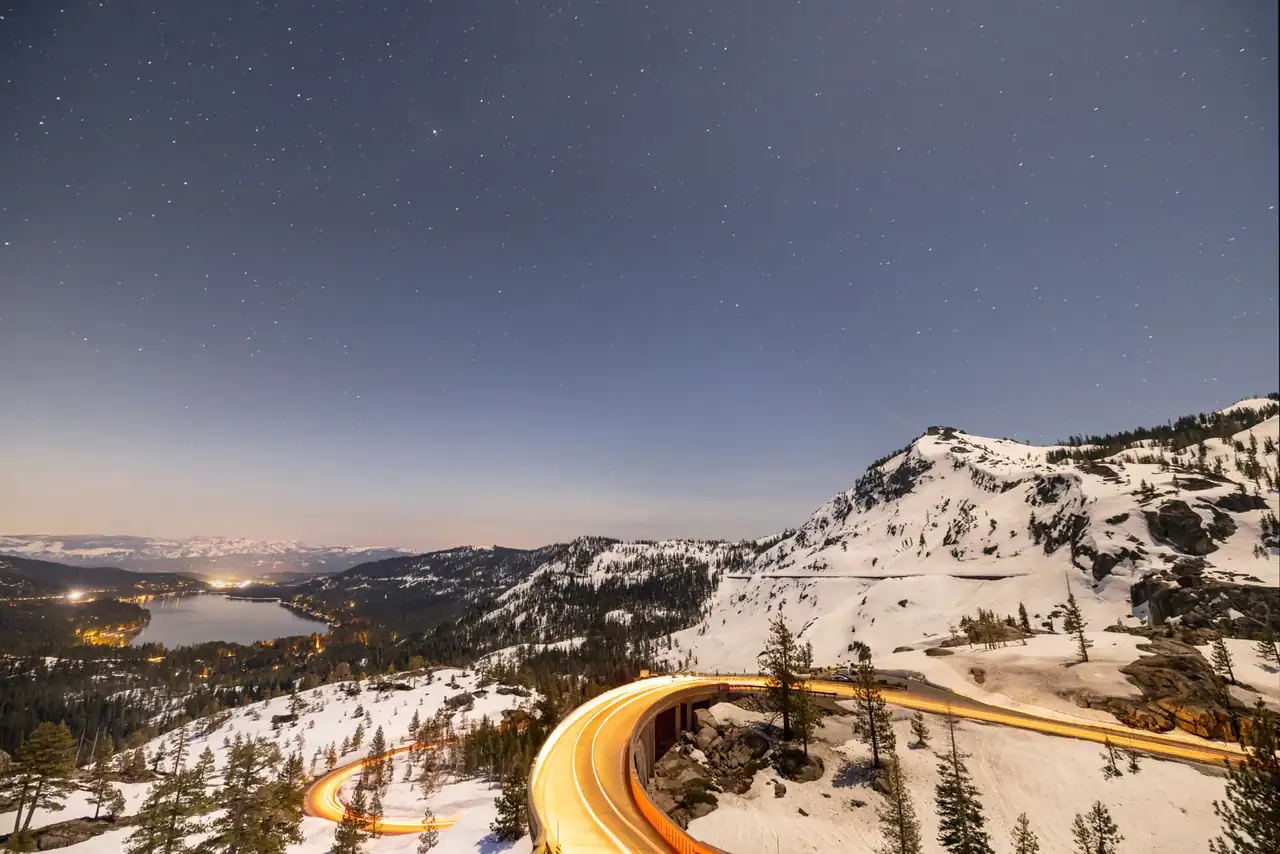
Entries for the 16th edition of Snow Running Sierra Nevada sold out in just two hours, confirming the appeal of an unusual night race: it is held on snow, in the mountains and at elevations close to 3,000 metres. The event is scheduled for February 6, 2027, in the area around the Granada ski resort, with the start planned for 6:30 p.m.
The classic category covers 12.7 kilometres and 920 metres of positive elevation gain. Cadet, youth and popular categories are also planned, with an approximate 8.2-kilometre course and 663 metres of climbing. Distance, however, does not tell the whole story: cold, altitude, darkness and snow make this a mountain experience that requires specific equipment and a different kind of preparation from a conventional trail race.
A winter race that has filled up once again
The organisers announced that entries for the 2027 edition were fully booked just two hours after registration opened. The available information does not state the exact number of race places, so it is not possible to quantify the total capacity or calculate how many participants will start. What is clear is how quickly places were taken for an event that has built a distinctive identity on the mountain-running calendar.
Interest is not explained by the sporting challenge alone. Running at night on snow creates a landscape and a sense of effort very different from those of a daytime race: a headlamp beam picks out the trail, mountain silence mingles with the sound of footsteps, and every change in gradient demands attention to the ground. This combination of winter atmosphere and technical demands is part of the race’s character.
The organisers thanked runners for their response and said that anyone who missed out should check official channels for updates or information about a possible waiting list. No confirmed details have been provided about additional places or the conditions for taking up a vacancy. Availability should therefore not be assumed: the sell-out announcement applies to the places made available for this edition.
2027 date, start and course details
The event is scheduled for Saturday, February 6, 2027, in Sierra Nevada, within the municipality of Monachil in Granada province. The start is planned for 6:30 p.m. from the upper section of the Río ski run, beside the Jara chairlift, and the finish will be in Pradollano. The race takes place in a mountain resort setting, but its course should not be mistaken for an easy route on groomed pistes.
The classic category covers approximately 12.7 kilometres and gains 920 metres. Cadet, youth and popular categories tackle an approximate distance of 8.2 kilometres and 663 metres of positive elevation. These figures describe a relatively short race by distance, although the profile, altitude and surface can significantly increase the perceived effort. On snow, distance alone cannot predict time or difficulty.
The route runs at elevations of approximately 2,100 to 3,000 metres. In the 2026 edition, the highest point was around 2,985 metres; this gives an idea of the terrain but does not confirm the exact elevation the 2027 course will reach. Snow and weather conditions can vary from season to season, so the final route and its characteristics should be understood according to official information for the edition.
Runners have a maximum of three hours to complete the race. The organisers set time checks for safety, preventing runners who are not maintaining a sufficient pace from continuing into higher sections when darkness and winter conditions increase exposure. The time limit is not merely a competitive benchmark; it is part of managing risk in a night mountain race.
Night and altitude reshape the experience
The night-time format is one of the features that set this race apart from other mountain events. The start takes place at dusk, and participants continue with their headlamps on as natural light fades. Visibility is limited to a narrow area in front of each runner, making it especially important to read the terrain, spot irregularities and stay focused on the ground.
Altitude adds another challenge. The route runs above 2,000 metres and approaches 3,000, where exertion may feel different from a race at sea level. Individual responses depend on fitness, acclimatisation and the conditions on the day; it is unwise to assume every participant will react in the same way. The classic category’s accumulated climb, 920 metres over about 12.7 kilometres, adds sustained effort to that setting.
Snow changes the way runners move, too. A soft or uneven surface can slow a stride and require adjustments to foot placement, while firmer sections may be slippery. Conditions are not uniform across the mountain and may not remain the same throughout the race. The course should therefore be understood as a winter route subject to change, not a measured distance on stable ground.
In a race like this, a strategy based solely on pace per kilometre may not be enough. Progress depends on elevation, snow conditions, visibility and the ability to retain warmth without restricting movement. These combined factors explain why a 12.7-kilometre race can demand mountain experience and sound judgement, even though it is much shorter than an ultradistance event.
Microspikes and equipment are central to the challenge
The reference information says participants must carry microspikes with at least 10 metal points, measuring 8 to 10 millimetres, distributed across the forefoot and heel. This requirement is intended to improve traction on snow and ice. They are not a decorative accessory: footwear grip on a changing surface affects both stability and the ability to move under control.
The mandatory equipment described for the race includes shoes suitable for snow, thermal layers, a windproof top and a waterproof, breathable jacket. Gloves, a hat, an emergency blanket, a reusable drink container, a headlamp and a rear red light are also listed. Equipment must provide warmth and visibility without preventing runners from moving freely uphill or downhill.
The headlamp has an obvious purpose, but rear lighting also matters on a night course. An emergency blanket and warm layers, meanwhile, help protect runners if they have to wait, stop or face changing conditions. In the high mountains, the wind chill can change quickly; waterproof and windproof layers help reduce exposure to wind and moisture, although their effectiveness depends on the conditions.
The final list and applicable specifications should be checked in the official 2027 regulations. The available summary is a useful guide, but it does not replace the organisers’ document, which may specify approved products, features or equipment checks. Reading the regulations prevents general recommendations being mistaken for entry requirements and clarifies which equipment will be inspected before the start.
A race created for running on snow
The race began in 2012 and reached its 16th edition in 2027. Its continued success has made it one of Spain’s best-known events in this specialty, where snow is not an occasional backdrop but a central part of the experience. The format combines mountain-running and winter-sport elements: elevation, changing conditions, artificial lighting and the need to choose equipment carefully.
The 2027 edition once again focuses on Sierra Nevada, a mountain range with high elevations and a setting accessible from the resort. That location helps explain both the visual appeal and the sporting and logistical challenge. Runners face more than an ascent and a descent: they compete in cold weather, at high altitude and at night, all of which affect perceived effort and make safety a visible part of the organisation.
The event has also gained international exposure. In 2022, Sierra Nevada hosted the first Snow Running World Championships, a milestone that raised the profile of the discipline. That history does not mean the 2027 event is a world championship: it is a new edition of the race, with its own categories and regulations. Its international track record adds context but does not change the specific format of this event.
Snow races occupy a distinctive place in the running calendar. They are defined not only by length or elevation, but also by the surface and the need to run with traction equipment and personal lighting. Trail experience can help with the climbs, but it does not remove the need to adapt to snow, cold and darkness.
What it means for registration to be sold out
The announcement that places have sold out means the standard registration made available for 2027 is no longer open. It does not establish that extra places will be released, that a waiting list is active or that race entries can be transferred. The organisers have advised runners to follow their social media channels and official website for updates, a particularly relevant point for those who did not secure a place.
Caution is also important when considering entries offered by third parties. The available information does not confirm that the organisers allow changes of ownership or transfers between runners. Before considering any alternative, participants should verify the official transfer rules, deadlines and required documents. An entry bought through an unauthorised channel does not guarantee the right to start.
The entry fee has not been stated in the reference material, so a reliable price for this edition cannot be provided. Fees may depend on the organisers’ terms, but they should not be inferred from previous editions or other Sierra Nevada races. Information on prices, withdrawals and refunds should be checked in the specific event rules.
For runners who do have a place, the key now is to distinguish confirmed information from matters that remain subject to the organisers. The date, planned start time, approximate distances and equipment requirements are described for this edition; details such as the price, total number of entries and any course changes are not specified in the information available. Keeping up with the regulations and route updates is especially important for a winter race.
Preparation starts before reaching the snow
The demands of the event mean that trail-running experience alone may not be enough. Physical preparation should account for a substantial climb over a short distance and a descent that may require control when the ground is covered with snow. It is also important to test shoes, clothing layers and lighting in similar conditions rather than trying the equipment for the first time on race day.
Acclimatisation to altitude deserves attention, although no universal approach guarantees the same response for everyone. Previous mountain experience, health and individual tolerance all affect how exertion feels. If concerning symptoms occur, safety should come first and runners should follow event staff instructions. General information about altitude is not a substitute for medical advice when a health condition may be affected.
The descent deserves as much consideration as the climb. On snow, a confident step on uneven ground can become a slip, and a headlamp’s beam reduces the field of view compared with daylight. Choosing a speed that allows time to react to changing surfaces and following safety instructions makes more sense than chasing a pace set on dry ground. Care is part of performance when running in the mountains at night.
The organisers set a three-hour maximum and time checks, but every participant should also pay attention to their own condition and surroundings. Thermal layers, gloves and a windproof top should be chosen with cold and wind in mind, without forgetting that the body warms up during exercise. Balancing warmth, breathability and freedom of movement is practical, not cosmetic: unsuitable clothing can become uncomfortable with every stride.
The mountain sets the pace for the 2027 edition
The race’s appeal comes from a combination that is hard to recreate elsewhere: snow, elevation, altitude and darkness in a single event. That profile helps explain why places sold out so quickly, but it also shows why this should not be treated as a conventional road race. The scenery may be spectacular; the demands are real, and runners must respect the route limits and weather conditions.
With the date confirmed for February 6, a planned 6:30 p.m. start and a 12.7-kilometre classic category, the event’s main sporting details are already available. Registration information points to a full field, while other details — including the entry fee and exact number of places — are not included in the available material. The most reliable guide for participants will be the updated official regulations, especially for mandatory equipment and any course changes.
In Sierra Nevada, February is not just a backdrop. Cold, snow and darkness are as much a part of the route as the gradient, making each decision — from footwear to pace — an exercise in adaptation. For runners with a place, the challenge will be reaching the start with the right equipment and attention fixed on the mountain; for those who missed out, the organisers’ own updates are the only reliable source of information about possible developments.



How to prevent thigh chafing: causes and real solutions

Women’s running windbreakers: seven jackets and how to choose

Do more workouts get rid of soreness? A guide for runners

Jaén Half Marathon 2026: Record 3,800 Runners Registered

Men’s short running tights: how to choose the right pair

World Triathlon confirms data breach involving medical data

Izan Edo targets podium at Miyazaki World Cup

María Pérez ranks ninth in World Athletics’ 2026 top ten

Dos Santos, Duplantis and Sawe: World Athlete of the Year finalists

San Silvestre Vallecana 2026: 42,000 places, prices and start times

 Races3 months ago
Valencia Half Marathon 2027: date and registration

 Races3 months ago
Valencia Marathon 2026: entry, ballot and course

 Reviews and Comparisons4 months ago
Asics Gel-Roadmiles 3 for men: review and current price

 Reviews and Comparisons4 months ago
Asics Gel Sonoma 8 Gore-Tex: complete analysis for trail and rain

 Sneakers3 months ago
Saucony Endorphin Pro 4: full review and verdict

 News5 months ago
Strava API 2026: what changes for clubs, challenges and runner apps?

 Reviews and Comparisons5 months ago
Nike Alphafly 3: opinions, sensations, and real key points

 Reviews and Comparisons4 months ago
Under Armour running shoes review 2025-2026: models and key features

 Sports Equipment4 months ago
Shoe sizes in cm: a clear guide to getting the right fit for your footwear

 Sneakers3 months ago
Skechers GO RUN Consistent 2.0 analysis: comfort and limits

 News5 months ago
Valencia Marathon 2026 route: key tips to train and run better

 Sneakers4 months ago
Adidas Adizero Boston 13 for men: review and verdict