Races
Somo Triathlon 2026: complete guide to the Cantabrian event
Somo combines sea, drafting allowed, and an explosive format with limited spots and a demanding bike cut-off.

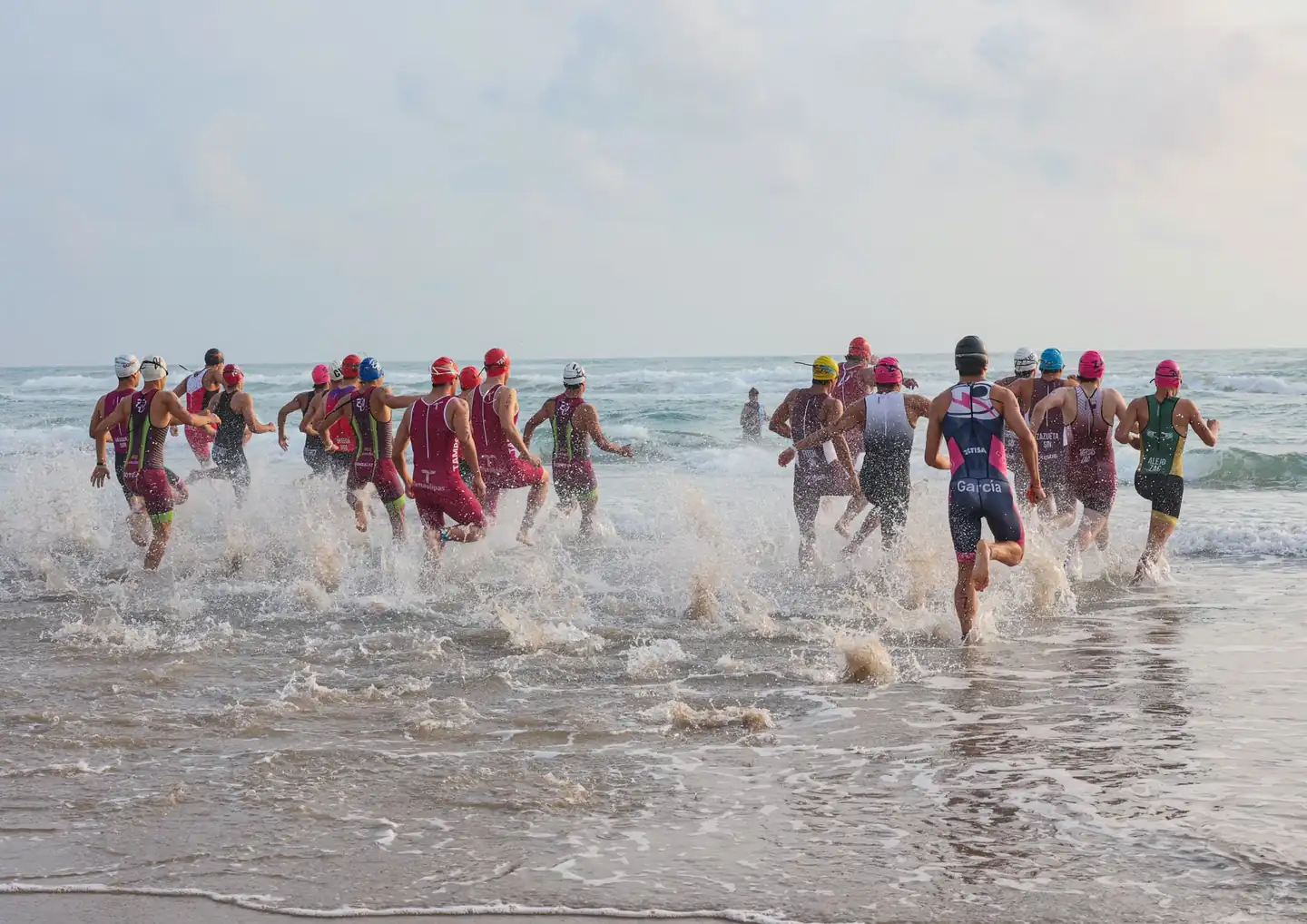
Somo Beach and its surroundings once again become the setting for a short, intense and highly technical event, with a format that combines 600 meters of swimming, 14 kilometers of cycling and 4 kilometers of running. The event, scheduled for June 7, 2026, has established itself as one of the most recognizable days on the Cantabrian calendar thanks to its mix of coastline, high pace and minimal room for error.
The triathlon is open to both licensed and non-licensed athletes from cadet category onward, with a 9:00 start, a registration limit of 200 places, and an organization that has made the timings, cutoffs and race rules clear from the outset. In an environment where wind, traffic and logistics can be distracting, the value of the event lies precisely in its apparent simplicity: little volume, lots of intensity and tactical decisions from the very first meter.
A short, fast triathlon with tactical reading from the water
The 600-meter swim sets the tone for the day. The start is located on the bridge from Somo to Pedreña, next to the Rey pier, and access to the water is not a neutral formality: athletes must walk to the entry area, taking care because of traffic on the CA-141 at that time. That detail, which may seem minor, forces a very specific mental activation even before the starting gun.
The water segment is organized with two buoys that must be left on the right-hand side to avoid rocks and bridge pillars, a measure that shows how the course aims to be clean and safe without losing its demands. The organizers set the joint start for women and men at 9:00 and allow drafting between both sexes, a distinctive feature that packs the field together and can significantly change the race dynamics. In a triathlon this short, getting a good position is not a decorative advantage, but almost a currency for the rest of the day.
The first transition also carries competitive weight. Athletes exit via the pier ramp and enter the transition area from the back, with the obligation to mount the bike only after crossing the authorized line. The helmet must be worn and fastened from inside the transition area, the race number on the back during the bike segment and on the front for the run. These are classic rules, yes, but in such an explosive event any oversight turns into avoidable lost seconds or a penalty.
The bike leg in Somo: drafting allowed and a course that punishes indecision
The cycling segment contains much of the race’s strategic appeal. It is 14 kilometers entirely on the CA-141, with a 180-degree turn at the Galizano roundabout and a return toward Somo. Drafting is allowed, which favors compact groups and encourages a collective reading of the race, almost like a small chess match launched at high speed on open asphalt.
That same allowance has a less friendly side: the need to position yourself without encroaching on the opposite lane, an obligation the organizers emphasize clearly. Clip-on aerobars and time-trial bikes are not allowed either, a decision that levels the field and reinforces the more traditional character of the event. The road does not forgive those who start cold or lose focus in a turn, especially when the route combines speed, motorbike officiating and regulations that leave no room for improvisation.
There is also a bike cutoff time, set at 45 minutes from the start of the first cyclist. That limit, driven by traffic permits, gives an exact measure of the pressure the organization places on the race’s development. In practical terms, it means that it is not enough to swim well and mount the bike efficiently: athletes must maintain a brisk pace from the first segment, avoid losses in transition and not let the group stretch too much.
The second transition is resolved with quick, simple logic: dismount before entering the transition area, rack the bike on its bar and start the run with the number already on the front. Equipment must be left in the designated boxes, the helmet cannot be removed until the maneuver is complete, and personal belongings can only be collected after the last cyclist has passed and the chief referee authorizes the removal of the gear. That order, more like choreography than a recreational race, reflects the level of control required by a federated event of this kind.
A short run, but enough to decide positions
The final 4 kilometers around Somo offer no rest. The course is designed as two laps, marked and taped off, with lap counters to ensure no one gets lost in the decisive stretch. In a reduced-distance triathlon, the run usually acts as the final filter, the place where accumulated fatigue, the ability to change pace and resistance to the temptation to ease off come to the surface when the body is already asking for a break.
The geometry of the race encourages that kind of finish. Those who come through the swim and bike well positioned can defend a spot with less energy expenditure; those who have lost time earlier must run with more risk. There is no long margin for conservative race management, because each transition weighs more than usual and the final course, though short, leaves very little room to recover from what may have gone wrong before.
Trophies will be awarded to the top three overall and the best by category and sex from cadet upward, as well as the best men’s and women’s club, with a minimum of three members. This distribution of awards fits the profile of an event designed not only for individual results, but also for the contest between clubs, age groups and career paths. Cantabrian triathlon, in that sense, retains a community dimension that remains as important as the time at the finish line.
Registration, prices and deadlines: what the schedule sets out
Registration is open to both licensed and non-licensed athletes, with closure scheduled for June 4 at 12:00 noon or earlier if the 200-place quota is filled. The system applies a 5-euro increase starting May 24 at 23:59, a small difference in appearance, but enough to regulate demand for an event that usually attracts interest because of its format and the appeal of the venue.
The fees set by the organizers are 17 euros for licensed athletes and 23 euros for non-licensed athletes, with the warning that no changes or refunds are allowed except in specific cases linked to cancellation or postponement. That detail matters because it places registration in a very regulated framework, something common in federated events, where permits, insurance and logistics require almost notarial precision.
Race numbers and swim caps will be collected on the Sunday itself between 7:30 and 8:30, at the event office located at Somo pier. Transition opens from 7:45 to 8:45, and access will require an ID card or federation license. In addition, there will be a cloakroom, a useful convenience on a morning when concentration tends to come before everything else.
The event accepts athletes from cadet category, that is, from age 14, a detail that clearly defines the participant profile. This is neither a day reserved for elite specialists nor a purely recreational event, but one in which young athletes taking their first serious competitive steps coexist with experienced triathletes who know how to measure each turn and each transition as if it were a valuable resource.
The Somo setting and why it matters so much in a race like this
Somo brings much more than just a name on the calendar. The town in Cantabria combines open sea, coastal road and an atmosphere that in June usually has a distinctly northern clarity: clean light, shifting wind and a landscape that may seem friendly from afar, but demands attention from the very first minute. In triathlon, the environment is not scenery; it acts as a second rival, silent and constant.
The swim next to the pier, the bike loop on the CA-141 and the run finish through the area’s streets create a compact sequence, easy for the public to follow and demanding for competitors. That clear layout helps make the race understandable at first glance, but it also makes it vulnerable to detail: poor positioning in the water, a bad turn on the bike, a race number in the wrong place or a slow transition can completely disrupt the final result.
The presence of federation officials in boats and on motorbikes underlines the regulated nature of the event. The oversight is not meant to complicate the experience, but to ensure the course is carried out safely, especially in an environment where there is road traffic, intersections and inevitable interaction with public roads. That blend of sport and logistics control is one of the hallmarks of well-organized coastal triathlons: everything seems smooth when it goes well precisely because meticulous monitoring stands behind it.
An event for endurance runners, sprinters and clubs paying close attention to detail
The Somo Triathlon favors very different profiles, but all must share the same virtue: the ability to react quickly. The strong swimmer may try to open a gap in the water; the good cyclist can use drafting to save energy and launch out front; the strongest runner can contain the effort and finish strongly over the final 4 kilometers. The course does not align itself with a single discipline, but rather forces them to be balanced almost to the millimeter.
That balance is a big part of its journalistic and sporting interest. It is not a long-distance race, nor does it try to be. Its merit lies in the tension it creates in a short time: a very controlled start, a bike leg where gaps can narrow or widen easily, and a final run where fatigue is already carried in the legs like fine sand. That kind of format rewards efficiency and punishes any excess of confidence.
It also explains why the event still has value within the Cantabrian calendar. It brings together participants of different ages, allows both licensed and non-licensed athletes, includes individual and team prizes, and maintains a recognizable territorial identity, closely tied to Somo. It is not just another race; it is an event that condenses, in a little more than an hour for most competitors, the essence of sprint triathlon: discipline, order, technique and the ability to suffer without losing composure.
The 2026 edition also arrives with a structure that leaves little doubt about its orientation. The limited entries, the time cutoffs, the ban on certain bike equipment and the need to respect each transition all shape a race with very clear rules. In times when many events have vague profiles, Somo maintains a clear identity: sea, asphalt and running, all compressed into a coastal setting that needs no embellishment to command respect.
What this edition adds to the Cantabrian triathlon map
The 34th edition of the Somo Triathlon confirms that the event has found a stable and recognizable formula. Short distance, early start, precise rules, limited entries and a course that leaves no room for distractions. In the end, that combination explains its continuity: it does not aim to grow at any cost, but to sustain a competitive experience where every segment makes sense and every rule responds to a real need.
For the competitor, that translates into an honest competition. There are no gimmicks or excessive storytelling; there is water, bike and asphalt, with the sea in the background and the wind as a possible guest. For the fan, it offers a clear and quick reading. And for the regional calendar, it represents one of those events that help keep alive the culture of grassroots and short middle-distance triathlon, so dependent on federation work as on local roots.
In Somo, speed matters, but organization matters just as much if not more. That is why the event continues to draw attention year after year: because it is not just a race, but a small snapshot of Cantabrian triathlon, with its mix of coastline, regulations, effort and precision. In a discipline where a bad turn can cost a position and a slow transition can erase half a race, that order is, in the end, part of the spectacle.



How to prevent thigh chafing: causes and real solutions

Women’s running windbreakers: seven jackets and how to choose

Do more workouts get rid of soreness? A guide for runners

Jaén Half Marathon 2026: Record 3,800 Runners Registered

Men’s short running tights: how to choose the right pair

World Triathlon confirms data breach involving medical data

Izan Edo targets podium at Miyazaki World Cup

María Pérez ranks ninth in World Athletics’ 2026 top ten

Dos Santos, Duplantis and Sawe: World Athlete of the Year finalists

San Silvestre Vallecana 2026: 42,000 places, prices and start times

 Races3 months ago
Valencia Half Marathon 2027: date and registration

 Races3 months ago
Valencia Marathon 2026: entry, ballot and course

 Reviews and Comparisons4 months ago
Asics Gel-Roadmiles 3 for men: review and current price

 Reviews and Comparisons4 months ago
Asics Gel Sonoma 8 Gore-Tex: complete analysis for trail and rain

 Sneakers3 months ago
Saucony Endorphin Pro 4: full review and verdict

 News5 months ago
Strava API 2026: what changes for clubs, challenges and runner apps?

 Reviews and Comparisons5 months ago
Nike Alphafly 3: opinions, sensations, and real key points

 Reviews and Comparisons4 months ago
Under Armour running shoes review 2025-2026: models and key features

 Sports Equipment4 months ago
Shoe sizes in cm: a clear guide to getting the right fit for your footwear

 Sneakers3 months ago
Skechers GO RUN Consistent 2.0 analysis: comfort and limits

 News5 months ago
Valencia Marathon 2026 route: key tips to train and run better

 Sneakers4 months ago
Adidas Adizero Boston 13 for men: review and verdict