Races
2025 Spanish Trail Championship: Calvó and Pons shine
Julen Calvó and Mireia Pons win in Azpeitia in a tough edition that is key for the Canfranc World Championship.

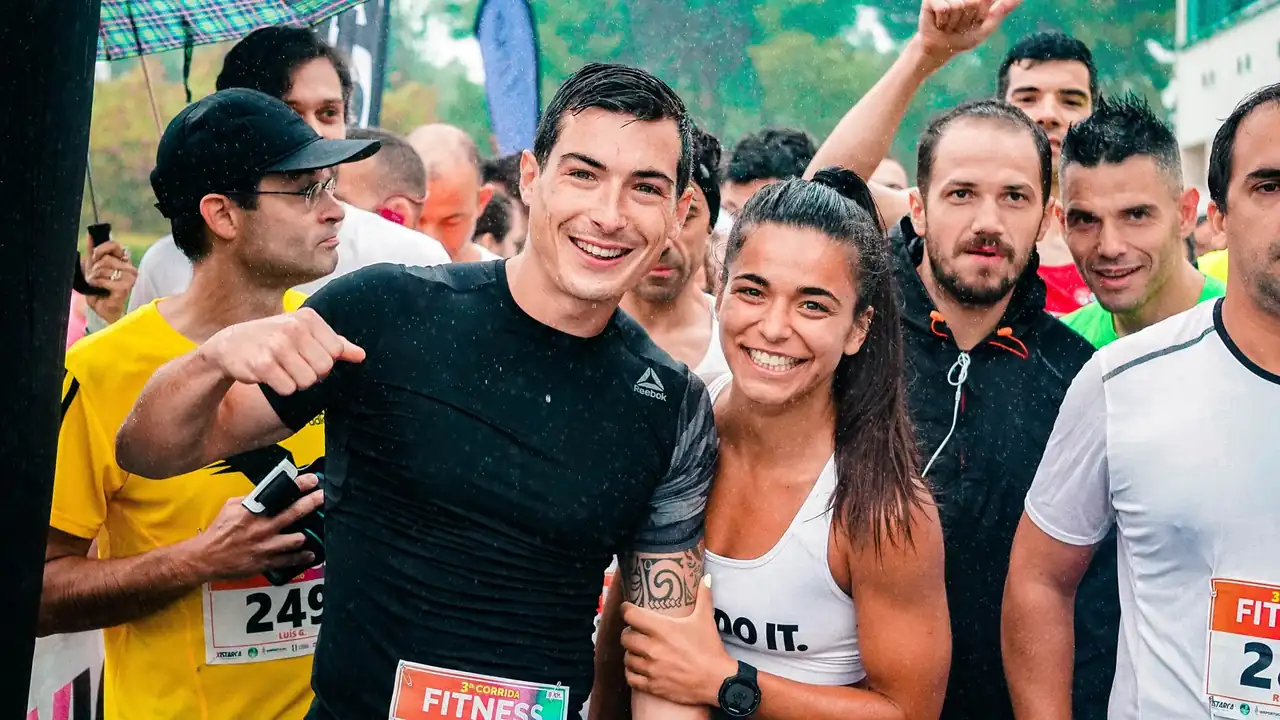
Azpeitia offered a faithful image of the most serious trail running: mud stuck to the shoes, legs punished by 65 kilometers, and a sky that changed the script halfway through the race. In that setting, Julen Calvó and Mireia Pons were crowned 2025 national ultra trail champions in an event that mattered as much for the title as for its value as a passport to the Canfranc-Pirineos World Championships.
The fourth edition of the national championship was contested over a course of 65 kilometers and 3,700 meters of positive elevation gain, with start and finish in Azpeitia, Gipuzkoa. The earlier rain left the ground softer, and a storm surprised the participants during the race, so the route, initially runnable, ended up becoming a trap of roots, rocks, and slippery descents that multiplied the dropouts and rewarded effort management over impulse.
An edition marked by weather and wear and tear
The championship measured more than speed. It also measured mental strength. In trail running, and even more on a day like this, the body calls for constant forward progress, but the terrain forces you to negotiate every meter. The mud made foot strikes less secure, the climbs felt longer, and the descents, normally the section where time is gained, turned into a sequence of braking and controlled risk.
The storm changed the race dynamic as soon as it appeared over the course. What at the start looked like a long, technical ultra became a test of almost surgical management of effort, nutrition, and footing. In this kind of event, equipment also tells a story: shoe grip, sock fit, the way you run on a yielding surface. This was not an edition for showing off, but for surviving with skill.
The event was organized by the Royal Spanish Athletics Federation, together with the Basque Federation and Club Lagun Onak M.B., in a race with a high competitive density. The goal was clear from the outset: the event awarded two spots per category for the Mountain and Trail Running World Championships, scheduled for September in Canfranc-Pirineos. That detail raised the tension, because it was not enough to get on the podium; it had to be done in a race of endurance, both literally and competitively.
Julen Calvó builds his gold when the race breaks apart
In the men’s category, Julen Calvó Vigara claimed the title in 6:07:43 after a patient, steadily improving performance. He was not among the most obvious favorites, but his race followed the classic pattern of a distance runner who waits for the right moment. He started conservatively, let the feeling-out phase pass, and found his space when the race became truly tough, just as the weather started to punish the ground more and separate the runners by real endurance.
His decisive move came after the halfway point. From there, the race stopped being a tight battle and became a succession of small cut-offs. Calvó settled into the lead with a steady pace and built enough of a cushion to approach the final descent with margin to spare. There, where others struggled with the unstable terrain, he had already done his work. He finished more than four minutes ahead of runner-up Pello Berrizbeitia, with a sense of control that a national ultra rarely gives away.
Víctor Mier’s withdrawal, after leading provisionally until kilometer 40, marked one of the turning points of the day. That DNF left the group without a clear reference and opened the door to new tactical approaches. It also explained why the podium did not follow a simple favorite-based logic: on a course like this, one bad decision on a descent or a hint of cramp can cost an entire race. Calvó avoided that toll and arrived strong when arriving strong mattered most.
The official third place went to Pere Aurell, although Urko Arizeta crossed the line ahead of him, as he was not competing for the national title. The reigning champion, Claudio Díaz Castán, finished fifth in the championship, more than an hour behind the winner. That gap sums up the harshness of the day: there was no compact fight to the end, but rather a progressive filtering in which the clock ended up prevailing as much as the legs.
Mireia Pons wins with consistency and without setbacks
The women’s race had a different story, less abrupt but equally demanding. Mireia Pons took the title with a very steady race, restrained at first and more incisive in the decisive stretch. From the opening kilometers she moved to the front together with Gemma Arenas, a major reference in mountain running and a medalist at the 2022 World Championships, and little by little she consolidated her lead with the ease of someone who does not need grand gestures to control an ultra.
Pons knew how to read the terrain before anyone else. While other runners alternated attacks and retreats, she maintained a clean cadence, without paying for excesses or getting carried away by the rush of the moment. That kind of victory often goes unnoticed by anyone who only looks at the final margin, but in reality it is a lesson in craft: in a race broken by rain, consistency is worth gold, especially if the body enters the final kilometers with some fuel in reserve.
The Catalan runner reached the finish with just over three minutes to spare over Arenas, who also won the F45 category. Third place went to Bárbara Ruiz, also the winner in F40, in a podium that mixed experience, endurance, and highly tuned mental resilience. María del Mar Pastor, the reigning champion, had led the first part, but faded in the final stretch and finished fourth in the championship and fifth overall. The second half of the course separated those who had run by feel from those who had run by strategy.
Pons’ victory confirms something trail running repeats often and that this edition brought to the forefront: winning is not always about attacking more, but about making fewer mistakes. In the rain, with tricky descents and the World Championships on the horizon, the athlete who best sustained the effort was the one who ended up wearing the national jersey. The clock favored the runner who managed the internal tension of a long race best.
A World Championship berth that added pressure to the podium
The battle for the championship coexisted with another, quieter but equally important one. There were only two spots per category for the Canfranc-Pirineos World Championships, which increased the value of every front position. In events of this caliber, the podium does more than hand out medals; it also shapes calendars, priorities, and training blocks. A good day in Azpeitia could change the rest of the season.
The selection for the World Championships turned the race into a high-voltage event. It was not just a national ultra trail final, but a stepping stone toward an international stage that will again demand mountains, technique, and the ability to suffer. Canfranc, moreover, shares a landscape with the harshness that trail running both punishes and defines. It is no coincidence that the names that stood out in Azpeitia also appear in the world-championship conversation.
Calvó and Pons left their presence in the September event very much on track, while other results also strengthened the candidacies of several athletes. In ultra running, the margins when building a team are usually narrow, because specific preparation, health, availability, and form all play out over very specific weeks. That is why this race was not experienced as an isolated milestone, but as a snapshot of form with diagnostic value.
The international context also explains how hard the race was run. With the World Championships taking place in Spain and over demanding terrain, every federation wanted to measure its best runners under similar conditions. Azpeitia therefore served as a kind of open-air laboratory, with enough mud, rain, and elevation gain to see who could sustain the pace when the body called for negotiating with the mountain.
The masters also offered a meaningful storyline
The championship program also included the Spanish Masters Ultra Trail Running Championship, a section that usually offers one of the most interesting perspectives in the sport. There, performance depends not only on explosiveness or bravery, but on the ability to stay fit over the years, to compete intelligently, and to keep finding room for long effort. Trail running, in that sense, rewards experience almost as much as youth.
Among the men, Pere Aurell achieved a double distinction by taking overall bronze and finishing best in M40. Fernando Sánchez won M35; Pablo Villalobos won M45; José Manuel Pérez took M50; José Manuel León won M55; Miguel Álvarez took M60; and Enrike Mazmela won M65. That variety of winners reflects trail running’s broad appeal, a discipline where the passage of time does not erase competitiveness entirely, but rather reshapes it.
In the women’s races, Gemma Arenas took the F45 title, Bárbara Ruiz the F40 title, and Silvia Puigarnau the F35 title. The overlap between overall and category results painted a clear picture: the runners who perform best in long events tend to maintain their value for years, with a mix of accumulated volume, technique, and a finely tuned relationship with prolonged effort. It is no coincidence; it is mountain logic applied to the calendar.
The masters championship adds a dimension that sometimes remains in the shadow of the absolute elite, but it helps explain the real health of trail running in Spain. There is a solid base of veteran runners who continue to compete at a high level, on tough courses and under very high demands. That continuity explains why trail running is not a passing fad, but a discipline with structure, memory, and history.
Azpeitia as a mirror of Spanish trail running
The day in Azpeitia produced more than just names. It portrayed the current state of Spanish trail running, with a mix of renewal and continuity visible in almost every category. Calvó represents a generation that is pushing forward with determination; Pons confirms that consistency can prevail on the roughest ground; and the masters podiums remind us that the discipline still has a broad, competitive base, capable of sustaining a high level from the absolute category to the older athletes.
It also left a technical certainty: in trail running, the course is not just raced; it is interpreted. Some read the clouds, some know when to back off a little, and some understand that a long race is not decided by a spectacular attack, but by a sequence of small decisions. In Azpeitia, the terrain vindicated the cautious. The rain reinforced that lesson with almost pedagogical force.
The lasting image is that of a demanding championship with a clear message: when the mountain hardens the script, the title goes to those who best combine strength, intelligence, and adaptability. Julen Calvó and Mireia Pons did so on a day that left no room for improvisation. Their victory was not only an individual triumph, but also a warning for the World Championships: those who mastered the mud and fatigue in Gipuzkoa will arrive in Canfranc with a credential that is hard to dispute.
In a sport where every climb leaves a brief scar and every descent can change a season, this championship reminded us why trail running attracts both runners and observers so strongly. There is beauty, yes, but also an almost mineral component of endurance and truth. Azpeitia gave nothing away, and precisely for that reason it turned national gold into something more than a medal: a test of character.



How to prevent thigh chafing: causes and real solutions

Women’s running windbreakers: seven jackets and how to choose

Do more workouts get rid of soreness? A guide for runners

Jaén Half Marathon 2026: Record 3,800 Runners Registered

Men’s short running tights: how to choose the right pair

World Triathlon confirms data breach involving medical data

Izan Edo targets podium at Miyazaki World Cup

María Pérez ranks ninth in World Athletics’ 2026 top ten

Dos Santos, Duplantis and Sawe: World Athlete of the Year finalists

San Silvestre Vallecana 2026: 42,000 places, prices and start times

 Races3 months ago
Valencia Half Marathon 2027: date and registration

 Races3 months ago
Valencia Marathon 2026: entry, ballot and course

 Reviews and Comparisons4 months ago
Asics Gel-Roadmiles 3 for men: review and current price

 Reviews and Comparisons4 months ago
Asics Gel Sonoma 8 Gore-Tex: complete analysis for trail and rain

 Sneakers3 months ago
Saucony Endorphin Pro 4: full review and verdict

 News5 months ago
Strava API 2026: what changes for clubs, challenges and runner apps?

 Reviews and Comparisons5 months ago
Nike Alphafly 3: opinions, sensations, and real key points

 Reviews and Comparisons4 months ago
Under Armour running shoes review 2025-2026: models and key features

 Sports Equipment4 months ago
Shoe sizes in cm: a clear guide to getting the right fit for your footwear

 Sneakers3 months ago
Skechers GO RUN Consistent 2.0 analysis: comfort and limits

 News5 months ago
Valencia Marathon 2026 route: key tips to train and run better

 Sneakers4 months ago
Adidas Adizero Boston 13 for men: review and verdict