Races
Subida a la Fuente del Paco 2025: date and distance
Villanúa brought together almost 250 runners in a mountain event with a festive atmosphere, 13.3 km, and a start at the Sports Center.

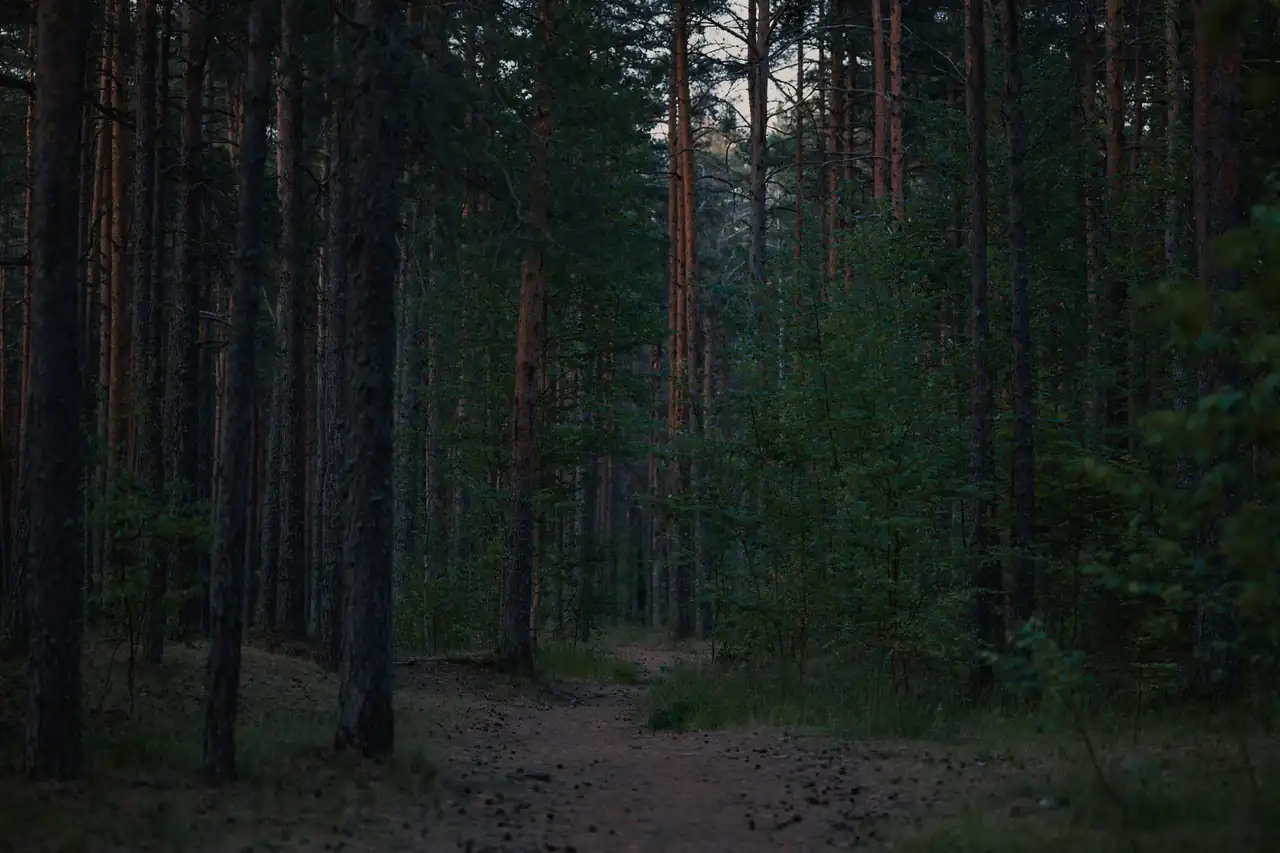
Villanúa once again put the Subida a la Fuente del Paco at the heart of the summer sports calendar with an edition that came close to 250 participants, cemented its popular appeal, and sent a clear message: this race remains one of the most solid events on the mountain-running calendar in the Aragonese Pyrenees. The victories of Leire Fernández and Lukas Cabezón in the 20th edition added competitive brilliance, but the real headline was the mix of elite athletes, youth talent, and recreational runners that brought the Polideportivo and the trails of the Araguás ravine to life.
The race took place on August 23, 2025, starting at 10:00 a.m. from the Villanúa Polideportivo and featuring a 13.3-kilometer course that combines the town center, forest track, shaded trail, and more exposed downhill sections. Online registration cost 10 euros and in-person registration 12 euros, figures that help explain why the race continues to attract a broad field of participants and remains very open in profile, far from the exclusivity of other more elitist mountain events.
A mountain classic with its own stamp
The Fuente del Paco is not a race that thrives on novelty. Its strength comes, precisely, from the opposite: a recognizable, stable identity closely tied to the area. Villanúa has made it a fixed part of its summer sports program, with a format that lets you read the landscape almost like a story: first the village streets, then the climb among pines and firs, later the area around the spring, and finally the return along a route that punishes the legs and demands careful pacing.
That balance explains much of its success. The event retains the feel of a classic mountain race, but it does not close in on itself. It brings together highly prepared athletes, as happened with Leire Fernández and Lukas Cabezón, and also runners looking for a competitive experience without the extreme strain of an ultra or a more punishing alpine ascent. That coexistence is what gives it personality. Here the mountain is not presented as a filter, but as a shared stage.
The route also has enough variety for each section to demand something different. The flat, urban-road start allows runners to settle in without surprises; then comes the climb along a trail sheltered by shade, where pace depends more on stride efficiency than on pure speed; and, after reaching the Fuente del Paco area, the track and the Old Path introduce the most uncomfortable part, where technique and concentration matter as much as the legs. The result is a short race in distance, but rich in nuance.
What the 2025 edition left behind
The presence of Leire Fernández, Spanish mountain-running champion, gave the event a media profile unusual for a race of this size. Her victory in 1:03:17 confirmed the level of a runner who not only imposed authority, but also approachability. Her return to Villanúa carried symbolic weight, because she had raced there at age 13, turning her presence into something more than a simple win. There was memory, continuity, and a certain idea of returning to the place where it all began.
In the men’s race, Lukas Cabezón secured a very convincing victory in 53:42, built on a very aggressive start that broke his rivals from the outset. His win had something of a knockout blow about it, because he did not wait until the second half of the climb to open a gap, but instead turned the first kilometers into a statement of intent. Xabier Sánchez and Antonio Beltrán completed the podium in a race where the early pace determined the hierarchy more than any waiting game.
The presence of local runners also reinforced the event’s social value. Diana Villas climbed onto the women’s podium, Yolanda Riera arrived as one of the recent benchmarks on the local trail calendar, and the overall atmosphere showed that the Fuente del Paco is not measured only by times. The race works as both a sporting showcase and a meeting point, something that does not always coincide in the more competitive mountain races. Here it did, and that is where a significant part of its prestige lies.
A course that explains why so many keep coming back
The 13.3-kilometer circuit is designed with a very clear logic: to offer real effort without losing readability for the runner. The start from the Villanúa Polideportivo takes the field through the town center before entering the ascending trail alongside the Araguás ravine. That shaded, narrow section is perhaps the most welcome in the early stages, because it protects from the sun and allows runners to find a rhythm. But it also forces them not to relax, because the gradient begins to sort runners almost without notice.
Arriving at the spring and continuing toward the Moscasecho junction changes the way the race is read. The forest track opens up the space, the terrain no longer feels as enclosed, and the race becomes more exposed. Other factors then come into play: temperature, effort control, and the ability to hold posture when the legs start asking for mercy. Then comes the Old Path, described by the organizers as the most technical sector. It is not an extreme section, but it is uncomfortable enough for any runner who eases off for a second to feel it for several minutes afterward.
That well-balanced design gives the Fuente del Paco an almost pedagogical quality. It serves to test fitness, but also to learn how to run in the mountains. It teaches you to manage your breathing, read the surface, avoid overexerting on the climb, and not give away meters on the descent. At the same time, it does not impose a level of toughness that shuts out anyone approaching this kind of race for the first time.
Registrations, schedules, and the value of an accessible race
One of the factors that keep participation alive is the registration model. In 2025, the organizers set 10 euros for online registration and 12 euros for in-person registration, with the deadline at 2:00 p.m. the day before and no same-day entries allowed. These are moderate figures in the current running and trail context, where prices often skyrocket when extra services or more complex logistical routes are involved.
Bib pickup was organized at the Villanúa Polideportivo itself, on the afternoon of August 22 and the morning of the 23rd before the start. That arrangement avoids crowds and leaves room for runners arriving from elsewhere. It also reinforces the image of a well-established race, with simple procedures and a system that does not require deciphering excessive bureaucracy. In a calendar saturated with events, that clarity is worth a lot.
The regulations also included a broad category structure, with junior, senior, and veteran brackets, plus children’s races for those born between 2012 and 2015. That is no minor detail. Youth development has a real, not merely decorative, place here. The presence of the youngest competitors turns the day into something closer to a local athletic festival than a simple adult competition, and that helps explain the loyalty of an audience that goes beyond the registered runner.
Atmosphere as part of the result
Mountain races are usually sold on toughness, elevation gain, or the beauty of the landscape. The Fuente del Paco adds another layer: atmosphere. In 2025, with glorious weather and close to 250 runners, the event had that full-day feel that recalls village festivals where everything happens around the same symbolic table. The runner competes, yes, but also chats, greets others, sees them again at the finish, and shares the sense of having taken part in something collective.
The organization emphasized the involvement of volunteers and Villanúa’s ability to sustain several events in the same summer. That continuity matters because it prevents the race from depending on a single name or a passing trend. The Fuente del Paco survives because it is integrated into the municipality’s sporting life, not because it appears as an isolated spectacle. When an event becomes part of a place’s emotional calendar, it gains resilience and authenticity.
That authenticity can be felt even in the small gestures. In 2025, the day did not end with a cold protocol, but with awards, conversations, and the sense of community that well-organized races leave behind when the weather cooperates. The classifications were finalized soon after, but the echo of the day remained in the village. In races like this, the stopwatch matters, of course, though sometimes the overall impression left by the experience counts for more: a forest, a climb, a spring, and a group of runners who, for a few hours, shared the same pulse.
Why it continues to draw so much attention on the Aragonese calendar
The Subida a la Fuente del Paco occupies a special place on the Aragonese trail map because it brings together three qualities that do not always coincide: history, accessibility, and sporting quality. It does not need to market itself as an oversized adventure to attract participants. Nor does it require an extraordinary technical setup to be respected. Its appeal lies elsewhere: in a well-dosed difficulty, a course that is easy to understand at first glance, and a setting that, without grandiosity, offers the essentials for a race to leave a mark.
In addition, its August date places it at a very useful point in the calendar. It does not compete with the major peaks of autumn or the start of spring. It works as a summer event with enough substance to gauge form and, at the same time, to keep athletic activity alive at a time when many runners look for less crowded races. That balance between competition and enjoyment explains its loyalty year after year.
The 2025 edition also reinforced an idea that had been growing in previous years: Villanúa knows how to build events that do not run out in a single discipline. The Fuente del Paco coexists with the Full Moon, El Muro, the Bike Festival, and other events that broaden the municipality’s sports ecosystem. In that context, the race stops being an isolated piece and becomes another cog in a local strategy that understands sport as activity, identity, and outward projection.
A race that tests the legs, but also belonging
In modern trail running, there is no shortage of races seeking epic stature, elevation gain, or a near-cinematic story of overcoming adversity. The Fuente del Paco offers something else: a more intimate, more continuous, and more recognizable experience, where the runner feels that the surroundings do not impose distance, but character. It is a race you can run hard, but also live calmly; one that welcomes both elite athletes and amateurs; one that speaks of effort without solemnity.
That is why its 2025 edition deserves to be read beyond the podium. The wins by Fernández and Cabezón, the recent participation record, the role of volunteers, the presence of young talent, and the response from the public paint a very clear picture: a village that sees itself in its race and a race that lets itself be loved by its village. At that intersection between sport and territory lies the reason for its enduring relevance.
Villanúa is already looking ahead to its next events, but the Fuente del Paco leaves a sharp image: well-marked trails, a demanding but not excessive climb, a festive atmosphere, and participation that confirms mountain races can still grow without losing their soul. That, perhaps, is the best news a race like this can leave behind.



How to prevent thigh chafing: causes and real solutions

Women’s running windbreakers: seven jackets and how to choose

Do more workouts get rid of soreness? A guide for runners

Jaén Half Marathon 2026: Record 3,800 Runners Registered

Men’s short running tights: how to choose the right pair

World Triathlon confirms data breach involving medical data

Izan Edo targets podium at Miyazaki World Cup

María Pérez ranks ninth in World Athletics’ 2026 top ten

Dos Santos, Duplantis and Sawe: World Athlete of the Year finalists

San Silvestre Vallecana 2026: 42,000 places, prices and start times

 Races3 months ago
Valencia Half Marathon 2027: date and registration

 Races3 months ago
Valencia Marathon 2026: entry, ballot and course

 Reviews and Comparisons4 months ago
Asics Gel-Roadmiles 3 for men: review and current price

 Reviews and Comparisons4 months ago
Asics Gel Sonoma 8 Gore-Tex: complete analysis for trail and rain

 Sneakers3 months ago
Saucony Endorphin Pro 4: full review and verdict

 News5 months ago
Strava API 2026: what changes for clubs, challenges and runner apps?

 Reviews and Comparisons5 months ago
Nike Alphafly 3: opinions, sensations, and real key points

 Reviews and Comparisons4 months ago
Under Armour running shoes review 2025-2026: models and key features

 Sports Equipment4 months ago
Shoe sizes in cm: a clear guide to getting the right fit for your footwear

 Sneakers3 months ago
Skechers GO RUN Consistent 2.0 analysis: comfort and limits

 News5 months ago
Valencia Marathon 2026 route: key tips to train and run better

 Sneakers4 months ago
Adidas Adizero Boston 13 for men: review and verdict