Races
Tangamanga International Marathon 2026: date and distances
Date, distances, schedules, and key details of a historic race in Mexico passing through San Luis Potosí and Tangamanga Park.

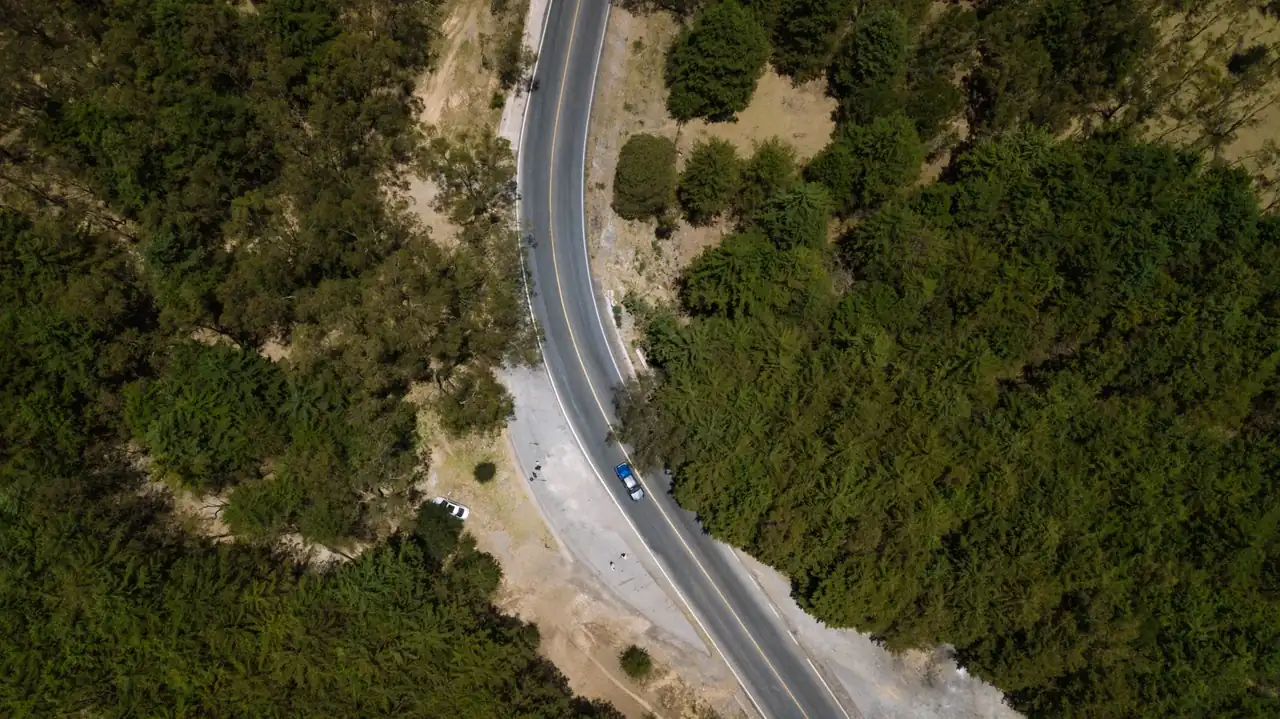
The BMW Tangamanga International Marathon returns to San Luis Potosí with the solidity of a classic: a race born in 1983, recognized for its mix of city, parks, and a gentle elevation profile in some stretches, demanding in others. The 2026 edition is set for June 28 and will bring together 5K, 10K, 21K, and marathon distances, with staggered starts from early morning.
This is not a new race or a minor date on the Mexican calendar. Its historical weight, its AIMS event label, and its link with Tangamanga Park have made it a reference for runners looking for an urban experience with open air, abundant greenery, and a course that demands good pace management. The marathon and half marathon are part of a day that also leaves room for mass participation, which explains its ability to attract very different kinds of runners.
A race with deep roots in San Luis Potosí
The story of the event began in 1983, when the city wanted to celebrate its identity with a long-distance race that connected streets, parks, and community. Over time, that initial idea became a race with its own name, international presence, and a continuity that is not common in Latin American running. The race has gone through different stages, but it has maintained a recognizable essence: running in an environment shaped by expansive scenery and by the energy of a city that has made the event its own.
In its early years, the start and finish were linked to Parque Tangamanga No. 1, one of the country’s best-known urban lungs. Later, the route was redesigned to gain visibility and a more civic atmosphere, with start and finish in the historic center. That change reinforced the race’s popular dimension and made it more attractive to those who value passing through areas with crowds, buildings, and a fuller reading of the city. In a marathon, that detail matters: it is not just the kilometers that count, but the atmosphere too.
The name Tangamanga refers to Huastec heritage and connects with the local imagination. In journalistic terms, that explains why this race is understood not only as a sporting event, but also as a piece of urban identity. San Luis Potosí does not simply host the race; the race tells its story. And that relationship, repeated over decades, helps explain its longevity.
What the course offers and why the profile matters
The route combines city stretches and greener areas, with Tangamanga Park as a visual and emotional reference. Competitors and organizers describe a course that alternates flat sections with more undulating ones, something that requires running with a certain amount of intelligence. This is not a route to simply go along with from the first kilometer. Altitude also matters: San Luis Potosí sits at around 1,894 meters above sea level, a figure that affects breathing and can make the effort feel more intense than expected.
That geographic context gives meaning to much of the race’s appeal. The runner is not only facing the clock; they are also negotiating drier air and the effect of moderate altitude, which punishes those who start too fast. Pace management becomes especially important in the marathon, where any excess in the first half can take its toll long before the finish. In the half marathon, the margin is a little greater, but the lesson is the same: caution usually pays better than exuberance.
The presence of Lago Mayor and the park’s vegetation provide an image that is unusual in a large Mexican city. There are areas where the urban asphalt gives way to a more open setting, almost domestic in scale, where the smell of pine and eucalyptus breaks with the typical harshness of a major mass start. That contrast between avenue and park is one of the features that sets the race apart from other more predictable marathons.
Distances, schedules, and practical details for the 2026 edition
The 2026 edition will take place on Sunday, June 28. The results information published by Sportmaniacs places the 21K start at 06:00, while the 5K, 10K, and 42K races begin at 06:30. That early time slot responds both to the expected effort and to the local climate, a factor that requires activity to be brought forward to avoid hotter hours.
The official distances identified for this edition are 5 kilometers, 10 kilometers, half marathon, and marathon. The offering is broad, but it is clearly organized around the heart of the event: the 21K and the 42K. For an organizer, that makes it possible to keep the day compact; for the runner, it means being able to choose between a first approach, an intermediate distance, or the full challenge. The logic is simple and effective, without unnecessary ornamentation.
The historical participation figure is also relevant. One reference for the race records 3,008 finishers, a number that speaks of a race with real substance, capable of sustaining itself beyond promotional storytelling. In marathons of this kind, the number of finishers reveals a lot: not just the scale of the event, but also its ability to keep runners coming back and remain loyal year after year.
An AIMS race with international recognition
The BMW Tangamanga International Marathon is listed as an AIMS member, the international association that brings together recognized marathons and distance races worldwide. Membership does not automatically make a race better or worse, but it does add a layer of prestige and oversight. For many runners, the AIMS label is a useful sign of stability, documented course, and continuity in the calendar.
Belonging to that circuit also helps explain its reach beyond Mexico. Although the race is deeply rooted in San Luis Potosí, its echo has crossed borders. In races with this kind of history, the appeal depends not only on the sponsor’s brand or the novelty of the route, but on the weight accumulated through the years, the editions, and the runners who return. Reputation in running is built slowly, almost like a road paved section by section.
The BMW brand is part of the race’s visible name, but the sporting value is not reduced to a commercial partnership. The event retains its own identity, sustained by its history and by a calendar that has endured cancellations and adjustments, including the 2021 pause. Continuity is, in this case, a journalistic argument in itself.
Why its course appeals to distance runners
The Tangamanga marathon attracts different profiles because it does not demand a single interpretation. Some are interested in the moderate altitude, which adds a layer of difficulty without pushing the body to the extreme of a major mountain pass. Others are drawn to the combination of city and park, uncommon in a single event. And there are those who choose it precisely for its historical character, because running a veteran race has something of a conversation with time.
The mix of urban terrain and tree-lined areas also affects the mental perception of effort. The runner moves from the straightness of an avenue to the shade of a park, from the harshness of concrete to the visual relief of green. That back-and-forth, almost cinematic, can help sustain motivation when the long kilometers arrive. The head runs as much as the legs, and Tangamanga knows that well.
In addition, the race offers a very useful structure for anyone who is not just looking to finish, but to compare sensations across distances. The 10K serves as a checkpoint, the 21K allows real endurance to be measured, and the 42K requires a complete strategy. Together, the event functions as a small long-distance school in which each runner finds a different level of challenge.
What to see before and after the race
San Luis Potosí is not just a backdrop. The urban setting, the historic center, and the proximity of natural spaces broaden the interest of the visit and strengthen the travel experience. The runner arrives in a city with a recognizable mix of contemporary rhythm and colonial heritage, and that adds a special texture to the competition weekend. Not everything is measured in times; it is also measured in the mark left by the place.
Among the most cited references around the race are places such as Ojo de Agua Trail, Media Luna, Tamul Waterfall, and the Sótano de las Golondrinas, as well as climbing areas like Tampiqueno Boulder. They are not part of the official course, but they are part of the region’s extended landscape. For a traveling runner, that surrounding context matters: it turns a race into a visit with context, not just a stopwatch appointment.
Tangamanga Park, with its scale as a large urban park, functions as the event’s most enduring image. The race benefits from that association because the park offers visual relief and, at the same time, creates a sense of openness that few urban races can provide. The runner does not feel like they are turning through the same set; they perceive transitions, changes in light, and a certain spatial depth that makes the effort easier to bear.
The 2026 edition in the international running calendar
Placed at the end of June, the race occupies a stretch of the calendar in which many northern hemisphere marathons have already given way to the heat. That increases the importance of early starts and environmental management. June 28, 2026 is not just any date: it falls at a time of year when preparation and hydration carry more weight than usual, especially in the longer distances.
In sporting terms, the race combines several elements that rarely appear together so naturally: history, altitude, an urban park, a classic distance, and a loyal community. That combination explains why it remains a reference for local and foreign runners. It does not need gimmicks to justify itself. Its value lies in persistence, in the memory of the routes, and in the way each edition rewrites the same map with different faces.
Its ability to adapt without losing character also matters. The course redesign in 1993, continuity under different circumstances, and the presence of multiple distances are signs of an organization that has known how to move some pieces without breaking the overall design. Lasting races do not survive by inertia; they survive because they find a way to keep being recognizable.
A Mexican classic that still breathes the future
The BMW Tangamanga International Marathon preserves something valuable in an increasingly crowded calendar: identity. It does not present itself as a noisy event or a seasonal product, but as a race with memory, a route with scenery, and a date that many runners reserve for its blend of challenge and uniqueness. Its strength comes from that rare combination of tradition and a contemporary reading of running.
For the informed fan, the 2026 edition offers a clear snapshot: San Luis Potosí, June 28, four distances, a very early start, and a course with personality. For the runner, that information translates into something more concrete: an opportunity to run in a city that has made long-distance running a form of storytelling. And in the long run, where a marathon is truly decided, few stories weigh as much as those that have learned how to last.
The race still rests on the same idea that gave it birth: running not only as exercise, but as a way of reading a place. In Tangamanga, that reading runs through the park, the streets, the altitude, and endurance. That combination explains its staying power and also its magnetism, still intact after more than four decades of history.



How to prevent thigh chafing: causes and real solutions

Women’s running windbreakers: seven jackets and how to choose

Do more workouts get rid of soreness? A guide for runners

Jaén Half Marathon 2026: Record 3,800 Runners Registered

Men’s short running tights: how to choose the right pair

World Triathlon confirms data breach involving medical data

Izan Edo targets podium at Miyazaki World Cup

María Pérez ranks ninth in World Athletics’ 2026 top ten

Dos Santos, Duplantis and Sawe: World Athlete of the Year finalists

San Silvestre Vallecana 2026: 42,000 places, prices and start times

 Races4 months ago
Valencia Half Marathon 2027: date and registration

 Races4 months ago
Valencia Marathon 2026: entry, ballot and course

 Reviews and Comparisons4 months ago
Asics Gel-Roadmiles 3 for men: review and current price

 Reviews and Comparisons4 months ago
Asics Gel Sonoma 8 Gore-Tex: complete analysis for trail and rain

 Sneakers4 months ago
Saucony Endorphin Pro 4: full review and verdict

 News5 months ago
Strava API 2026: what changes for clubs, challenges and runner apps?

 Reviews and Comparisons5 months ago
Nike Alphafly 3: opinions, sensations, and real key points

 Reviews and Comparisons4 months ago
Under Armour running shoes review 2025-2026: models and key features

 Sports Equipment4 months ago
Shoe sizes in cm: a clear guide to getting the right fit for your footwear

 Sneakers3 months ago
Skechers GO RUN Consistent 2.0 analysis: comfort and limits

 News5 months ago
Valencia Marathon 2026 route: key tips to train and run better

 Sneakers4 months ago
Adidas Adizero Boston 13 for men: review and verdict