Races
Torrejón de Ardoz Constitution Race 2025: date, route, and key details
The December 6 race will bring together thousands of runners with age-based circuits, school awards, and a festive atmosphere.

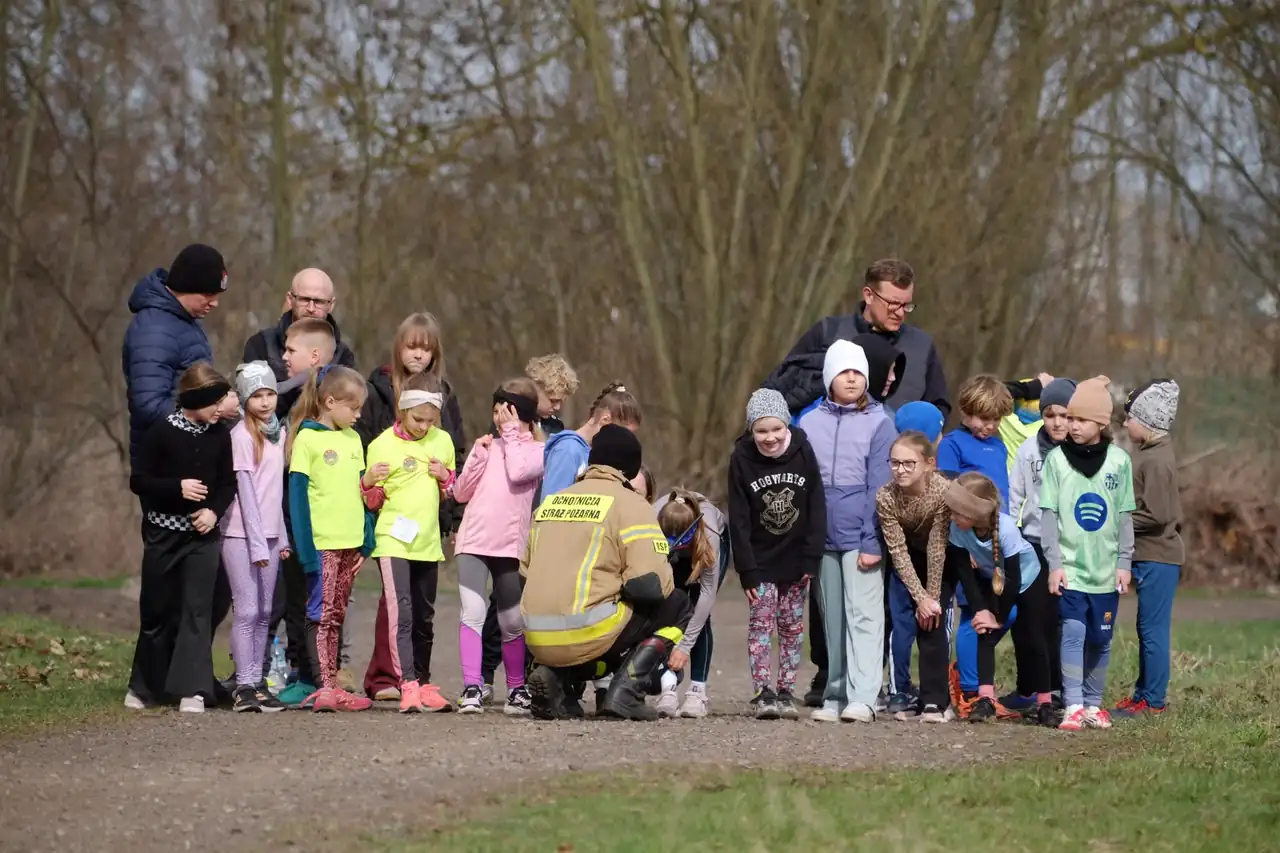
The Torrejón de Ardoz Constitution Race will once again turn December 6, 2025 into a day of asphalt, schools, families, and neighborhood atmosphere with a big-city vocation. The event will be held between the Parque de Ocio and Parque de los Fresnos, with circuits adapted to each age group and logistics that combine competition, popular participation, and a strong school component.
The 38th edition arrives under the slogan Wear a medal full of values, a phrase that neatly sums up the spirit of the event: more than a conventional race, it is a civic and sporting occasion that brings together thousands of people every year. For adult runners, the practical reference point is the final stretch of the calendar; for younger categories, the appeal remains the blend of play, belonging, and shared effort.
An event that is already part of Torrejón’s social calendar
Torrejón de Ardoz has spent decades using this race as a way to celebrate Constitution Day with sneakers, bib numbers, and medals. In 2025, it reaches its 38th edition, a figure that gives historical weight to a race that has managed to stay alive because it does not depend solely on the clock. In its DNA, grassroots sport, family participation, and the showcase of a city that has made sport part of its identity coexist.
This year’s edition also coincides with Torrejón being named European City of Sport 2026, a context that adds institutional visibility and explains the choice of the commemorative T-shirt and the special medal for the top finishers. The race thus works as a family portrait of the city: children, teachers, clubs, popular runners, and neighbors who come out into the street to cheer.
The appeal of a race like this is not only in the route. It lies in the rhythm of the morning, in the noise of the school groups, in the color of the T-shirts, and in that very Spanish mix of competition and celebration that turns an urban race into a small local event. In Torrejón, Constitution Day is no longer understood without that sporting pulse.
Date, schedule, and main setting of the race
The celebration is set for December 6, 2025, with activity running from 09:00 to 14:00. The start and the different routes will be concentrated around Parque de Ocio, where different circuits will be set up depending on the distance of each category. This arrangement makes the morning easier to organize and separates the children’s races from the longer distances without breaking the shared atmosphere.
The choice of venue is no coincidence. A large park makes turns, access, and the presence of companions easier, and it also reduces the impact of having different categories coexist. For a race with so many ages, from pre-benjamin to veterans, logistics are almost as important as the bib number. Here, the organizers are aiming precisely for that: for each group to have its own space without the whole event losing coherence.
The available information also places the event within a very clear window for registration and bib collection. In competitions of this kind, success depends a great deal on runners arriving with everything sorted out; that is why deadlines, collection points, and schedules become an essential part of the race story, almost on the same level as the results or the prizes.
Age-based routes and a race designed for all profiles
The design of the day confirms the event’s broad character. Categories range from pre-benjamin to junior and veterans, with distances adapted to each age bracket. The most concrete reference places the youngest runners on a 400-meter course, while the oldest runners will tackle 5,000 meters. Between those two extremes, a range of distances allows the effort to be adjusted to each participant’s actual level.
That approach has both sporting and educational value. In the same morning, you can see a child learning how to line up at the start and an adult runner managing their pace over a short but demanding distance. In that sense, the race does not separate generations: it brings them into conversation on the same circuit. The result is a mosaic of paces, ages, and motivations that explains much of its staying power.
The categories with rankings include Junior, Promesa, Senior, and Veteran, for both men and women, as well as the usual school divisions. The event is not organized simply as a sequence of races, but as a small urban championship where technical skill, school excitement, and local pride coexist. For spectators, the effect is clear: short starts, intense efforts, and finishes that can be read at a glance, like chapters of the same story.
Registration, deadlines, and places to sign up
Registration can be completed at the Ciudad Deportiva Joaquín Blume and at the Juncal and London Sports Complexes, during public service hours. The general deadline remains open until December 3 at 12:00 p.m., while students from schools and secondary schools may register through their own centers until December 1 at 12:00 p.m.
That dual registration system reveals the school-based nature of the race. It is not only an open public call; it is also an extension of the work that educational centers do around sport and collective participation. The presence of schools and institutes helps fill the streets with recognizable groups, shared T-shirts, and an energy that is usually the most visible hallmark of this race.
The 2025 edition also includes a commemorative T-shirt for all participants, a detail that reinforces the sense of memory and belonging. It is not merely a promotional giveaway: in popular races of this kind, the T-shirt functions as a kind of textile diploma, physical proof that you were there, that you were part of the morning. For many runners, that symbolic value weighs almost as much as the final placing.
Prizes, medals, and the weight of the school component
One of the features that most distinguishes this race from other popular events in the area is its system of prizes by category and by educational center. The top three finishers in each category will receive a special medal linked to Torrejón, European City of Sport 2026, while in pre-benjamin all boys and girls will receive a participation medal, since it is a non-competitive category. The message is clear: compete, yes, but without losing sight of the educational value of the event.
In the school section, the centers with the highest participation will receive cash prizes. For Pre-benjamin, Benjamín, and Alevín, the amounts range from 700 to 100 euros, depending on the center’s ranking. In Infantil, Cadete, Juvenil, and Junior, the prizes are 200, 125, and 75 euros for the top three centers. This structure helps encourage the involvement of schools and institutes, which are a key part of the day’s success.
There will also be a Christmas hamper raffle at the end of the awards ceremonies for certain categories, an element that adds a festive tone without undermining the sporting core. This mix of medals, school incentives, and symbolic details turns the race into a broader civic celebration than a simple weekend competition.
Free entry, fee for non-residents, and entry cap
The 2025 edition maintains a common formula for this kind of local event: registration is free for residents registered in Torrejón de Ardoz, while for non-residents the cost is 4 euros in the Junior, Promesas, Senior, and Veterans categories. In these latter categories, a limit of 700 athletes is also set, a figure that helps manage the start and avoid congestion that would complicate the normal running of the race.
In popular races, price is not everything, but it does make an important difference in participation. The fact that the municipality supports free entry for its residents sends a clear message about its commitment to sport as a public service, while the symbolic fee for external participants serves as both a filter and a contribution toward covering organization costs. It is a familiar formula, but here it is fine-tuned for a high-volume event.
Chip collection, for the paid categories, can be done on December 5 at the Ciudad Deportiva Joaquín Blume, between 5:00 p.m. and 8:00 p.m., or on race day itself, one hour before the start, at the starting line, by presenting the bib number. In a race with so much movement, that operational detail is crucial: it reduces queues, avoids confusion, and allows the morning to begin with less friction.
What this race conveys within Madrid’s popular running calendar
The Torrejón Constitution Race does not aim to be the longest or the most technical. Its strength lies elsewhere: in its ability to bring together very different profiles under the same sporting excuse. That versatility makes it a particularly meaningful event for the local fabric, because it speaks to schools, families, and runners who simply want a well-organized morning to move and share public space.
On the map of Madrid’s popular races, events of this kind perform a function that sometimes falls outside the media spotlight. They do not generate headlines with astronomical times or huge cash prizes, but they sustain the foundation of urban running. They are the fabric that gives continuity to mass sport and the first step for many children who line up at a start line for the very first time.
They also help explain how running in Spain has changed. It is no longer just about running faster or farther, but about taking part in events that blend local identity, education, health, and coexistence. In Torrejón, the race is almost a municipal choreography: schools, families, clubs, and the administration dance to the same beat for a few hours and leave behind a trail of photos, medals, and memories.
The value of a race that combines memory, sport, and city
The XXXVIII edition arrives with a very clear symbolic charge. It commemorates the Constitution, but also a way of understanding sport as a meeting point. The race has survived changes in the calendar, new sports trends, and the fragmentation of leisure options because it maintains a solid base: a clear route, accessible categories, and a recognizable identity for years now.
Ultimately, that is the key to its continuity. There are races sold on spectacle and others sustained by trust. Torrejón’s belongs to the second family. Runners know what they will find: a well-organized morning, plenty of participation, a friendly atmosphere, and a municipality that has made this date a small civic ritual. There is no need to embellish it further.
With the 2025 edition, the event once again takes a central place in the early December holiday period. For those who run, those who cheer, and those who simply watch the human tide pass by from the sidewalk, the race leaves a very specific image: that of a city that gets up early, pins on a bib number, and turns an institutional date into a vibrant sporting scene.



How to prevent thigh chafing: causes and real solutions

Women’s running windbreakers: seven jackets and how to choose

Do more workouts get rid of soreness? A guide for runners

Jaén Half Marathon 2026: Record 3,800 Runners Registered

Men’s short running tights: how to choose the right pair

World Triathlon confirms data breach involving medical data

Izan Edo targets podium at Miyazaki World Cup

María Pérez ranks ninth in World Athletics’ 2026 top ten

Dos Santos, Duplantis and Sawe: World Athlete of the Year finalists

San Silvestre Vallecana 2026: 42,000 places, prices and start times

 Races3 months ago
Valencia Half Marathon 2027: date and registration

 Races3 months ago
Valencia Marathon 2026: entry, ballot and course

 Reviews and Comparisons4 months ago
Asics Gel-Roadmiles 3 for men: review and current price

 Reviews and Comparisons4 months ago
Asics Gel Sonoma 8 Gore-Tex: complete analysis for trail and rain

 Sneakers3 months ago
Saucony Endorphin Pro 4: full review and verdict

 News5 months ago
Strava API 2026: what changes for clubs, challenges and runner apps?

 Reviews and Comparisons5 months ago
Nike Alphafly 3: opinions, sensations, and real key points

 Reviews and Comparisons4 months ago
Under Armour running shoes review 2025-2026: models and key features

 Sports Equipment4 months ago
Shoe sizes in cm: a clear guide to getting the right fit for your footwear

 Sneakers3 months ago
Skechers GO RUN Consistent 2.0 analysis: comfort and limits

 News5 months ago
Valencia Marathon 2026 route: key tips to train and run better

 Sneakers4 months ago
Adidas Adizero Boston 13 for men: review and verdict