Races
Trail Calamochos 2026: distances, route, and schedules
Casavieja brings together four mountain races with a tough route, restored trails, and a start in the town center.

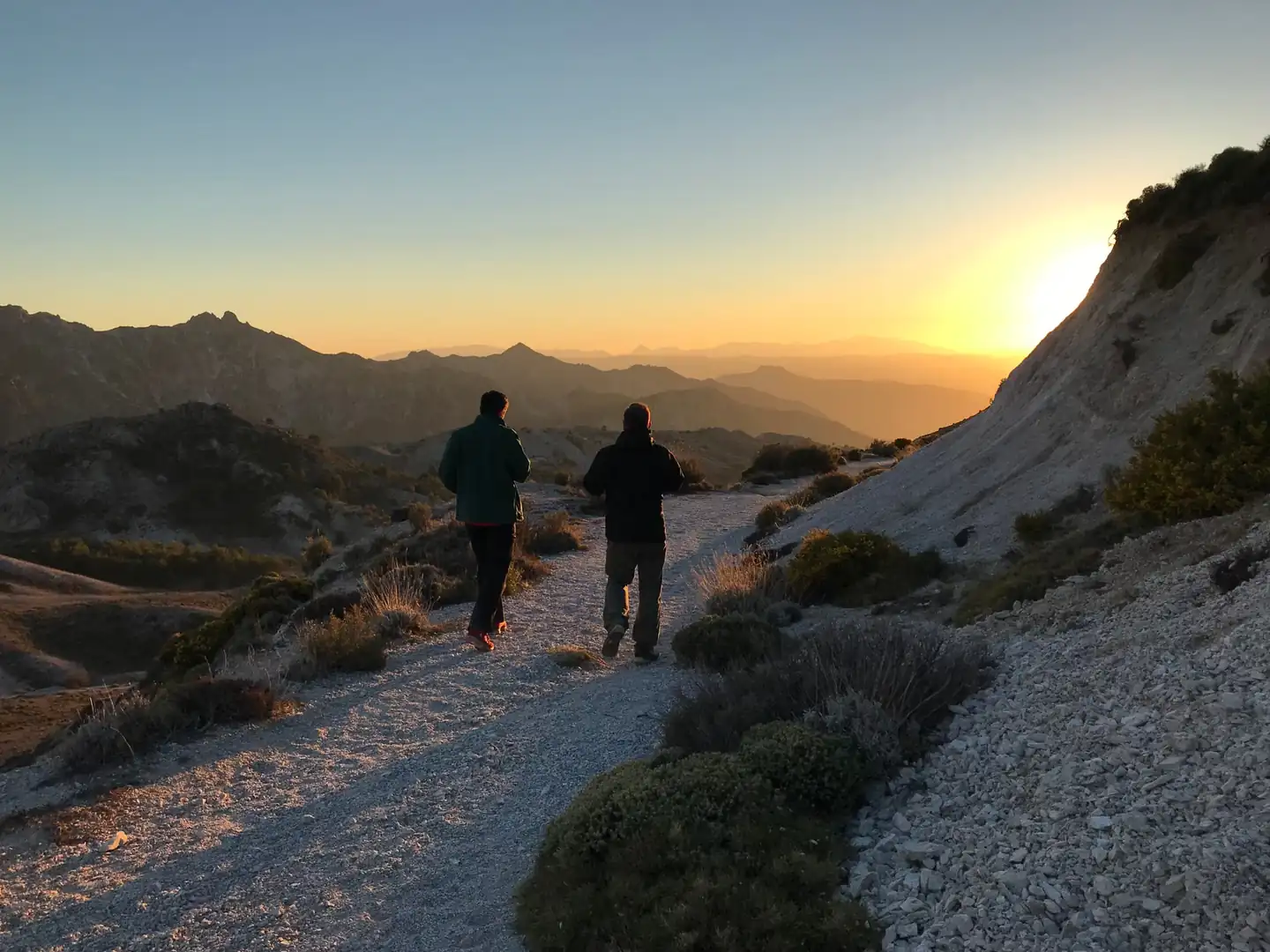
Trail Calamochos has established itself in Casavieja as one of the most unique events on the mountain racing calendar in the central Iberian Peninsula. Born in 2017 and built on the recovery of old paths, the race combines sporting effort, mountain scenery, and background work that goes far beyond a simple run. The 2026 edition takes place on May 23 and once again brings together several formats in the same weekend, designed for different audiences, from the most demanding distance to the hiking march.
The core of the event is clear: to highlight the Casavieja mountains through sport, attract runners and companions, and showcase a landscape of trails, ridgelines, and pine forests that still retains the spirit of a classic, almost handcrafted route. The organizers place the start and finish in Plaza de San Bartolomé, a spot that gives the event a minimal urban identity before the course heads into pure mountain terrain.
A race born from the trails and from the work of the mountains
The history of the event explains much of its character. The trail did not emerge as an imported trend, but as a shared idea among mountain enthusiasts and those who had spent years caring for the area. That alliance between sporting drive and rural memory made it possible to recover old routes, goat paths, and tracks nearly erased by vegetation. In races like this, the course is not just about meters and elevation gain: it also tells the biography of the land.
Casavieja, in the province of Ávila, also provides a very recognizable setting for the mountain runner. The mountain range rises to high elevations, and the reference point of La Gamonosa, at 1,915 meters above sea level, stands as a symbol of that harsh, open horizon that so many races seek but few manage to offer with such character. The result is an event where physical demand coexists with a strong visual experience: slopes, pines, ridgelines, and descents that require you to manage your effort wisely.
The growth of the program followed a simple logic. The main race was strong, but not everyone looks for the same level of wear and tear. That is why intermediate and more accessible formats began to appear, until a weekend was built around more than one distance. Skyline, mountain half marathon, short trail, and hiking march form a coherent block, with very different profiles but united by the same idea of exploring the mountains with respect and sporting ambition.
The 2026 race formats and what each one offers
The 2026 edition includes four main formats. The most demanding is Skyline, with 33 kilometers and around 2,000 meters of positive elevation gain. It is the most technical and toughest face of the program, a route designed for those seeking a serious mountain challenge. Here, the terrain rules, and the race demands both endurance and a smart reading of effort, because altitude, long climbs, and ridge sections wear you down long before the final descent.
The mountain half marathon cuts the distance to 20 kilometers and accumulates about 1,050 meters of positive elevation gain. It is still a demanding race, but with a somewhat more manageable approach for those who want to venture into the mountains without facing the full punishment of the flagship distance. Its structure preserves much of the event’s character: trails, mountain sections, and a reading of the terrain that forces you to pace yourself.
The short trail and the hiking march share a 13-kilometer course and about 550 meters of positive elevation gain. The difference lies in the approach and pace: one format keeps the competitive trail component, while the march opens the door to participants who prefer to complete the route on foot. This dual use of the same itinerary is one of the race’s key strengths, because it broadens the audience without diluting the mountain identity of the event.
Overall, the program offers a very well-planned progression. The runner can choose between a long challenge, an intermediate distance, or a shorter and more accessible format; the hiker finds a mountain route with its own purpose; and Casavieja turns a Saturday in May into a day of sporting activity, local tourism, and social gathering.
Start, schedules, and bib pickup
The organizers set the start of the race for Saturday, May 23, 2026, starting at 8:30 a.m.. The choice of time is no small matter. In a May race, temperatures can change quickly, and as is often the case in inland mountain events, the middle hours of the day can be much harsher than the elevation gain itself. That is why the early start fits the logic of the terrain and the kind of effort the routes demand.
Bib pickup takes place in Plaza de San Bartolomé. It is scheduled for Friday, May 22, from 7:00 p.m. to 8:30 p.m. and also on Saturday, May 23, from 7:30 a.m. until 15 minutes before the start of each corresponding race. This window makes logistics easier for those arriving the day before and for those traveling on Saturday itself, a fairly common arrangement in mountain races that draw participants from various parts of the region and beyond.
The start and finish in the town center also have a practical side. They allow services to be concentrated, simplify access, and give the event visibility within the village. In this type of race, the logistical core makes the difference: less dispersion, more clarity for runners and companions, and a more recognizable experience for those following the race from the outside.
Course, elevation gain, and technical nature of the terrain
The Trail Calamochos route is not designed for pure speed or easy terrain. Its identity is built on a mountain that alternates compact trails, sustained climbs, ridge sections, and descents that demand attention. The reference to recovered old paths is not decorative; it explains why the course has that feel of a living route, a path brought back to life by the race and by those who keep it open.
The Skyline format perfectly summarizes the event’s philosophy. With its 33 kilometers and 2,000 meters of positive elevation gain, it requires a combination of endurance, running economy, and tolerance for prolonged effort. This is not a race for stable road-running paces, but one in which you must learn to move through the mountains patiently. Long climbs, exposed sections, and technical descents shape a race plan where heart-rate and leg management matter as much as physical fitness.
The mountain half marathon retains that character, but in a shorter dose. Seventy-five percent of the route runs along trails and tracks, with a middle section that concentrates the essence of the mountains. This mix makes the distance appealing to runners who already know trail running but still do not want or cannot face a major elevation challenge. The short trail, for its part, keeps enough difficulty so that the mountain does not disappear, albeit in a more accessible format suitable for more profiles.
In mountain races, the map matters, but the real terrain matters more. A narrow path changes the pace, a loose dirt climb reduces traction, and an open ridge may seem faster than it ultimately is. Trail Calamochos relies precisely on that variety, and that is why its route usually leaves a mark: it does not just add up kilometers, but genuine mountain sensations.
Gear, safety, and self-sufficiency
The Skyline format includes a self-sufficiency model, an increasingly common requirement in mountain races of some difficulty. That means runners must carry part of what they need to handle the effort on their own: hydration, nutrition, navigation items, and basic safety gear. In practice, the race is understood not only as moving forward, but also as the ability to complete the route without depending on every aid station.
The organizers require a charged mobile phone, route track, hydration containers, food, thermal blanket, whistle, and trail shoes. These are items based on reasonable safety criteria and place the race within the logic of modern trail running: the runner must be prepared for weather changes, minor incidents, or unforeseen circumstances typical of the mountains. The point is not to carry an unnecessary backpack, but to bring what allows you to face a demanding day with some margin.
In the other formats, aid stations and checkpoints become relatively more important, but the core issue is the same: the mountains require planning. In May, heat can also arrive without much warning, and that greatly affects how effort is perceived. In races with elevation gain, heat fatigue can weigh even more than the accumulated meters. Hydrating well, starting with appropriate gear, and respecting your true pace is not an ornamental recommendation; it is part of the sporting script.
An event that also drives tourism and local life
One of the less visible virtues of Trail Calamochos is that it does not function solely as a sporting event. From the beginning, the organizers have shaped it as a weekend capable of energizing accommodation, restaurants, and visitor presence in Casavieja. That local dimension matters because the mountains, when handled with care, can become a tool for revitalization without losing authenticity.
The race’s origin itself reveals that ambition. Recovering old paths, opening trails, and connecting sport with the village are not isolated gestures, but a way of giving use back to a landscape that preserves rural memory. In this case, trail running acts as both a showcase and an excuse to look at the mountains again. For runners, that translates into a more complete experience; for the village, into an event that brings activity and visibility.
There is also an emotional component that is hard to measure in numbers. Those who run through the mountains see more than elevation gain on a watch; they see paths that may have been closed for years, ravines, meadows, and hillsides that create a very specific image of the place. That connection between landscape and effort explains why certain races return year after year on so many runners’ calendars. Not because they are easy, precisely, but because they have the power to leave a memory.
What Trail Calamochos conveys to the mountain runner
The event’s appeal lies not only in its toughness, but in the balance between challenge and environment. Some races are remembered for speed and others for scenery. Trail Calamochos belongs to this second group, even though it does not give up its competitive side. Its value lies in forcing you to run attentively, to decide when to push and when to hold back, and to accept that the mountains do not negotiate with haste.
The variety of distances also broadens its sporting reach. An experienced runner may choose the Skyline distance as a spring form test; another may prefer the half marathon as an intermediate step; and a participant less used to steep climbs may find in the short trail a very serious gateway into the mountains. The race does not simplify the mountains, but it does organize the possibilities.
At its core, that is the trait that most sets it apart: it does not aim to be a generic race, but an experience tied to a very specific place. Casavieja is not an interchangeable backdrop. Its mountains, recovered trails, and relationship with the organizing club shape a race with its own personality, something the runner perceives from the first meters to the return into the town center.
Casavieja and the May edition, a now recognizable image on the calendar
Over the years, Trail Calamochos has gone from a local initiative to a recurring reference in trail running in Castile and León. The 2026 edition reinforces that position with a compact program, four well-defined formats, and an organization that preserves the original spirit of environmental recovery. The event maintains a very clear identity: mountain, trail, and effort on the same level.
On May 23, 2026, Casavieja will once again welcome runners and hikers on a date that already sounds familiar to many enthusiasts. The appeal of the race does not depend on gimmicks, but on something more solid: a well-worked mountain, routes with character, and a structure that allows each participant to find their distance. In an ever-expanding calendar, that coherence is worth as much as a big name on the poster.
That is why Trail Calamochos keeps growing without losing its roots. It is a mountain race, yes, but also a story about recovered paths, about a village opening itself to sport, and about a mountain range that still has the power to surprise. Whoever arrives in Casavieja is not looking only for a time; they are looking for a real day in the mountains, one that leaves the legs tired and the memory awake.



How to prevent thigh chafing: causes and real solutions

Women’s running windbreakers: seven jackets and how to choose

Do more workouts get rid of soreness? A guide for runners

Jaén Half Marathon 2026: Record 3,800 Runners Registered

Men’s short running tights: how to choose the right pair

World Triathlon confirms data breach involving medical data

Izan Edo targets podium at Miyazaki World Cup

María Pérez ranks ninth in World Athletics’ 2026 top ten

Dos Santos, Duplantis and Sawe: World Athlete of the Year finalists

San Silvestre Vallecana 2026: 42,000 places, prices and start times

 Races3 months ago
Valencia Half Marathon 2027: date and registration

 Races3 months ago
Valencia Marathon 2026: entry, ballot and course

 Reviews and Comparisons4 months ago
Asics Gel-Roadmiles 3 for men: review and current price

 Reviews and Comparisons4 months ago
Asics Gel Sonoma 8 Gore-Tex: complete analysis for trail and rain

 Sneakers3 months ago
Saucony Endorphin Pro 4: full review and verdict

 News5 months ago
Strava API 2026: what changes for clubs, challenges and runner apps?

 Reviews and Comparisons5 months ago
Nike Alphafly 3: opinions, sensations, and real key points

 Reviews and Comparisons4 months ago
Under Armour running shoes review 2025-2026: models and key features

 Sports Equipment4 months ago
Shoe sizes in cm: a clear guide to getting the right fit for your footwear

 Sneakers3 months ago
Skechers GO RUN Consistent 2.0 analysis: comfort and limits

 News5 months ago
Valencia Marathon 2026 route: key tips to train and run better

 Sneakers4 months ago
Adidas Adizero Boston 13 for men: review and verdict