Races
Trail Catllaràs: route, history and key details of a wild event
Technical mountain, demanding elevation gain, and a unique setting in La Pobla de Lillet sum up a now classic event in Berguedà.

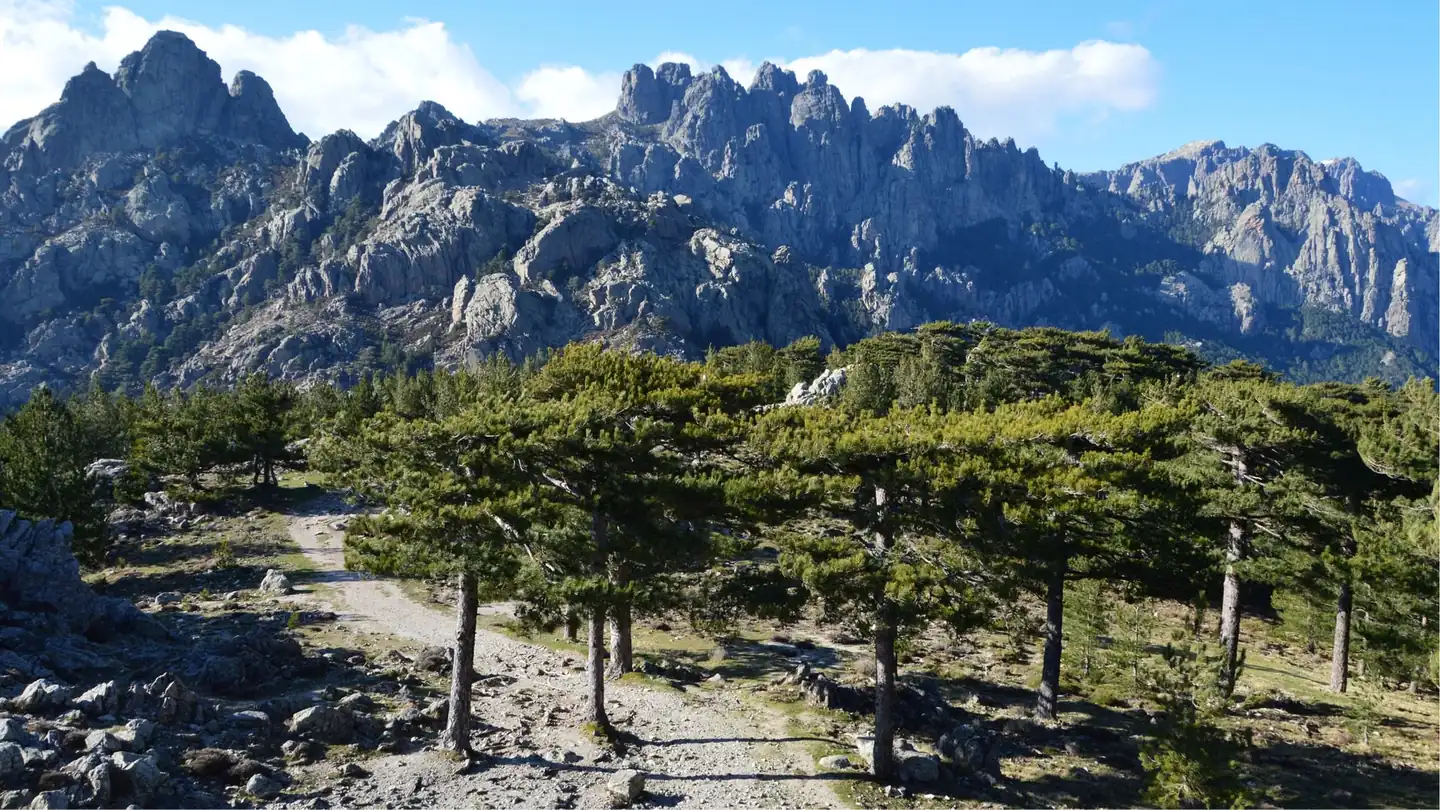
La Pobla de Lillet is once again marked on the trail running map every time the Serra del Catllaràs comes into play. This is not just a mountain race: it is an outing into the rough, wooded, and changing terrain of Berguedà, where the trails bite, the ridgelines force you to measure every footfall, and the landscape has that feel of an under-tamed corner that many runners seek when they leave the asphalt behind.
The Trail Catllaràs has established itself as one of the most recognizable events on the Catalan calendar thanks to a formula that blends sporting toughness, a local atmosphere, and a course with its own personality. The race revolves around La Pobla de Lillet and usually offers two main distances, marathon and half marathon, with a profile that truly punishes the legs and rewards both effort management and downhill technique.
A race born from the land and character of Berguedà
The value of the Trail Catllaràs lies not only in its numbers, but in the place where it takes place. The Serra del Catllaràs is an area of dense forests, cut slopes, and passages that alternate runnable stretches with others where the runner must stay fully focused. It is a setting that feels partly like a natural refuge and partly like a frontier, as if every bend in the trail reminded you that here the mountain rules more than the clock.
La Pobla de Lillet serves as both the operational base and the human backdrop of the event. From there starts a race that has sought, since its first editions, to connect sport and territory. That link with the surroundings explains much of its appeal: this is not an event that merely adds up kilometers, but an experience that shows Catllaràs at the rhythm of each stride, passing by emblematic places and with the feeling that the route is part of the place’s story.
The recent history of the event also matters, as it has managed to reinvent itself without losing its identity. Across different editions, routes have changed, distances have been adjusted, and organizational innovations have been introduced, but always with the same underlying idea: to preserve the mountain character of an event that has been gaining prestige among runners of very different profiles, from those looking for a technical marathon to those who prefer an intermediate distance with real demands.
The distances that have defined the race
The Trail Catllaràs has centered around two main routes. The marathon has hovered around 42 kilometers, with positive elevation gains that in some editions have exceeded 2,700 and 2,800 meters, a figure that places the race in a clearly demanding range even for experienced runners. The half marathon, meanwhile, has been around 21 or 23 kilometers, with about 1,400 positive meters, enough to break the rhythm of anyone who starts out too enthusiastically from La Pobla de Lillet.
The difference between the two distances is not just mathematical. The marathon fully enters the category of long, technical effort, with a course that can build fatigue from the first kilometers due to the combination of elevation gain, uneven terrain, and changes of pace. The half marathon, although more accessible, gives no respite: it begins with a sustained climb to the highest point on the route and then offers a final descent that usually decides positions and sensations.
In both cases, the course usually includes very recognizable landmarks in the area, such as the Xalet del Catllaràs, a point that concentrates much of the race’s identity. That kind of milestone gives the runner a clear reading of the effort: they know where they are, what they have climbed, and what still lies ahead. In trail running, that information matters as much as the race bib; sometimes more.
Course & elevation Edition 2023
Per-kilometre table
| Km | Elevation | Grade |
|---|---|---|
| 1 | 909 m | 5.8 % |
| 2 | 943 m | 3.4 % |
| 3 | 968 m | 2.5 % |
| 4 | 964 m | -0.4 % |
| 5 | 1,067 m | 10.3 % |
| 6 | 1,197 m | 13.0 % |
| 7 | 1,280 m | 8.3 % |
| 8 | 1,400 m | 12.0 % |
| 9 | 1,476 m | 7.6 % |
| 10 | 1,539 m | 6.4 % |
| 11 | 1,640 m | 10.1 % |
| 12 | 1,509 m | -13.1 % |
| 13 | 1,406 m | -10.3 % |
| 14 | 1,305 m | -10.2 % |
| 15 | 1,267 m | -3.8 % |
| 16 | 1,303 m | 3.6 % |
| 17 | 1,196 m | -10.8 % |
| 18 | 1,291 m | 9.6 % |
| 19 | 1,416 m | 12.4 % |
| 20 | 1,420 m | 0.5 % |
| 21 | 1,324 m | -9.6 % |
| 22 | 1,316 m | -0.9 % |
| 23 | 1,286 m | -2.9 % |
| 24 | 1,296 m | 0.9 % |
| 25 | 1,234 m | -6.2 % |
| 26 | 1,201 m | -3.4 % |
| 27 | 1,247 m | 4.6 % |
| 28 | 1,292 m | 4.5 % |
| 29 | 1,295 m | 0.3 % |
| 30 | 1,184 m | -11.2 % |
| 31 | 1,116 m | -6.8 % |
| 32 | 1,035 m | -8.1 % |
| 33 | 938 m | -9.6 % |
| 34 | 901 m | -3.7 % |
| 35 | 873 m | -2.8 % |
| 36 | 854 m | -1.9 % |
| 37 | 941 m | 8.7 % |
| 38 | 1,044 m | 10.3 % |
| 39 | 1,117 m | 7.3 % |
| 40 | 1,044 m | -7.3 % |
| 41 | 906 m | -13.7 % |
| 42 | 852 m | -5.4 % |
| 43 | 852 m | 0.1 % |
Plan your pace on this course →
Route source: OpenRunner
A technical profile that forces you to run smart
The toughness of Catllaràs does not come from great altitude, but from the way the mountain strings efforts together. Narrow trails, ridgelines, and stretches of closed forest force runners to alternate traction, balance, and terrain reading. There is hardly any room for a steady pace, and that turns the race into a test of skill. Anyone who insists on racing it like a road race usually pays the price in the second half.
Technique matters because the terrain changes easily. There are sections where you can run freely and others where it is better to shorten your stride, conserve energy, and let the poles, if used, do their part on the steeper grades. On the descents, attention must be multiplied: loose rock, roots, tight turns, and moisture in some sections can completely change the running feel.
That is why the Trail Catllaràs usually rewards complete runners, not just the strongest ones. You need engine power to climb, but also calmness not to empty yourself too early and skill to descend without losing too much time. That combination explains why its results often show tight gaps in some sections and wider margins in others, especially when heat or humidity make the course even tougher.
The marathon: Catllaràs’s queen distance
The Trail Catllaràs marathon is an endurance race with a mountain accent. Its 42 kilometers and more than 2,800 meters of positive elevation place it in a demanding bracket even within Catalan trail running. It is not enough to arrive well trained; you need to know how to distribute your efforts, when to eat, when to back off, and at what point to accept that the race will be decided more by consistency than by bursts of speed.
The start usually concentrates much of the competitive tension, with the favorites trying to get into position early while the pack looks for space in the opening sections. Then comes the most recognizable part of Catllaràs: a succession of trails and climbs that force you to manage every effort as if it were a water reserve in summer. The runner who understands the mountain, more than the one who challenges it, usually comes out better.
In recent editions, the marathon has produced reference times that help explain its toughness. Marc Pinsach won in 4h14:13, while Ester Ricart took the women’s race in 6h31:24 on a day when the elevation gain and technical profile made the difference. A result like that is not interpreted only by average speed; it speaks of a race where every climb weighs heavily and every descent leaves its mark on the quadriceps like a stone in your shoe.
The half marathon: intensity without losing the mountain feel
The shorter distance of the event is not a softened version, but another reading of the same territory. The Catllaràs half marathon usually packs about 1,400 positive meters into its first 16 kilometers, a fact that is enough to show we are not dealing with a transition race. The first major goal is usually to reach the highest point on the route, from where a more favorable stretch to the finish begins.
That design turns the race into an exercise in control. The initial climb quickly filters out those who start too hard, and the final descent opens the door to changes of pace, attacks, and comebacks. For the public, it is also a rewarding distance: it allows spectators to follow runners at several points and see how the standings change as the mountain does its work.
Recent winning times in this distance show a high level and a very lively race. Pep Mirabet posted 2h10:18 in one edition, and Alba Villanova stood out with 2h47:04 in the women’s category. In another season, Josep Miret won in 2h08:36 and Leire Fernández did so in 2h35:43. These are marks that reflect a fast course on favorable sections, but never an easy one, because the initial elevation gain imposes a clear toll.
The surroundings: forests, ridgelines, and a chalet that is already part of the imagination
If there is one element that sets the Trail Catllaràs apart from other mountain races, it is the mix of landscape and local memory. The Serra del Catllaràs does not present itself as a clean, perfect postcard; it appears as a lived-in territory, with lush forests, beech woods and oak groves, hidden trails, and a sense of relative isolation that fits the trail running logic very well. It is the kind of place where silence weighs as much as elevation gain.
Among the points often associated with the route is the Xalet del Catllaràs, a distinctive building linked to the Modernist imagination and to the figure of Antoni Gaudí. Its presence adds a cultural layer to the race, as if the mountain demanded not only legs, but also a more attentive gaze. In events like this, runners do not just cross a course; they cross a geography with history.
That combination of nature and heritage helps explain the event’s magnetism. Those who take part remember not only the finishing time or their position in the standings. They also remember the humidity in the forest, the effort on the climbs, and the exact moment when the view opens from a high point and Catllaràs seems to stretch out like a green, earthy wave beneath their feet.
Race atmosphere and the role of the public
The Trail Catllaràs has always fostered a close atmosphere, almost like a big-town festival day. Participation usually reaches the hundreds of runners, with numbers close to 300 registered in some editions, creating a lively atmosphere without tipping into overcrowding. That scale allows the event to keep a human dimension, with families, volunteers, and spectators present at various points along the course.
The festive character does not remove the competitive demands. On the contrary, the mix of excitement at the start, support on visible sections, and tension at the finish creates a very recognizable day for any trail enthusiast. Some races seem designed for television, while others, like this one, seem made for those who truly know the smell of wet earth and the sound of shoes on singletrack.
The presence of different runner profiles also reinforces the event’s identity. In the marathon, those seeking a serious mountain challenge predominate, while the half marathon mixes faster runners with others coming to trail running for the first time in a format that is already respectable. That variety gives the whole event a special richness and turns the race into a kind of snapshot of popular trail running in Catalonia.
Registrations, route changes, and organizational evolution
One of the most interesting features of the Trail Catllaràs has been its ability to adapt. In different seasons, renewed routes have been announced compared to previous years, something common in mountain races that depend on the condition of the terrain, permits, and the desire to showcase different sides of the same environment. Changing a section in trail running is not a whim; often it is a way of keeping the race alive without distorting it.
There have also been significant organizational changes. The race came to be managed by a group of residents from La Pobla de Lillet with external support, maintaining collaboration with well-known local structures. That kind of handover is often decisive in local events: it allows the emotional foundation of the race to be preserved while also refining details that improve the experience for runners and companions alike.
Registrations and pre-race announcements have continued to build interest in the event, to the point that the race has become part of conversations about the national trail calendar. It is not a giant event, nor does it seek to be one. Its strength lies elsewhere: in the balance between sporting challenge, authenticity, and a landscape that needs no embellishment to command respect.
Why it still attracts attention within the trail calendar
The Trail Catllaràs stands out because it brings together three ingredients that rarely align so well. It has a demanding course, a setting with personality, and an organization that has managed to preserve its local essence without giving up on growing its reach. In a scene saturated with races that look too similar to one another, that combination works like a signature.
Moreover, the event fits very well with the evolution of modern trail running. More and more runners are looking for experiences that are not limited to adding kilometers, but instead offer elevation gain, technique, landscape, and a real narrative. Catllaràs answers that demand with a race where effort is felt in the legs, but also understood through the territory. That makes it more memorable.
The race also illustrates a trait increasingly valued in Spanish trail running: the identity of place. Not every event needs a major international headline to matter. Some build their prestige from the ground up, through course, continuity, and character. The Trail Catllaràs belongs to that category: an event that is defined not only by the podiums, but by everything that happens between the start and the finish, on a mountain that leaves a mark without needing to raise its voice.
A distinctive name within Catalan mountain running
On the Catalan trail map, Catllaràs occupies a singular space. It does not compete in altitude or media fame with the great Alpine peaks; it competes in authenticity. And on that terrain, the La Pobla de Lillet race has carved out a solid place for itself. Each edition renews the relationship between runner and mountain, between suffering and enjoyment, between competitiveness and landscape.
That is why interest in this race goes beyond the result of any given day. What remains is the image of a course that is both hard and beautiful, the kind of event that forces you to stay alert from the very first meter and rewards those who arrive with patience, endurance, and respect for the terrain. In trail running, few combinations are as valuable as that.
The Trail Catllaràs remains, in essence, a celebration of the runner who seeks real mountains. Not polished mountains or easy circuits, but terrain that forces you to negotiate elevation, read the ground, and accept that beauty can also come with mud, heat, humidity, or empty legs. Therein lies its strength, and also the reason it continues to hold a prominent place in the conversation about mountain races in Catalonia.



How to prevent thigh chafing: causes and real solutions

Women’s running windbreakers: seven jackets and how to choose

Do more workouts get rid of soreness? A guide for runners

Jaén Half Marathon 2026: Record 3,800 Runners Registered

Men’s short running tights: how to choose the right pair

World Triathlon confirms data breach involving medical data

Izan Edo targets podium at Miyazaki World Cup

María Pérez ranks ninth in World Athletics’ 2026 top ten

Dos Santos, Duplantis and Sawe: World Athlete of the Year finalists

San Silvestre Vallecana 2026: 42,000 places, prices and start times

 Races3 months ago
Valencia Half Marathon 2027: date and registration

 Races3 months ago
Valencia Marathon 2026: entry, ballot and course

 Reviews and Comparisons4 months ago
Asics Gel-Roadmiles 3 for men: review and current price

 Reviews and Comparisons4 months ago
Asics Gel Sonoma 8 Gore-Tex: complete analysis for trail and rain

 Sneakers3 months ago
Saucony Endorphin Pro 4: full review and verdict

 News5 months ago
Strava API 2026: what changes for clubs, challenges and runner apps?

 Reviews and Comparisons5 months ago
Nike Alphafly 3: opinions, sensations, and real key points

 Reviews and Comparisons4 months ago
Under Armour running shoes review 2025-2026: models and key features

 Sports Equipment4 months ago
Shoe sizes in cm: a clear guide to getting the right fit for your footwear

 Sneakers3 months ago
Skechers GO RUN Consistent 2.0 analysis: comfort and limits

 News5 months ago
Valencia Marathon 2026 route: key tips to train and run better

 Sneakers4 months ago
Adidas Adizero Boston 13 for men: review and verdict