Races
Trail Montán 2026: route, schedules and registration
Montán combines mountain scenery, hiking, and a demanding route, with start times, prices, and rules already set for 2026.

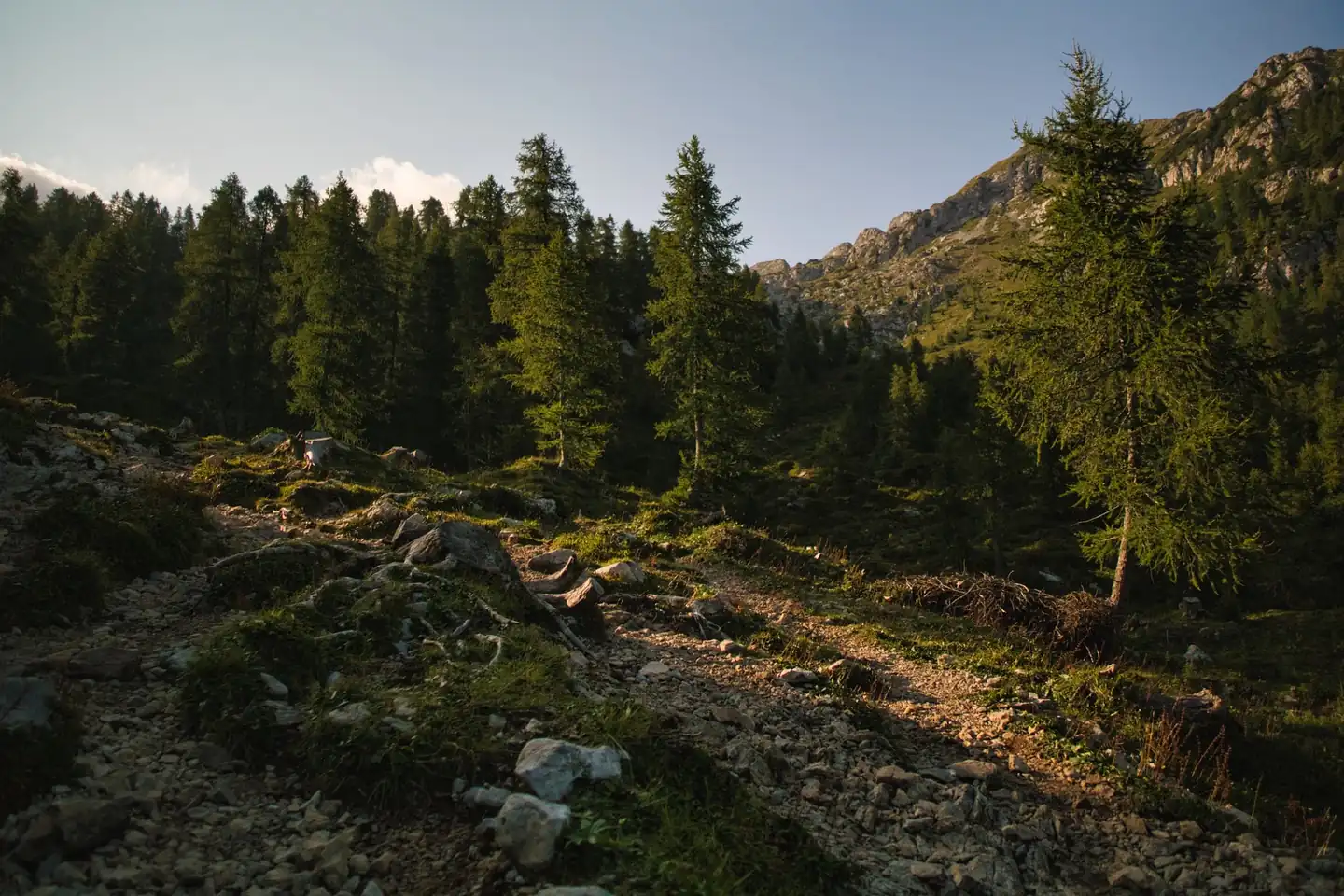
Montán is back on the Valencian trail map with a ninth edition that combines mountains, forest, and a format designed for very different profiles. On September 6, 2026, the Castellón town will host a 34-kilometer long race, a 13-kilometer distance, and a hiking route over the same terrain, with staggered starts from the municipal swimming pool sports complex.
The main race arrives with 1,800 meters of positive elevation gain and is part of the UTMB international circuit with a 50K index, a detail that raises the sporting interest of the event. The shorter race adds 650 meters of elevation gain and serves as an entry point into mountain terrain, while the hike follows the same 13-kilometer route with a non-competitive approach. Together, the event has become a day in which experienced runners, first-timers, and hikers share the same dry, leafy landscape that is very characteristic of inland Mediterranean terrain.
A mountain course with three different interpretations
The main appeal lies in the variety of routes. The 2026 edition offers a 34-kilometer race, another over 13 kilometers, and a hiking route also of 13 kilometers. These are not merely variations on the same idea: each one answers to a different physical and mental demand, from prolonged endurance to the controlled effort of those looking to run on trails without entering the extreme toughness of ultratrail.
The long distance starts at 07:30, the 13-kilometer race at 08:00, and the hiking route at 08:10. That order is no coincidence. The organizers have designed a morning in which the mountain gradually fills with participants like overlapping layers, each group at its own pace. First the longest distance, while the air still holds the freshness of early morning; then the shorter block; and finally the hiking route, which shares the same setting but with a different sense of time and effort.
The terrain profile is clearly mountainous, with passage through trails, ravines, dry streambeds, roads, and tracks, and paved sections that do not exceed 15%. In runner’s terms, that means changing terrain, uneven footing, stretches where traction matters, and others where every stride must be managed as if the ground were a series of pieces fitted together by hand. It is the kind of race that forces you to read the terrain quickly and never trust any seemingly flat section.
The long distance defines the sporting character of the event
The 34 kilometers are the competitive emblem of the event. With 1,800 meters of positive elevation gain, the race fully enters the category of serious effort, the kind that separates ambition from improvisation. It is not an excessive figure in absolute terms, but it is enough to punish naive pacing, drain the legs on long climbs, and demand technical competence on the descents.
In addition, the course is registered in the international UTMB circuit in the 50K index category, which makes the event more than just a local race. For many participants, that adds extra competitive value: you are not only racing in an attractive setting, but also competing in an event recognized within the trail universe. In a season packed with events, that kind of credential carries more weight than any poster.
The 13-kilometer race should not be seen as a formality. With 650 meters of positive elevation, it demands climbing work, some technical skill, and fairly precise effort management if the day turns hot, as is often the case in September in inland Castellón. Its role is important because it broadens the range of participants and prevents the event from being reserved for very specific profiles. It is a race that welcomes runners seeking concentrated intensity without giving up the atmosphere of a true mountain event.
The hiking route, meanwhile, has its own editorial value within the event. In many trail races, walking appears as an add-on; in Montán, however, it is part of the overall structure and shares the start, the setting, and the logistics. That reinforces the idea of a day open to mountain sport in the broad sense, not just pure competition.
Timetables, starts and regulations that leave little room for improvisation
The organizers have set out a precise roadmap. The 34-kilometer start will be at 07:30, the 13-kilometer start at 08:00, and the hiking start at 08:10, all from the municipal swimming pool sports complex in Montán, Castellón. Bib pickup has also been detailed: preferably on Saturday, September 5, between 15:00 and 20:00, or on Sunday itself, between 06:30 and 07:15.
That level of detail shows a highly organized logistical setup. In mountain racing, schedules are not an administrative detail but a central part of strategy: they affect sleep, breakfast, warm-up, and even the temperature at which the first climb is tackled. Starting early in September in this area is a way to try to avoid the harshest midday heat, although the race still leaves room for changing weather.
The finish cutoff is set at 14:00, a decisive reference for calculating pace, stops, and possible cutoffs. On the hiking route there is a checkpoint at kilometer 8, at the drinking trough by Peña Blanca spring, with a latest passage time of 12:30. On the 34K, the checkpoint at kilometer 12 in the Town Hall square must be passed before 10:00, and the one at kilometer 26, in Corral del Militar, before 12:30. These references help show that the course is not only punishing because of its elevation gain, but also because of time.
The regulations stress several elements that shape the racing experience. There will be no cups at aid stations, so each participant must bring their own container of at least one liter. A mobile phone with battery, a whistle, trail shoes, and, in case of heat or adverse weather, a cap, rain jacket or windbreaker, and thermal blanket are also required. The recommendation to carry the track loaded on a watch or phone points to terrain where navigation should not be left to chance.
Registration, minimum ages, and staggered prices
Registration opened on April 1, 2026 and closes on September 3 at 17:30, with an extraordinary period on race day itself before the first start. The organizers limit the total number of participants to 400 across the three categories, a figure that reinforces the event’s controlled and intimate character. It is not a mass event; rather, it is a race with the scale of a village and the ambition of the mountains.
Prices change depending on the registration date. From April 1 to July 31, the 34K costs 25 euros, the 13K costs 15 euros, and the hiking route costs 12 euros. From August 1 to September 3 at 17:00, the fees rise to 30, 20, and 15 euros, respectively. This system rewards those who commit early and penalizes late registration, a common trail-running formula for managing demand and facilitating organizational planning.
There are also very clear age conditions. The 34K requires participants to be 18 years old in 2026. The 13K allows participation from age 16, with parental or legal guardian authorization. The hiking route accepts participants from age 14, always accompanied by a responsible adult. This age breakdown clearly explains the design of the event: the long distance for adult, established profiles, the short race as a technical entry point, and the walk as an intergenerational space.
In case of medical leave or injury, a refund is предусмотрed if supported by a medical certificate. If the race is canceled for reasons beyond the organizers’ control, the money will not be refunded, although the runner’s bag will still be delivered. Registration also allows category changes until 07:00 on race day, always subject to the corresponding financial conditions. These are important details because they define the real margin for adjustments before the start.
Safety, aid stations, and responsibility on the course
The event combines sport and prevention with considerable rigor. There will be a medicalized ambulance with life support, medical and nursing staff, as well as vehicles ready to access quickly the points on the course where an emergency may arise. There will also be a sweeper in each category, responsible for closing the race after the last participant, and volunteers at sensitive sections to guide or assist at difficult points.
The organizers emphasize that the course will not be closed to traffic, so safety depends partly on individual prudence. That detail is not minor. In trail running, the line between racing and coexisting with the environment remains visible: shared paths, tracks with traffic, and crossings where the runner must anticipate more than they push. Respect for traffic rules and staff instructions is part of the basic participation agreement.
The aid stations are designed with a self-sufficiency mindset. Four points are planned along the long course, approximately at kilometers 8, 12, 20, and 26, all with solid and liquid food. In addition, there will be liquid aid at kilometers 4.8 and 16.8, and another final point at the finish. The absence of cups means the race must be approached in practical terms: anyone racing will need to carry their own hydration system, not simply rely on what they find along the way.
The environmental philosophy is also reflected in waste management. Participants must collect their own trash and deposit it in the bins provided at the aid stations. Outside those points, there will be no places to throw away waste. In a mountain event, that kind of rule is not ornamental: it protects the environment and prevents a landscape of ravines and tracks from paying the price of a sporting day.
An event that blends competition, hiking, and local identity
Beyond the stopwatch, Montán uses the race as a territorial showcase. The regulations themselves speak of promoting the town and its natural surroundings as a sporting setting for mountain sports, hiking, and environmental activities. That local dimension matters. The goal is not just to attract bib numbers, but to place the town on the map of those who travel for races and discover villages through their trails.
The event is organized by the Alto Bellota de Montán Hiking Association, with the City Council as promoter. That combination of local involvement and institutional support usually yields solid results in events of this type, where the closeness of volunteers and knowledge of the terrain make the difference. Compared with large impersonal events, here it is clear that the race has its own accent.
The September calendar also helps. Right at the start of the trail-running autumn season, Montán appears as a race capable of opening the competitive year with a mix of challenge, scenery, and accessibility. The average weather in the area during that month is usually pleasant in the early hours, but the heat can still bite, so managing hydration and mandatory gear is not a formality. It is part of the real reading of the race.
The finisher medal in the 34K, the trophies for the top three men and women in the long distance, and the category prizes in the 13K reinforce the sporting component without turning the race into a prize fair. Recognition is also given to the club with the highest number of registered participants across the three categories, a way of rewarding collective participation and the presence of groups that help sustain the race atmosphere.
What the ninth edition leaves in the Valencian trail calendar
The IX Trail Montán arrives with a very clearly defined identity: real mountain terrain, clear regulations, several distances, and an organization that has fine-tuned schedules, checkpoints, and safety. It does not seek the noise of big urban races or the artificial epic of postcard settings. Its value lies elsewhere, in something more sober and more lasting: a demanding course, a town that gets involved, and a race that knows exactly what it wants to be.
For the runner, that translates into useful information and a reliable setting. There is an entry distance, a tougher one, and a walk for those who prefer to gain experience without competing. There are fixed prices, limited slots, cutoffs, and mandatory equipment. And above all, there is terrain that does not forgive mistakes. In Montán, the mountain does not decorate the race: it governs it.
That is probably the greatest value of this event. In a calendar saturated with similar races, Montán maintains a recognizable personality made of trails, elevation gain, and logistics that prioritize control over spectacle. That is why its ninth edition is interesting beyond the final result: because it offers a fairly clear snapshot of what still works in inland trail running, where the landscape matters, but how you race through it matters even more.



How to prevent thigh chafing: causes and real solutions

Women’s running windbreakers: seven jackets and how to choose

Do more workouts get rid of soreness? A guide for runners

Jaén Half Marathon 2026: Record 3,800 Runners Registered

Men’s short running tights: how to choose the right pair

World Triathlon confirms data breach involving medical data

Izan Edo targets podium at Miyazaki World Cup

María Pérez ranks ninth in World Athletics’ 2026 top ten

Dos Santos, Duplantis and Sawe: World Athlete of the Year finalists

San Silvestre Vallecana 2026: 42,000 places, prices and start times

 Races3 months ago
Valencia Half Marathon 2027: date and registration

 Races3 months ago
Valencia Marathon 2026: entry, ballot and course

 Reviews and Comparisons4 months ago
Asics Gel-Roadmiles 3 for men: review and current price

 Reviews and Comparisons4 months ago
Asics Gel Sonoma 8 Gore-Tex: complete analysis for trail and rain

 Sneakers3 months ago
Saucony Endorphin Pro 4: full review and verdict

 News5 months ago
Strava API 2026: what changes for clubs, challenges and runner apps?

 Reviews and Comparisons5 months ago
Nike Alphafly 3: opinions, sensations, and real key points

 Reviews and Comparisons4 months ago
Under Armour running shoes review 2025-2026: models and key features

 Sports Equipment4 months ago
Shoe sizes in cm: a clear guide to getting the right fit for your footwear

 Sneakers3 months ago
Skechers GO RUN Consistent 2.0 analysis: comfort and limits

 News5 months ago
Valencia Marathon 2026 route: key tips to train and run better

 Sneakers4 months ago
Adidas Adizero Boston 13 for men: review and verdict