Races
Trail Serralavella – La Serracames (21K): date, route, and key details
Ullastrell once again brings together mountains, trails, and a local atmosphere in a 21-kilometer event starting and finishing at the sports center.

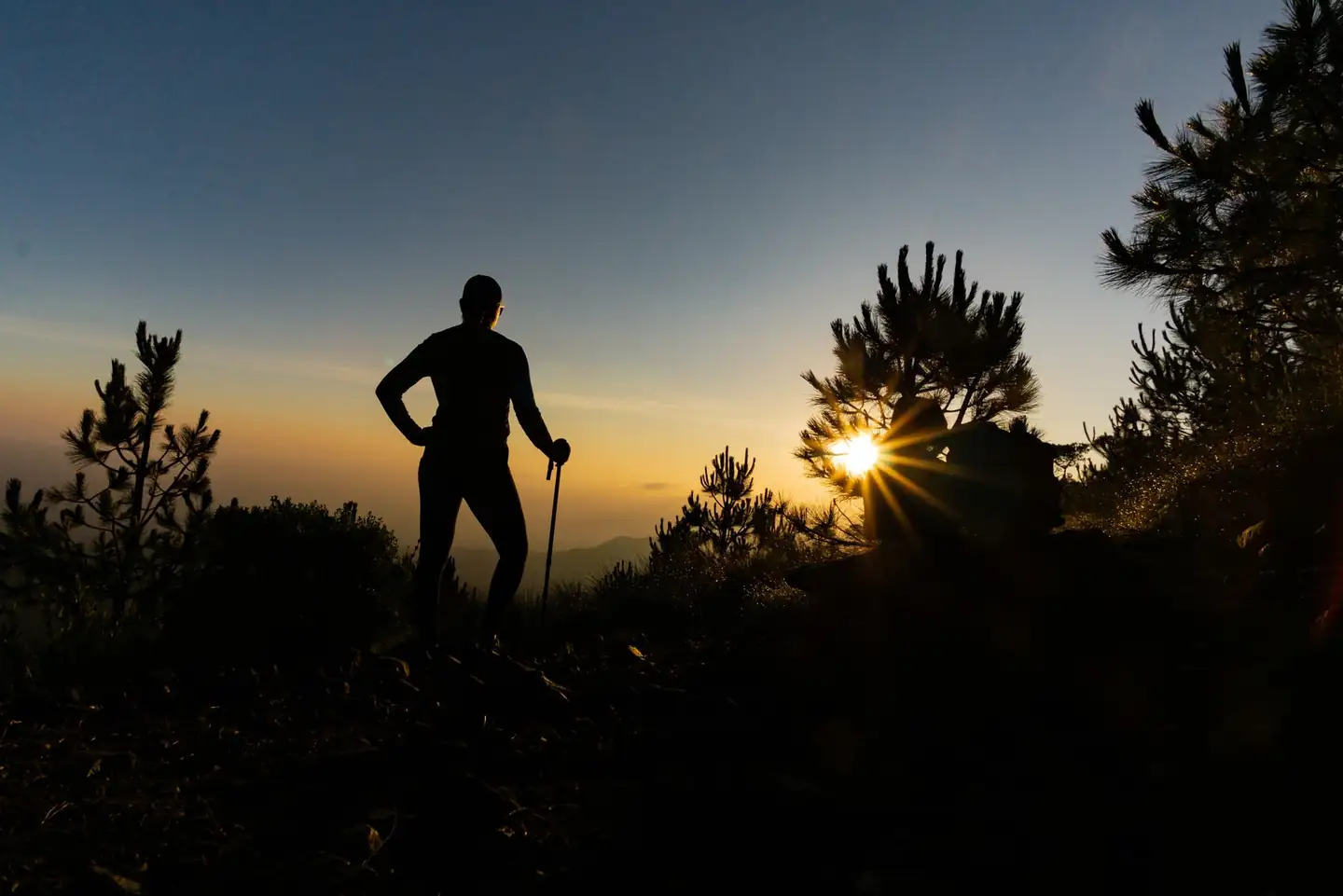
Ullastrell will once again bring together runners and hikers on Sunday, June 7, 2026 in an event that blends nearby mountains, a local atmosphere, and a 21-kilometer route with start and finish at the sports court. The Trail Serralavella – La Serracames has established itself as a calendar event that focuses more on the terrain and enjoyment of the surroundings than on pure timekeeping, with a profile of sustained effort and inland Mediterranean scenery.
The main race covers 21 kilometers and 580 meters of positive elevation gain, a combination that places it in that intermediate ground so valued by those who already know trail running and are looking for a demanding distance without entering extreme formats. The event is organized by the Grup de Muntanya d’Ullastrell with the support of the town council, a formula that usually translates into closeness, careful route design, and a local identity that shows in the details of the event.
A 21K that speaks the language of nearby mountains
The appeal of the Trail Serralavella – La Serracames lies not in grandiosity, but in human scale. Ullastrell, in the Vallès Occidental region of Barcelona, offers transitional terrain between urban center, dirt roads, and low woodland trails, a mosaic that forces runners to read each incline carefully. On a route like this, the runner does not find long mountain highways or lofty alpine summits, but rather a succession of pace changes that punish the legs with the patience of a fine sander.
The 580 meters of accumulated elevation gain do not make the race an extreme challenge, but they do make it a day when it pays to manage effort well. Trail Running Calendar lists the distance as a mountain 21K, while Runedia also highlights the start and finish at the Pista Poliesportiva Ullastrell. That reference helps sketch a competition that is simple and effective at its core: concentration, a clear start, a local route, and a return to the same point, without unnecessary embellishments.
In events of this kind, the experience is defined as much by the effort as by the context. Trail sections often fragment the rhythm, wide paths allow runners to catch their breath, and connecting stretches create a changing race, with the sensation of entering and leaving the forest as if opening and closing a door to fresh air. For many runners, that is where the charm of mid-distance trail running lies: it is not just running, it is negotiating with the terrain.
Date, venue, and details that are already shaping the agenda
The event is confirmed for June 7, 2026, with a start at 08:15, according to the information published by Runedia. The location is also clearly defined: Ullastrell, Barcelona, with start and finish at the Pista Poliesportiva Ullastrell. In the mountain race calendar, these details are not minor; they affect logistics, the expected early-morning temperature, and even the fueling strategy before the heat builds strongly in the late morning of early June.
The price is listed from 19 euros, a reasonable figure for a local trail with timed race and municipal organization. In a race of this profile, the registration fee usually covers very specific services: course marking, insurance, timing, aid stations, and start/finish logistics. It is not a figure that makes the event cheap by default, but it does place it in the usual range for popular mountain races in Catalonia.
The race is also linked to a charitable component, with promotion and part of the proceeds going to a social cause. That element adds another layer of meaning that fits well with town-based races: trail running is not limited to the podium or bib number, but also serves as a meeting point between sport, community associations, and the territory. In the language of small races, that matters almost as much as the elevation gain.
What kind of course to expect in Ullastrell
The available information points to a mountain route dominated by roads and trails, with terrain where asphalt does not seem to play the leading role. In events of this nature, the proportion between track and trail often determines the tone of the effort: if the path is wide, the runner can hold a better pace; if the trail narrows, the work becomes more technical, more about the feet than the lungs. The Trail Serralavella – La Serracames seems to sit in that intermediate zone where the legs must react quickly, but without extreme complexity.
The average elevation gain per kilometer is around 28 meters, according to data released by Trail Running Calendar. That average helps better understand the nature of the route: it does not require major climbs, but it does demand consistency that quietly drains energy reserves. In races like this, the runner who lets themselves go at the start often pays for it later, because the terrain does not forgive early overexcitement.
It is also useful to look at the coexistence of distances in the same event. The main race shares the spotlight with shorter routes, including a 7-kilometer walk and another 7K trail format, revealing a structure designed for different profiles. That coexistence usually creates a more family-friendly and diverse atmosphere, with participants arriving for very different reasons, from pure competition to simply experiencing the mountains with or without a bib.
An event with local roots and an open vocation
The Trail Serralavella – La Serracames already has several editions behind it, with Runedia listing 2026 as the 13th edition. That matters because it speaks of continuity, of a race that has found its place in the calendar and that, without needing major spotlights, has managed to sustain a recognizable identity. Races that survive for many years in small towns usually do so through a mix of neighborhood loyalty and a good reading of the surroundings.
The event is organized by the Grup de Muntanya d’Ullastrell and the Ullastrell Town Council, with support from the Diputació de Barcelona. When a race is born from that alliance, the result is usually a format closely tied to the municipality, where the route is not designed as a backdrop but as an extension of the everyday landscape. That is an important difference: the runner is not visiting a set prepared for photos, but a territory that already exists before and will still be there afterward.
The atmosphere is usually one of the main arguments for these events. Not because of any inflated mystique, but because the contained size makes it possible to recognize faces, share moments before and after, and experience the race as a community day. At a time when many races grow in size and become impersonal, Ullastrell’s 21 kilometers retain a manageable scale that can be decisive for those who value both the route and the atmosphere.
Services and technical details worth examining closely
The race information lists chip timing, a trophy for winners, a children’s race, and a prize raffle. These are elements that help define the style of the event: competitive, yes, but without losing its participatory, small-town character. The chip records times precisely and places the race within the usual standards of modern trail running, while the prizes and categories reinforce the sporting aspect without turning the event into an oversized competition.
The organizers also indicate three liquid aid stations and one solid aid station, a proportion consistent with a 21-kilometer distance and moderate elevation gain. For the runner, that means a race where hydration is planned, but where it still makes sense to start with a clear water and energy strategy. In trail running, aid stations do not replace planning: they complement it. That seemingly small difference usually separates a steady day from a race with avoidable ups and downs.
The technical information released by competitors does not specify a maximum time, percentage of asphalt, or exact participant capacity. When that kind of data is missing, it is wise not to draw conclusions. Even so, the overall structure of the event points to a classic local trail race, with an early start, mixed terrain, and a compact enough circuit that logistics do not get out of hand. That balance is often one of the keys to races that work year after year.
Why this 21K fits into the June calendar
June is a delicate month for mountain races in the province of Barcelona. Early in the morning, the air may still be pleasant, but the sun rises quickly and turns effort into a constant conversation with the temperature. The 08:15 start makes sense in that context, because it allows much of the work to be done before the morning becomes heavy. In a 21-kilometer race, that time margin can make the difference between a controlled race and an unnecessary fight against the heat.
There is also a calendar factor that matters. By that time of year, many runners have already taken part in spring road races and are now looking for a change of pace that is more natural, more short- and mid-distance mountain running. Ullastrell fits as a transitional option: demanding enough to feel serious, accessible enough not to require complex logistics. That middle ground explains much of its appeal.
Nearby trail running also retains value beyond the result. It makes it possible to run without long travel, discover nearby paths, and take part in a day with territorial identity. In Catalonia, this type of event not only keeps popular mountain culture alive, but also serves as a breeding ground for those who are new to the discipline and prefer a less rugged setting than the great ultras.
What the comparison with other mountain races reveals
Compared with races with greater elevation gain or longer distances, the Trail Serralavella – La Serracames offers a less extreme but equally demanding experience in terms of management. The runner does not need exceptional reserves or an ultra strategy, but neither can they afford to improvise. The combination of 21 kilometers and 580 meters of climbing calls for a cool head, steady pace, and constant reading of the terrain.
Compared with other races on the Barcelona calendar, this event sits in a very useful range for the popular runner who has already tried shorter distances and wants to take a step up without yet jumping into highly technical half-marathon formats or tougher races. That relative accessibility, together with the Ullastrell setting, explains why the event frequently appears in regional trail calendars.
The family-friendly aspect of the day also stands out. The presence of a walk and children’s races suggests a format aimed not only at adult runners, but at a wider audience. In practice, that turns the morning into a small sporting ecosystem where different paces, ages, and motivations coexist. Not everyone is looking for the same thing, but everyone shares the same space and the same landscape.
A route that leaves a mark without needing fanfare
The races that age best are not always the most spectacular, but rather those that know how to maintain a clear identity. In Ullastrell, that identity comes through nearby mountains, municipal involvement, and a reasonable-profile 21K, with enough challenges to keep attention and enough ease to keep participation from becoming an ordeal. It is a sober, almost understated formula, but precisely for that reason, a resilient one.
The Trail Serralavella – La Serracames 2026 points to a useful, well-measured mountain day with a strong local base. The runner who comes to this bib will find a race that does not sell showcase epicness, but real kilometers, concrete trails, and an early start in an environment that demands attention, rhythm, and respect for the terrain. In the end, that honesty is part of its appeal: a race without makeup, where the landscape and the effort speak for themselves.
Ullastrell will once again wake up with sneakers on dirt, short steps on the climbs, and breathing marked by the relief of the terrain. And in that simple sequence, so familiar to anyone who has run in the mountains, much of the persistence of these races is explained: they still make sense because they connect sport, territory, and community with a naturalness that rarely needs explaining.



How to prevent thigh chafing: causes and real solutions

Women’s running windbreakers: seven jackets and how to choose

Do more workouts get rid of soreness? A guide for runners

Jaén Half Marathon 2026: Record 3,800 Runners Registered

Men’s short running tights: how to choose the right pair

World Triathlon confirms data breach involving medical data

Izan Edo targets podium at Miyazaki World Cup

María Pérez ranks ninth in World Athletics’ 2026 top ten

Dos Santos, Duplantis and Sawe: World Athlete of the Year finalists

San Silvestre Vallecana 2026: 42,000 places, prices and start times

 Races4 months ago
Valencia Half Marathon 2027: date and registration

 Races4 months ago
Valencia Marathon 2026: entry, ballot and course

 Reviews and Comparisons4 months ago
Asics Gel-Roadmiles 3 for men: review and current price

 Reviews and Comparisons4 months ago
Asics Gel Sonoma 8 Gore-Tex: complete analysis for trail and rain

 Sneakers4 months ago
Saucony Endorphin Pro 4: full review and verdict

 News5 months ago
Strava API 2026: what changes for clubs, challenges and runner apps?

 Reviews and Comparisons5 months ago
Nike Alphafly 3: opinions, sensations, and real key points

 Reviews and Comparisons4 months ago
Under Armour running shoes review 2025-2026: models and key features

 Sports Equipment4 months ago
Shoe sizes in cm: a clear guide to getting the right fit for your footwear

 Sneakers3 months ago
Skechers GO RUN Consistent 2.0 analysis: comfort and limits

 News5 months ago
Valencia Marathon 2026 route: key tips to train and run better

 Sneakers4 months ago
Adidas Adizero Boston 13 for men: review and verdict