Races
Trail Valle de Bielsa 2025: route, dates, and key details of the event
The Pyrenean race returns with three distances, tough elevation gain, and a setting that blends scenery, history, and challenge.

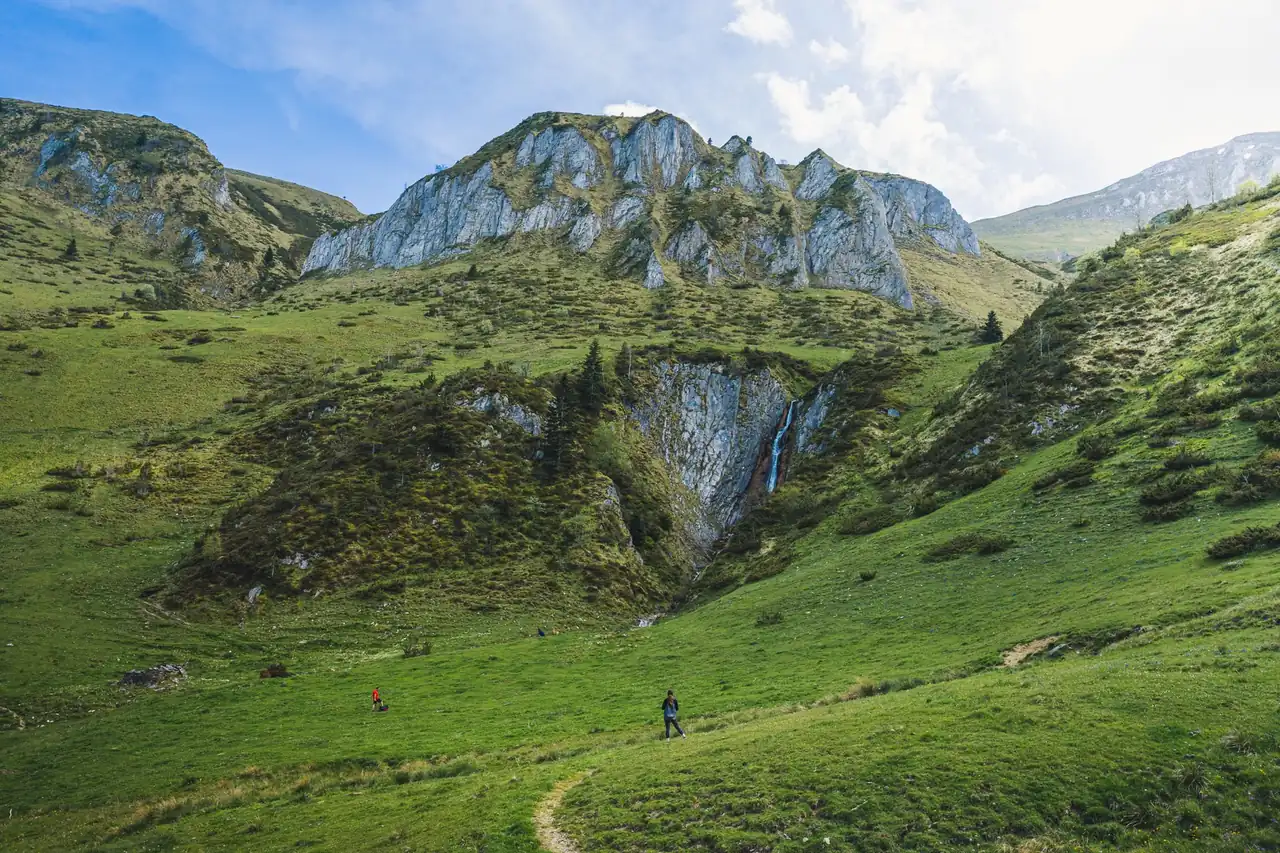
The Trail Valle de Bielsa has established itself as one of the most recognizable events on Aragon’s mountain race calendar for a simple reason: it combines Pyrenean scenery, real toughness, and an organization that has been fine-tuning the format edition after edition. In 2025, the race preserves that essence of a complete competition, with the Pineta Valley as the main stage, Bielsa as the logistical hub, and a route that gives no respite from the very first meters.
Interest in this edition comes not only from the sporting results, but from the race’s own personality. Long climbs, mountain terrain, technical sections, and a first-rate natural setting explain why this event attracts both trail runners and those looking for a high-mountain experience with its own identity. The long distance is around 39 kilometers and includes roughly 2,500 meters of positive elevation gain, a figure that speaks plainly of its demands.
A race born to show Bielsa from the inside
The race has a purpose that goes beyond the stopwatch. Bielsa is not limited to offering the start and finish; the municipality becomes a showcase for a territory with relief, memory, and a strong connection to its surroundings. The route passes through areas such as Espierba, Diera, Pineta, or the surroundings of Pico Comodoto, names that for the runner mean elevation gain, open views, and stretches where effort becomes more visible with every stride.
That territorial focus has been constant since its earliest editions. The trail also serves as a calling card for the Sobrarbe Valley, an argument that explains much of the appeal for participants. This is not a flat transition race or an event to fly over asphalt: here the profile dictates, the terrain weighs, and the landscape imposes itself with the same force with which it demands effort regulation.
The start and finish in Bielsa’s Plaza Mayor reinforce that character of a compact, clearly defined event. From there, the three usual options open up, designed for different profiles but united by the same mountain logic. The organizers have opted for an event where runners find sporting challenge, but also a civilized setting in the middle of a wild environment, something that does not always coexist easily in mountain races.
The 2025 distances and what they really demand
The 2025 edition keeps the multi-distance format that has already become its hallmark. The long race reaches 39 kilometers, with total elevation gain of around 2,500 meters, a combination that forces runners to manage legs, mind, and nutrition over many hours. The intermediate distance, of about 24 kilometers, offers a significant challenge for those seeking mountain running without entering the hardship of a short ultra. And the 14-kilometer route opens the door to runners looking for a more contained day, although nothing is truly easy in Bielsa.
In practice, the difference between the three formats is not just mileage. The way you suffer also changes. The long race demands race reading, patience on the climbs, and skill on the descents; the middle distance rewards those who can maintain a strong pace on broken terrain; the short race, despite being shorter, can become very hard if the runner arrives without mountain adaptation. Altitude and profile turn each distance into a different experience, not just a simple reduction in meters.
The technical reference from previous editions helps explain the scale of the challenge. In the longest distance, a maximum altitude of 2,349 meters has been mentioned, with sections that require managing oxygen and pace more carefully than in mid-mountain races. The intermediate event has hovered around elevations close to 2,027 meters, while the short race has moved at somewhat lower altitudes, though always in a clearly mountainous setting. In Bielsa, the terrain does not cooperate: it imposes itself.
A course that rewards consistency more than speed
The terrain is one of the keys to the appeal of this race. Much of the course runs along paths, tracks, and mountain passes, with a very high presence of natural ground. This is not a fast race in the classic sense, but an event where every kilometer can change the script because of a climb that is longer than expected or a descent that punishes quads and balance.
That technical character forces runners to think the race through. Those who usually perform best are the ones who do not rush in the first half, who accept that the terrain sets the rules, and who know that a false flat at altitude also takes its toll. Bielsa’s mountains do not give meters away; they return them in the form of views, yes, but only after collecting their physical toll. Mental endurance matters just as much as fitness.
In editions already held, the organization has set cutoff points and maximum times to ensure route safety, especially on the long distance. That speaks to an event where the coexistence of sport and mountain is taken seriously. This is no minor detail: in high mountain running, logistics are part of the competitive experience just as much as the bib or the standings.
Previous winners set the standard for the event
The recent winners give a fairly clear idea of the level the race demands. In one of its early editions, Alfonso López and Consuelo Velasco took the longest distance, while Daniel Cremades and Pilar Salvador dominated the 23-kilometer race and Daniel Puyuelo and Mónica Leandro did the same in the 11-kilometer race. Later, names such as Ander Iñarra and Liliana Ginestar left their mark on the main distance, reinforcing the idea that Bielsa is not a place for improvisation.
The repetition of certain profiles also reveals something interesting: the race attracts mountain specialists with real experience in elevation gain and technical terrain. That raises the sporting value of the result. Winning in Bielsa depends on more than just running well; it requires knowing how to read the terrain, withstand sudden changes in gradient, and stay calm when the course gets steep. Altitude, accumulated effort, and uneven ground punish anyone who arrives too confident.
In the women’s categories, victories by Consuelo Velasco, Pilar Salvador, Mónica Leandro, and Liliana Ginestar have provided continuity to a highly competitive field. That strong presence of women on the podium has also been a notable constant in the race, along with participation that has sought to grow over the years. The race has not only gained prestige; it has also gained competitive depth.
Services, technical control, and a format designed to last
The organization, led by the Bielsa Town Council with technical support from Fartleck Sport and oversight from the Aragon Athletics Federation, has incorporated elements that better organize the runner’s experience. These include chip timing, strategically placed aid stations, showers and changing rooms, and a reinforced medical setup at key points on the course. All of this helps the event maintain a serious tone, closer to a well-crafted race than to an improvised one.
Another detail that has gained importance is the environmental focus. In recent editions, it has been emphasized that there are no cups at the aid stations to reduce waste, which requires each participant to carry their own hydration system. This measure, which may seem minor, fits the philosophy of many current mountain races: the more delicate the environment, the more careful the impact management must be. Respect for the landscape is no longer an ornament; it is part of the moral code of trail running.
Value-added elements have also been added, such as post-race food, runner’s bag, commemorative T-shirt, photo and video service, and access to local spaces such as the Bielsa Museum. These layers do not replace what is essential, but they do complete a day that aims to be memorable without losing its sporting nature. In a race like this, runners do not just want to finish; they want to carry away the feeling of having crossed a living territory.
What makes Bielsa different from other mountain races
The trail map in Spain is full of tough races, yes, but Bielsa has its own distinct nuance. Its value is not in presenting itself as the most extreme course or the most technical one on the calendar. Its value lies in the mix of Pyrenean scenery, compact format, and local tradition. There are races with more elevation gain, others with more fame, and some with a more media-friendly profile, but few offer this such clear combination of territorial identity and athletic challenge.
The beauty of the surroundings should not be confused with ease. The valley impresses with its walls, glacial valleys, and changing light, but that same environment produces demanding routes, with areas where the runner feels small. The mountain here is not decoration; it is the protagonist. Toughness and beauty come in the same package, and that mix explains why many participants return year after year.
Moreover, the event has established itself in the regional calendar as a stable reference, capable of attracting runners from different provinces and clubs. The fact that the circuit combines several distances allows for broader participation, something important for a race that does not exist in isolation, but in dialogue with a community of runners that values both competition and the environment. In Bielsa, the result matters; the course matters even more.
The sporting appeal of 2025 in a valley that refuses to be tamed
The 2025 edition arrives with the same formula that has consolidated the race, but also with the usual challenge of maintaining the balance between growth and authenticity. In an increasingly crowded calendar, the events that survive with their own weight are the ones that offer a recognizable experience. Bielsa does so with a mountain that does not soften its edges, with an organization that has refined the details, and with a natural narrative that is very easy for runners to understand.
For the runner, that means something very concrete: it is not just about completing a distance, but about entering a territory with its own rules. You have to conserve energy, understand the elevation gain, accept that the clock breaks apart on the climbs, and that the descent can also drain your legs. The race rewards intelligence as much as engine power, and that is why it hooks those looking for more than just a bib number.
Ultimately, the Trail Valle de Bielsa 2025 sums up very well what many mountain races aim for and few manage to sustain so clearly: real challenge, powerful scenery, local identity, and an organization that knows mountains cannot be conquered, only crossed with respect. That is the true common thread of the event, the one that continues to make Bielsa a race with memory, character, and plenty of vertical gain.



How to prevent thigh chafing: causes and real solutions

Women’s running windbreakers: seven jackets and how to choose

Do more workouts get rid of soreness? A guide for runners

Jaén Half Marathon 2026: Record 3,800 Runners Registered

Men’s short running tights: how to choose the right pair

World Triathlon confirms data breach involving medical data

Izan Edo targets podium at Miyazaki World Cup

María Pérez ranks ninth in World Athletics’ 2026 top ten

Dos Santos, Duplantis and Sawe: World Athlete of the Year finalists

San Silvestre Vallecana 2026: 42,000 places, prices and start times

 Races3 months ago
Valencia Half Marathon 2027: date and registration

 Races3 months ago
Valencia Marathon 2026: entry, ballot and course

 Reviews and Comparisons4 months ago
Asics Gel-Roadmiles 3 for men: review and current price

 Reviews and Comparisons4 months ago
Asics Gel Sonoma 8 Gore-Tex: complete analysis for trail and rain

 Sneakers3 months ago
Saucony Endorphin Pro 4: full review and verdict

 News5 months ago
Strava API 2026: what changes for clubs, challenges and runner apps?

 Reviews and Comparisons5 months ago
Nike Alphafly 3: opinions, sensations, and real key points

 Reviews and Comparisons4 months ago
Under Armour running shoes review 2025-2026: models and key features

 Sports Equipment4 months ago
Shoe sizes in cm: a clear guide to getting the right fit for your footwear

 Sneakers3 months ago
Skechers GO RUN Consistent 2.0 analysis: comfort and limits

 News5 months ago
Valencia Marathon 2026 route: key tips to train and run better

 Sneakers4 months ago
Adidas Adizero Boston 13 for men: review and verdict